Quick Verdict: A Pioneer That Still Delivers Efficiency
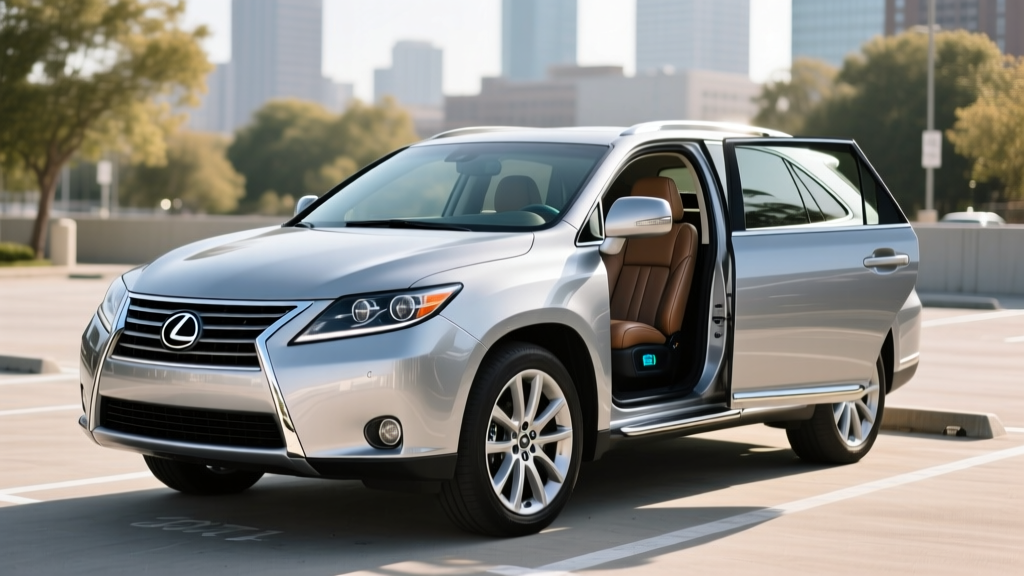
The 2008 Lexus RX 400h hybrid was one of the first luxury SUVs to prove that electrification and premium comfort could coexist. Nearly two decades later, this conventional hybrid (HEV) remains a compelling used buy for drivers who want SUV practicality with fuel economy that still rivals many modern non-hybrid crossovers. With an EPA-estimated 29 MPG combined and a combined output of 272 horsepower from its V6-electric powertrain, the RX 400h set the template that Toyota and Lexus have refined ever since.
But buying a 16-plus-year-old hybrid raises legitimate questions: How long does the battery last? What does replacement cost? And how does this early-generation hybrid stack up against today's EVs, PHEVs, and newer HEVs? This guide covers every number a used buyer needs.
Understanding the Powertrain: Conventional Hybrid, Not Plug-In
The 2008 Lexus RX 400h is a conventional hybrid (HEV), not a plug-in hybrid (PHEV). This distinction matters enormously for ownership expectations:
HEV vs PHEV: What the RX 400h Actually Is
| Feature | 2008 RX 400h (HEV) | Plug-In Hybrid (PHEV) |
|---|---|---|
| Plug-in charging required? | No — charges via regenerative braking and engine | Yes — plugs into wall outlet or charger |
| Electric-only range | ~1 mile at very low speeds | Typically 20–45 miles (modern PHEVs) |
| Battery capacity | ~2.5 kWh (NiMH) | 13–25+ kWh (lithium-ion) |
| Federal tax credit (new) | Did not qualify | May qualify under §30D (new vehicles only) |
| Charging infrastructure needed | None | Home Level 2 recommended |
The RX 400h's hybrid system uses a 3.3-liter V6 engine paired with two electric motors — one driving the front wheels and a second powering the rear axle for electronic all-wheel drive (e-AWD). Combined system output is 272 horsepower. The nickel-metal hydride (NiMH) battery pack stores approximately 2.5 kWh and recharges entirely through regenerative braking and the gasoline engine. You never plug it in.
Fuel Economy: EPA Numbers and Real-World MPG
According to fueleconomy.gov, the 2008 Lexus RX 400h carries these EPA estimates:
| Driving Cycle | EPA MPG |
|---|---|
| City | 31 MPG |
| Highway | 27 MPG |
| Combined | 29 MPG |
Real-world expectations: Owners frequently report matching or slightly exceeding the EPA city estimate — a common trait of conventional hybrids, which rely heavily on electric motor assist in stop-and-go driving where regenerative braking recaptures the most energy. Highway driving, where the gasoline engine does most of the work, tends to land closer to 25–27 MPG. Cold weather can reduce city MPG by 2–4 MPG due to increased engine idle time for cabin heat and reduced battery efficiency in the NiMH pack.
For context, the 2008 gasoline-only RX 350 achieved 21 MPG combined — making the 400h roughly 38% more fuel-efficient in mixed driving. That gap remains meaningful at today's fuel prices: at $3.50/gallon and 12,000 miles/year, the RX 400h saves approximately $550 annually in fuel compared to the RX 350.
Performance and Drivetrain Specifications
| Specification | 2008 Lexus RX 400h |
|---|---|
| Engine | 3.3L V6 (3MZ-FE) |
| Electric motors | 2 (front + rear e-AWD) |
| Combined system horsepower | 272 HP |
| 0–60 mph | ~7.3 seconds |
| Transmission | eCVT (electronically controlled) |
| Drivetrain | Electronic AWD (e-AWD) |
| Battery type | NiMH (nickel-metal hydride) |
| Battery capacity | ~2.5 kWh |
| Curb weight | ~4,510 lbs |
| Towing capacity | 3,500 lbs (when properly equipped) |
| Cargo volume (rear seats up) | 38.3 cu ft |
| Cargo volume (rear seats folded) | 71.0 cu ft |
The eCVT transmission in the RX 400h is not a belt-driven CVT like those found in some competitors — it uses a planetary gearset (Toyota's Hybrid Synergy Drive) to blend engine and motor power seamlessly. This design has proven exceptionally durable, with virtually no mechanical wear items compared to traditional automatic transmissions.
Hybrid Battery Life, Warranty, and Replacement Cost
Original Hybrid Battery Warranty
When new, the 2008 RX 400h's hybrid battery was covered for 8 years / 100,000 miles (10 years / 150,000 miles in CARB states including California, New York, Massachusetts, and others adopting California emissions standards). That factory warranty has expired for all examples on the used market.
Real-world battery longevity: The NiMH pack in the RX 400h has a well-documented track record. Many examples reach 150,000–200,000 miles before significant degradation, and some exceed 250,000 miles on the original battery. NiMH chemistry is less energy-dense than modern lithium-ion but tends to degrade more gracefully — you'll notice a gradual decline in fuel economy rather than a sudden failure.
Battery replacement cost (2026 estimates):
- OEM Lexus replacement: $3,500–$5,000 (parts + dealer labor)
- Aftermarket/remanufactured pack: $1,500–$2,800 installed at an independent hybrid specialist
- Individual module replacement: $300–$800 if only specific cells have failed (viable for NiMH packs with discrete modules)
Signs of hybrid battery degradation to watch for:
- Noticeable drop in city MPG (falling below 27 MPG consistently)
- Engine running more frequently at stops or low speeds
- Dashboard hybrid system warning light
- Reduced regenerative braking feel
- SOC (state of charge) gauge fluctuating erratically
Before purchasing, request a hybrid battery health check from a Toyota/Lexus dealer or a shop with a capable scan tool that can read individual module voltages. A healthy pack should show module voltages within 0.2V of each other.
Reliability Record and Common Issues
The 2008 RX 400h benefits from Toyota/Lexus's reputation for hybrid powertrain durability. The Hybrid Synergy Drive system has fewer wear components than a conventional drivetrain — no traditional starter motor, no alternator, no conventional transmission clutches or bands. The eCVT planetary gearset is essentially bulletproof when maintained.
Known issues beyond the hybrid battery:
- Inverter coolant pump: Some 2006–2008 RX 400h models were subject to a recall for the hybrid inverter coolant pump. Verify this recall was performed (check with any Lexus dealer using the VIN).
- Brake actuator: The electro-hydraulic brake system can develop faults around 120,000–150,000 miles. Replacement runs $1,200–$1,800.
- 12V auxiliary battery: Located in the rear cargo area, it can fail without obvious warning and will prevent the vehicle from starting even though the hybrid pack is fine. Replacement: $200–$350.
- Rack and pinion steering: Some owners report leaks or clunking around 130,000+ miles.
- Water pump and timing belt: The 3.3L V6 uses a timing belt (not chain) — replacement interval is 90,000 miles and costs $800–$1,200. Critical to verify on any used example.
Overall, the RX 400h consistently earns above-average reliability marks from owner surveys and remains one of the more dependable used luxury SUVs from its era.
Pricing, Tax Credits, and Ownership Economics
Used market pricing (2026 estimates): A 2008 Lexus RX 400h typically sells for $5,500–$9,500 depending on mileage, condition, and battery health. Examples under 100,000 miles with documented battery service command the top of that range.
Tax credit eligibility: The RX 400h did not qualify for the federal hybrid tax credit when new (that credit applied to earlier model years and phased out for Toyota/Lexus hybrids in 2007). As a used vehicle purchased in 2026, it does not qualify for the federal §30D new clean vehicle credit. It also does not qualify for the used clean vehicle credit (IRC §25E), which applies only to qualified plug-in electric vehicles — conventional hybrids are excluded.
Annual ownership cost snapshot:
- Fuel (12,000 mi/yr at 29 MPG, $3.50/gal): ~$1,450
- Insurance (national avg for this model year): ~$900–$1,200
- Maintenance (oil changes, filters, fluid top-offs): ~$400–$600/yr
- Total estimated annual running cost: ~$2,750–$3,250
Compare this to the gasoline-only 2008 RX 350 at 21 MPG combined, which would cost approximately $2,000/year in fuel alone — the hybrid's fuel savings of ~$550/year help offset its slightly higher used purchase price within 2–3 years.
Pros
- 29 MPG combined still competitive with modern non-hybrid crossovers
- 272 HP provides confident acceleration for merging and passing
- Lexus build quality and ride refinement hold up well at high mileage
- e-AWD without a mechanical driveshaft — fewer failure points
- No charging infrastructure needed — works like a gas car
- eCVT durability exceeds conventional automatic transmissions
Cons
- Hybrid battery replacement ($1,500–$5,000) is a real cost at this age
- No electric-only driving range beyond parking-lot speeds
- Dated infotainment — no Apple CarPlay, Android Auto, or modern safety tech
- NiMH battery less efficient in extreme cold vs. modern lithium-ion packs
- 3,500-lb tow rating is modest for the SUV class
- No federal or state tax credits available on used purchase
RX 400h vs Modern Alternatives: Which Powertrain Fits You?
| Factor | 2008 RX 400h (HEV) | Modern PHEV (e.g., 2026 RAV4 Prime) | Modern BEV (e.g., 2026 Ioniq 5) |
|---|---|---|---|
| Used purchase price | $5,500–$9,500 | $35,000–$48,000 (new) | $42,000–$55,000 (new) |
| Electric-only range | ~1 mile (low speed) | 35–42 miles | 290–310 miles (full EV) |
| Fuel cost per year | ~$1,450 | ~$600–$900 (with home charging) | ~$500–$700 (electricity) |
| Home charging needed? | No | Recommended for EV range | Essential |
| Tax credit eligible? | No | Possibly (§30D, new only) | Possibly (§30D, new only) |
| Maintenance complexity | Moderate (engine + hybrid) | Moderate (engine + electric) | Low (no engine) |
| Best for | Budget buyers, no home charging | Short commutes + road trips | Home chargers, daily EV driving |
Choose the 2008 RX 400h if: You want a reliable, efficient luxury SUV on a tight budget, lack access to home or workplace charging, drive in a region with extreme temperatures where EV range loss concerns you, or simply need a second vehicle that requires zero behavioral change from a gas car.
Choose a modern PHEV if: You have a short commute (under 40 miles), can install a Level 2 home charger, want to drive mostly electric daily while retaining gas-engine flexibility for road trips, and can afford a new-vehicle purchase that may qualify for the §30D federal tax credit.
Choose a modern BEV if: You have reliable home charging access, drive under 250 miles daily, want minimal maintenance, and can invest in a new vehicle with available tax incentives.
Frequently Asked Questions
How many MPG does the 2008 Lexus RX 400h hybrid get?
The EPA rates the 2008 RX 400h at 31 MPG city, 27 MPG highway, and 29 MPG combined. Real-world city driving often matches or slightly exceeds the EPA estimate thanks to regenerative braking. Highway driving typically returns 25–27 MPG, and cold weather can reduce city efficiency by 2–4 MPG.
Does the 2008 RX 400h need to be plugged in to charge?
No. The 2008 RX 400h is a conventional hybrid (HEV). Its NiMH battery charges through regenerative braking and the gasoline engine. There is no plug and no electric-only driving range beyond very low-speed parking maneuvers.
How long does the hybrid battery last, and what does replacement cost?
The NiMH hybrid battery typically lasts 150,000–200,000+ miles before significant degradation. An OEM replacement at a Lexus dealer costs $3,500–$5,000. Remanufactured aftermarket packs run $1,500–$2,800 installed. Individual module repair may be possible for $300–$800.
Does the 2008 RX 400h qualify for any federal tax credit?
No. The federal hybrid tax credit for the RX 400h phased out in 2007 for Toyota/Lexus vehicles. As a used purchase in 2026, it does not qualify for the §30D new clean vehicle credit or the §25E used clean vehicle credit (which applies only to plug-in electric vehicles, not conventional hybrids). Check your state's DMV or energy office for any local incentives, though most have moved to plug-in vehicles.
Is the 2008 RX 400h reliable at high mileage?
Yes, with proper maintenance. The Hybrid Synergy Drive powertrain has fewer wear components than a conventional automatic transmission. Key maintenance items to verify before purchase include timing belt replacement (90,000-mile interval), hybrid inverter coolant pump recall status, and hybrid battery health via module voltage scan. The brake actuator is the most expensive non-battery repair, typically $1,200–$1,800 if it fails.
How does the RX 400h compare to the modern Lexus RX hybrid?
The 2026 Lexus RX 500h produces 366 HP from a turbocharged 2.4L hybrid system and achieves an EPA-estimated 27 MPG combined — slightly less than the 2008 model, but in a heavier, more powerful vehicle with far more technology and safety features. Used 2008 RX 400h pricing ($5,500–$9,500) represents a fraction of the new RX 500h's starting MSRP of ~$62,000.
Can I still get parts and service for a 2008 RX 400h in 2026?
Yes. Toyota/Lexus parts availability for the RX 400h remains strong given its shared 3.3L V6 platform with the Camry, Highlander, and Sienna of the same era. Hybrid-specific components (inverter, motors, battery modules) are available through dealers and a growing network of independent hybrid specialists. Any Toyota/Lexus dealer can service the hybrid system.
Sources: EPA Fuel Economy — 2008 Lexus RX 400h, IRS Used Clean Vehicle Credit (§25E), Lexus USA press archives.