Quick Verdict: A Pioneer That Still Commutes
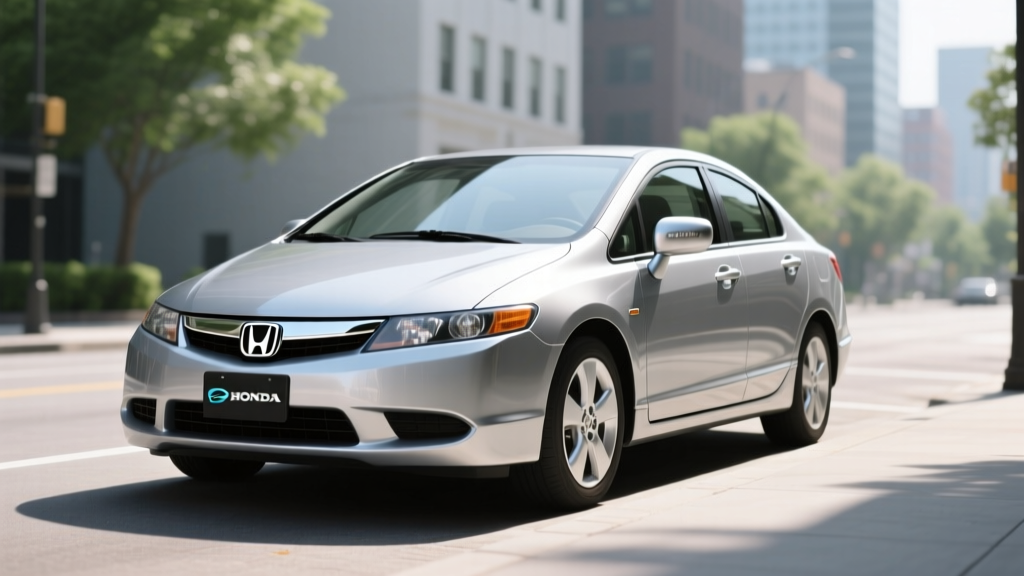
The 2008 Honda Civic Hybrid sedan was one of the first mainstream hybrids to challenge the Toyota Prius, using Honda's Integrated Motor Assist (IMA) system to pair a 1.3L gasoline engine with a small electric motor. Nearly two decades later, it remains a popular search for budget-conscious commuters and used-car shoppers evaluating early hybrid ownership costs. With an EPA rating of 40 city / 45 highway / 42 combined MPG, the 2008 Civic Hybrid delivers real fuel savings — but prospective buyers must understand the age-related risks of its nickel-metal hydride (NiMH) IMA battery before signing any paperwork.
This guide covers the exact specs, real-world fuel economy, battery replacement economics, and reliability data you need to decide whether a used 2008 Civic Hybrid makes sense in 2026 — or whether a newer hybrid or full EV is the smarter move.
2008 Honda Civic Hybrid: Core Specifications
| Specification | Value |
|---|---|
| Powertrain | 1.3L i-VTEC 4-cyl + IMA electric motor |
| Combined Horsepower | 110 hp @ 6,000 rpm |
| Combined Torque | 123 lb-ft @ 1,000–2,500 rpm |
| Transmission | CVT (Continuously Variable) |
| EPA Fuel Economy | 40 city / 45 highway / 42 combined MPG |
| Fuel Tank Capacity | 12.4 gallons |
| Total Range (est.) | ~520 miles per tank |
| IMA Battery Type | Nickel-Metal Hydride (NiMH) |
| IMA Battery Voltage | 158V nominal |
| Drivetrain | Front-Wheel Drive |
| 0–60 mph (est.) | ~10.5 seconds |
| Curb Weight | ~2,850 lbs |
| Original MSRP (2008) | $22,600 (base) |
| Used Price Range (2026) | $2,500–$5,500 (private party) |
Sources: EPA Fuel Economy — 2008 Honda Civic Hybrid, Honda press archives.
Real-World MPG vs. EPA Sticker
Real-World Expectation: 36–44 combined MPG depending on driving style, battery health, and climate
Honda's IMA system in the 2008 Civic Hybrid is a mild hybrid — the electric motor assists the gasoline engine but cannot propel the car on electric power alone. This is fundamentally different from Toyota's Hybrid Synergy Drive (used in the Prius), which can operate in electric-only mode at low speeds.
In real-world use, owners report:
- City driving: 38–43 MPG. The IMA system recaptures energy through regenerative braking and assists during acceleration, which helps in stop-and-go traffic. However, because the motor cannot drive the wheels independently, city gains are more modest than a full hybrid like the Prius.
- Highway driving: 40–46 MPG. At steady cruising speeds, the 1.3L engine operates efficiently, and the IMA system provides subtle assist on inclines. Some owners report exceeding the EPA highway figure on flat terrain.
- Cold weather penalty: Expect a 5–10% drop in fuel economy below 40°F. The engine runs richer during warm-up, and the NiMH battery is less efficient at low temperatures.
- Degraded IMA battery: A failing hybrid battery can drop real-world MPG to 30–35 combined, as the system loses its assist capability and the gasoline engine carries the full load.
Fuelly.com owner data shows a lifetime average of approximately 39.8 MPG across hundreds of tracked 2008 Civic Hybrid fill-ups — closely aligned with the EPA combined figure but slightly below it, consistent with mixed real-world conditions.
HEV vs. PHEV vs. EV: Where Does the 2008 Civic Hybrid Fit?
The 2008 Honda Civic Hybrid is a conventional hybrid electric vehicle (HEV). It does not plug in. It has no electric-only driving range. The small NiMH battery recharges exclusively through regenerative braking and the gasoline engine.
| Feature | HEV (e.g., 2008 Civic Hybrid) | PHEV (e.g., 2026 RAV4 Prime) | BEV (e.g., 2026 Tesla Model 3) |
|---|---|---|---|
| Plugs in? | No | Yes | Yes |
| Electric-only range | 0 miles | 25–45 miles | 250–400 miles |
| Gasoline engine? | Yes (primary) | Yes (backup) | No |
| Home charging needed? | No | Recommended (Level 2) | Required (Level 2) |
| Combined MPG / MPGe | 42 MPG | 38 MPG + 94 MPGe | 130+ MPGe |
| Federal tax credit (new) | None | Up to $7,500 (§30D) | Up to $7,500 (§30D) |
| Battery replacement risk | Moderate (NiMH, age) | Low (under warranty) | Low (under warranty) |
Who Should Choose a Used 2008 Civic Hybrid?
- Budget commuters spending under $5,000 who want better fuel economy without plugging in
- Apartment dwellers with no access to home or workplace charging
- Low-mileage drivers (under 8,000 miles/year) where fuel savings may not justify a more expensive newer vehicle
Who Should Look Elsewhere?
- High-mileage commuters — a newer hybrid (2020+ Prius, Accord Hybrid) offers better reliability, warranty coverage, and safety features
- Home-charging-capable buyers — a used EV (2019+ Bolt, Leaf) or a new PHEV will deliver far lower per-mile energy costs
- Safety-focused buyers — the 2008 Civic lacks modern ADAS features (automatic emergency braking, lane-keeping assist, blind-spot monitoring) that became standard in the 2016+ generation
IMA Battery Lifespan, Warranty & Replacement Cost
The IMA battery is the single biggest financial risk when buying a used 2008 Honda Civic Hybrid. Here is what you need to know:
Current Status (2026): All 2008 Civic Hybrids are now 18 years old. The original factory battery warranty has expired for every vehicle unless an extended warranty was purchased and transferred.
How Long Does the IMA Battery Last?
Based on owner reports and repair databases:
- Original battery lifespan: 8–12 years / 100,000–150,000 miles is typical before the IMA system throws a warning light or loses meaningful assist capability
- Failure mode: NiMH cells degrade unevenly, causing voltage imbalance. The car will still drive on the gasoline engine alone, but fuel economy drops to approximately 30–35 MPG and the IMA system becomes non-functional
- Warning signs: IMA warning light on dash, reduced assist during acceleration, lower regenerative braking, and declining MPG over several months
IMA Battery Replacement Cost
| Option | Cost Range | Warranty | Notes |
|---|---|---|---|
| OEM Honda replacement | $2,500–$3,500 (parts + labor) | 1 year / 12,000 mi | Dealer-installed; often exceeds the car's value |
| Aftermarket / remanufactured | $1,200–$2,000 | 1–3 years | Common choice for older vehicles; quality varies by supplier |
| Individual cell reconditioning | $400–$800 (DIY or specialist) | None / limited | Requires technical skill; replaces only failed cells within the pack |
| Used battery from salvage | $300–$600 | None | Highest risk — unknown remaining life |
The economic reality: At a used market value of $2,500–$5,500, an OEM battery replacement can total the vehicle from an insurance perspective. Most owners opt for aftermarket remanufactured packs or sell the car when the IMA battery fails. Factor a potential $1,500–$2,000 battery replacement into your purchase budget if the current battery has not been replaced recently.
Reliability & Ownership Costs
The 2008 Civic Hybrid's reliability story is split between its excellent conventional mechanicals and its problematic hybrid system:
Strengths
- Engine and transmission: The 1.3L i-VTEC engine and CVT are generally durable, with many examples exceeding 200,000 miles with basic maintenance
- Low running costs: No plug-in infrastructure needed, standard 12V battery, conventional brakes (though regenerative braking reduces pad wear)
- Parts availability: The 8th-generation Civic platform shares many parts with non-hybrid Civic models, keeping mechanical repair costs low
Known Issues
- IMA battery failure: As detailed above, this is the dominant failure point and expense
- CVT shudder: Some owners report transmission shudder at low speeds, often resolved with CVT fluid replacement (Honda CVTF)
- 12V battery drain: The IMA system's interaction with the 12V battery can cause premature 12V battery failure; keep a close eye on the auxiliary battery
- Motor mount wear: Engine mounts, particularly the passenger-side mount, tend to wear earlier than non-hybrid Civics due to the IMA system's stop-start cycling
- NHTSA recalls: Check the VIN at nhtsa.gov/recalls for any open recalls, including the Takata airbag recall that affected many Honda models of this era
Tax Credits & Incentives (2026)
Here is the straightforward answer on incentives for the 2008 Honda Civic Hybrid:
- Federal tax credit (§30D): NOT eligible. The federal clean vehicle credit applies only to new qualifying plug-in vehicles (PHEVs and BEVs). Conventional hybrids like the Civic Hybrid do not qualify, and the used-EV credit (§25E) also requires a plug-in powertrain.
- Original hybrid credit (expired): When new in 2008, the Civic Hybrid qualified for a federal Alternative Motor Vehicle Credit of up to $2,100, but this credit phased out for Honda in 2008 after the manufacturer hit the 60,000-unit cap. This credit has been unavailable for over 15 years.
- State incentives: No state currently offers purchase incentives for used conventional hybrids. Some states offer reduced registration fees or HOV lane access for hybrids, but these programs are winding down and vary by jurisdiction — check your state DMV for current rules.
Used Buyer's Checklist: What to Inspect Before You Buy
- IMA battery health: Ask the seller if the battery has been replaced and when. Request documentation. If original, budget $1,200–$2,000 for imminent replacement.
- IMA warning light: Turn the key to "ON" (without starting) and verify the IMA light illuminates briefly then turns off. If it stays on or never illuminates, the system may have a fault or the bulb may have been removed to hide a problem.
- Charge/discharge bars: Start the car and observe the IMA battery gauge on the dash. A healthy battery should show 4–6 bars of charge and respond to acceleration (discharge) and braking (charge).
- CVT operation: Test-drive at low speeds (15–30 mph) and feel for shudder, hesitation, or jerky acceleration. The CVT should be smooth.
- Maintenance records: Look for regular oil changes (5W-20 synthetic), CVT fluid changes, and 12V battery replacement history.
- VIN check: Run the VIN through NHTSA for open recalls and consider a Carfax or AutoCheck report for accident and title history.
- Rust inspection: Check the undercarriage, wheel wells, and rocker panels, especially in salt-belt states.
- A/C compressor: The Civic Hybrid uses an electric A/C compressor. Verify cold air output — replacement is significantly more expensive than a conventional compressor ($800–$1,200).
Frequently Asked Questions
How many MPG does the 2008 Honda Civic Hybrid get?
The EPA rates the 2008 Civic Hybrid at 40 city / 45 highway / 42 combined MPG. Real-world owner data averages approximately 39–40 combined MPG, with a typical range of 36–44 depending on driving conditions, climate, and IMA battery health. Highway driving at steady speeds often yields the best results.
Does the 2008 Civic Hybrid need to be plugged in?
No. The 2008 Civic Hybrid is a conventional hybrid (HEV), not a plug-in hybrid (PHEV). Its IMA battery recharges automatically through regenerative braking and the gasoline engine. There is no charging port and no electric-only driving mode.
How far can it go on electric power alone?
Zero miles. The IMA system in the 2008 Civic Hybrid is a mild hybrid assist — the electric motor cannot propel the vehicle independently. The gasoline engine is always running when the car is in motion (with auto-stop at idle). If electric-only driving is important to you, consider a PHEV like the Toyota Prius Prime (25–40 miles electric) or a full BEV.
Is the 2008 Honda Civic Hybrid reliable?
The conventional mechanical components (engine, suspension, brakes) are reliable and share parts with the widely produced 8th-generation Civic. However, the IMA battery is a known failure point at this vehicle's age. With a replaced or healthy IMA battery, the car is a dependable commuter. Without one, expect degraded fuel economy and eventual warning lights. Overall reliability is moderate — good mechanicals offset by aging hybrid-specific components.
What does an IMA battery replacement cost?
Expect to pay $1,200–$2,000 for an aftermarket remanufactured IMA battery (the most common choice for a vehicle of this value), or $2,500–$3,500 for an OEM Honda replacement at a dealer. DIY cell-level reconditioning can cost $400–$800 but requires technical expertise. Given the car's $2,500–$5,500 used market value, most owners choose the aftermarket route or sell the vehicle.
Does the 2008 Civic Hybrid qualify for any tax credit?
No. The federal §30D clean vehicle credit and the §25E used clean vehicle credit both require a plug-in powertrain (PHEV or BEV). The 2008 Civic Hybrid is a conventional HEV and does not qualify for any current federal purchase incentive. The original hybrid tax credit that applied when this car was new expired for Honda in 2008. State incentives for used conventional hybrids are essentially nonexistent in 2026.
Hybrid vs. PHEV vs. EV — which should I buy?
If your budget is under $5,000 and you cannot charge at home, a used HEV like the 2008 Civic Hybrid is a reasonable choice — just budget for the IMA battery. If you can spend $15,000–$30,000 and have home charging access, a used PHEV (2018+ Prius Prime, Clarity PHEV) gives you 25–47 miles of electric commuting with a gas backup. If your budget allows $25,000+ and you have reliable home charging, a new or used BEV eliminates gasoline entirely and qualifies for federal tax credits. The right choice depends on your budget, charging access, and daily mileage.