2008 Honda Civic Hybrid MPG: What the EPA Says vs. What You'll Actually Get
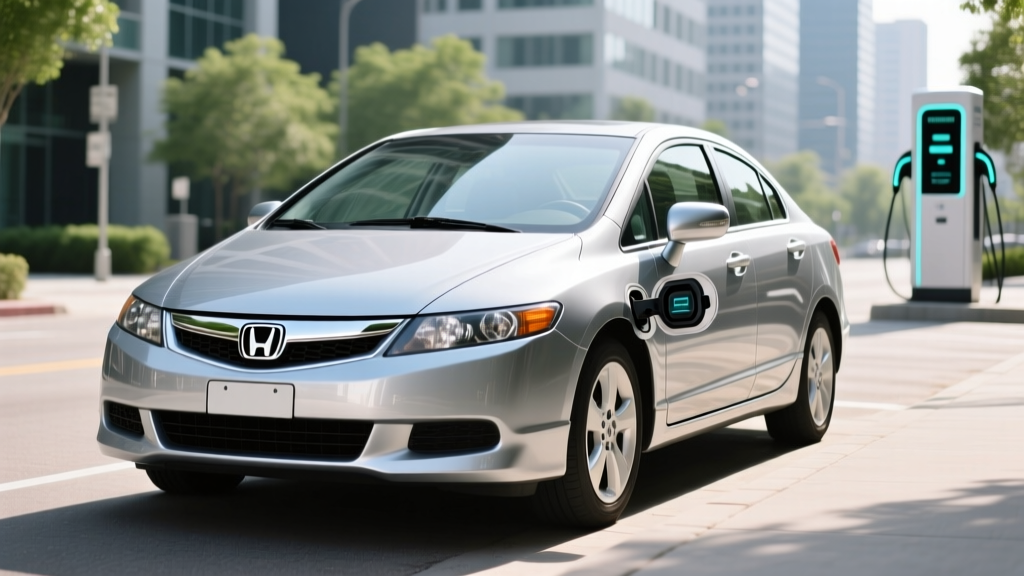
The 2008 Honda Civic Hybrid was one of the most fuel-efficient vehicles available in the U.S. market before Toyota's Prius fully dominated the segment. Built on Honda's Integrated Motor Assist (IMA) system — a conventional hybrid (HEV) that never plugs in — this sedan promised outstanding fuel economy with the practicality of a compact four-door. If you're researching the 08 Honda Civic Hybrid MPG figures as a prospective used-car buyer, a current owner, or simply benchmarking older hybrid tech, this guide covers the exact numbers, real-world expectations, battery longevity, and ownership economics from a 2026 perspective.
Let's be clear upfront: the 2008 Civic Hybrid is a conventional hybrid, not a plug-in. It uses regenerative braking and a small electric motor to assist its 1.3-liter gasoline engine. You never plug it in. There is no electric-only driving range. This distinction matters because many buyers confuse HEVs with PHEVs, and the ownership experience is fundamentally different.
EPA Fuel Economy: City, Highway, and Combined MPG
The 2008 Honda Civic Hybrid came exclusively with a continuously variable transmission (CVT). According to EPA data on fueleconomy.gov, the official ratings are:
| Metric | Value |
|---|---|
| City MPG | 40 MPG |
| Highway MPG | 45 MPG |
| Combined MPG | 42 MPG |
| Fuel Tank Capacity | 12.3 gallons |
| Total Driving Range (EPA) | ~516 miles |
| Annual Fuel Cost (EPA est.) | ~$1,250 (based on 15,000 mi/yr at avg. gas prices) |
Powertrain Specs: Honda's IMA System Explained
The 2008 Civic Hybrid uses Honda's Integrated Motor Assist (IMA) — a mild hybrid architecture that pairs a small electric motor between the engine and transmission. Unlike Toyota's Hybrid Synergy Drive, which can propel the vehicle on electric power alone at low speeds, Honda's IMA system always runs the gasoline engine alongside the electric motor. The engine never fully shuts off during driving (though it does use idle-stop at traffic lights).
| Component | Specification |
|---|---|
| Gasoline Engine | 1.3L i-VTEC inline-4 (8-cylinder via i-VTEC) |
| Engine Horsepower | 95 HP @ 6,000 RPM |
| Electric Motor | Permanent-magnet DC motor, ~20 HP |
| Combined System Output | 110 HP @ 6,000 RPM |
| Combined Torque | 123 lb-ft @ 1,000–2,500 RPM |
| Transmission | CVT (Continuously Variable Transmission) |
| Hybrid Battery | NiMH (Nickel-Metal Hydride), ~0.6 kWh nominal |
| Drivetrain | Front-Wheel Drive |
The IMA system's electric motor is sandwiched between the engine and the CVT, providing torque fill at low RPMs and enabling regenerative braking. The NiMH battery pack is small — roughly 0.6 kWh usable — and sits behind the rear seat. This is not a battery designed for electric-only propulsion; it's an assist-and-recover system.
HEV vs. PHEV vs. EV: Which Powertrain Fits Your Needs?
The 2008 Civic Hybrid is a conventional HEV. Understanding the differences between electrified powertrain types is critical for making the right purchase decision — especially in the used market where options span all three categories.
HEV (This Civic)
- No plug-in required
- 0 miles electric-only range
- Gasoline only for fuel
- 36–42 MPG real-world
- Simplest ownership
- No home charging needed
PHEV (e.g., Prius Prime)
- Plugs in for electric range
- 25–45 miles electric-only
- Gas + electricity for fuel
- 50+ MPG after battery depletes
- Needs home/outlet access
- May qualify for tax credits (new)
BEV (e.g., Model 3, Bolt)
- Plugs in — no gasoline
- 250–400 miles range
- Electricity only
- 100+ MPGe equivalent
- Home charging essential
- Higher upfront cost, lower running
Choose the HEV (this Civic Hybrid) if you have no access to home charging, want maximum simplicity, drive a mix of city and highway, and want proven fuel savings without any plug-in infrastructure. Choose a PHEV if you can install a Level 2 charger or have a 120V outlet near your parking spot and your daily commute is under 40 miles. Choose a BEV if you have reliable home charging, want the lowest per-mile fuel cost, and are ready for the charging-network learning curve.
Battery Longevity, Warranty, and Replacement Cost
The single biggest concern for any used hybrid buyer is battery health. The 2008 Civic Hybrid's NiMH battery pack is now 17–18 years old in most examples on the road. Here's what you need to know:
| Factor | Detail |
|---|---|
| Original Battery Chemistry | NiMH (Nickel-Metal Hydride) |
| Typical Lifespan | 8–12 years / 100,000–150,000 miles |
| Known Failure Rate | Moderate — IMA battery failures were a common complaint on 2006–2011 Civic Hybrids |
| OEM Replacement Cost (Dealer) | $2,000–$3,500 (parts + labor) |
| Aftermarket/Refurbished Pack | $800–$1,800 installed |
| DIY Refurbished Pack | $500–$1,000 (parts only) |
| IMA Warning Light | Dashboard "IMA" light indicates battery system fault |
The IMA battery in the 2006–2011 Civic Hybrid generation had a well-documented history of premature degradation. Honda extended warranties on some model years through class-action settlements. If you're buying a 2008 Civic Hybrid today, the critical question is: has the IMA battery been replaced, and if so, when and with what? A car still on its original NiMH pack at 18 years old is running on borrowed time. Budget $1,000–$2,500 for a replacement unless you have documentation of a recent swap.
Signs of IMA battery degradation include: reduced MPG (dropping into the low 30s or below), the IMA warning light illuminating, the battery gauge showing fewer bars than normal, and the engine running more frequently at idle rather than engaging idle-stop. The car will still drive with a degraded IMA battery — the gasoline engine simply does all the work — but fuel economy drops noticeably.
Reliability and Common Issues Beyond the Battery
The 2008 Civic Hybrid carries a mixed reliability reputation. The conventional Civic (non-hybrid) of this generation is widely regarded as one of the most reliable compact cars ever built. The hybrid variant, however, introduces IMA-specific failure points:
- IMA Battery Failure — The most common and costly issue. NiMH cells degrade unevenly, and the pack's small capacity means even modest degradation is noticeable.
- CVT Transmission — Honda's CVT in this generation is generally reliable but not bulletproof. Fluid changes every 30,000–60,000 miles are recommended. Shuddering or hesitation can indicate worn belt/pulley components.
- Engine Mounts — The 1.3L engine's motor mounts wear faster than non-hybrid Civics due to the frequent idle-stop cycling. Replacement runs $300–$600.
- 12V Battery — Like all hybrids, the 12V auxiliary battery can fail independently of the IMA pack. A dead 12V battery prevents the car from starting even if the hybrid battery is healthy.
- Brake Actuator — Regenerative braking reduces wear on friction brakes, but the brake actuator assembly can develop issues around 100,000+ miles.
For general powertrain reliability, the 1.3L i-VTEC engine itself is robust. Timing chain (not belt) means no scheduled replacement. With proper maintenance, the engine can reach 200,000+ miles. The hybrid system's weak link is the IMA battery — not the engine or transmission.
Tax Credits and Incentives: What Applies in 2026?
Because the 2008 Honda Civic Hybrid is a conventional HEV (not a plug-in), it does not qualify for the federal §30D new clean vehicle tax credit, which applies only to plug-in electric vehicles (PHEVs and BEVs). There is no federal used-EV credit applicable to conventional hybrids either — the IRS used clean vehicle credit (up to $4,000) is reserved for used BEVs and PHEVs purchased through a dealer.
Some states historically offered rebates for hybrid purchases, but nearly all hybrid-specific incentive programs have been sunset or redirected toward plug-in vehicles. As of 2026, no major state incentive programs target conventional HEVs. The Civic Hybrid's financial advantage comes entirely from fuel savings at the pump, not from tax benefits.
Who Should Buy the 2008 Honda Civic Hybrid in 2026?
✓ Buy It If:
- You need an ultra-low-cost commuter with no plug-in requirement
- The IMA battery has been recently replaced with documentation
- You primarily drive in city/stop-and-go traffic (where hybrids shine)
- You want a simple, proven platform with abundant aftermarket parts
- Your budget is under $5,000 and fuel economy is a priority
✗ Skip It If:
- The IMA battery is original and untested (high replacement risk)
- You want electric-only driving capability (look at a PHEV instead)
- You primarily drive highway miles (hybrid advantage diminishes)
- You want modern safety features (no AEB, lane-keep, or backup camera standard)
- You want any tax credit or incentive eligibility
At 18 years old, the 2008 Civic Hybrid is a budget used-car play. Its value proposition rests entirely on fuel economy — and that advantage is real but modest. The non-hybrid 2008 Civic (29 MPG combined) is arguably the safer used buy because it eliminates the IMA battery risk entirely, costing you only ~$560/year more in fuel. If you find a Civic Hybrid with a documented recent IMA battery replacement and the price is right, it remains an efficient daily driver. If the battery status is unknown, factor $1,500–$2,500 into your purchase budget.
Frequently Asked Questions
How many MPG does the 2008 Honda Civic Hybrid get?
The EPA rates the 2008 Honda Civic Hybrid at 40 MPG city, 45 MPG highway, and 42 MPG combined. Real-world owner data typically shows 36–42 MPG combined, with city driving closer to the EPA estimate and sustained highway driving sometimes falling slightly below. A degraded IMA battery can reduce real-world MPG into the low-to-mid 30s.
Does the 2008 Civic Hybrid need to be plugged in?
No. The 2008 Civic Hybrid is a conventional hybrid (HEV). It charges its small NiMH battery through regenerative braking and the gasoline engine. There is no plug, no charging cable, and no electric-only driving mode. You fuel it exclusively with gasoline.
How far can the 2008 Civic Hybrid go on electric power alone?
Zero miles. The IMA system cannot propel the car on electric power alone. The gasoline engine always runs when the vehicle is in motion (except during idle-stop at standstill). The electric motor only assists the engine — it never drives the wheels independently.
Is the 2008 Honda Civic Hybrid reliable?
The engine, transmission, and chassis are generally reliable, but the IMA hybrid battery is a known failure point on this generation. Many 2006–2011 Civic Hybrids experienced premature battery degradation, leading to extended warranty settlements. If the IMA battery has been replaced with a quality unit, the car can be a dependable daily driver. If it's still on the original 18-year-old pack, plan for a replacement.
What does it cost to replace the hybrid battery?
A dealer OEM replacement runs $2,000–$3,500. Aftermarket refurbished NiMH packs installed by independent shops typically cost $800–$1,800. DIY-sourced refurbished packs can be found for $500–$1,000 in parts. Given the car's low resale value (typically $2,500–$5,500 in 2026), a dealer replacement often exceeds the vehicle's worth — making refurbished or aftermarket packs the economically rational choice.
Does the 2008 Civic Hybrid qualify for any tax credit?
No. Federal tax credits under IRS §30D apply only to plug-in electric vehicles (BEVs and PHEVs). The conventional Civic Hybrid has no plug and does not qualify. No current state incentive programs target conventional HEVs either. The only financial benefit is fuel savings.
How does the 2008 Civic Hybrid compare to a 2008 Toyota Prius?
The 2008 Prius is rated at 46 MPG combined (48 city / 45 highway) — notably higher than the Civic Hybrid's 42 MPG combined. The Prius uses Toyota's full hybrid system, which can drive on electric-only power at low speeds, giving it a stronger city MPG advantage. However, the Prius's larger NiMH battery is also a replacement risk on aging examples, though Toyota's hybrid batteries have historically shown better longevity than Honda's IMA packs. The Civic Hybrid offers a more conventional driving feel and a traditional trunk, while the Prius provides a hatchback and slightly better fuel economy.