The 2008 Highlander Hybrid in 2026: Does the MPG Still Hold Up?
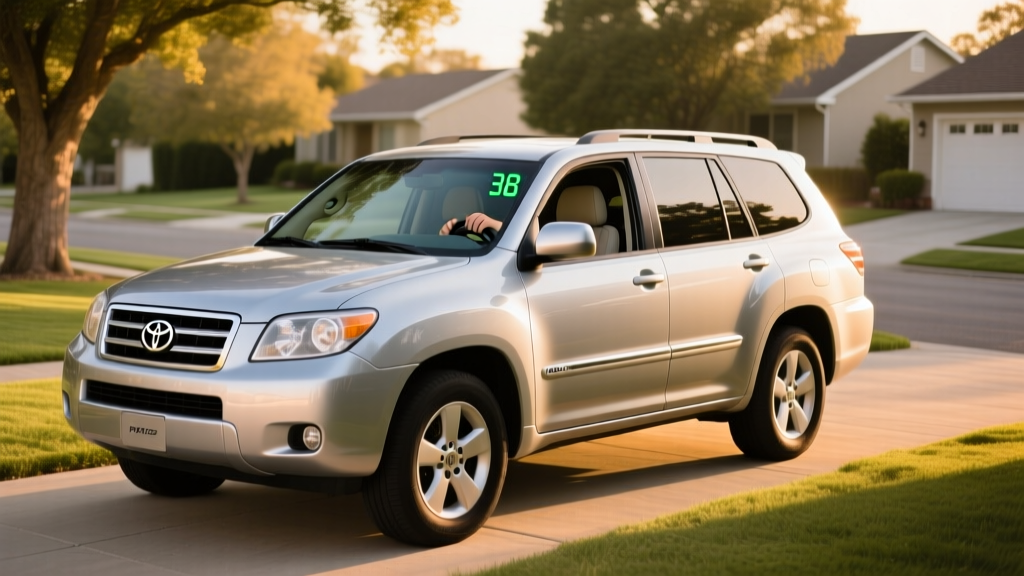
Eighteen years after it rolled off the line, the 2008 Toyota Highlander Hybrid remains one of the most searched legacy hybrids on the used market. Buyers hunting for a three-row SUV that sips fuel are still asking the same question: what kind of 2008 Highlander Hybrid MPG can you actually expect in real-world driving today?
The short answer: the EPA rated it at 26 MPG combined (25 city / 27 highway) when new. In 2026, well-maintained examples routinely return 24–28 MPG depending on driving conditions — and some owners report exceeding the EPA city figure thanks to Toyota's Synergy Drive system favoring electric-only operation at low speeds.
But buying a nearly two-decade-old hybrid in 2026 requires more than an MPG check. Battery health, replacement costs, and how this pioneer stacks up against modern PHEVs and full EVs all factor into the calculus. Here's the complete data-driven breakdown.
2008 Highlander Hybrid: Official EPA MPG vs. Real-World Results
| Metric | EPA Sticker (2008) | Real-World 2026 (Est.) |
|---|---|---|
| City MPG | 25 | 24–28 |
| Highway MPG | 27 | 22–25 |
| Combined MPG | 26 | 23–27 |
| Fuel Tank | 17.2 gal | 17.2 gal |
| Total Range | ~447 miles | ~395–464 miles |
Source: fueleconomy.gov — 2008 Toyota Highlander Hybrid
Powertrain Specs: What's Under the Hood
| Specification | Detail |
|---|---|
| Engine | 3.3L V6 (3MZ-FE) |
| Engine HP | 208 hp @ 5,600 rpm |
| Electric Motor | Front + Rear (eCVT AWD-i) |
| Combined System Output | 270 hp (net) |
| Transmission | eCVT (electronically controlled) |
| Drivetrain | AWD-i (electric rear axle) |
| Hybrid Battery | NiMH, ~6.5 kWh (sealed, non-plug-in) |
| 0-60 mph | ~7.8 seconds |
| Towing Capacity | 3,500 lbs |
This was Toyota's Hybrid Synergy Drive (HSD) architecture — the same lineage as the Prius but scaled for a midsize SUV. The rear electric motor provides on-demand AWD without a mechanical driveshaft, reducing parasitic loss and contributing to the respectable fuel economy for a 4,500-lb vehicle.
HEV vs. PHEV: Where the 2008 Highlander Hybrid Fits
The 2008 Highlander Hybrid is a conventional hybrid (HEV). It does not plug in. The small NiMH battery charges exclusively through regenerative braking and engine-driven generation. There is no electric-only driving range to speak of — the battery assists the gas engine and enables brief EV-mode creeping at very low speeds, but it cannot propel the vehicle on electricity alone for meaningful distances.
| Feature | HEV (2008 Highlander Hybrid) | Modern PHEV (e.g., 2026 RAV4 Prime) | Full BEV (e.g., 2026 Ioniq 5) |
|---|---|---|---|
| Plug-in Charging | No | Yes (Level 1/2) | Yes (Level 1/2/DC) |
| Electric-Only Range | ~0 mi (assist only) | ~42 mi | ~300+ mi |
| Battery Size | ~6.5 kWh NiMH | ~18.1 kWh Li-ion | ~77.4 kWh Li-ion |
| Fuel Required | Yes (regular unleaded) | Yes (regular unleaded) | No |
| Federal Tax Credit (§30D) | Not eligible | Up to $7,500* | Up to $7,500* |
*§30D credit subject to MSRP caps, buyer income limits, and battery sourcing requirements per IRS rules. Verify eligibility with a tax professional.
Hybrid Battery Health in 2026: Lifespan, Warranty, and Replacement Cost
The NiMH battery pack in this generation Highlander Hybrid has proven remarkably durable. Owner forums and repair databases show many units lasting 180,000–250,000 miles before significant capacity loss triggers a check-engine light or noticeable MPG decline. However, at 18 years old, any original battery is living on borrowed time.
Replacement costs in 2026:
- Remanufactured NiMH pack: $1,800–$2,800 (installed)
- New OEM Toyota pack: $3,500–$4,800 (installed, if still available)
- Individual module replacement: $600–$1,200 (only failed modules swapped — requires a qualified hybrid shop)
Before purchasing, request a hybrid battery health check from a Toyota dealer or hybrid specialist. They can read the battery's State of Health (SoH) via OBD-II and check for voltage imbalance across modules. A pack showing more than 15–20% degradation from original capacity is a negotiation point or a budget line item.
2008 Highlander Hybrid: Pros and Cons in 2026
Pros
- Proven Toyota hybrid reliability — HSD powertrain is one of the most durable ever built
- 24–28 MPG real-world in a 3-row AWD SUV remains competitive with some new non-hybrid crossovers
- Low used-market entry price: $5,000–$9,000 depending on mileage and condition
- No plug-in infrastructure needed — fuel and go
- eCVT has no traditional transmission fluid or bands to fail
- 3,500-lb towing for a hybrid of this era
Cons
- Hybrid battery is 18 years old — replacement likely imminent if not already done
- Outdated infotainment: no Apple CarPlay, Android Auto, or modern safety tech
- No EV-only range — this is a fuel-economy assist, not an electric commuter
- Highway MPG dips to 22–25 under load (towing, hills, headwinds)
- NiMH chemistry is heavier and less energy-dense than modern Li-ion packs
- No federal tax credit eligibility (used or new)
Who Should Buy the 2008 Highlander Hybrid — and Who Shouldn't
Choose the 2008 Highlander Hybrid if:
- You need a budget-friendly 3-row SUV with better-than-average fuel economy
- You lack home charging access and can't consider a PHEV or BEV
- You value Toyota's long-term reliability track record and are willing to budget $2,000–$4,000 for a battery replacement
- Your commute is city-heavy, where the hybrid system shines brightest
Look at a modern PHEV or BEV instead if:
- You have home Level 2 charging and a commute under 40 miles — a PHEV like the 2026 RAV4 Prime covers most trips on electricity alone
- You want modern ADAS features (automatic emergency braking, lane-keeping, blind-spot monitoring) — the 2008 model has none
- You want federal tax credit eligibility — new PHEVs and BEVs can qualify for up to $7,500 under §30D, and used EVs can qualify for up to $4,000 under §25E
- Total cost of ownership matters more than upfront price — a new hybrid or PHEV's warranty coverage and fuel savings may offset the higher monthly payment
- Budget under $10K, no charging, need 3 rows: 2008 Highlander Hybrid is a solid pick — budget for battery
- Budget $25K–$40K, have home charging: Used PHEV (RAV4 Prime, Chrysler Pacifica Hybrid) gives you electric commuting + gas backup
- Budget $40K+, want lowest operating cost: New BEV (Kia EV9, Tesla Model Y) eliminates fuel entirely and qualifies for incentives
Frequently Asked Questions
How many MPG does the 2008 Highlander Hybrid get?
The EPA rated it at 25 city / 27 highway / 26 combined. Real-world reports in 2026 cluster around 23–27 combined, with city driving often yielding 26–28 MPG thanks to regenerative braking and electric-motor assist at low speeds.
Does the 2008 Highlander Hybrid plug in?
No. It is a conventional hybrid (HEV), not a plug-in hybrid (PHEV). The battery charges through regenerative braking and the gasoline engine. You never need to plug it in — just fill it with regular unleaded.
Is the 2008 Highlander Hybrid reliable?
Toyota's HSD powertrain from this era is widely regarded as one of the most reliable hybrid systems ever produced. The eCVT eliminates traditional transmission failure points. The main reliability variable in 2026 is hybrid battery age — expect to replace or refurbish the NiMH pack if it hasn't been done already.
What does a hybrid battery replacement cost?
Remanufactured NiMH packs run $1,800–$2,800 installed. New OEM packs (if available) cost $3,500–$4,800. Individual module replacement at a hybrid specialist can be as low as $600–$1,200.
Does the 2008 Highlander Hybrid qualify for any tax credit?
No. The federal §30D new clean vehicle credit and §25E used clean vehicle credit apply only to plug-in electric vehicles (PHEVs and BEVs) meeting specific battery-capacity and sourcing requirements. Conventional hybrids (HEVs) have never qualified for these federal credits. Some states historically offered hybrid rebates, but most have transitioned to plug-in-only incentives.
How does the 2008 Highlander Hybrid compare to a modern hybrid SUV?
A 2026 Toyota Highlander Hybrid achieves an EPA-estimated 35–36 MPG combined — roughly 10 MPG better than the 2008 model — thanks to a more efficient 2.5L four-cylinder hybrid system, lighter Li-ion battery, and improved aerodynamics. The trade-off is a $40,000+ entry price versus $5,000–$9,000 on the used market for the 2008.
Is it worth buying a 2008 Highlander Hybrid in 2026?
It depends on your budget and priorities. At $5,000–$9,000, it remains one of the most affordable ways into a 3-row hybrid SUV with proven reliability. Factor in a potential $2,000–$3,500 battery replacement and the absence of modern safety tech, and it makes sense as a budget-conscious family hauler — not as a long-term primary vehicle if you can afford newer options.