The 2008 Toyota Highlander Hybrid was one of the first mainstream three-row SUVs to pair a V6 engine with an electric motor, promising family-hauler practicality with a meaningful fuel-economy edge over its gas-only sibling. Nearly two decades later, thousands of these vehicles remain on the road — a testament to Toyota's hybrid durability. But if you're considering a used 2008 Highlander Hybrid in 2026, the big question is practical: what kind of 2008 Highlander Hybrid gas mileage can you actually expect today, and what does long-term ownership look like?
This guide covers the EPA figures, real-world MPG data, the hybrid battery's expected lifespan and replacement cost, and how this early-generation HEV stacks up against modern hybrids, PHEVs, and full EVs for budget-minded buyers.
2008 Highlander Hybrid EPA Fuel Economy
The 2008 Highlander Hybrid uses Toyota's Hybrid Synergy Drive (HSD) system — a conventional full hybrid (HEV), not a plug-in hybrid. It generates its own electricity through regenerative braking and the gasoline engine. You never plug it in.
| Metric | Value |
|---|---|
| EPA City | 27 MPG |
| EPA Highway | 25 MPG |
| EPA Combined | 26 MPG |
| Fuel Tank Capacity | 17.2 gallons |
| Total Driving Range | ~447 miles |
| Fuel Type | Regular unleaded (87 octane) |
Source: fueleconomy.gov — 2008 Toyota Highlander Hybrid
For context, the conventional 2008 Highlander V6 AWD was rated at 18 city / 24 highway / 20 combined. The hybrid's 26 MPG combined represents a 30% improvement over the gas model — significant for a 4,500-lb SUV from that era.
Real-World MPG vs. EPA Sticker
Toyota's Synergy Drive system is notably city-biased: the electric motor handles low-speed driving, stop-and-go traffic, and initial acceleration, where the gas engine is least efficient. Owners consistently report:
- City driving: 27–30 MPG (often matching or exceeding the EPA city rating)
- Highway driving (70+ mph): 22–24 MPG (below EPA highway due to aerodynamic drag and the hybrid system's limited highway assist)
- Mixed commuting: 25–27 MPG
- Cold weather / short trips: 22–24 MPG (the engine runs more to heat the cabin and warm the catalytic converter)
Fuelly.com owner data, aggregated across hundreds of fill-ups, puts the real-world average at approximately 25.1 MPG combined — about 1 MPG below the EPA sticker, which is typical for a hybrid of this age with a slightly degraded battery.
Powertrain: How the Hybrid System Works
The 2008 Highlander Hybrid pairs a 3.3-liter V6 gasoline engine (3MZ-FE) with two electric motor-generators and a nickel-metal hydride (NiMH) battery pack. Here's the breakdown:
| Component | Specification |
|---|---|
| Gasoline Engine | 3.3L V6 (3MZ-FE), 208 HP |
| Front Electric Motor | 120 kW (161 HP) |
| Rear Electric Motor (AWD-i) | 50 kW (67 HP) |
| Net Combined System Output | 270 HP |
| Hybrid Battery | NiMH, ~6.5 kWh (not plug-in) |
| Transmission | eCVT (electronically controlled) |
| Drivetrain | AWD-i (electric rear axle, no mechanical driveshaft) |
| 0–60 mph | ~7.8 seconds |
The AWD-i system is worth noting: the rear wheels are driven entirely by the rear electric motor, with no physical connection to the engine. This means AWD engagement is seamless and instant, but the rear motor only activates during acceleration from stops or when the system detects front-wheel slip. At steady highway speeds, the Highlander Hybrid is effectively front-wheel drive.
HEV vs. PHEV — What's the Difference?
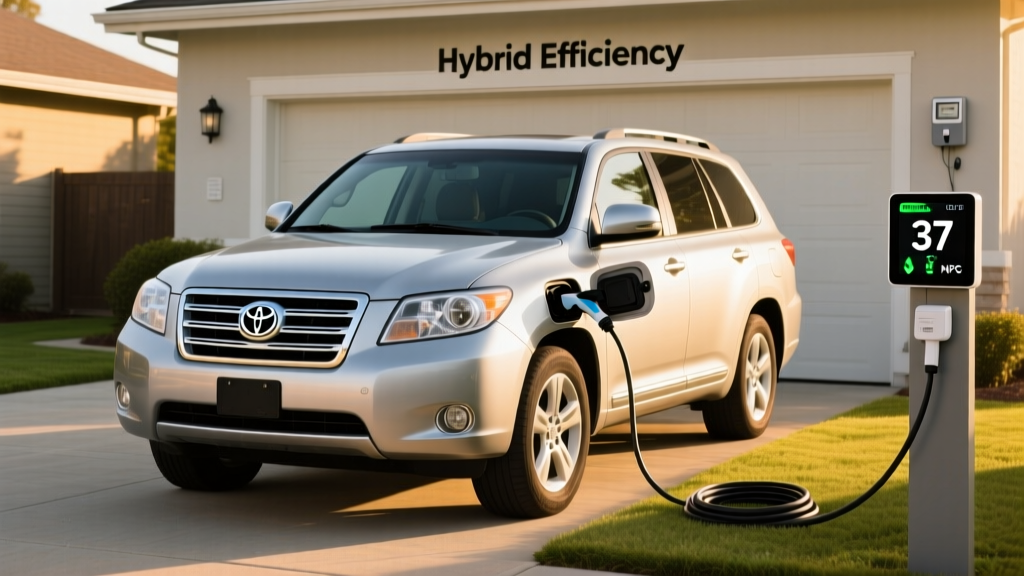
The 2008 Highlander Hybrid is a conventional hybrid (HEV). The battery is small (~6.5 kWh), charges only through regenerative braking and the gas engine, and provides brief electric-only assist at low speeds (typically under 25 mph for short distances). You never plug it in.
A plug-in hybrid (PHEV) — like the current Toyota RAV4 Prime or the Highlander Hybrid's modern PHEV competitors — has a much larger battery (18–20+ kWh), can be plugged into a wall outlet or Level 2 charger, and delivers 30–45 miles of true electric-only driving before the gas engine engages. The 2008 Highlander Hybrid cannot do this.
Hybrid Battery Lifespan and Replacement Cost
This is the single biggest ownership concern for any used hybrid, and it's especially relevant for a vehicle approaching 18 years old. Here's what the data shows:
Battery Warranty & Expected Lifespan
Original warranty: Toyota covered the 2008 Highlander Hybrid battery for 8 years / 100,000 miles (10 years / 150,000 miles in California-emissions states: CA, CT, ME, MA, NJ, NY, OR, RI, VT, WA). That warranty has expired for all 2008 models.
Real-world lifespan: Toyota's NiMH hybrid batteries from this generation typically last 150,000–200,000 miles before significant degradation. Many exceed 200,000 miles with gradual capacity loss rather than sudden failure. The NiMH chemistry degrades more gracefully than early lithium-ion — you'll notice declining MPG and more frequent engine engagement before the battery fails entirely.
| Option | Cost Range | Warranty | Notes |
|---|---|---|---|
| New OEM Toyota Battery | $3,500–$4,500 (parts + labor) | 1 year / 12,000 mi | Dealership install; increasingly difficult to source for this model year |
| Remanufactured Battery | $1,800–$2,800 | 1–3 years varies | Reconditioned cells; quality varies by vendor |
| Individual Cell Module Replacement | $400–$1,200 | Varies | Replace only failed modules; requires a skilled hybrid-shop technician |
| Used/Salvage Battery | $600–$1,200 | 30–90 days typical | Highest risk — remaining lifespan unknown |
Key advice for 2026 buyers: Before purchasing any 2008 Highlander Hybrid, have the hybrid battery tested with a Toyota Techstream diagnostic scan or by a qualified hybrid specialist. The scan reveals individual module voltage differences — a spread greater than 0.3V between modules signals imminent failure. Budget $2,000–$3,500 for a battery replacement unless you have documentation of a recent replacement.
Reliability and Long-Term Ownership Costs
The 2008 Highlander Hybrid's 3MZ-FE V6 engine is one of Toyota's most durable powerplants, with a timing belt (not chain) that should be replaced every 90,000 miles. The eCVT transmission has no traditional gears or clutch packs — it uses a planetary gearset with no wear components, and failures are extremely rare.
Common non-hybrid issues for this model year include:
- Power steering pump leaks (the hybrid uses an electric power steering pump — replacement ~$800–$1,200)
- Water pump failure (should be replaced preventatively with the timing belt)
- Inverter coolant pump (a known failure point; Toyota issued a recall for some model years — verify completion via NHTSA VIN lookup)
- Brake actuator assembly (the regenerative braking system uses an electro-hydraulic actuator that can fail around 120,000–150,000 miles; replacement ~$1,500–$2,200)
With the hybrid battery addressed, annual maintenance costs run $600–$1,000 — comparable to a conventional V6 SUV of this era. Insurance is inexpensive for a vehicle of this age and value.
2008 Highlander Hybrid vs. Modern Alternatives
If you're cross-shopping the 2008 Highlander Hybrid, you're likely weighing it against newer used hybrids, modern PHEVs, or affordable EVs. Here's how the decision breaks down:
| Vehicle Type | Example (Used Market 2026) | Combined MPG / Range | Typical Price | Best For |
|---|---|---|---|---|
| 2008 Highlander Hybrid (HEV) | This vehicle | 26 MPG combined | $5,000–$8,500 | Budget buyers needing 3 rows + AWD |
| Modern HEV (newer used) | 2018–2020 Highlander Hybrid | 29 MPG combined | $22,000–$32,000 | Buyers wanting newer safety tech + better MPG |
| PHEV (3-row) | 2022+ Toyota Grand Highlander Hybrid / Chrysler Pacifica PHEV | 30–35 MPG + 30 mi EV | $35,000–$50,000 | Short-commute families with home charging |
| Full EV (3-row) | Kia EV9 / Tesla Model X (used) | 270–300 mi range | $35,000–$55,000 | Home-charging owners wanting zero gas |
Choose the 2008 Highlander Hybrid If:
- Your total budget is under $10,000 and you need three rows and AWD
- You drive mostly in the city (where the hybrid system shines)
- You have no access to plug-in charging at home or work
- You're comfortable budgeting $2,000–$3,500 for a potential battery replacement
- You want a proven, simple hybrid system with wide aftermarket support
Look at Modern Alternatives If:
- You want current safety features (automatic emergency braking, blind-spot monitoring, lane-keeping — none available on the 2008 model)
- You have home charging access and want PHEV or EV running costs
- You drive primarily highway miles (the hybrid advantage shrinks significantly at 70+ mph)
- You want a warranty — any remaining factory coverage on a 2008 model has expired
Tax Credits and Incentives
The 2008 Highlander Hybrid does not qualify for any current federal tax credit. The IRS §30D Clean Vehicle Credit applies only to new plug-in vehicles (BEVs and PHEVs) meeting battery-sourcing, MSRP, and buyer-income requirements. Conventional hybrids (HEVs) have never qualified for the federal EV credit.
Some states offer modest incentives for used hybrid purchases or hybrid battery replacements, but these vary widely by jurisdiction and change frequently. Check your state's energy office or department of revenue for current programs. A tax professional can confirm eligibility for any local credits.
The Bottom Line
The 2008 Toyota Highlander Hybrid delivers 25–27 MPG in real-world driving — a meaningful improvement over its gas-only counterpart and still competitive with many non-hybrid SUVs on the road today. Its 270-HP powertrain provides confident acceleration, the AWD-i system handles light snow and rain, and the three-row cabin seats seven.
The critical ownership variable is the hybrid battery. At 18 years old, any original battery is near or past its expected lifespan. A replacement adds $2,000–$4,500 to the purchase price — but even with that cost factored in, a well-maintained 2008 Highlander Hybrid at $7,000–$12,000 all-in remains one of the most affordable ways to get a three-row, AWD, hybrid-powered SUV in 2026.
Frequently Asked Questions
How many MPG does the 2008 Highlander Hybrid get in real driving?
Expect 25–27 MPG combined in mixed driving. City driving often reaches 27–30 MPG thanks to the hybrid system's electric motor assist at low speeds. Highway driving at 70+ mph typically drops to 22–24 MPG. Cold weather and short trips reduce economy further, to roughly 22–24 MPG.
Does the 2008 Highlander Hybrid need to be plugged in?
No. It is a conventional hybrid (HEV), not a plug-in hybrid (PHEV). The battery charges through regenerative braking and the gasoline engine. There is no charging port and no electric-only driving range to speak of — the electric motor assists the gas engine but cannot power the vehicle alone at meaningful speeds or distances.
How much does it cost to replace the hybrid battery?
A new OEM battery from Toyota costs $3,500–$4,500 installed, though sourcing new batteries for the 2008 model year is becoming difficult. Remanufactured batteries run $1,800–$2,800. Individual module replacement by a hybrid specialist can cost as little as $400–$1,200 if only a few cells have failed.
Is the 2008 Highlander Hybrid reliable?
Yes, with proper maintenance. The 3MZ-FE V6 engine and eCVT transmission are among Toyota's most durable components. The main risk is the aging hybrid battery and the electro-hydraulic brake actuator. Verify that the inverter coolant pump recall was performed. With a fresh hybrid battery, these vehicles routinely reach 200,000+ miles.
Hybrid vs. PHEV vs. EV — which should I buy?
Choose a conventional hybrid (HEV) like this Highlander if you have no plug-in charging access and want a low-purchase-price, no-behavior-change fuel-economy improvement. Choose a PHEV if you have home charging and a short commute (under 35 miles) — you'll drive mostly on electricity but keep the gas engine for road trips. Choose a full EV if you have reliable home charging, want the lowest per-mile fuel cost, and your daily driving stays within the vehicle's range.
Does the 2008 Highlander Hybrid qualify for any tax credit?
No. The federal §30D Clean Vehicle Credit applies only to new plug-in vehicles (BEVs and PHEVs). Conventional hybrids do not qualify. Some states or utilities may offer small rebates for hybrid battery replacement — check local programs.