Quick Verdict: A Pioneer That Paved the Way
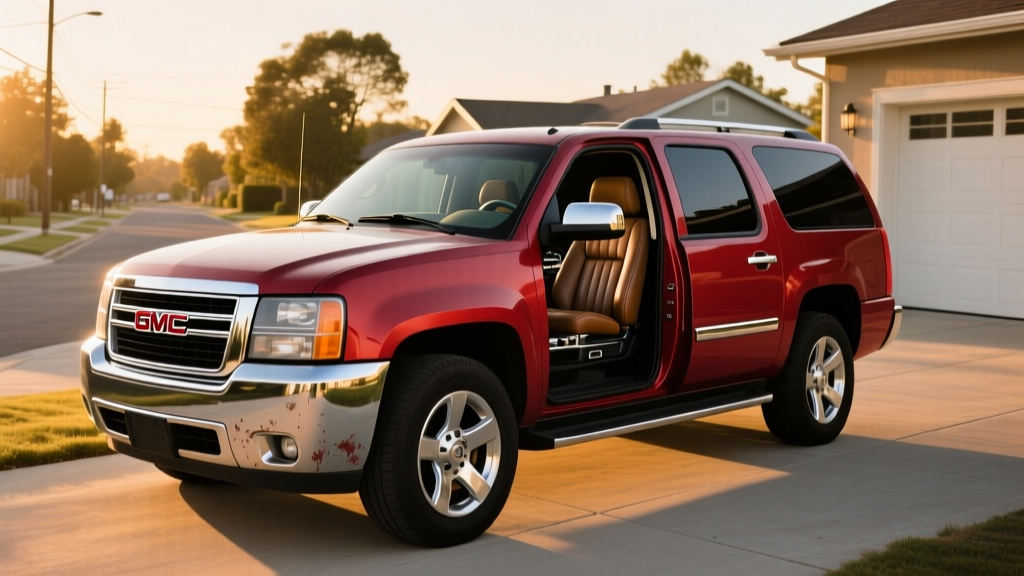
The 2008 GMC Yukon Hybrid was one of the first full-size SUVs to pair a V8 with an electric hybrid system, and it remains a recognizable name on the used market in 2026. With its Two-Mode hybrid powertrain, this truck promised V8 power with noticeably better fuel economy than its gas-only siblings. For used-car shoppers researching the 2008 GMC Yukon Hybrid today, the critical questions are about long-term battery health, real-world MPG after nearly two decades on the road, and whether the hybrid premium still makes financial sense at today's used prices.
This guide breaks down the EPA numbers, real-world fuel economy expectations, the hybrid battery's current state of health, replacement costs, and how the 2008 Yukon Hybrid compares to modern hybrid, PHEV, and full EV alternatives you can buy today.
The 2008 GMC Yukon Hybrid is a conventional hybrid (HEV). It cannot plug into a wall or charger. The battery recharges through regenerative braking and the gasoline engine. If you're looking for electric-only driving or plug-in capability, you'll need a PHEV or a full battery-electric vehicle (BEV) — this truck offers neither.
Powertrain and Hybrid System Specs
The 2008 Yukon Hybrid uses GM's Two-Mode Hybrid system, co-developed with BMW and Chrysler (then DaimlerChrysler). It pairs a 6.0-liter Vortec V8 with Active Fuel Management (cylinder deactivation) and two electric motors integrated into a specially designed 4-speed automatic transmission (the Electrically Variable Transmission, or EVT).
| Spec | Value |
|---|---|
| Engine | 6.0L Vortec V8 (VVT, Active Fuel Management) |
| Engine Output | 332 hp @ 5,100 rpm / 367 lb-ft @ 4,100 rpm |
| Electric Motors | Two AC motors integrated in EVT (60 kW each) |
| Combined System Output | 379 hp |
| Transmission | 2-Mode EVT (Electrically Variable Transmission) |
| Hybrid Battery | ~1.8 kWh Nickel-Metal Hydride (NiMH), 300V nominal |
| Drivetrain | RWD standard; 4WD available |
| Towing Capacity | 5,800 lbs (4WD Hybrid) |
| Curb Weight | ~5,840 lbs |
The Two-Mode system is notably different from the single-mode power-split systems used in the Toyota Prius or Ford Escape Hybrid of the same era. Mode 1 operates at low speeds with an emphasis on electric assist and cylinder deactivation (the V8 drops to four cylinders under light load). Mode 2 engages at highway speeds and under heavy load, providing full V8 power with electric motor assist for seamless acceleration. The result is a full-size SUV that can launch from a stop on electric power alone at very low speeds, though not for any meaningful distance.
Fuel Economy: EPA Ratings and Real-World MPG
Fuel economy was the entire reason the Yukon Hybrid existed, and the numbers were genuinely impressive for a 5,800-pound body-on-frame SUV in 2008.
| Drive Config | City MPG | Highway MPG | Combined MPG |
|---|---|---|---|
| 2WD Hybrid | 21 | 22 | 21 |
| 4WD Hybrid | 20 | 20 | 20 |
| Gas-only 2WD (5.3L V8, for comparison) | 14 | 20 | 16 |
Real-World MPG After 18 Years
Hybrids often exceed their EPA city estimates in stop-and-go traffic because regenerative braking recaptures energy that a gas-only vehicle wastes as heat. The Yukon Hybrid is no exception when the system is healthy. Owner reports on fuel-tracking platforms consistently show 19–22 MPG combined for well-maintained examples.
However, age introduces variables. A degraded NiMH hybrid battery loses some of its charge-and-discharge efficiency, which can drop real-world MPG by 1–3 MPG from the EPA sticker. The Active Fuel Management system (cylinder deactivation) can also develop issues on high-mileage 6.0L Vortec engines, negating one of the hybrid system's key efficiency tricks. If you're evaluating a used 2008 Yukon Hybrid, ask for a hybrid battery state-of-health (SoH) reading from a GM dealer or a shop with a Tech 2 scan tool.
With a 26-gallon fuel tank and 20 MPG combined (4WD), expect roughly 520 miles per tank in mixed driving. Highway-only trips may yield 480–500 miles; city-heavy commutes can push past 540 miles thanks to regenerative braking.
Hybrid Battery: Lifespan, Warranty, and Replacement Cost
The 2008 Yukon Hybrid's NiMH battery pack is the single biggest concern for any used buyer in 2026. Here's what you need to know about its longevity and the cost of keeping this truck on the road.
GM warranted the hybrid battery and related components for 8 years / 100,000 miles (10 years / 150,000 miles in CARB states including California, New York, Massachusetts, and others). As of 2026, the factory warranty has expired on all 2008 models regardless of mileage.
Battery Degradation Reality
NiMH batteries degrade differently than the lithium-ion packs in modern EVs. Rather than a gradual capacity loss that reduces range, NiMH hybrid batteries tend to develop weak individual cells within the pack. This causes the battery management system to limit charge/discharge cycles, which reduces the electric motor's assist capability and lowers fuel economy. Complete failure is less common than partial degradation.
Based on owner data and repair-shop reports, many 2008 Yukon Hybrid battery packs begin showing noticeable degradation between 130,000 and 180,000 miles. Some packs have lasted beyond 200,000 miles with minimal issues, while others have needed service sooner — particularly in hot climates where under-hood temperatures stress the NiMH cells.
Replacement Cost in 2026
| Option | Estimated Cost | Notes |
|---|---|---|
| New OEM GM Battery Pack | $3,500–$5,000 | Availability may be limited; check GM dealer parts departments |
| Remanufactured Pack | $2,000–$3,200 | Most common route; 1–3 year warranty typical |
| Individual Cell Rebuild | $800–$1,500 | Specialist shops replace weak cells; results vary |
| Used/Salvage Pack | $500–$1,200 | Risky — unknown remaining life |
For context, a 2008 Yukon Hybrid in average condition trades for roughly $4,000–$8,000 on the used market in 2026. A $3,000+ battery replacement can represent 40–75% of the vehicle's value, which is a critical factor in the buy-or-pass decision.
Hybrid vs. PHEV vs. Full EV: Where Does the 2008 Yukon Hybrid Fit?
If you're shopping for a three-row family hauler in 2026, you have options the 2008 Yukon Hybrid's original buyers could only dream of. Here's how this 18-year-old HEV compares to the modern alternatives.
| Factor | 2008 Yukon Hybrid (HEV) | Modern PHEV (e.g., Jeep Grand Cherokee 4xe) | Full BEV (e.g., Rivian R1S, Tesla Model X) |
|---|---|---|---|
| Plug-in Required? | No | Yes (for EV range) | Yes |
| Electric-Only Range | None (motor assist only) | 25–40 miles typical | 300–400 miles |
| Combined MPG / MPGe | 20–21 MPG | 56 MPGe (electric) / 23 MPG (gas) | 100+ MPGe |
| Used Price (2026) | $4,000–$8,000 | $35,000–$55,000 | $50,000–$90,000 |
| Federal Tax Credit | None | Up to $7,500 (§30D, new) | Up to $7,500 (§30D, new) |
| Home Charging Needed? | No | Recommended (Level 2) | Essential (Level 2) |
| Towing (3-row SUV) | 5,800 lbs | 6,000–7,200 lbs | 5,000–7,700 lbs |
Does the 2008 GMC Yukon Hybrid Qualify for Any Tax Credit?
No. The 2008 GMC Yukon Hybrid does not qualify for any federal tax credit in 2026. When new, it was eligible for a federal hybrid tax credit under the Energy Policy Act of 2005, but that credit was capped at 60,000 units per manufacturer and GM's allocation was exhausted by mid-2008. Even if it hadn't been, the original hybrid credit expired for purchases after December 31, 2010.
Under current IRS §30D Clean Vehicle Credit rules, only new plug-in hybrids (PHEVs) and battery-electric vehicles (BEVs) with a minimum battery capacity of 7 kWh qualify — and only if they meet MSRP caps, buyer income limits, and battery-component/critical-mineral sourcing requirements. A 2008 conventional hybrid with a ~1.8 kWh NiMH pack meets none of these criteria.
The Used Clean Vehicle Credit (§25E) offers up to $4,000 for qualifying used EVs and PHEVs, but again, conventional hybrids are excluded. There is no federal incentive available for purchasing a used 2008 Yukon Hybrid.
Reliability, Common Issues, and Ownership Costs
Beyond the hybrid battery, the 2008 Yukon Hybrid shares its GMT900 platform with the gas-only Yukon, Tahoe, and Silverado — a platform known for robust frame and suspension durability but with a few recurring trouble spots.
Common Issues to Inspect
- Active Fuel Management (AFM) lifter failure: The cylinder-deactivation system on the 6.0L V8 is prone to collapsed lifters at high mileage, leading to misfires and expensive valvetrain repairs ($2,500–$4,000). Many owners install an AFM disabler module as a preventive measure.
- Hybrid inverter cooling system: The hybrid system has its own coolant loop. Leaks or pump failures can cause the hybrid system to shut down, defaulting the truck to gas-only operation with reduced efficiency.
- Electric power steering: The Yukon Hybrid uses an electrically assisted steering rack (to reduce parasitic engine load). These can fail and are more expensive to replace than a conventional hydraulic rack.
- Standard GMT900 issues: Dashboard cracking, transmission cooler line leaks, and power-folding mirror motor failures are platform-wide and not hybrid-specific.
Annual Ownership Cost Estimate
At current fuel prices (~$3.40/gallon national average in early 2026) and 15,000 miles driven annually, a 2008 Yukon Hybrid (4WD, 20 MPG) would cost approximately $2,550/year in fuel. That compares to roughly $3,640/year for a gas-only 4WD Yukon of the same year (14 MPG combined). The hybrid saves about $1,090 per year at the pump.
However, factor in higher insurance premiums for the hybrid system, the looming battery replacement cost, and the age-related maintenance any 18-year-old vehicle requires. The fuel savings are meaningful but not transformative at this price point.
Who Should Buy the 2008 GMC Yukon Hybrid?
✓ Buy It If:
- You need a body-on-frame, three-row SUV with towing capability on a tight budget (under $8,000)
- Your driving is heavily city/stop-and-go where the hybrid system delivers maximum benefit
- You've verified the hybrid battery SoH and it reads above 70%
- You have access to an independent shop familiar with GM Two-Mode hybrids
- You want V8 power without the worst V8 fuel bills
✗ Pass If:
- The hybrid battery hasn't been tested or is below 60% SoH
- You primarily drive highway miles (the hybrid advantage shrinks significantly)
- You want modern safety tech (the 2008 model lacks automatic emergency braking, lane-keeping, blind-spot monitoring)
- You can stretch your budget to a 2017+ hybrid SUV or a modern PHEV
- You need a federal or state tax incentive to make the numbers work
Frequently Asked Questions
How many MPG does the 2008 GMC Yukon Hybrid get?
The EPA rates the 2WD model at 21 city / 22 highway / 21 combined MPG, and the 4WD at 20/20/20 MPG. In real-world driving with a healthy battery, expect 19–22 MPG combined. City-heavy routes favor the hybrid system; steady highway cruising narrows the gap with the gas-only model.
Can the 2008 Yukon Hybrid drive on electric power alone?
Only at very low speeds (under ~25 mph) and for extremely short distances — think creeping through a parking lot. The ~1.8 kWh NiMH battery is far too small for meaningful electric-only driving. This is a conventional hybrid that uses electric motors to assist the V8, not to replace it.
Is the 2008 GMC Yukon Hybrid reliable?
The GMT900 platform is structurally robust, and the Two-Mode hybrid system has proven more durable than many expected. The main reliability risks are the hybrid battery (degradation after 130K–180K miles), the Active Fuel Management lifter issue on the 6.0L V8, and the electric power steering system. A pre-purchase inspection by a GM-knowledgeable mechanic is strongly recommended.
What does it cost to replace the hybrid battery?
A remanufactured NiMH battery pack — the most common replacement route — costs $2,000–$3,200 installed. A new OEM pack, if available, runs $3,500–$5,000. Given that the vehicle itself is worth $4,000–$8,000, a battery failure is often a total-loss event for owners who can't find a cost-effective repair.
Does the 2008 Yukon Hybrid qualify for any tax credit?
No. It is a conventional hybrid (HEV), not a plug-in hybrid or EV. Neither the federal §30D new-vehicle credit nor the §25E used-vehicle credit applies to conventional hybrids. The original hybrid tax credit available when the vehicle was new has long since expired.
How does it compare to a modern hybrid SUV like the Toyota Grand Highlander Hybrid?
The 2026 Toyota Grand Highlander Hybrid delivers 36 MPG combined with a modern hybrid powertrain, standard AEB, adaptive cruise, and a full factory warranty — but starts at roughly $47,000. The 2008 Yukon Hybrid costs a fraction of that upfront but carries age-related maintenance risk, no modern safety features, and 16 fewer MPG. The right choice depends entirely on your budget and how long you plan to keep the vehicle.