The Original Full-Size Hybrid SUV: A 2026 Used-Buyer Assessment
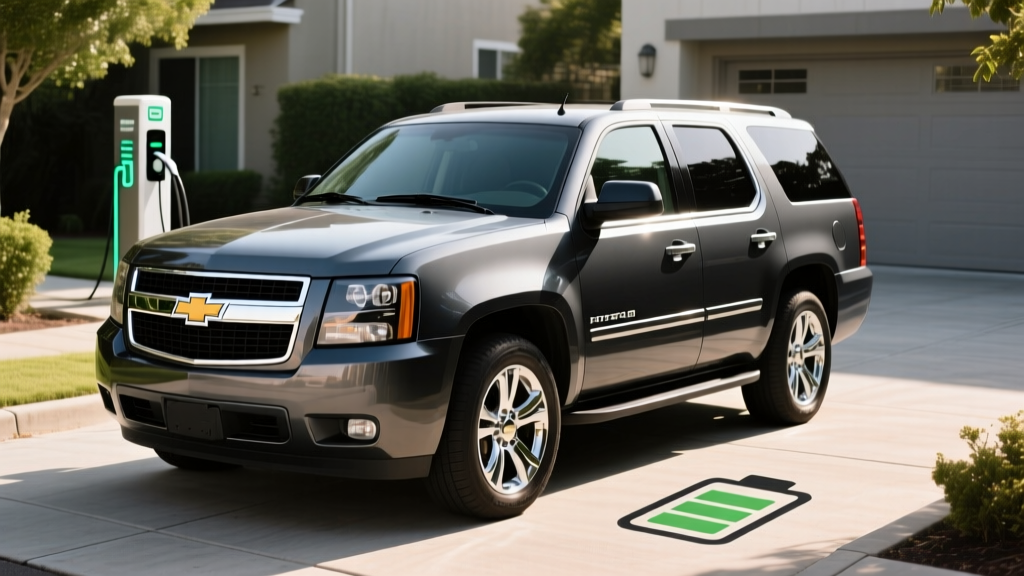
Long before plug-in hybrids dominated family-hauler conversations, General Motors bet big on the Two-Mode Hybrid system. The 2008 Chevrolet Tahoe Hybrid was the result: a body-on-frame, three-row SUV that paired a 6.0L V8 with two electric motors inside a specialized transmission. It was the first full-size hybrid SUV ever sold in the United States, and it arrived at a moment when $4-per-gallon gasoline made large-vehicle buyers reconsider their options.
Nearly two decades later, the 2008 Tahoe Hybrid occupies a curious spot in the used market. It offers legitimate fuel savings over its gas-only siblings, but it also carries the weight of an early-generation hybrid system that is now well outside its warranty window. If you are considering one in 2026, you need clear numbers on what it actually delivers at the pump, what the battery replacement looks like, and how it stacks up against modern hybrid, PHEV, and full-EV alternatives.
HEV vs PHEV: What the 2008 Tahoe Hybrid Actually Is
Conventional Hybrid (HEV): The 2008 Tahoe Hybrid is a conventional hybrid, not a plug-in. It has no charging port, no electric-only driving range to speak of, and no kWh battery you can refill from a wall outlet. The nickel-metal hydride (NiMH) pack is small — roughly 1.8 kWh — and is recharged exclusively through regenerative braking and the gasoline engine.
Plug-in Hybrid (PHEV): A PHEV (like the current Toyota RAV4 Prime or Chrysler Pacifica Hybrid) carries a much larger battery (typically 15-25 kWh), offers 25-45 miles of electric-only range, and must be plugged in to realize its full efficiency benefit. The 2008 Tahoe Hybrid does none of this. If you see it advertised as a "plug-in," that listing is wrong.
This distinction matters because used-car listings frequently conflate the two. The Tahoe Hybrid saves fuel by supplementing the V8 with electric assist and enabling cylinder deactivation (Active Fuel Management) — not by running on electricity alone.
Fuel Economy: EPA Numbers and Real-World MPG
| Metric | 2008 Tahoe Hybrid (2WD) | 2008 Tahoe Hybrid (4WD) | 2008 Tahoe Gas 5.3L V8 (2WD) |
|---|---|---|---|
| City MPG | 21 | 20 | 14 |
| Highway MPG | 22 | 20 | 19 |
| Combined MPG | 21 | 20 | 16 |
Source: EPA / fueleconomy.gov
The headline figure is the 21 MPG combined rating for the two-wheel-drive model. In the context of 2008 full-size SUVs, that was remarkable — a roughly 31% improvement over the gas-only 5.3L Tahoe. For a 5,000-plus-pound vehicle, hitting 21 combined was genuinely impressive engineering.
Real-World MPG Expectations: Hybrids tend to exceed their EPA city ratings in stop-and-go driving, where regenerative braking and electric assist do the most work. Owners frequently report 22-24 MPG in mixed city driving. However, sustained highway cruising at 75+ MPH diminishes the hybrid advantage — expect 18-20 MPG on the interstate. Towing drops economy further, often into the 13-15 MPG range depending on trailer weight.
Active Fuel Management (AFM) deactivates four of the eight cylinders under light loads, and the Two-Mode transmission's electric motors can propel the Tahoe at very low speeds (under ~30 MPH in stop-and-go) on electric power alone for brief stretches. This is not a usable EV range — it is a low-speed assist that shaves fuel consumption in traffic.
Two-Mode Hybrid Powertrain: Specs and How It Works
| Specification | Detail |
|---|---|
| Engine | 6.0L Vortec V8 (VVT, AFM cylinder deactivation) |
| Engine Power | 332 hp @ 5,200 rpm |
| Electric Motors | Two 60-kW motors integrated in transmission |
| Combined System Power | 379 hp |
| Transmission | Two-Mode CVT (electronically variable) |
| Battery Type | Nickel-Metal Hydride (NiMH), ~1.8 kWh, 300V |
| Drivetrain | 2WD or 4WD (4WD uses modified transfer case) |
| Towing Capacity | 5,800 lbs (2WD) / 5,600 lbs (4WD) |
| 0-60 MPH | ~7.8 seconds (estimated) |
| Curb Weight | ~5,770 lbs |
The Two-Mode system, co-developed with BMW and Chrysler (then DaimlerChrysler), uses two electric motors embedded in a specially designed continuously variable transmission. In "Mode 1," the system operates like a conventional hybrid CVT at low speeds, using the electric motors for smooth acceleration and regenerative braking. In "Mode 2," the transmission locks into fixed gear ratios for highway cruising and towing, where traditional CVTs lose efficiency.
This dual-mode approach solved a fundamental problem with early hybrid systems: they were efficient in the city but offered little benefit — or even a penalty — at highway speeds. The Tahoe Hybrid's 22 MPG highway rating (2WD) proved the concept worked, though it came at the cost of considerable mechanical complexity.
Battery Life, Warranty, and Replacement Cost
Original Battery Warranty: GM covered the hybrid battery and related components for 8 years / 100,000 miles (10 years / 150,000 miles in CARB states like California, New York, and Massachusetts). For a 2008 model, this warranty expired no later than 2018 in most states or 2018-2020 in CARB states depending on in-service date.
Current Status (2026): Any 2008 Tahoe Hybrid you find today is well outside factory warranty coverage. Battery replacement is an out-of-pocket expense.
Battery Replacement Cost: A refurbished or rebuilt NiMH hybrid battery pack for the 2008 Tahoe Hybrid typically runs $2,500 to $4,500 installed, depending on the supplier and whether you go through a dealership or an independent hybrid specialist. New-old-stock GM packs are essentially unavailable. Several aftermarket companies offer reconditioned units with 1- to 3-year warranties.
Degradation Reality: NiMH batteries are robust but not immune to age. At 18 years old, most original packs will have lost significant capacity. The good news is that the Tahoe Hybrid's system does not rely on large battery reserves — even a degraded pack still provides regenerative braking and electric assist, though fuel economy may drop 1-3 MPG from original ratings. If the hybrid battery fails completely, the vehicle will typically still drive on the gasoline engine alone, but the check-engine light will illuminate and efficiency will drop to roughly gas-only levels (16-17 MPG combined).
What to Check Before Buying:
- Ask whether the hybrid battery has been replaced and get documentation
- Use an OBD-II scanner to check hybrid battery State of Health (SoH) and individual module voltages — large voltage spreads between modules indicate a failing pack
- Look for warning messages like "Service Hybrid System" on the dash
- Verify the 300V high-voltage cabling shows no corrosion or damage
Pricing, Tax Credits, and Total Cost Considerations
The 2008 Tahoe Hybrid originally carried an MSRP starting around $50,490 — a substantial premium over the gas-only Tahoe LT (roughly $38,000 at the time). That price gap was partly offset by a now-expired federal tax credit of up to $2,200, which phased out for GM hybrids in 2010.
Used Market Pricing (2026): Expect to pay between $4,500 and $9,000 for a 2008 Tahoe Hybrid depending on mileage, condition, and whether the hybrid battery has been serviced. Examples with over 180,000 miles and an original (likely degraded) battery sit at the low end; lower-mileage trucks with a recent battery replacement command the high end.
Federal Tax Credit Eligibility: The 2008 Tahoe Hybrid does not qualify for the current IRS §30D Clean Vehicle Credit. That credit applies only to new qualifying EVs and PHEVs (and used EVs/PHEVs under §25E). Conventional hybrids like the Tahoe Hybrid are not eligible for any current federal purchase incentive. Some states may offer minimal incentives for any electrified vehicle, but these are rare for conventional hybrids — check your state's energy office for specifics.
Reliability: What 18 Years of Data Tells Us
The Two-Mode Hybrid system was sophisticated, and sophistication in a first-year production run inevitably means some early-adopter pain. Common issues reported by long-term owners and documented on NHTSA include:
- Hybrid battery failure — typically between 120,000 and 160,000 miles; cost manageable with aftermarket options
- Active Fuel Management (AFM) lifter failure — a known issue on GM's 6.0L Vortec V8 where cylinder-deactivation lifters collapse, causing misfires and potential engine damage; aftermarket AFM disablers exist
- Transmission cooling line leaks — the Two-Mode transmission generates heat; cooling lines can weep or fail at high mileage
- Electric power steering issues — the Tahoe Hybrid uses an electric steering pump, which can fail and is costly to replace
- Standard Tahoe issues — rust on body mounts, power window regulator failure, and instrument cluster stepper motor failures are common across all 2007-2014 GMT900 Tahoes
The hybrid-specific components (battery, motors, inverter) have proven reasonably durable when properly maintained, but parts availability is narrowing as the platform ages. Independent hybrid shops are generally a better resource than dealerships for this generation.
2008 Tahoe Hybrid vs Modern Alternatives: Who Should Buy What
Choose the 2008 Tahoe Hybrid if:
- You need a body-on-frame, three-row SUV with genuine towing capability (5,800 lbs) on a budget under $10,000
- You drive a city-heavy commute where the hybrid system delivers its best MPG advantage
- You are comfortable with the risk of a potential $3,000-$4,500 battery replacement
- You value the V8's passing power and truck-based durability
Choose a modern PHEV (e.g., Chrysler Pacifica Hybrid, Toyota Grand Highlander Hybrid) if:
- You want 30+ miles of electric-only range for daily driving and have access to Level 2 home charging
- You prefer current safety tech (automatic emergency braking, lane-keeping assist, adaptive cruise)
- You want a factory battery warranty (10 years / 150,000 miles on most new PHEVs)
- You qualify for the §30D or §25E federal tax credits
Choose a full EV (e.g., Rivian R1S, Kia EV9) if:
- You have reliable home Level 2 charging and your daily drives fall within 250-300 miles
- You want zero tailpipe emissions and minimal powertrain maintenance
- You can absorb a higher purchase price offset by lower fuel and maintenance costs
Pros
- 21 MPG combined in a 5,770-lb SUV — still competitive with some modern non-hybrid V6 SUVs
- Genuine 5,800-lb towing capacity with hybrid efficiency benefits at low speeds
- Spacious three-row cabin with the same utility as any GMT900 Tahoe
- 379 combined system horsepower — stronger than the base 5.3L gas Tahoe
- Low used purchase price ($4,500-$9,000)
Cons
- 18-year-old hybrid battery is out of warranty and likely degraded or replaced
- No electric-only range — this is a conventional hybrid, not a PHEV
- Missing modern safety features (no AEB, no lane-keeping, no adaptive cruise)
- AFM lifter failure risk on the 6.0L V8 can lead to expensive engine repairs
- Parts availability for hybrid-specific components is shrinking
- No federal or state tax credit eligibility
FAQ: Common Questions About the 2008 Chevrolet Tahoe Hybrid
How many MPG does the 2008 Tahoe Hybrid get?
The EPA rates the 2WD model at 21 city / 22 highway / 21 combined MPG. The 4WD model is rated at 20/20/20. In real-world driving, city-heavy commutes often yield 22-24 MPG, while sustained highway driving drops to 18-20 MPG. Towing reduces economy further, typically to 13-15 MPG.
Can the 2008 Tahoe Hybrid drive on electric power only?
Only at very low speeds (under ~30 MPH) and for very short distances. This is not a usable electric-only range — it is a low-speed assist feature that reduces fuel consumption in stop-and-go traffic. The Tahoe Hybrid is a conventional HEV with no plug and no meaningful EV mode.
How much does it cost to replace the hybrid battery?
Expect to pay $2,500 to $4,500 for a refurbished NiMH battery pack, installed. New OEM packs from GM are essentially unavailable. Aftermarket reconditioned units from hybrid specialists are the most common option, typically carrying a 1- to 3-year warranty.
Is the 2008 Tahoe Hybrid reliable?
The hybrid system itself is reasonably durable, but at 18 years old, age-related failures are expected. The biggest concerns are the hybrid battery (if not yet replaced), Active Fuel Management lifter collapse on the 6.0L V8, and electric power steering pump failure. A pre-purchase inspection by a hybrid-experienced mechanic is essential.
Does the 2008 Tahoe Hybrid qualify for any tax credit?
No. The original federal hybrid tax credit (up to $2,200) expired for GM vehicles in 2010 and applied only to the original purchaser. The current IRS §30D Clean Vehicle Credit and §25E Used Clean Vehicle Credit apply only to plug-in vehicles (EVs and PHEVs), not conventional hybrids. There are no federal incentives available for purchasing a used 2008 Tahoe Hybrid in 2026.
Can I tow with the 2008 Tahoe Hybrid?
Yes. The 2WD model is rated for 5,800 pounds and the 4WD for 5,600 pounds. The Two-Mode transmission's fixed-gear "Mode 2" was specifically designed to handle towing loads efficiently. Expect fuel economy to drop to 13-15 MPG while towing, which is still slightly better than the gas-only Tahoe's towing economy.
Should I buy a 2008 Tahoe Hybrid or a newer hybrid SUV?
It depends on your budget and needs. If you need a truck-based SUV with real towing capacity for under $10,000, the Tahoe Hybrid is one of very few options. If you can spend $35,000+, a modern hybrid or PHEV SUV (Toyota Grand Highlander Hybrid, Ford Explorer Hybrid) will offer better reliability, modern safety tech, and remaining factory warranty. For daily commuting with home charging, a PHEV with 30+ miles of electric range will save more fuel than the Tahoe Hybrid ever could.