2008 Camry Hybrid MPG: The Numbers That Still Matter in 2026
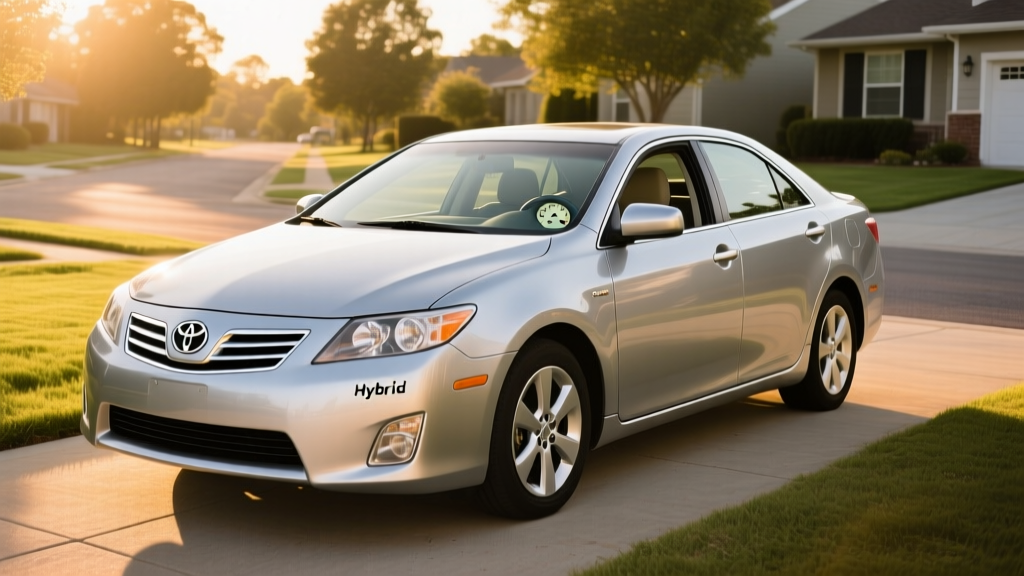
The 2008 Toyota Camry Hybrid was one of the first mainstream midsize sedans to prove that hybrid technology could deliver meaningful fuel savings without sacrificing daily usability. Nearly two decades later, it remains a popular used-car choice for buyers seeking low running costs. If you're researching the 2008 Camry Hybrid MPG before purchasing a surviving example, this guide covers the EPA ratings, real-world fuel economy data, battery longevity expectations, and whether this early hybrid still makes financial sense in 2026.
| EPA Fuel Economy | 33 city / 34 highway / 34 combined MPG |
| Powertrain | 2.4L 4-cylinder + electric motor (192 hp combined) |
| Transmission | eCVT (electronically controlled continuously variable) |
| Hybrid Battery | 1.3 kWh nickel-metal hydride (NiMH) |
| 0–60 mph | ~8.6 seconds |
| Drivetrain | Front-wheel drive |
| Original MSRP | ~$26,700 (base) |
| Hybrid Battery Warranty (Original) | 8 years / 100,000 miles (10 yr/150,000 mi in CARB states) |
EPA Ratings vs. Real-World MPG: What Owners Actually Report
The EPA rated the 2008 Camry Hybrid at 33 MPG city, 34 MPG highway, and 34 MPG combined. These numbers were competitive for the era, though they look modest next to today's Toyota Prius (57 combined) or the current-generation Camry Hybrid (52 combined).
Real-world data from Fuelly and owner forums tells a more nuanced story. Many owners report 30–36 MPG in mixed driving, with city-heavy commutes sometimes pushing above the EPA city rating — a hallmark of series-parallel hybrid systems that recapture braking energy in stop-and-go traffic. Highway-only driving at 75+ mph tends to drop economy to 28–31 MPG, as the electric motor contributes less at sustained high speeds and the 2.4L engine carries most of the load.
| Driving Scenario | EPA Estimate | Real-World Range |
|---|---|---|
| City (stop-and-go) | 33 MPG | 32–37 MPG |
| Highway (65–75 mph) | 34 MPG | 28–33 MPG |
| Combined mixed driving | 34 MPG | 30–36 MPG |
| Cold weather (below 32°F) | N/A | 26–30 MPG |
Cold weather reduces MPG by 10–20% in any hybrid. The engine runs more frequently to maintain cabin heat, the battery's internal resistance increases, and winter fuel blends contain less energy per gallon. If you live in northern climates, budget for 26–30 MPG in winter.
Understanding the Powertrain: HEV, Not PHEV
The 2008 Camry Hybrid is a conventional hybrid electric vehicle (HEV), not a plug-in hybrid (PHEV). This distinction matters for buyers cross-shopping used hybrids:
| Feature | HEV (2008 Camry Hybrid) | PHEV (e.g., Prius Prime) |
|---|---|---|
| Plug-in charging | No — charges via regenerative braking and engine | Yes — plugs into Level 1/Level 2 |
| Electric-only range | ~1 mile at low speed | 25–44 miles (modern PHEVs) |
| Battery size | 1.3 kWh | 8.8–18.1 kWh |
| DC fast charging | No | Some models (varies) |
| Federal tax credit (new) | Never eligible | Up to $7,500 under §30D (if eligible) |
The Camry Hybrid's 1.3 kWh NiMH battery is small by today's standards. It enables brief electric-only movement at parking-lot speeds and assists the gasoline engine during acceleration, but it cannot sustain electric-only driving beyond about one mile at very low speeds. You never plug this car in — all energy comes from the gasoline engine and regenerative braking.
The combined output of the 2.4-liter Atkinson-cycle four-cylinder engine and the permanent-magnet electric motor is 192 net horsepower. The eCVT provides seamless power delivery without the shift shock of a conventional automatic. Acceleration is adequate for merging and passing, though the engine drone under hard acceleration is a known characteristic of Toyota's hybrid synergy drive system.
Hybrid Battery Lifespan and Replacement Cost
This is the single most important question for anyone buying a 2008 Camry Hybrid in 2026: is the hybrid battery still alive, and what does it cost to replace?
Original Hybrid Battery Warranty: Toyota covered the 2008 Camry Hybrid battery for 8 years/100,000 miles nationwide and 10 years/150,000 miles in CARB states (California, New York, Massachusetts, and others adopting California emissions standards). All factory warranty coverage expired no later than 2018.
NiMH hybrid batteries in this generation of Toyota hybrids have proven remarkably durable. Many 2008 Camry Hybrids have reached 200,000+ miles on the original battery pack. The NiMH chemistry is less energy-dense than modern lithium-ion but tolerates the shallow charge-discharge cycles of hybrid operation well. Toyota's battery management system keeps the NiMH pack between roughly 40% and 80% state of charge, avoiding the deep cycles that accelerate degradation.
That said, at 17+ years old, any original battery is living on borrowed time. Heat is the primary enemy — cars in Arizona, Texas, and the Southeast are more likely to have experienced battery failure than those in cooler climates.
Battery replacement costs in 2026:
- New OEM Toyota battery: $2,500–$3,500 installed at a dealership
- Refurbished/remanufactured battery: $1,200–$2,000 installed at an independent hybrid specialist
- Individual cell module replacement: $400–$800 if only a few modules are weak (requires a shop with hybrid battery diagnostic capability)
Before purchasing any 2008 Camry Hybrid, request a hybrid battery health check. A qualified technician can read the battery's internal resistance values and voltage delta across modules using Toyota's Techstream diagnostic tool or an aftermarket OBD-II reader with hybrid capability. A voltage spread greater than 0.20V between the highest and lowest modules suggests impending failure.
Reliability and Common Issues Beyond the Battery
The 2008 Camry Hybrid benefits from Toyota's reputation for mechanical longevity. The 2AZ-FXE engine is a proven design, and the eCVT transmission has no traditional clutch packs or bands to wear — it's a planetary gearset that's essentially bulletproof with basic fluid maintenance.
Known issues to check before buying:
- Brake actuator assembly: The regenerative braking system uses an electro-hydraulic brake actuator that can fail on high-mileage examples. Symptoms include a firm brake pedal, ABS warning light, and a diagnostic code for the brake actuator. Replacement runs $1,200–$1,800.
- Electric water pump: The inverter cooling system uses an electric water pump that can fail silently. If the inverter overheats, the car enters a limp mode. Check for coolant flow in the inverter coolant reservoir with the car in READY mode.
- 12V auxiliary battery: Like all hybrids, the Camry has a conventional 12V battery (located in the trunk) that powers the computers and accessories. It typically lasts 3–5 years. A dead 12V battery will prevent the car from starting, even if the hybrid battery is fully charged.
- Dashboard cracking: The 2007–2009 Camry generation is known for dashboard surface cracking in sun-exposed climates. Cosmetic only, but affects resale value.
With proper maintenance, the powertrain is easily capable of 250,000–300,000 miles. The hybrid system adds complexity but not fragility — the components are overbuilt for their thermal and electrical loads.
Tax Credits and Incentives: What Applies in 2026?
The 2008 Camry Hybrid does not qualify for any federal tax credit, whether purchased new or used. When sold new, conventional hybrids (HEVs) were never eligible for the federal plug-in vehicle tax credit. A separate Advanced Technology Vehicle credit that existed for early hybrids (including the Camry Hybrid) was capped by manufacturer volume and expired for Toyota buyers long ago.
Under the current IRS §30D clean vehicle credit rules, only plug-in electric vehicles (BEVs and PHEVs with at least 7 kWh of battery capacity) qualify. The 2008 Camry Hybrid's 1.3 kWh pack falls far short of this threshold.
For used-EV buyers, the §25E used clean vehicle credit (up to $4,000 or 30% of sale price, whichever is less) also requires a plug-in vehicle with at least 7 kWh. The Camry Hybrid does not qualify.
Some states offer registration fee reductions or HOV lane access for hybrids, but most of these programs have expired or transitioned to plug-in vehicles only. Check your state's current incentives on the Alternative Fuels Data Center.
2008 Camry Hybrid vs. Modern Alternatives: Is It Worth Buying?
Pros
- Low purchase price: $3,000–$6,000 in 2026 used market
- 30–36 MPG real-world combined reduces fuel costs significantly vs. a gas Camry (22–25 MPG)
- Proven Toyota reliability with widely available parts and hybrid-capable mechanics
- No charging infrastructure required — works as a gas car with better economy
- Smooth, quiet low-speed driving on electric assist
Cons
- Hybrid battery replacement risk ($1,200–$3,500) on a car worth $3,000–$6,000
- Outdated safety tech: no automatic emergency braking, lane-keeping, or blind-spot monitoring
- Modest fuel economy vs. modern hybrids (2026 Camry Hybrid: 52 combined MPG)
- No EV mode, no plug-in capability, no tax credit eligibility
- Brake actuator and inverter pump repairs can total the car economically
Who should buy the 2008 Camry Hybrid? Budget-conscious commuters who drive 15,000+ miles per year in city or mixed conditions and want to minimize fuel costs without a large upfront investment. If you can find a well-maintained example with a recently replaced hybrid battery (or verified battery health), the math works: at 34 MPG and $3.20/gallon gas, you'll spend roughly $1,410/year on fuel for 15,000 miles of driving. A comparable gas Camry at 24 MPG would cost $2,000/year — a $590 annual savings.
Who should look elsewhere? If your budget allows $20,000+, a used 2020–2023 Camry Hybrid delivers 52 combined MPG with modern safety features (Toyota Safety Sense 2.0/2.5), a fresh battery warranty, and lower long-term repair risk. If you have home charging access and want maximum fuel savings, a used PHEV like the Prius Prime offers 25–40 miles of electric-only range before the engine starts.
Frequently Asked Questions
How many MPG does the 2008 Camry Hybrid get?
The EPA rates it at 33 city / 34 highway / 34 combined. Real-world owners report 30–36 MPG combined, with city driving sometimes exceeding the EPA rating due to regenerative braking. Cold weather reduces this by 10–20%.
Does the 2008 Camry Hybrid need to be plugged in?
No. It is a conventional hybrid (HEV), not a plug-in. The battery charges through regenerative braking and the gasoline engine. You fuel it like any other car.
How far can the 2008 Camry Hybrid drive on electric power alone?
Effectively less than one mile, and only at very low speeds (under 25 mph). The electric motor primarily assists the gas engine during acceleration and enables engine-off coasting — it does not provide meaningful electric-only range.
Is the 2008 Camry Hybrid reliable?
Yes, with caveats. The powertrain is proven to 250,000+ miles. The main risks are hybrid battery failure ($1,200–$3,500 to replace), brake actuator failure ($1,200–$1,800), and inverter cooling pump failure. A pre-purchase hybrid battery health check is essential.
Does the 2008 Camry Hybrid qualify for any tax credit?
No. Federal tax credits under §30D and §25E require plug-in vehicles with at least 7 kWh of battery capacity. The Camry Hybrid's 1.3 kWh NiMH pack does not qualify. No state incentives specifically target this model in 2026.
What does it cost to replace the hybrid battery?
A new OEM battery from Toyota costs $2,500–$3,500 installed. Refurbished batteries from hybrid specialists run $1,200–$2,000 installed. Individual module replacement is possible for $400–$800 if only a few cells have failed.
Hybrid vs. PHEV vs. EV — which should I choose?
Choose a conventional hybrid (HEV) if you want better fuel economy with zero lifestyle changes — no charging, no range planning. Choose a plug-in hybrid (PHEV) if you have home charging and want 25–44 miles of electric-only commuting with a gas engine for longer trips. Choose a full EV (BEV) if you want zero tailpipe emissions, lower per-mile fuel costs, and have reliable charging access at home or work.