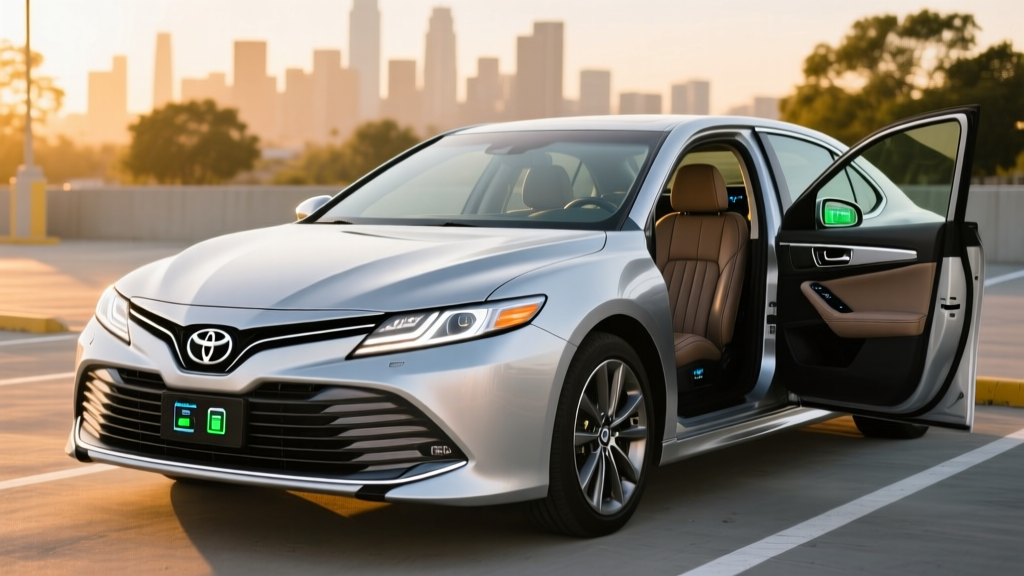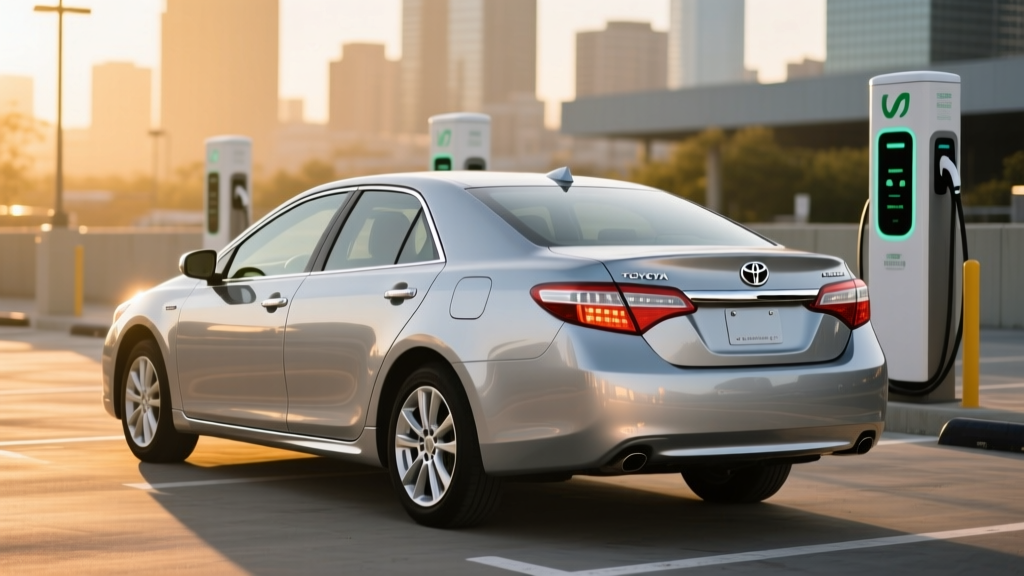
If you're researching the 08 Camry Hybrid in 2026, you're likely considering one of the most durable used hybrids on the road. Nearly two decades after it rolled off the line, the 2008 Toyota Camry Hybrid remains a fixture in the used-car market — a testament to Toyota's early hybrid engineering. But with high mileage examples now common and original batteries well past their warranty window, prospective buyers need hard data on MPG, battery replacement costs, and whether this HEV still makes financial sense against modern hybrids, PHEVs, and full EVs.
This guide covers everything you need to evaluate a used 2008 Camry Hybrid today: EPA and real-world fuel economy, the hybrid powertrain specs, battery longevity and replacement pricing, and how it stacks up against the electrified alternatives available in 2026.
2008 Camry Hybrid Powertrain: Engine, Motor, and Horsepower
The 2008 Camry Hybrid uses Toyota's second-generation Hybrid Synergy Drive — a series-parallel full hybrid system. This is a conventional hybrid (HEV), meaning it generates its own electricity through regenerative braking and the gasoline engine. There is no plug, no charging port, and no electric-only driving mode of any meaningful distance.
| Component | Specification |
|---|---|
| Gasoline Engine | 2.4L inline-4 (2AZ-FXE), Atkinson cycle |
| Engine Horsepower | 147 HP @ 6,000 RPM |
| Electric Motor | Permanent magnet synchronous, 105 kW (141 HP) |
| Net Combined System HP | 192 HP |
| Transmission | eCVT (planetary gearset, no traditional belts) |
| Hybrid Battery | Nickel-Metal Hydride (NiMH), ~1.6 kWh gross |
| Drivetrain | Front-wheel drive |
| 0-60 mph | ~8.6 seconds (Car and Driver tested) |
The 192 combined horsepower was competitive for a midsize sedan in 2008 and still provides adequate acceleration for highway merging today. The eCVT is a key reliability advantage — it uses a planetary gearset with no clutches, bands, or torque converter to wear out, which is why these transmissions routinely exceed 200,000 miles with basic fluid maintenance.
HEV vs PHEV: What the 2008 Camry Hybrid Is (and Isn't)
The 08 Camry Hybrid is an HEV (Hybrid Electric Vehicle). It cannot be plugged in. The small 1.6 kWh NiMH battery charges exclusively through regenerative braking and the gas engine. It provides electric assist during acceleration and enables brief low-speed electric-only movement (under ~1 mile at parking-lot speeds), but it does not offer a usable electric-only driving range.
A PHEV (Plug-in Hybrid) like the current Toyota Camry PHEV or Prius Prime has a much larger battery (typically 13-18 kWh), a charging port for Level 1/Level 2 AC charging, and 25-45 miles of genuine electric-only range before the gas engine engages.
A BEV (Battery Electric Vehicle) has no gasoline engine at all, with 200-400+ miles of range from a 60-100+ kWh battery pack.
Fuel Economy: EPA Ratings and Real-World MPG
Fuel economy is the primary reason buyers seek out the 08 Camry Hybrid. Here are the official EPA estimates from fueleconomy.gov:
| Metric | Value |
|---|---|
| City MPG | 33 MPG |
| Highway MPG | 34 MPG |
| Combined MPG | 34 MPG |
| Annual Fuel Cost (est.) | ~$1,450 (15,000 mi/yr, $3.25/gal) |
| Fuel Type | Regular unleaded (87 octane) |
Real-World MPG: What Owners Actually Report
The 2008 Camry Hybrid is one of those rare vehicles where real-world fuel economy often meets or slightly exceeds the EPA sticker, particularly in city driving. The hybrid system recovers the most energy in stop-and-go traffic where regenerative braking is constantly recharging the NiMH pack.
Based on aggregated owner data from Fuelly and hybrid-owner forums, expect these real-world figures:
- City / suburban driving: 33-38 MPG (regen braking maximizes electric assist)
- Highway (65-75 mph): 30-34 MPG (less regen benefit, higher aerodynamic drag)
- Cold weather (below 35°F): 27-31 MPG (engine runs longer for cabin heat, battery efficiency drops)
- Combined real-world average: 31-35 MPG
The relatively flat city/highway EPA split (33/34) is a hallmark of Toyota's hybrid system — unlike gas cars that get significantly worse city MPG, the hybrid's regenerative braking essentially equalizes the two.
Hybrid Battery Life, Degradation, and Replacement Cost
This is the single most important factor for anyone evaluating a used 2008 Camry Hybrid in 2026. The original NiMH battery pack is now 17-18 years old. Here's what you need to know about longevity and replacement.
Original Battery Warranty
Toyota warranted the 2008 Camry Hybrid battery for 8 years / 100,000 miles (10 years / 150,000 miles in CARB states including California, New York, Massachusetts, and others adopting California emissions standards). That warranty expired no later than 2018 in non-CARB states and 2018-2020 in CARB states. Any battery failure today is an out-of-pocket expense.
How Long Do These NiMH Batteries Actually Last?
Toyota's Gen 2 hybrid battery packs (used in the 2007-2011 Camry Hybrid and contemporaneous Prius) have proven remarkably durable. Real-world data from fleet operators, taxi services, and high-mileage owners shows:
- Typical lifespan: 150,000 - 200,000 miles or 12-18 years before significant degradation
- Failure mode: Gradual capacity loss rather than sudden failure — you'll notice declining MPG and more frequent engine engagement before the battery fails outright
- Common failure point: Individual cell imbalance within the pack, which can sometimes be addressed by replacing single modules rather than the full pack
Battery Replacement Cost in 2026
If the hybrid battery in a 2008 Camry Hybrid has failed or degraded significantly, you have several replacement options:
| Option | Cost Range | Warranty | Notes |
|---|---|---|---|
| New OEM Toyota battery | $3,000 - $4,000 (installed) | 3 yr / 36,000 mi | Dealership; often uneconomical for a car worth $4,000-$7,000 |
| Refurbished / reconditioned pack | $1,200 - $2,000 (installed) | 1-3 years | Independent hybrid shops; replaced weak modules, balanced cells |
| Used salvaged battery | $500 - $1,000 (installed) | 30-90 days | From a wrecked Camry Hybrid; mileage/age unknown |
| Aftermarket new battery (e.g., Dorman) | $2,000 - $2,800 (installed) | 3 years | New cells, third-party manufacturer |
For a 2008 Camry Hybrid with a Kelley Blue Book value of roughly $4,000-$7,500 depending on mileage and condition, a full OEM battery replacement at $3,500+ is often a total-loss scenario. Most buyers and owners opt for the refurbished pack route at $1,200-$2,000 from a hybrid specialist shop.
Pre-Purchase Battery Health Check
Before buying any used 2008 Camry Hybrid, insist on a hybrid battery health diagnostic. A qualified technician can use a Toyota Techstream scan tool or an aftermarket OBD-II reader with hybrid capability to pull:
- Individual module voltages: All 34 modules should read within 0.2V of each other. Wider variance signals cell imbalance and impending failure.
- Internal resistance: Elevated resistance indicates aging cells that can no longer accept or deliver charge efficiently.
- SOC (State of Charge) behavior: The battery should charge and discharge predictably during a test drive with regenerative braking and electric assist.
Pricing in 2026: What You'll Pay for a Used 08 Camry Hybrid
The 2008 Camry Hybrid trades on the used market at significant discounts from its original MSRP of approximately $28,770. Current 2026 pricing ranges:
- 100,000 - 130,000 miles, clean title: $6,000 - $7,500
- 130,000 - 170,000 miles, clean title: $4,500 - $6,000
- 170,000+ miles or rebuilt battery: $3,000 - $4,500
Tax Credit Eligibility
The 2008 Camry Hybrid does not qualify for any current federal tax credit. The IRS §25E used clean vehicle credit (up to $4,000 or 30% of sale price, whichever is less) applies only to used BEVs and PHEVs purchased from a dealer — conventional hybrids like the 08 Camry Hybrid are excluded. The original §30D new-vehicle credit for this model expired over a decade ago.
Some states offer modest incentives for purchasing any used fuel-efficient vehicle, but these vary by jurisdiction. Check your state's energy office or department of environmental quality for current programs.
Reliability and Long-Term Ownership Costs
The 2008 Camry Hybrid benefits from Toyota's reputation for durability, and the hybrid-specific components have largely proven that reputation justified. Key reliability notes:
- Engine (2AZ-FXE): The Atkinson-cycle 2.4L is known for 250,000+ mile longevity with regular oil changes. Early 2AZ-FE engines (non-hybrid) had oil consumption issues, but the hybrid variant's lower thermal load and frequent electric assist reduce this risk.
- eCVT transmission: Among the most reliable transmissions ever produced. No traditional wear items — just periodic fluid changes every 60,000 miles.
- Brakes: Regenerative braking significantly reduces pad wear. Original brake pads at 80,000-100,000 miles are common among Camry Hybrid owners.
- Inverter/cooling system: The hybrid inverter coolant pump should be inspected; failures are uncommon but costly (~$1,500-$2,500 for inverter replacement).
- 12V auxiliary battery: Like any car, the standard 12V battery needs replacement every 4-5 years. A dead 12V battery will prevent the hybrid system from booting, even if the traction battery is fully charged.
Annual maintenance costs for a well-kept 2008 Camry Hybrid typically run $400-$700 per year — lower than most gas-only vehicles of the same age due to reduced brake and engine wear.
Pros and Cons of the 2008 Camry Hybrid in 2026
Pros
- Proven 33-35 MPG combined real-world fuel economy
- Exceptionally reliable eCVT and powertrain
- Low purchase price ($4,000-$7,500 used)
- Regular unleaded fuel — no premium required
- Comfortable midsize sedan with solid trunk space (14.5 cu ft)
- Reduced brake wear from regenerative braking
- No charging infrastructure needed — just fill up with gas
- Strong parts availability and independent hybrid shop support
Cons
- Hybrid battery likely at or past end-of-life; $1,200-$4,000 replacement risk
- No electric-only driving range — always burns gasoline
- No federal or state tax credit eligibility
- Dated interior technology (no Apple CarPlay, basic infotainment)
- NiMH battery is heavier and less energy-dense than modern lithium-ion
- Only one trim level was offered — limited option flexibility
- Higher-mileage examples may have deferred maintenance beyond the hybrid system
- Safety tech limited to 2008 standards (no automatic emergency braking, lane-keep assist)
08 Camry Hybrid vs. Modern Alternatives: HEV, PHEV, or EV?
If you're weighing the 2008 Camry Hybrid against newer electrified options, here's a practical decision framework based on budget, driving habits, and charging access:
Choose the 2008 Camry Hybrid if:
- Your budget is under $8,000 and you need reliable daily transportation
- You drive 10,000-15,000 miles per year, mostly city/suburban
- You have no access to home or workplace charging (apartment, street parking)
- You want the lowest possible purchase price with strong MPG
- You're comfortable budgeting $1,500-$2,000 for a potential battery replacement
Choose a newer used HEV (2018+ Camry Hybrid, Prius) if:
- Your budget is $15,000-$25,000
- You want modern safety features (automatic emergency braking, lane-keep assist)
- You want a hybrid battery with remaining warranty life
- You want 44-52 MPG combined (modern Toyota hybrids are significantly more efficient)
Choose a PHEV (Prius Prime, RAV4 Prime) if:
- You can charge at home (Level 1 120V outlet is sufficient for overnight)
- Your daily commute is under 40 miles round-trip (you'll drive mostly on electricity)
- You want to eliminate most gasoline use without range anxiety on road trips
- You qualify for the up-to-$4,000 used clean vehicle tax credit (IRS §25E)
Choose a full EV (BEV) if:
- You have reliable home Level 2 charging (240V)
- You want zero tailpipe emissions and the lowest per-mile fuel cost
- You want to qualify for up to $7,500 new EV tax credit (IRS §30D) or up to $4,000 used EV credit
- Your daily driving is under 250 miles and you're comfortable with public DC fast charging for road trips
Frequently Asked Questions
How many MPG does the 2008 Camry Hybrid get?
The EPA rates the 2008 Camry Hybrid at 33 MPG city, 34 MPG highway, and 34 MPG combined. In real-world driving, most owners report 31-35 MPG combined, with city driving often yielding 33-38 MPG thanks to regenerative braking. Cold weather and sustained highway speeds above 70 MPH will reduce these figures by 3-5 MPG.
Does the 2008 Camry Hybrid need to be plugged in?
No. The 2008 Camry Hybrid is a conventional hybrid (HEV), not a plug-in hybrid (PHEV). It has no charging port. The hybrid battery charges exclusively through regenerative braking and the gasoline engine. You fuel it like any other car — with gasoline at any station.
How far can the 2008 Camry Hybrid drive on electric power alone?
Effectively zero usable electric-only range. The 1.6 kWh NiMH battery can propel the car at very low speeds (under 25 mph) for roughly 0.5-1 mile under ideal conditions, but this is not a practical driving mode. The electric motor primarily assists the gas engine during acceleration to improve fuel economy — it does not replace it.
Is the 2008 Camry Hybrid reliable, and what does battery replacement cost?
Yes, the 2008 Camry Hybrid is considered one of the most reliable vehicles of its era. The eCVT transmission and Atkinson-cycle engine are known for 200,000+ mile longevity. The primary reliability concern in 2026 is the hybrid battery, which is now 17-18 years old. If the original battery has not been replaced, budget $1,200-$2,000 for a refurbished pack or $3,000-$4,000 for a new OEM replacement. Many examples on the used market already have replacement batteries installed — verify this with the seller and request documentation.
Does the 2008 Camry Hybrid qualify for any tax credit?
No. The 2008 Camry Hybrid is a conventional hybrid (HEV) and does not qualify for the federal §30D new vehicle credit or the §25E used clean vehicle credit. Both credits apply only to plug-in vehicles (PHEVs and BEVs). Some states may offer minor incentives for fuel-efficient used vehicles — check your state energy office for current programs.
What should I check before buying a used 2008 Camry Hybrid?
Prioritize a hybrid battery health diagnostic (module voltage balance and internal resistance), verify whether the battery has been replaced and when, check for hybrid system warning lights on the dash, confirm regular engine oil change history, and inspect the inverter coolant level. A pre-purchase inspection at a Toyota dealership or hybrid specialist shop ($100-$200) is strongly recommended.
How does the 08 Camry Hybrid compare to the current Camry Hybrid?
The 2026 Toyota Camry Hybrid (now standard on all Camry trims) achieves an EPA-estimated 44-51 MPG combined depending on trim — a massive 30-50% improvement over the 2008 model. It also features a modern lithium-ion battery pack, Toyota Safety Sense 3.0 (automatic emergency braking, adaptive cruise, lane centering), Apple CarPlay/Android Auto, and available all-wheel drive. However, a new 2026 Camry Hybrid starts around $30,000+ versus $4,000-$7,500 for a used 2008 model.
Bottom Line: Is the 2008 Camry Hybrid Worth It in 2026?
The 08 Camry Hybrid occupies a specific niche: ultra-affordable, proven-efficient transportation for buyers who can't or don't want to plug in. At $4,000-$7,500 with 33-35 MPG real-world economy, the math works — especially for city-heavy commuters without charging access.
The critical caveat is battery risk. Go into any purchase assuming you may spend $1,200-$2,000 on a refurbished battery within the first year or two. If that total investment ($5,500-$9,500 all-in) still beats your alternative — a newer gas car getting 25 MPG or a more expensive modern hybrid — the 2008 Camry Hybrid remains a rational, data-backed choice nearly two decades later.