The 2007 Toyota Prius in 2026: Still Worth Buying?
Nearly two decades after it rolled off the line, the second-generation (XW20) Toyota Prius remains one of the most fuel-efficient used cars on American roads. For buyers searching for a 2007 Toyota Prius hybrid MPG benchmark, the numbers still hold up: EPA-rated at 48 city / 45 highway / 46 combined, this conventional hybrid (HEV) requires no plug, no charging infrastructure, and no behavioral change from a standard gas-car driver. In 2026's used-car market—where clean examples sell between $3,500 and $7,000 depending on mileage and condition—the Prius continues to deliver sub-$1,000 annual fuel costs for most drivers.
But a 19-year-old hybrid raises legitimate questions: How long does the battery last? What does replacement cost? And how does this pioneer stack up against modern hybrids, plug-in hybrids (PHEVs), and full battery-electric vehicles (BEVs)? This guide answers each of those with hard data.
2007 Toyota Prius Hybrid MPG: EPA vs. Real-World Numbers
The 2007 Prius uses Toyota's Hybrid Synergy Drive (HSD) paired with a 1.5-liter Atkinson-cycle inline-four and a permanent-magnet electric motor. Combined system output is 110 horsepower. The nickel-metal hydride (NiMH) traction battery stores just 1.3 kWh—tiny by modern standards, but sufficient to assist the engine during acceleration, capture energy during regenerative braking, and enable brief low-speed electric-only motoring.
| Metric | EPA Rating | Real-World Expectation (2026) |
|---|---|---|
| City MPG | 48 | 44–52 (hybrids often exceed EPA in stop-and-go) |
| Highway MPG | 45 | 40–44 (aerodynamic drag at 70+ mph reduces efficiency) |
| Combined MPG | 46 | 42–48 (varies by climate, tire condition, battery health) |
| Fuel Tank | 11.9 gal | ~500–540 miles per tank |
| Annual Fuel Cost* | — | ~$850–$1,050 (12,000 mi/yr, $3.30/gal avg) |
*Based on 2026 national average regular unleaded pricing and 12,000 annual miles. Source: fueleconomy.gov — 2007 Toyota Prius.
Powertrain Specs: How the 2007 Prius Hybrid System Works
The second-generation Prius powertrain is a series-parallel full hybrid. Unlike mild hybrids that use a small motor solely for start-stop assist, the Prius can propel itself on electric power alone at low speeds (typically under 25 mph for short distances), run on the gasoline engine alone at cruising speeds, or combine both for maximum acceleration. A planetary gearset (Toyota's power-split device) continuously blends the two power sources without a traditional transmission.
| Component | Specification |
|---|---|
| Gasoline Engine | 1.5L 4-cyl Atkinson-cycle (1NZ-FXE), 76 hp / 82 lb-ft |
| Electric Motor (MG2) | Permanent-magnet synchronous, 67 hp / 295 lb-ft |
| Combined System Output | 110 hp |
| Traction Battery | 1.3 kWh NiMH (nickel-metal hydride), 201.6V nominal |
| Transmission | eCVT (planetary power-split device, no fixed gears) |
| 0–60 mph | ~10.0 seconds |
| Drivetrain | Front-wheel drive |
| Curb Weight | ~2,932 lbs |
HEV vs. PHEV vs. BEV: Which Powertrain Fits You in 2026?
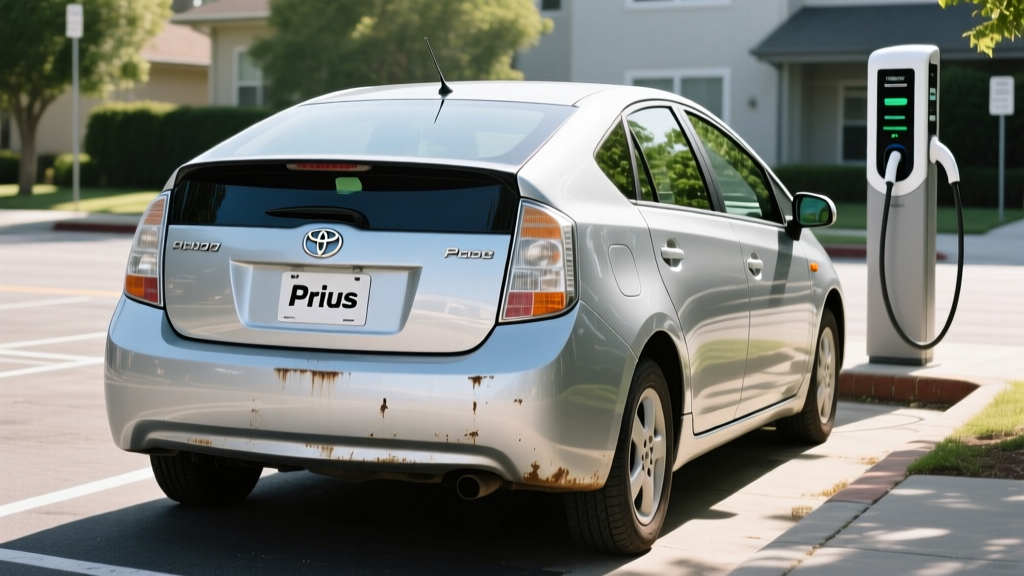
The 2007 Prius is a conventional hybrid (HEV). It has no plug, no electric-only highway range to speak of, and generates all its electricity from the gasoline engine and regenerative braking. This distinction matters because buyers sometimes confuse HEVs with plug-in hybrids (PHEVs) like the Prius Prime, which offers 25–44 miles of electric-only range and qualifies for certain incentives.
| Factor | HEV (2007 Prius) | PHEV (e.g., 2026 Prius Prime) | BEV (e.g., 2026 Tesla Model 3) |
|---|---|---|---|
| Plug Required? | No | Optional (benefits from plugging in) | Yes (mandatory) |
| Electric-Only Range | ~1 mi at low speed | 25–44 mi (EPA) | 250–360 mi (EPA) |
| Fuel/Charging Cost | Gas only (~$900/yr) | Gas + electricity (~$500–$800/yr) | Electricity only (~$400–$650/yr) |
| Federal Tax Credit | None (used HEV) | Up to $3,750 (§30D, new) | Up to $7,500 (§30D, new, if eligible) |
| Home Charging Needed? | No | Recommended (120V or 240V) | Yes (240V Level 2 ideal) |
| Used Purchase Price (2026) | $3,500–$7,000 | $18,000–$28,000 | $14,000–$30,000+ |
| Best For | Budget buyers, no home charging | Short commuters who can plug in | Home-charging access, longer commutes |
Reliability, Battery Lifespan & Replacement Cost
The second-generation Prius earned a reputation as one of the most reliable vehicles Toyota has ever built. The HSD powertrain has fewer wear components than a conventional automatic transmission—no torque converter, no clutch packs, no gear shifts. The eCVT planetary gearset is essentially bulletproof under normal maintenance.
The primary longevity concern is the NiMH traction battery. Here's what 2026 ownership data tells us:
• Original factory warranty: 8 years / 100,000 miles (10 years / 150,000 miles in CARB states including CA, NY, MA, and others)
• Typical real-world battery lifespan: 150,000–200,000 miles or 12–18 years
• Current status in 2026: Original warranty is expired on all 2007 models
• Battery replacement cost: $1,500–$2,500 (remanufactured) or $2,800–$3,600 (new OEM from Toyota)
• Individual cell/module replacement: $300–$600 (independent hybrid specialists can recondition packs)
Many 2007 Prius examples on the road in 2026 are on their second or even third traction battery. A remanufactured replacement from suppliers like Green Bean Battery or Dorman typically costs $1,500–$2,200 installed and carries a 1–3 year warranty. Toyota dealerships quote $2,800–$3,600 for a new OEM pack. For a car worth $4,000–$6,000, a battery replacement is a significant but justifiable investment given the vehicle's overall durability.
Beyond the hybrid battery, common age-related items on a 2007 Prius include:
- 12V auxiliary battery (located in the trunk): Replace every 4–6 years; ~$200 for an AGM replacement
- Inverter coolant pump: Known failure point on Gen 2; ~$300–$500 replacement. Check for recalls—Toyota issued service campaigns for this component
- Brake actuator assembly: Some units develop issues past 150,000 miles; $800–$1,500 repair
- Catalytic converter: Theft target due to precious-metal content; replacement shields cost $150–$250 installed
Pricing, Tax Credits & Total Cost of Ownership
As of 2026, the 2007 Toyota Prius does not qualify for any federal tax credit. The IRS §30D Clean Vehicle Credit applies only to new or qualifying used electrified vehicles purchased from a licensed dealer, and the used-vehicle credit (up to $4,000 or 30% of sale price, max $4,000) requires the vehicle to be a BEV, PHEV, or fuel-cell vehicle—not a conventional HEV. The 2007 Prius, as a non-plug-in hybrid, is ineligible.
| Cost Factor | Estimate |
|---|---|
| Used Purchase Price (80K–140K mi) | $3,500–$7,000 |
| Federal Tax Credit | $0 (HEV — not eligible) |
| Annual Fuel (12K mi, 46 MPG, $3.30/gal) | ~$860 |
| Annual Insurance (national avg) | $900–$1,300 |
| Annual Maintenance | $400–$700 (age-adjusted) |
| Estimated Annual Total Cost | $2,160–$2,860 |
Compare this to a new 2026 compact hybrid (e.g., Toyota Corolla Hybrid at ~$24,000 MSRP, EPA 50 combined) or a used BEV (e.g., 2020 Nissan Leaf at ~$12,000, 150-mile range). The 2007 Prius wins on upfront cost but carries higher maintenance risk due to age. Buyers with a strict sub-$7,000 budget and no home-charging access will struggle to find a more efficient option.
Who Should Buy the 2007 Prius — And Who Shouldn't
✓ Choose the 2007 Prius If:
- Your budget is under $7,000 and you want maximum MPG
- You lack access to home or workplace charging (no plug needed)
- Your commute is urban/suburban (city driving maximizes hybrid efficiency)
- You want low annual fuel cost without infrastructure investment
- You're comfortable with an older vehicle and basic maintenance
✗ Look Elsewhere If:
- You drive mostly highway miles (highway MPG drops to 40–43)
- You want modern safety tech (no AEB, lane-keep, or backup camera standard)
- You need electric-only driving for HOV lane access or emissions zones
- You want federal/state EV incentives (HEV doesn't qualify)
- You prefer a warranty-backed powertrain (all 2007 models are out of factory warranty)
2007 Toyota Prius Hybrid: Frequently Asked Questions
How many MPG does the 2007 Toyota Prius get?
The EPA rates the 2007 Prius at 48 city / 45 highway / 46 combined. In real-world 2026 driving, owners report 44–52 MPG in city conditions (hybrids thrive in stop-and-go traffic) and 40–44 MPG on the highway. Cold weather, worn tires, and a degraded hybrid battery can reduce these figures by 5–10%.
Does the 2007 Prius need to be plugged in?
No. The 2007 Prius is a conventional hybrid (HEV), not a plug-in hybrid. It charges its small 1.3 kWh NiMH battery entirely through regenerative braking and the gasoline engine. You refuel it at a standard gas station—no charging cable, no plug, no home electrical work required.
Is the 2007 Toyota Prius reliable?
Yes, with caveats. The Gen 2 Prius powertrain is widely regarded as one of the most reliable Toyota has produced. The eCVT transmission has virtually no wear components. The main risk is the aging NiMH hybrid battery, which typically lasts 150,000–200,000 miles. Most 2007 examples in 2026 have already had at least one battery replacement. Other age-related items include the inverter coolant pump, 12V battery, and brake actuator.
How much does a 2007 Prius hybrid battery replacement cost?
A remanufactured NiMH battery costs $1,500–$2,500 installed through an independent hybrid specialist. A new OEM battery from a Toyota dealership runs $2,800–$3,600. Some shops offer individual module reconditioning for $300–$600 if only a few cells have failed.
Does the 2007 Prius qualify for any tax credit in 2026?
No. The 2007 Prius is a conventional hybrid (HEV), which does not qualify for the federal §30D Clean Vehicle Credit or the used-EV credit. Those incentives apply only to plug-in hybrids (PHEVs) and battery-electric vehicles (BEVs). Some states historically offered hybrid rebates, but most have transitioned to EV-only incentive programs. Check IRS.gov Clean Vehicle Tax Credits for current rules.
How does the 2007 Prius compare to a modern hybrid like the 2026 Corolla Hybrid?
The 2026 Toyota Corolla Hybrid achieves an EPA 50 combined MPG (53 city / 46 highway) with a modern 2.0L hybrid system producing 196 hp—nearly double the Prius's 110 hp. It also includes Toyota Safety Sense 3.0 (automatic emergency braking, lane-tracing assist, adaptive cruise control) as standard equipment. The trade-off is price: a new Corolla Hybrid starts around $24,000, while a used 2007 Prius sells for $3,500–$7,000.
What should I check before buying a used 2007 Prius?
Before purchasing, verify: (1) hybrid battery health via an OBD-II scan tool—look for voltage delta across modules under 0.3V; (2) inverter coolant pump operation (check for fluid circulation in the reservoir with the car in READY mode); (3) recall status for the brake actuator and steering intermediate shaft via NHTSA.gov; (4) overall maintenance history including transaxle fluid and inverter coolant changes. A pre-purchase inspection at a hybrid-experienced shop ($100–$150) is strongly recommended.