The 2007 Toyota Highlander Hybrid was one of the first mainstream SUVs to pair a V6 engine with an electric motor system, promising better fuel economy without sacrificing the utility families needed. Nearly two decades later, used examples are still on the road, and buyers researching the 2007 Toyota Highlander Hybrid mileage want straight answers: what MPG does it actually deliver today, how long does the hybrid battery last, and does this aging HEV still hold up?
This guide covers the EPA ratings, real-world fuel economy expectations, powertrain specs, battery longevity, and whether a 2007 Highlander Hybrid is a smart used buy or a money pit waiting to happen.
EPA Fuel Economy Ratings: The Official Numbers
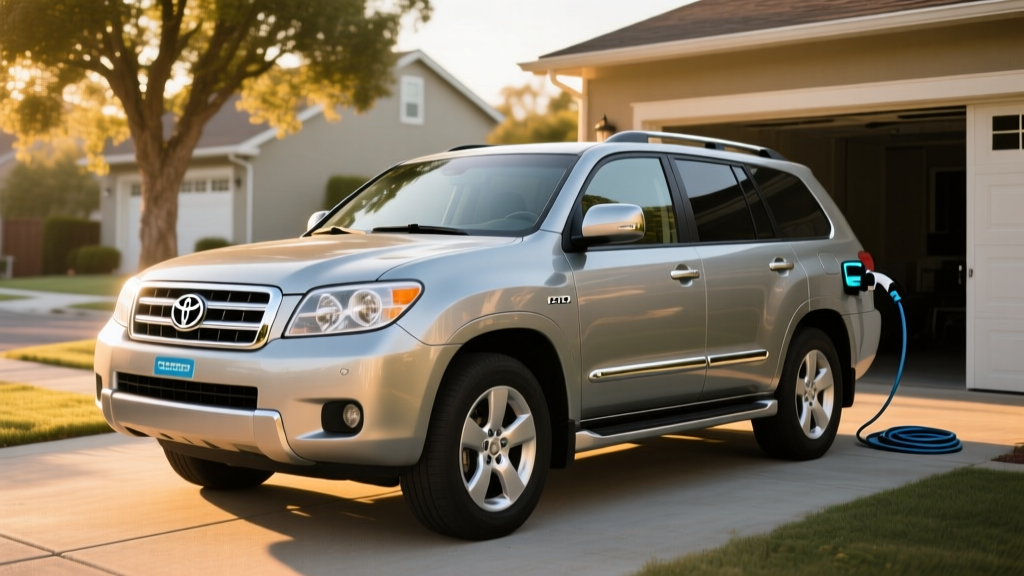
The 2007 Toyota Highlander Hybrid is a conventional hybrid electric vehicle (HEV). It cannot be plugged in — the battery charges through regenerative braking and the gasoline engine. Here is what the EPA published for this model year:
| Metric | Value |
|---|---|
| City MPG | 31 |
| Highway MPG | 27 |
| Combined MPG | 26 (EPA revised estimate) |
| Fuel Type | Regular Unleaded (87 octane) |
| Fuel Tank Capacity | 17.2 gallons |
| Estimated Total Range | ~447 miles |
Source: EPA fueleconomy.gov
The city-highway split is typical of Toyota's Hybrid Synergy Drive system: the electric motor handles low-speed driving and stop-and-go traffic where gas engines are least efficient, while the V6 takes over at highway speeds. This is why the city rating actually exceeds the highway number — the opposite of a conventional gas vehicle.
Real-World MPG: What Owners Actually Report
EPA Combined: 26 MPG | Owner-Reported Average: 24–27 MPG | Expect 22–25 MPG with aggressive driving, heavy cargo, or cold weather below 30°F.
Data from owner communities and fuel-tracking sites like Fuelly shows that well-maintained 2007 Highlander Hybrids cluster around 24–27 MPG in mixed driving. Several factors influence where a specific vehicle lands:
- City-heavy driving: Owners who drive mostly in stop-and-go traffic often report 27–30 MPG, exceeding the EPA city estimate. The hybrid system recovers energy during braking that would otherwise be wasted as heat.
- Highway-heavy driving: Sustained 70+ MPH cruising drops efficiency to 22–25 MPG. Aerodynamic drag dominates, and the electric motor provides minimal assist at these speeds.
- Cold weather: Below freezing, the gas engine runs more frequently to heat the cabin and keep the catalytic converter warm. Expect a 10–15% MPG drop in winter — roughly 22–24 MPG combined.
- Battery health: A degraded hybrid battery forces the engine to work harder. If the original nickel-metal hydride (NiMH) pack is significantly weakened, owners report 20–23 MPG combined.
- Tire pressure and maintenance: Underinflated tires, dirty air filters, and old spark plugs reduce efficiency by 2–4 MPG. Standard maintenance matters more on a 17-year-old vehicle.
The good news: unlike a pure gas vehicle that only degrades with age, a Highlander Hybrid with a healthy battery can maintain near-original MPG figures. The bad news: battery health is the single biggest variable in a used example.
Powertrain Specs: What Powers the 2007 Highlander Hybrid
| Component | Specification |
|---|---|
| Gasoline Engine | 3.3L V6 (3MZ-FE) |
| Engine Horsepower | 208 HP @ 5,600 RPM |
| Electric Motor (front) | Permanent magnet synchronous, 120 kW (161 HP) |
| Electric Motor (rear) | Permanent magnet synchronous, 50 kW (67 HP) — AWD models only |
| Combined System Output | 270 HP (net) |
| Transmission | eCVT (electronically controlled continuously variable) |
| Drivetrain | AWD-i (electronic on-demand AWD via rear motor, no mechanical driveshaft) |
| 0–60 MPH | ~7.5 seconds (estimated) |
| Towing Capacity | 3,500 lbs |
The 2007 Highlander Hybrid uses Toyota's Hybrid Synergy Drive (HSD) system. The front electric motor is integrated into the transaxle and provides both propulsion and regenerative braking. On AWD-i models, the rear electric motor engages automatically when front-wheel slip is detected — there is no mechanical connection between the front and rear axles, which saves weight and reduces drivetrain losses.
The combined 270 HP output made this one of the most powerful hybrid SUVs of its era. The eCVT transmission uses a planetary gearset rather than a belt or chain, which is a key reason for its long-term durability — there are no friction bands or clutch packs to wear out.
HEV vs PHEV vs Full EV: Where Does This Highlander Fit?
The 2007 Highlander Hybrid is a conventional hybrid (HEV). Understanding the distinction matters for buyers cross-shopping used vehicles:
| Feature | HEV (this vehicle) | PHEV | BEV (Full EV) |
|---|---|---|---|
| Plugs in? | No | Yes | Yes |
| Electric-only range | 0 miles (motor assists only) | 20–50 miles typical | 200–400+ miles |
| Gasoline engine | Yes — primary power | Yes — backup/range extender | No |
| Fuel/energy cost per mile | ~$0.12–0.15 | ~$0.04–0.12 | ~$0.03–0.06 |
| Home charging needed | No | Recommended (Level 2) | Required |
| Federal tax credit (new) | None | Up to $7,500 (§30D) | Up to $7,500 (§30D) |
Who should choose this HEV? Drivers who want better fuel economy than a gas-only SUV but lack access to home charging. If you live in an apartment, park on the street, or simply don't want to think about plugging in, a conventional hybrid delivers meaningful savings with zero lifestyle change.
Who should look at a PHEV instead? Drivers with home charging access and a commute under 40 miles round-trip. A modern PHEV like the Toyota RAV4 Prime covers most daily driving on electricity alone, then uses gas for longer trips. The per-mile cost is dramatically lower for daily use.
Who should go full EV? Drivers with reliable home Level 2 charging, predictable daily routes under 250 miles, and a desire to minimize per-mile energy cost and maintenance. Modern EVs like the Hyundai Ioniq 5 or Tesla Model Y offer 260–310+ miles of EPA range with far lower maintenance costs than a 17-year-old hybrid.
Hybrid Battery Lifespan, Warranty & Replacement Cost
Original warranty: 8 years / 100,000 miles (10 years / 150,000 miles in CARB states).
Battery chemistry: Nickel-Metal Hydride (NiMH), ~1.9 kWh capacity.
Expected lifespan: 150,000–200,000+ miles with normal use.
Replacement cost: $2,000–$4,000 (OEM new), $800–$1,500 (refurbished/reconditioned).
The 2007 Highlander Hybrid's NiMH battery pack is one of the most proven hybrid batteries Toyota ever produced. Unlike modern lithium-ion packs, NiMH chemistry degrades slowly and predictably. Many 2007 Highlanders have exceeded 200,000 miles on the original battery.
However, at nearly 20 years old, any used example you're considering is likely on borrowed battery time — not because of mileage, but because of age. NiMH cells lose capacity over time regardless of use. Symptoms of a weakening pack include:
- Noticeable drop in fuel economy (3–5 MPG below expected)
- The gasoline engine runs more frequently, even at low speeds
- Reduced regenerative braking feel
- Hybrid system warning light on the dashboard
- The battery charge indicator fluctuates rapidly between high and low
Replacement options:
- OEM new battery (Toyota dealer): $3,000–$4,000 installed. This restores original performance and typically comes with a 1-year/12,000-mile warranty.
- Refurbished/reconditioned pack: $800–$1,500 installed at an independent hybrid specialist. These replace only the weak cells within the pack and typically carry a 1–3 year warranty. Quality varies by shop.
- Individual cell replacement: $300–$600 for parts if you or a shop can diagnose the specific failing module. Labor-intensive and not always cost-effective.
- Aftermarket new pack (e.g., Green Bean Battery): $1,500–$2,500 with lifetime warranty options available from some vendors.
For a used 2007 Highlander Hybrid, budget $2,000–$3,000 as a contingency for battery replacement within the first year or two of ownership unless the seller can provide documentation of a recent replacement.
Pricing & Tax Credit Eligibility
As a used vehicle, the 2007 Toyota Highlander Hybrid is no longer eligible for the federal §30D new clean vehicle credit. Here is the current pricing landscape:
| Condition | Mileage Range | Estimated Price |
|---|---|---|
| Excellent (well-maintained, recent battery) | 100K–140K | $6,500–$8,500 |
| Good (average maintenance) | 140K–180K | $4,500–$6,500 |
| Fair (needs battery or other work) | 180K+ | $3,000–$4,500 |
Tax credit note: The IRS §30D credit applies only to new and qualifying used clean vehicles. The federal used clean vehicle credit (§25E) offers up to $4,000 or 30% of the sale price (whichever is less) for qualifying used EVs and PHEVs purchased from a dealer — but conventional HEVs like the 2007 Highlander Hybrid do not qualify. Only BEVs and PHEVs are eligible for §25E. See IRS.gov §25E for current rules.
No state incentives apply to the purchase of a used conventional hybrid in most jurisdictions. The economic case for this vehicle rests entirely on fuel savings versus a comparable gas-only SUV.
Fuel Cost Savings vs. Gas-Only Highlander
The 2007 gas-only Toyota Highlander with the 3.3L V6 is EPA-rated at 18 city / 24 highway / 20 combined MPG. Let's compare annual fuel costs assuming 15,000 miles/year (55% city, 45% highway) and $3.40/gallon regular unleaded:
- Gas-only Highlander (20 combined MPG): 750 gallons/year × $3.40 = $2,550/year
- Highlander Hybrid (26 combined MPG): 577 gallons/year × $3.40 = $1,962/year
- Annual savings: ~$588/year
- 5-year savings: ~$2,940
Those savings are meaningful but not transformative. Over five years, the hybrid saves roughly $2,940 in fuel — but a battery replacement ($2,000–$3,000) could consume most or all of that gain. The economic argument for this specific vehicle works best if you find one with a recently replaced battery or if you plan to keep it long enough to recoup the investment through fuel savings alone.
Reliability & Common Issues Beyond the Battery
The 2007 Highlander Hybrid benefits from Toyota's reputation for durability, but age brings specific concerns beyond the hybrid battery:
- Inverter coolant pump: The electric water pump that cools the hybrid inverter can fail, typically around 120,000–160,000 miles. Replacement runs $400–$700. Watch for inverter overheating warnings.
- Brake actuator assembly: The regenerative braking system uses a complex electro-hydraulic actuator. Failures are uncommon but expensive ($1,500–$2,500) when they occur. A firm brake pedal or ABS warning light are early signs.
- Rack-and-pinion steering: Some owners report power steering fluid leaks from the rack around 130,000+ miles. Replacement: $800–$1,200.
- Standard wear items: Suspension bushings, struts, wheel bearings, and engine mounts will likely need attention on any 17-year-old vehicle. Budget $1,000–$2,000 for deferred maintenance.
The eCVT transmission itself is remarkably reliable — Toyota's planetary gearset design has virtually no wear components. The 3.3L V6 (3MZ-FE) is a proven engine shared with the Camry and Lexus ES/RX of the same era, with timing belt service required every 90,000 miles (a $600–$900 job that should be verified on any used example).
- Proven, durable hybrid system
- No plug-in charging required
- Strong 270 HP combined output
- AWD-i with no mechanical driveshaft losses
- 3,500-lb towing capacity
- Low running costs for a midsize SUV
- Hybrid battery likely near end of life at this age
- No federal or state tax credits for used HEV purchase
- Dated interior and infotainment
- Safety tech is minimal by modern standards
- Fuel savings modest vs. potential repair costs
- NiMH battery less energy-dense than modern Li-ion
Decision Framework: Should You Buy the 2007 Highlander Hybrid?
Choose the 2007 Highlander Hybrid if:
- You need an affordable AWD family SUV with better-than-average fuel economy
- You cannot charge at home and a PHEV or EV isn't practical
- You find a well-maintained example with a recently replaced hybrid battery (under $6,000)
- You plan to drive it 3–5 years and 10,000–15,000 miles/year
- You value Toyota's reliability track record and parts availability
Look elsewhere if:
- The hybrid battery has not been replaced and the seller won't discount accordingly
- You have home charging access — a used PHEV or a new hybrid like the RAV4 Hybrid (39 MPG combined) offers far better economics
- You want modern safety features (automatic emergency braking, lane-keeping, blind-spot monitoring) — none are available on this model year
- You plan to keep it 7+ years — the age-related repair costs will likely exceed fuel savings
Frequently Asked Questions
How many MPG does the 2007 Toyota Highlander Hybrid get?
The EPA rates it at 31 city / 27 highway / 26 combined MPG. Real-world owners typically report 24–27 MPG in mixed driving, with city-heavy drivers sometimes exceeding 28 MPG and highway-heavy drivers seeing 22–25 MPG. A degraded hybrid battery can drop real-world MPG to 20–23 combined.
Does the 2007 Highlander Hybrid need to be plugged in?
No. This is a conventional hybrid (HEV), not a plug-in hybrid (PHEV). The battery charges through regenerative braking and the gasoline engine. You fuel it exactly like a regular car — just pump gas and drive.
Is the 2007 Toyota Highlander Hybrid reliable?
The powertrain is among the most reliable Toyota ever built. The eCVT transmission uses a planetary gearset with no wear-prone friction components, and the 3.3L V6 is a proven engine. The main reliability concern at this age is the hybrid battery, which may need replacement ($2,000–$4,000 OEM) if it hasn't been serviced already. The inverter coolant pump and brake actuator are secondary items to watch.
What is the hybrid battery replacement cost?
A new OEM battery from Toyota costs $3,000–$4,000 installed. Refurbished or reconditioned packs from independent hybrid specialists run $800–$1,500. Aftermarket new packs with extended warranties are available for $1,500–$2,500. Budget at least $2,000 as a contingency when buying a used 2007 Highlander Hybrid unless the battery has been recently replaced with documentation.
Does the 2007 Highlander Hybrid qualify for any tax credit?
No. The federal §30D new clean vehicle credit and the §25E used clean vehicle credit both require a plug-in vehicle (BEV or PHEV). Conventional hybrids (HEVs) that cannot be plugged in do not qualify for any federal tax credit. Some states previously offered hybrid incentives, but most have expired or shifted to EV-only programs. Check your state's current energy office website for any remaining programs.
How does the 2007 Highlander Hybrid compare to a modern hybrid SUV?
A 2026 Toyota RAV4 Hybrid delivers 39 MPG combined EPA — roughly 50% better fuel economy than the 2007 Highlander Hybrid — in a similar-sized package with modern safety technology, a full warranty, and available federal incentives on the PHEV variant (RAV4 Prime). If your budget allows $30,000+, a new hybrid SUV is a substantially better value. The 2007 Highlander Hybrid makes sense only as a budget used buy under $7,000.
What is the towing capacity?
The 2007 Highlander Hybrid is rated to tow up to 3,500 pounds when properly equipped with a tow package. Towing will reduce fuel economy significantly — expect 17–20 MPG combined when pulling a trailer near the maximum rating.