Quick Verdict: A Pioneer That Still Delivers Real-World MPG
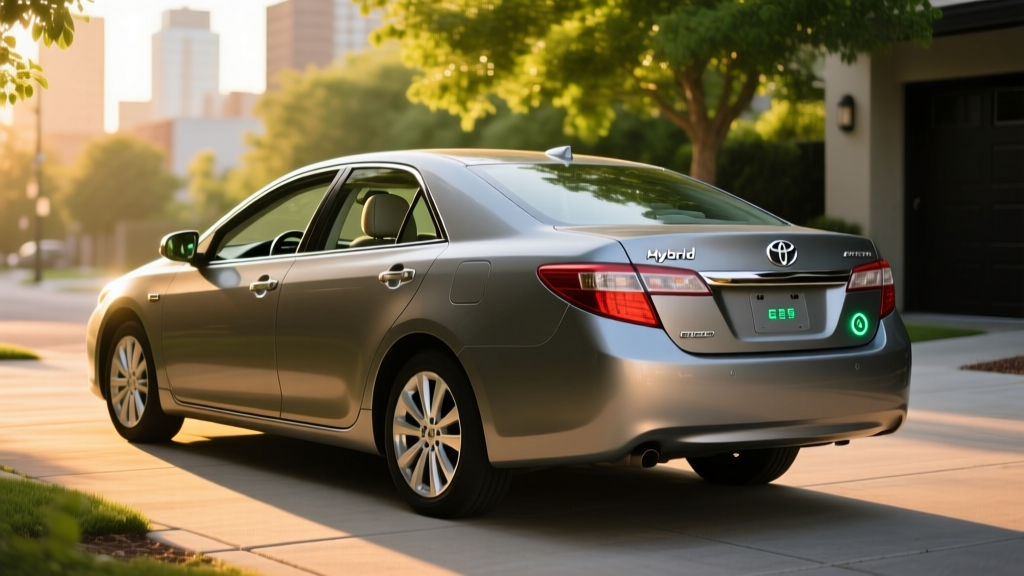
The 2007 Toyota Camry Hybrid was only the second year of Toyota's hybridized midsize sedan, arriving on the heels of the Prius's mainstream breakthrough. As a conventional hybrid (HEV) — not a plug-in — it requires zero behavior change from the driver: no charging cables, no range planning, no outlet hunting. You fuel it like any other Camry and let Toyota's Hybrid Synergy Drive recapture energy under braking and low-speed driving.
Nearly two decades later, the 2007 Camry Hybrid remains a compelling used-car proposition for budget-conscious commuters who want proven hybrid efficiency without the complexity of a plug-in hybrid (PHEV) or a battery electric vehicle (BEV). With EPA-rated fuel economy of 33 city / 34 highway / 33 combined MPG, this sedan still outperforms most modern non-hybrid midsize cars in city driving, where hybrid regenerative braking and electric-motor assist shine brightest.
| Specification | Value |
|---|---|
| Powertrain Type | Conventional Hybrid (HEV) — no plug-in |
| Engine | 2.4L 4-cylinder (2AZ-FXE, Atkinson cycle) |
| Engine Horsepower | 147 HP @ 6,000 RPM |
| Electric Motor | Permanent-magnet synchronous, 40 HP (30 kW) |
| Combined Net Horsepower | 192 HP |
| Transmission | eCVT (planetary gearset, no traditional gears) |
| Hybrid Battery | ~1.6 kWh nominal (NiMH, 244.8V pack) |
| EPA Fuel Economy | 33 city / 34 highway / 33 combined MPG |
| Fuel Tank Capacity | 17.2 gallons |
| Estimated Total Range | ~567 miles per tank |
| 0–60 MPH | ~8.5 seconds |
| Drivetrain | Front-wheel drive |
| Original MSRP (2007) | ~$26,820 (single trim level) |
| Current Used Price Range (2026) | $3,500–$7,500 depending on mileage/condition |
Fuel Economy: EPA Numbers vs. Real-World MPG
The EPA rated the 2007 Camry Hybrid at 33 MPG city, 34 highway, and 33 combined. These figures were revised under the EPA's updated 2008 testing methodology, which more accurately reflects real-world driving; the original window stickers from 2007 showed higher numbers (approximately 40/38/39 under the old methodology), which caused some buyer confusion. Per fueleconomy.gov, the 33/34/33 figures are the accurate, comparable numbers.
| Driving Scenario | EPA Rating | Real-World Expectation |
|---|---|---|
| City (stop-and-go) | 33 MPG | 33–38 MPG (hybrids excel here) |
| Highway (steady 70 MPH) | 34 MPG | 30–33 MPG (aero drag, less regen benefit) |
| Combined | 33 MPG | 31–35 MPG |
| Cold weather (below 32°F) | Not rated | 28–31 MPG (engine runs more for cabin heat) |
The counterintuitive city-highway split is a hallmark of Toyota's hybrid system. In stop-and-go traffic, the electric motor handles low-speed propulsion while regenerative braking recovers kinetic energy that a conventional car wastes as heat. On the highway, the gasoline engine does most of the work with less regenerative benefit, so the advantage over a conventional Camry narrows. Owners who drive predominantly urban routes routinely report 35–38 MPG, while long highway commutes may yield 30–32 MPG.
For context, the 2007 conventional Camry 4-cylinder was EPA-rated at 24 city / 33 highway / 27 combined — making the hybrid roughly 22% more efficient overall and up to 37% better in city driving.
Understanding the Powertrain: How Toyota's Hybrid Synergy Drive Works
The 2007 Camry Hybrid pairs a 2.4-liter Atkinson-cycle four-cylinder engine (the 2AZ-FXE) with a 40 HP permanent-magnet electric motor through Toyota's eCVT transaxle. Despite the "eCVT" label, this is not a belt-and-pulley continuously variable transmission. It uses a planetary gearset that seamlessly blends power from the gasoline engine and electric motor, with no fixed gear ratios and no traditional shifting.
The combined net output of 192 HP gives the Camry Hybrid brisk acceleration for its era — roughly 8.5 seconds to 60 MPH, which is competitive with the V6-equipped conventional Camry of the same year. The electric motor provides instant torque from a stop, which makes the car feel punchy in urban driving even though peak combined horsepower arrives higher in the rev range.
The nickel-metal hydride (NiMH) battery pack sits behind the rear seat, reducing trunk space slightly compared to the conventional Camry (10.6 cu ft vs. 15.0 cu ft). The pack operates at 244.8 volts and holds approximately 1.6 kWh of energy — a fraction of what a modern PHEV or BEV carries, but sufficient for the hybrid system's charge-sustaining operation. The battery never depletes fully; the system maintains a state-of-charge buffer (roughly 40–80% SoC) to prolong cell life.
HEV vs. PHEV vs. BEV: Which Fits Your Driving Pattern?
The 2007 Camry Hybrid is a conventional hybrid (HEV). It cannot be plugged in and has no electric-only driving range beyond brief low-speed assist. Here is how it compares to the other electrified options available to today's used-car shoppers:
| Factor | HEV (2007 Camry Hybrid) | PHEV (e.g., RAV4 Prime) | BEV (e.g., Model 3) |
|---|---|---|---|
| Plug-in required? | No | Yes, for EV range | Yes, always |
| Electric-only range | None (motor assist only) | 25–42 miles typical | 250–360+ miles |
| Home charging needed? | No | Recommended (Level 2) | Essential (Level 2) |
| Fuel cost per mile (2026) | ~$0.10 (gas) | ~$0.04 electric / $0.10 gas | ~$0.03–$0.05 (electric) |
| Used price range (2026) | $3,500–$7,500 | $25,000–$40,000 | $18,000–$40,000 |
| Best for | No home charging, budget buyers | Short commute + road trips | Home charging + low running cost |
The 2007 Camry Hybrid is the right choice if you lack access to home or workplace charging, want the lowest possible purchase price for an electrified vehicle, and primarily need a reliable commuter that sips fuel without any lifestyle adjustment. If you have a garage with a 240V outlet and a short daily commute, a modern PHEV delivers far greater electric driving and lower fuel costs — but at a substantially higher purchase price. A BEV makes sense if you can charge at home and want to eliminate gasoline entirely.
Battery Reliability, Lifespan, and Replacement Cost
The hybrid battery is the single biggest concern for any used-hybrid buyer. The 2007 Camry Hybrid's NiMH pack is proven technology — Toyota had already accumulated years of Prius data by the time this car launched — and these packs have a reputation for longevity when properly maintained.
Original Battery Warranty
Toyota warranted the 2007 Camry Hybrid battery for 8 years / 100,000 miles (10 years / 150,000 miles in California and states adopting CARB emissions standards). By 2026, all original warranties have expired. The hybrid system components (inverter, transaxle, control modules) carried the same coverage.
Real-world data from owner communities and repair shops shows that 2007 Camry Hybrid NiMH batteries typically last 150,000–200,000 miles before significant capacity loss triggers a check-engine light or noticeable fuel-economy decline. Some packs exceed 250,000 miles; others fail earlier, especially in hot climates where thermal stress accelerates cell degradation.
If the battery does need replacement, you have several options:
- New OEM pack from Toyota: $2,500–$3,500 for the battery alone, plus $500–$1,000 in labor. Total: ~$3,000–$4,500.
- Refurbished/remanufactured pack: $1,200–$2,000 installed. Several reputable suppliers offer packs with 1–3 year warranties.
- Individual cell/module replacement: A qualified hybrid specialist can test and replace only the failed modules within the pack for $500–$1,200. This is the most cost-effective option but requires expertise.
- Junkyard/salvage pack: $300–$800, but with unknown remaining life — a gamble.
Given that a clean 2007 Camry Hybrid costs $3,500–$7,500 on the used market in 2026, a $3,000+ OEM battery replacement can represent a significant percentage of the car's value. Most budget-conscious owners opt for refurbished packs or module-level repair.
Ownership Costs: Fuel Savings vs. a Conventional Camry
At 2026 national average gasoline prices of approximately $3.30 per gallon and an assumed 15,000 miles per year, the 2007 Camry Hybrid's fuel cost advantage is tangible:
- 2007 Camry Hybrid (33 MPG combined): ~455 gallons/year → ~$1,500/year in fuel
- 2007 Camry 4-cylinder (27 MPG combined): ~556 gallons/year → ~$1,834/year in fuel
- Annual fuel savings: ~$334/year
- 5-year fuel savings: ~$1,670
These savings are modest compared to what a BEV or PHEV delivers, but they come with zero infrastructure investment — no home charger, no electrical panel upgrade, no public-charging dependency. For a used-car buyer spending under $8,000, the Camry Hybrid's fuel savings help offset maintenance costs over time.
Insurance costs for the 2007 Camry Hybrid are generally comparable to the conventional model. Because the car's value is low, comprehensive and collision coverage premiums are minimal. Liability-only coverage is common for vehicles in this price range.
Tax Credits and Incentives: What Applies to a 2007 Used Hybrid?
The 2007 Camry Hybrid originally qualified for a federal hybrid tax credit of $2,600 under the Energy Policy Act of 2005, but this credit phased out for Toyota buyers after September 30, 2007, when Toyota hit the 60,000-vehicle manufacturer cap. That credit has been unavailable for nearly two decades.
Under current 2026 IRS §30D clean vehicle credit rules, the 2007 Camry Hybrid does not qualify for any federal tax credit. The §30D credit applies only to new plug-in electric vehicles (BEVs and PHEVs) meeting battery-sourcing, critical-mineral, MSRP, and buyer-income requirements. Conventional hybrids (HEVs) that cannot be plugged in have never qualified for the modern credit structure.
The federal used clean vehicle credit (§25E) offers up to $4,000 (30% of sale price, capped) for qualified used BEVs and PHEVs — but again, conventional hybrids like the Camry Hybrid are excluded. No state incentives currently target used HEV purchases either. The financial case for the 2007 Camry Hybrid rests entirely on its low purchase price and ongoing fuel savings.
What to Inspect Before Buying a Used 2007 Camry Hybrid
At 18–19 years old, any 2007 Camry Hybrid on the used market will have accumulated significant mileage. Here is a prioritized inspection checklist:
- Hybrid battery health: Have a hybrid-qualified mechanic run a battery health scan using Toyota's Techstream diagnostic tool or an aftermarket OBD-II scanner with hybrid-data capability. Look at individual module voltage deltas — a spread greater than 0.3V between modules suggests imbalance and impending failure.
- Hybrid battery cooling fan: The battery has a dedicated cooling fan with a filter behind the rear seat. If the filter is clogged or the fan has failed, the battery overheats and degrades prematurely. Check for dust buildup and fan operation.
- Inverter coolant: The hybrid system has a separate coolant loop. Check the inverter coolant reservoir (under the hood) for proper level and condition. Toyota recommends replacement every 100,000 miles.
- Brake actuator: The Camry Hybrid uses an electro-hydraulic brake system. Listen for unusual pump cycling when pressing the brake pedal with the car in READY mode. Excessive cycling can indicate a failing accumulator.
- General Camry items: Check for oil consumption (the 2AZ-FE/FXE engine family is known for excessive oil use in some examples — verify oil level and ask about consumption history), timing chain condition, and suspension wear typical of any 200,000-mile vehicle.
Pros
- Proven, simple hybrid system with no plug-in requirement
- 33+ MPG combined; often exceeds EPA in city driving
- Strong reliability record for powertrain and eCVT
- Low used purchase price ($3,500–$7,500)
- Refurbished battery replacements available at reasonable cost
- Comfortable ride and practical sedan packaging
Cons
- Reduced trunk space due to battery placement (10.6 cu ft)
- No electric-only driving capability
- Original battery warranties have expired on all examples
- No federal or state tax credits available
- 2AZ-FXE engine prone to oil consumption in some units
- Dated infotainment and safety technology vs. modern cars
Frequently Asked Questions
How many MPG does the 2007 Toyota Camry Hybrid get?
The EPA rates it at 33 city / 34 highway / 33 combined MPG (under the revised 2008 testing methodology). In real-world driving, city commuters often achieve 35–38 MPG thanks to regenerative braking, while steady highway driving may return 30–33 MPG.
Does the 2007 Camry Hybrid need to be plugged in?
No. It is a conventional hybrid (HEV), not a plug-in hybrid (PHEV). The battery charges through regenerative braking and the gasoline engine. You fuel it exactly like a regular Camry.
How far can it drive on electric power alone?
The 2007 Camry Hybrid cannot drive on electric power alone for any meaningful distance. The electric motor assists the gasoline engine during acceleration and can propel the car at very low speeds (under ~25 MPH) for brief distances on flat ground, but the engine is almost always running. This is fundamentally different from a PHEV, which offers 25–42 miles of electric-only range.
Is the 2007 Camry Hybrid reliable, and what does a battery replacement cost?
Yes, it has a strong reliability record. The hybrid system (eCVT, inverter, battery) is proven technology shared with the Prius family. NiMH batteries typically last 150,000–200,000 miles. A new OEM replacement battery costs $3,000–$4,500 installed; refurbished packs run $1,200–$2,000 installed. Module-level repair by a hybrid specialist costs $500–$1,200.
Does the 2007 Camry Hybrid qualify for any tax credit in 2026?
No. Federal §30D and §25E clean vehicle credits apply only to plug-in vehicles (BEVs and PHEVs). Conventional hybrids are excluded. The original $2,600 hybrid credit that applied in early 2007 phased out for Toyota buyers nearly two decades ago.
Is a 2007 Camry Hybrid a better buy than a used Prius of the same era?
It depends on priorities. The 2007 Prius (second generation) rates higher in fuel economy at 46 MPG combined and offers a hatchback cargo area. The Camry Hybrid provides a more conventional sedan driving experience, a quieter ride, more rear-seat legroom, and stronger acceleration (192 HP vs. 110 HP combined). If maximum MPG is the goal, the Prius wins. If comfort and power matter more, the Camry Hybrid is the better choice.
What is the biggest risk of buying a used 2007 Camry Hybrid?
The hybrid battery. At 18–19 years old, most original NiMH packs are near or past their expected lifespan. Budget $1,500–$3,000 for a refurbished replacement or module repair if the current pack shows signs of degradation (reduced MPG, check-engine light with battery-related codes, reduced state-of-charge range on the dashboard display).
Final Assessment: Who Should Buy the 2007 Camry Hybrid in 2026?
The 2007 Toyota Camry Hybrid occupies a specific niche in today's used-car market: it is the lowest-friction entry point into hybrid ownership. No charging infrastructure, no plug-in behavior change, no tax-credit paperwork — just a proven gasoline-electric sedan that saves 300+ gallons of fuel per year versus its conventional sibling.
This car makes sense for buyers who cannot install a home charger, who drive in stop-and-go urban conditions where hybrid efficiency peaks, and who want a sub-$8,000 vehicle with running costs lower than a comparable gas-only Camry. It does not make sense for buyers who want electric-only commuting, modern tech features, or the lowest possible cost-per-mile that a BEV or PHEV can deliver.
Before purchasing, invest in a hybrid-specific pre-purchase inspection, budget for a potential battery replacement within the first few years of ownership, and verify that the 2AZ-FXE engine in the specific example does not exhibit excessive oil consumption. With those boxes checked, the 2007 Camry Hybrid remains one of the most pragmatic used hybrid buys available — a testament to Toyota's early hybrid engineering.