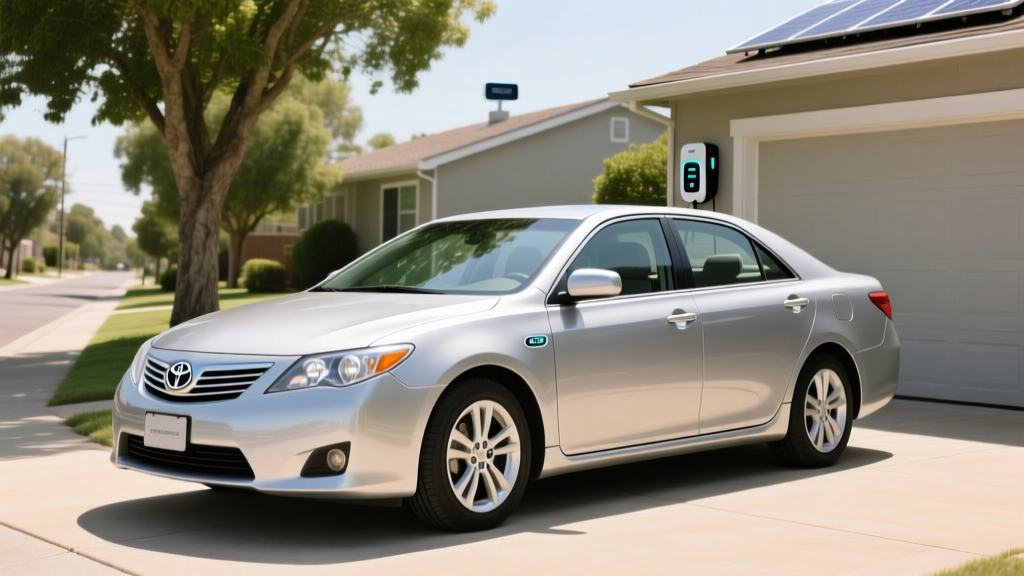
The 2007 Toyota Camry Hybrid was one of the first mainstream midsize sedans to prove that hybrid technology could deliver meaningful fuel savings without sacrificing daily practicality. Nearly two decades later, it remains a popular choice on the used market, and the question buyers still ask is straightforward: what kind of mileage does it actually get?
The short answer is that the 2007 Camry Hybrid carries an EPA rating of 33 MPG city, 34 MPG highway, and 33 MPG combined. But real-world results vary significantly based on driving habits, climate, and the condition of the hybrid battery — especially on a vehicle now approaching 20 years old. This guide breaks down the official numbers, real-world expectations, battery longevity, and whether this early hybrid still makes financial sense in 2026.
EPA Fuel Economy vs. Real-World MPG
According to fueleconomy.gov, the 2007 Toyota Camry Hybrid (2.4L 4-cylinder with CVT) earned the following ratings:
| Metric | EPA Rating |
|---|---|
| City MPG | 33 MPG |
| Highway MPG | 34 MPG |
| Combined MPG | 33 MPG |
| Annual Fuel Cost (est.) | ~$1,350 (at $3.20/gal, 15,000 mi/yr) |
| Gallons per 100 Miles | 3.0 gal |
Unlike many conventional gas cars, the Camry Hybrid's city and highway numbers are nearly identical — and some owners report city MPG slightly exceeding highway figures. This is a hallmark of Toyota's Hybrid Synergy Drive: regenerative braking recaptures energy in stop-and-go traffic, and the electric motor handles low-speed driving where gas engines are least efficient.
Real-World Expectations in 2026
Owner-reported data on Fuelly and Edmunds forums clusters around 28–33 MPG combined for 2007 Camry Hybrids still on the road. Several factors pull real-world numbers below the EPA sticker:
- Hybrid battery degradation: The original NiMH (nickel-metal hydride) pack loses capacity over time. A weakened battery forces the gas engine to run more often, dropping fuel economy by 2–5 MPG in severe cases.
- Highway-dominant driving: At sustained speeds above 65 mph, the electric motor contributes less, and aerodynamic drag dominates. Expect 30–32 MPG on long highway trips.
- Cold climate operation: Below 40°F, the engine runs longer to heat the cabin and warm the battery, reducing city MPG to roughly 28–30.
- Tire and maintenance condition: Underinflated tires, old spark plugs, and dirty air filters compound efficiency losses on any 18-year-old vehicle.
Conversely, careful drivers in mild climates with a healthy battery report matching or even slightly exceeding 34 MPG in city driving. The 2007 Camry Hybrid's efficiency is remarkably resilient when the hybrid system is in good shape.
Hybrid Powertrain: How It Works
The 2007 Camry Hybrid pairs a 2.4-liter Atkinson-cycle 4-cylinder engine (147 hp on its own) with a permanent-magnet electric motor integrated into the transaxle. Combined system output is 192 horsepower, delivered through a continuously variable transmission (CVT).
| Component | Specification |
|---|---|
| Gas Engine | 2.4L Atkinson-cycle I4, 147 hp |
| Electric Motor | Permanent-magnet AC synchronous, ~45 hp |
| Combined Output | 192 hp |
| Transmission | CVT (planetary gearset, eCVT) |
| Drivetrain | Front-wheel drive |
| Hybrid Battery | NiMH, ~1.6 kWh (gross), ~0.9 kWh usable |
| 0–60 mph | ~8.4 seconds |
| Curb Weight | ~3,680 lbs |
HEV vs. PHEV: What the 2007 Camry Hybrid Is
The 2007 Camry Hybrid is a conventional hybrid electric vehicle (HEV), not a plug-in hybrid (PHEV). It cannot be plugged in to charge, and it has no meaningful electric-only driving range. The small NiMH battery charges exclusively through regenerative braking and the gas engine. The electric motor assists during acceleration and can propel the car at very low speeds (under ~25 mph for short distances), but the gas engine is always the primary power source.
This distinction matters because Toyota did not introduce a plug-in Camry variant until the 2025 model year. If you need electric-only commuting range, the 2007 Camry Hybrid won't provide it — you'd need to look at a PHEV like the Toyota RAV4 Prime or a full battery electric vehicle (BEV).
Hybrid Battery Lifespan and Replacement Cost
Battery longevity is the single biggest concern for anyone buying a used 2007 Camry Hybrid. Here's what the data shows:
| Factor | Detail |
|---|---|
| Original Warranty | 8 years / 100,000 miles (10 yr / 150,000 mi in CARB states) |
| Current Status (2026) | Warranty expired on all 2007 models |
| Battery Chemistry | NiMH (nickel-metal hydride) |
| Typical Lifespan | 150,000–200,000+ miles with gradual capacity loss |
| OEM Replacement Cost | $2,500–$4,000 (dealer installed) |
| Aftermarket/Refurbished | $1,200–$2,200 (independent shop or DIY module swap) |
| Individual Module Repair | $300–$800 (replace only failed cells) |
NiMH batteries degrade more gracefully than early lithium-ion packs. Rather than sudden failure, they lose capacity gradually — meaning fuel economy declines incrementally over years. Many 2007 Camry Hybrids have surpassed 200,000 miles on the original pack, though with noticeably reduced electric-assist contribution.
If you're evaluating a used 2007 Camry Hybrid, ask for a hybrid battery health check at a Toyota dealer or hybrid-specialist shop. They can read the battery's state of health (SoH) via the OBD-II port. A pack retaining above 70% of original capacity is generally considered serviceable; below 60% suggests replacement within 1–2 years.
Does the 2007 Camry Hybrid Qualify for Tax Credits?
No. The 2007 Toyota Camry Hybrid does not qualify for any current federal tax credit. Here's why:
- The original federal hybrid tax credit (under the Energy Policy Act of 2005) for the Camry Hybrid was phased out for Toyota in 2007 after the company hit the 60,000-vehicle cap. By mid-2007, the credit had been reduced to $0.
- The current IRS §30D Clean Vehicle Credit applies only to new plug-in electric vehicles (PHEVs and BEVs) with sufficient battery capacity. Conventional hybrids like the 2007 Camry Hybrid have never qualified under this program.
- There is no federal used-EV credit applicable to conventional HEVs — the §25E used clean vehicle credit (up to $4,000) also requires a plug-in vehicle with at least 7 kWh of battery capacity.
Some states offer rebates for hybrid purchases, but these typically target new PHEVs or BEVs. Check your state's energy office for current programs, but expect no incentives for a 2007 HEV purchase.
Ownership Economics: Does It Still Save Money?
The 2007 Camry Hybrid's value proposition in 2026 comes down to purchase price, fuel savings, and maintenance risk. Here's a realistic breakdown:
| Cost Factor | Camry Hybrid | Camry Gas (LE 4-cyl) |
|---|---|---|
| Used Purchase Price (2026 est.) | $3,500–$5,500 | $3,000–$4,500 |
| EPA Combined MPG | 33 MPG | 24 MPG |
| Annual Fuel Cost (15k mi, $3.20/gal) | ~$1,455 | ~$2,000 |
| 5-Year Fuel Cost | ~$7,275 | ~$10,000 |
| Hybrid Battery Replacement Risk | $1,500–$3,500 (if needed) | $0 |
| Estimated 5-Year Total | $12,275–$16,275 | $13,000–$14,500 |
The hybrid saves roughly $545 per year in fuel. If the hybrid battery holds up, the total cost of ownership is competitive with or lower than the gas Camry. If you need a battery replacement, that advantage erodes — but the fuel savings continue for the life of the car.
Insurance costs are comparable between the two variants, and the hybrid's CVT has proven more durable than the 5-speed automatic in the gas model (fewer moving parts, no traditional gear shifts).
Who Should Choose This Hybrid — And Who Shouldn't
The 2007 Camry Hybrid occupies a specific niche in 2026. Here's a decision framework:
Choose the 2007 Camry Hybrid If:
- You drive primarily in city or suburban traffic where regenerative braking maximizes MPG
- Your budget is under $6,000 and you want the lowest fuel cost in that price range
- You have access to a hybrid-knowledgeable mechanic or are comfortable with basic DIY maintenance
- You want a proven, simple hybrid system with abundant aftermarket parts and repair guides
- You don't need electric-only range or plug-in capability
Look Elsewhere If:
- You drive mostly highway miles (the fuel savings over a gas Camry shrink significantly)
- You want plug-in electric range for a short commute — consider a used PHEV like the Prius Prime or Clarity
- You want zero tailpipe emissions — look at a used BEV like the Nissan Leaf or Chevy Bolt
- The hybrid battery has already been flagged as degraded and the seller won't negotiate on replacement cost
Frequently Asked Questions
How many MPG does the 2007 Toyota Camry Hybrid get?
The EPA rates it at 33 city / 34 highway / 33 combined MPG. Real-world owners typically see 28–33 combined, depending on battery health, driving mix, and climate. City driving often yields the best results thanks to regenerative braking.
Can you plug in the 2007 Camry Hybrid to charge?
No. The 2007 Camry Hybrid is a conventional HEV — it has no plug and no external charging capability. The battery recharges through regenerative braking and the gas engine. Toyota did not offer a plug-in Camry until the 2025 model year.
How much does it cost to replace the hybrid battery?
A new OEM battery from Toyota costs $2,500–$4,000 installed. Aftermarket refurbished packs run $1,200–$2,200. Individual NiMH module replacement (if only a few cells have failed) can cost $300–$800 at a specialist shop.
Is the 2007 Camry Hybrid reliable?
Yes, with caveats. The powertrain (engine, eCVT, hybrid system) has proven exceptionally durable, with many examples exceeding 250,000 miles. The main risk is hybrid battery degradation, which is gradual and repairable. The eCVT has fewer failure points than a conventional automatic.
Does it qualify for any tax credit in 2026?
No. The original federal hybrid credit was phased out for Toyota in 2007, and current federal credits (§30D for new, §25E for used) only apply to plug-in vehicles. No federal incentive is available for purchasing a used conventional hybrid.
How does it compare to a modern hybrid or EV?
A 2026 Toyota Camry Hybrid achieves 44–52 MPG combined — a significant leap over the 2007's 33 MPG. A used BEV like the 2018+ Nissan Leaf offers 150+ miles of electric range with zero tailpipe emissions but costs $10,000–$15,000+. The 2007 Camry Hybrid's advantage is its rock-bottom purchase price and proven simplicity.