Quick Verdict: A Pioneer That Still Punches Above Its Weight
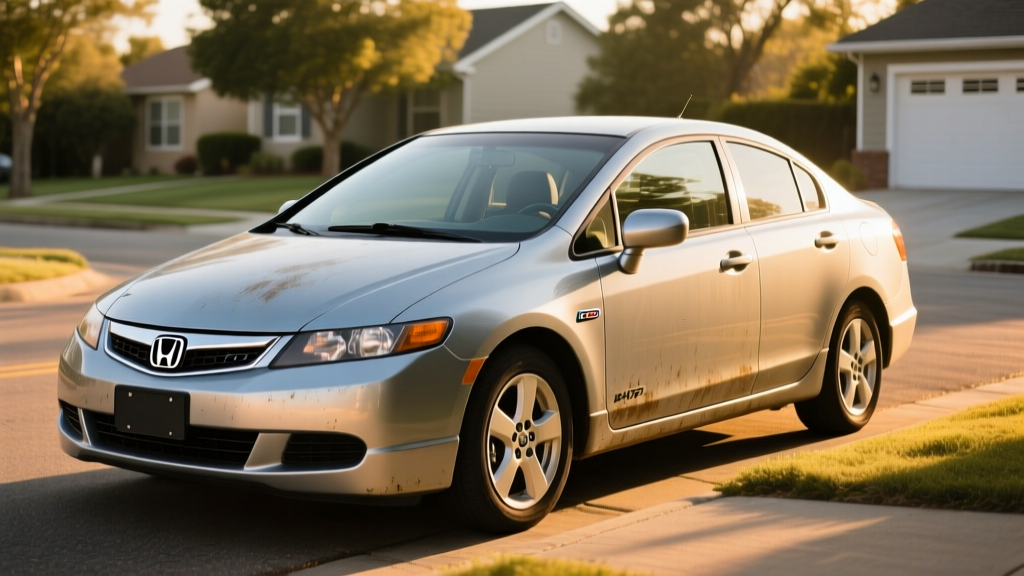
The 2007 Honda Civic Hybrid — officially badged with Honda's Integrated Motor Assist (IMA) system — was one of the first mainstream hybrids to challenge the Toyota Prius for fuel-economy supremacy. Nearly two decades later, it remains a compelling used-car proposition for budget-conscious commuters who want hybrid efficiency without plug-in complexity. With an EPA-rated 49 MPG combined, a simple powertrain, and Honda's reputation for mechanical longevity, the 2007 Civic IMA Hybrid can still deliver meaningful fuel savings at a used-car price that typically ranges from $2,500 to $5,500 depending on mileage and condition.
But there are caveats any prospective buyer must understand: the IMA nickel-metal hydride (NiMH) battery is now well past its original warranty window, replacement costs are a real consideration, and this is a conventional hybrid (HEV) — not a plug-in. Let's break down every number that matters.
| Specification | Value |
|---|---|
| Powertrain | 1.3L i-VTEC 4-cyl + 15 kW electric motor (IMA) |
| Combined Horsepower | 110 hp @ 6,000 rpm |
| Combined Torque | 123 lb-ft @ 1,000-2,500 rpm |
| Transmission | CVT (continuously variable) |
| Battery Type | NiMH (nickel-metal hydride), ~0.5 kWh |
| EPA MPG (City / Hwy / Combined) | 49 / 51 / 49 |
| Fuel Tank Capacity | 12.4 gallons |
| Total Range (est.) | ~607 miles |
| 0-60 mph | ~10.5 seconds |
| Drivetrain | Front-wheel drive |
| Original MSRP (2007) | $22,600 (base) |
| Current Used Price (2026 est.) | $2,500 – $5,500 |
HEV vs PHEV: Where the Civic IMA Fits
Before we go further, it's critical to distinguish between the two hybrid architectures on the market, because the 2007 Civic IMA is firmly in one camp:
| Feature | Conventional Hybrid (HEV) | Plug-In Hybrid (PHEV) |
|---|---|---|
| Plug-in charging required? | No — charges via engine & regen | Yes — plugs into Level 1/2 |
| Electric-only range | None (motor assists engine only) | Typically 20–50 miles |
| Battery size | Small (~0.5–1.5 kWh) | Larger (~8–25 kWh) |
| Fuel economy when battery depleted | Still efficient (hybrid mode) | Gas-only MPG (lower) |
| Federal tax credit (new) | Not eligible under §30D | Up to $7,500 (varies) |
| 2007 Civic IMA classification | ← This vehicle | — |
The Civic IMA's electric motor assists the gasoline engine during acceleration and enables idle stop-start. It cannot propel the car on electricity alone at any meaningful speed. You never plug it in; the battery recharges through regenerative braking and the engine. If you're looking for electric-only commuting, you need a PHEV like the Toyota Prius Prime or a full BEV — not this car.
Fuel Economy: EPA Ratings vs Real-World MPG
The EPA rates the 2007 Honda Civic Hybrid at 49 MPG city, 51 MPG highway, and 49 MPG combined, according to fueleconomy.gov. Those numbers were class-leading in 2007 and remain impressive for a compact sedan even today.
| Driving Condition | EPA MPG | Real-World Expectation |
|---|---|---|
| City | 49 MPG | 45–52 MPG (hybrids excel in stop-and-go) |
| Highway | 51 MPG | 44–50 MPG (aerodynamic drag at 70+ mph hurts) |
| Combined | 49 MPG | 42–49 MPG |
| Cold weather (below 35°F) | — | 38–44 MPG (engine runs more for cabin heat) |
Why Real-World MPG Varies
Honda's IMA system recovers braking energy and uses the electric motor to assist during acceleration — the two phases where gasoline engines are least efficient. This means city driving with frequent stops often yields higher MPG than sustained highway cruising, the opposite of a conventional gas car.
However, several factors erode real-world economy:
- Aged IMA battery: A degraded NiMH pack reduces the motor's assist capability, forcing the engine to work harder. Owners with original batteries report combined MPG dropping to 38–42.
- Cold weather: The 1.3L engine must run continuously to provide cabin heat (no electric heater in this generation), and the battery is less efficient at low temperatures.
- Highway speeds above 70 mph: The Civic Hybrid's aerodynamic advantage diminishes, and the small engine operates outside its efficiency sweet spot.
- Aggressive driving: Hard acceleration bypasses the electric assist window entirely.
The IMA Powertrain: How It Works (and Its Limits)
Honda's Integrated Motor Assist is fundamentally different from Toyota's Hybrid Synergy Drive (HSD). The IMA system places a thin 15 kW (20 hp) electric motor directly between the engine and transmission — a "sandwich" design. The motor cannot drive the wheels independently; it only assists the 1.3L i-VTEC four-cylinder.
Combined output is 110 horsepower and 123 lb-ft of torque. The torque figure is notable because the electric motor delivers its contribution from as low as 1,000 rpm, giving the Civic Hybrid surprisingly responsive off-the-line acceleration for a car of its era. The CVT transmission keeps the engine in its most efficient RPM band.
Performance is adequate rather than quick: expect a 0-60 mph time of roughly 10.5 seconds. Highway merging and uphill passes require planning. This car rewards smooth, anticipatory driving — which is exactly the behavior that maximizes fuel economy.
IMA Battery: Size, Chemistry, and Function
The 2007 Civic Hybrid uses a nickel-metal hydride (NiMH) battery pack with approximately 0.5 kWh of total capacity (usable capacity is even smaller). This pack is mounted behind the rear seatback, which slightly reduces trunk pass-through space compared to the non-hybrid Civic.
Unlike the lithium-ion packs in modern PHEVs and BEVs, this NiMH pack is not designed for electric-only propulsion. Its job is to store enough energy for brief motor-assist bursts and to enable the idle-stop feature, which shuts off the engine at red lights and restarts it seamlessly when you release the brake.
Battery Lifespan, Degradation, and Replacement Cost
Original Battery Warranty
Honda covered the 2007 Civic Hybrid's IMA battery under a 10-year / 100,000-mile warranty in states that adopted California's emissions standards (including CA, NY, MA, and others), and 8-year / 80,000-mile in other states. As of 2026, every 2007 Civic Hybrid is well beyond both thresholds.
What Happens When the IMA Battery Degrades?
NiMH batteries degrade gradually rather than failing catastrophically. Symptoms of a weakened IMA pack include:
- Reduced motor assist (the car feels sluggish off the line)
- More frequent engine running at idle (reduced stop-start activation)
- Lower fuel economy (typically a 5–10 MPG drop from original)
- IMA warning light on the dashboard
- In severe cases, a "check hybrid system" message
Replacement Cost Breakdown
| Option | Cost Range | Notes |
|---|---|---|
| New OEM Honda IMA battery | $2,000 – $2,800 (parts + labor) | Available through dealers; may have limited stock |
| Remanufactured IMA battery | $1,200 – $1,800 (parts + labor) | Third-party suppliers; typically 1–3 year warranty |
| Used/salvage IMA battery | $400 – $800 (parts + labor) | Risky — unknown remaining lifespan |
| Individual cell replacement (DIY) | $150 – $300 (parts only) | Requires technical skill; Dorman-style NiMH sticks |
Given that a clean 2007 Civic Hybrid sells for $2,500–$5,500 in 2026, a full OEM battery replacement at $2,800 represents a significant percentage of the car's value. Many owners opt for a remanufactured pack or sell the vehicle once the IMA battery fails. If you're buying used, always ask whether the IMA battery has been replaced and request documentation.
Tax Credits and Incentives: What Applies in 2026?
The 2007 Honda Civic Hybrid originally qualified for a federal tax credit of up to $2,100 under the Energy Policy Act of 2005. However, that credit expired long ago — both the per-manufacturer cap (Honda hit 60,000 qualifying units) and the sunset provision have eliminated it entirely.
As a used vehicle purchased in 2026, here's what applies:
- Federal §30D New EV Credit: Not applicable. This credit is for new plug-in EVs and PHEVs only; the Civic IMA is neither new nor plug-in.
- Federal Used Clean Vehicle Credit (§25E): This credit offers up to $4,000 (30% of sale price, capped) for qualified used plug-in EVs and fuel-cell vehicles purchased from a dealer. The 2007 Civic Hybrid is a conventional HEV with no plug-in capability, so it does not qualify.
- State incentives: A handful of states offer rebates or HOV-lane access for hybrids, but most have shifted focus to plug-in vehicles. Check your state's energy office for current programs.
Bottom line: there are no federal tax credits available for purchasing a 2007 Honda Civic Hybrid in 2026. The value proposition rests entirely on its low purchase price and strong fuel economy. For current §30D and §25E rules, consult the IRS Clean Vehicle Credits page.
Who Should Buy This Hybrid — and Who Shouldn't
Choose the 2007 Honda Civic IMA Hybrid if:
- You want a low-cost commuter with proven 45+ MPG real-world economy
- You don't have access to home or workplace charging (no plug needed)
- You prefer a simple, proven powertrain with widely available parts
- Your budget is under $6,000 and you want to minimize fuel spend
- You drive mostly in city/suburban stop-and-go conditions where hybrid efficiency shines
Look elsewhere if:
- You want electric-only driving — consider a used PHEV (Chevy Volt, Prius Prime) or a BEV
- You need strong highway passing power or all-wheel drive
- The car you're considering still has its original IMA battery with no replacement documentation (budget $1,500+ for replacement)
- You want modern safety features (blind-spot monitoring, automatic emergency braking) — the 2007 Civic predates these
- You want any federal or state tax incentive for your purchase
Hybrid vs PHEV vs EV — Which Fits You?
The 2007 Civic IMA occupies the simplest rung on the electrification ladder. Here's how it compares to the alternatives for a used-car buyer in 2026:
| Factor | 2007 Civic IMA (HEV) | Used PHEV (e.g., 2017 Chevy Volt) | Used BEV (e.g., 2018 Nissan Leaf) |
|---|---|---|---|
| Plug-in charging needed? | No | Yes (for EV range) | Yes (always) |
| Electric-only range | 0 miles | ~40–53 miles | ~100–150 miles |
| Used price (2026) | $2,500–$5,500 | $8,000–$14,000 | $7,000–$13,000 |
| Fuel cost per mile | ~$0.07 (at $3.20/gal) | ~$0.04 (electric) / $0.08 (gas) | ~$0.04 (electric) |
| Tax credits available | None | Possibly §25E (used) | Possibly §25E (used) |
| Maintenance complexity | Low (simple hybrid) | Medium (two powertrains) | Low (no engine) |
Reliability, Safety, and Ownership Costs
The 2007 Civic Hybrid shares its fundamental chassis, suspension, and interior with the widely praised eighth-generation Civic (2006–2011). The non-hybrid Civic of this generation is known for strong mechanical reliability, and the hybrid variant is largely the same — with the IMA system being the primary variable.
Key reliability considerations:
- IMA battery: As detailed above, this is the single biggest reliability and cost risk.
- CVT transmission: Honda's CVT from this era is generally reliable if fluid is changed at recommended intervals (every 30,000–60,000 miles). Neglected CVTs can develop shudder or failure.
- Engine: The 1.3L i-VTEC is under-stressed and durable. Timing chain (not belt) means no scheduled replacement.
- Motor-assist function: If the IMA battery is healthy, the electric motor itself is extremely reliable — it has no brushes and few wear components.
Safety Ratings
The 2007 Civic earned a 5-star frontal crash rating from NHTSA for both driver and passenger, and Good ratings from IIHS in frontal offset and side-impact tests (with side airbags). However, it lacks electronic stability control on some trims and has none of the active safety technology standard on modern vehicles. For details, check the NHTSA vehicle page.
Estimated Annual Ownership Costs (2026)
| Cost Category | Annual Estimate |
|---|---|
| Fuel (12,000 mi/yr at 45 MPG, $3.20/gal) | ~$853 |
| Insurance (varies heavily by driver/state) | $800 – $1,400 |
| Maintenance (oil, tires, brakes — hybrid regen extends brake life) | $500 – $900 |
| Registration & taxes | $50 – $200 |
| Total (excluding battery replacement) | $2,200 – $3,350 |
For comparison, a 2007 non-hybrid Civic (30 MPG combined) would cost roughly $1,280/year in fuel under the same assumptions — about $427 more annually. The hybrid's fuel savings pay for themselves if you drive more than ~10,000 miles per year, even factoring in a potential IMA battery replacement amortized over several years.
Pros
- EPA 49 MPG combined; real-world city driving can exceed 50 MPG
- Low purchase price ($2,500–$5,500 used)
- No plug-in charging needed — ideal for apartment dwellers
- Simple, proven Honda mechanicals with wide parts availability
- Regenerative braking extends brake pad life significantly
- Low annual fuel cost (~$850 at 12k miles/year)
Cons
- IMA battery likely out of warranty; replacement costs $1,200–$2,800
- No electric-only driving capability
- Modest 110 hp — slow by modern standards (10.5s to 60 mph)
- No federal or state tax credits available
- Lacks modern safety tech (AEB, blind-spot, lane-keep)
- Trunk space reduced by battery pack placement
- NiMH battery less efficient in extreme cold
Frequently Asked Questions
How many MPG does the 2007 Honda Civic IMA Hybrid get?
The EPA rates it at 49 MPG city, 51 MPG highway, and 49 MPG combined. In real-world driving, expect 42–52 MPG depending on conditions. City driving with frequent stops tends to yield the best numbers, while sustained highway driving above 70 mph and cold weather reduce efficiency. A car with a degraded original IMA battery may drop to 38–42 MPG combined.
Can I plug in the 2007 Honda Civic Hybrid to charge?
No. The 2007 Civic Hybrid is a conventional hybrid (HEV), not a plug-in hybrid (PHEV). It has no charging port. The IMA battery charges exclusively through regenerative braking and the gasoline engine. You fuel it like any other car — with gasoline at a gas station.
Is the 2007 Civic Hybrid reliable, and what does battery replacement cost?
The underlying Civic platform is very reliable. The main risk is the IMA NiMH battery, which is now beyond its original 8–10 year warranty. A remanufactured replacement runs $1,200–$1,800 installed, while a new OEM battery costs $2,000–$2,800. The electric motor and CVT are generally durable with proper maintenance. Always verify whether the IMA battery has been replaced before purchasing.
Does the 2007 Honda Civic Hybrid qualify for any tax credit in 2026?
No. The original federal hybrid tax credit for this model expired years ago. Under current IRS rules, the §30D New Clean Vehicle Credit applies only to new plug-in EVs and PHEVs, and the §25E Used Clean Vehicle Credit requires a plug-in vehicle. The Civic IMA Hybrid qualifies for neither. Consult irs.gov for the latest rules.
Hybrid vs PHEV vs EV — which should I choose?
Choose the Civic IMA Hybrid if you want the lowest upfront cost, can't plug in at home, and mostly drive in the city. Choose a used PHEV (like a Chevy Volt or Prius Prime) if you have home charging and want 30–50 miles of electric-only commuting with a gas engine for longer trips. Choose a used BEV (like a Nissan Leaf or Chevy Bolt) if you want zero gasoline, have reliable charging access, and your daily driving is under 100 miles. Each step up the electrification ladder increases purchase price but reduces per-mile fuel cost.
How far can the 2007 Civic Hybrid go on a full tank?
With a 12.4-gallon fuel tank and an EPA combined rating of 49 MPG, the theoretical range is approximately 607 miles. In real-world driving at 45 MPG combined, expect roughly 558 miles. Some hypermilers have reported exceeding 650 miles on a single tank under ideal conditions.
What should I check before buying a used 2007 Civic Hybrid?
Priority items: (1) IMA battery health — ask for replacement documentation or have a mechanic test pack voltage and assist levels. (2) CVT fluid condition and service history. (3) Any IMA or check-engine warning lights. (4) Standard used-car checks: rust, suspension, brakes, timing chain rattle on cold start. A pre-purchase inspection by a Honda-qualified mechanic is strongly recommended given the vehicle's age.