Quick Verdict: A Pioneer That Still Commutes
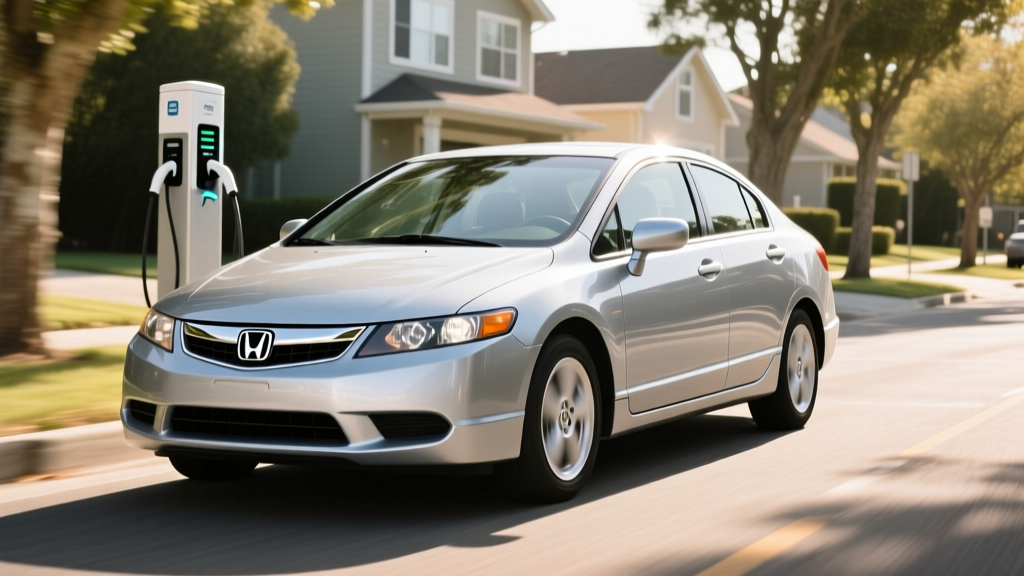
The 2007 Honda Civic Hybrid sedan was one of the first mainstream hybrids to challenge the Toyota Prius in the US market, and nearly two decades later, surviving examples still serve as ultra-low-cost commuter cars. Honda's Integrated Motor Assist (IMA) system pairs a 1.3-liter four-cylinder engine with a thin electric motor sandwiched between the engine and transmission — a mild-hybrid approach that prioritizes fuel efficiency over electric-only driving. If you're evaluating a used 2007 Civic Hybrid today, the big questions center on IMA battery health, real-world fuel economy, and whether this aging HEV (conventional hybrid) still out-economizes a modern gas car or a newer plug-in hybrid.
This guide covers the exact EPA numbers, real-world MPG expectations, battery replacement economics, and a clear decision framework for whether this car fits your commute in 2026.
HEV vs. PHEV: What the 2007 Civic Hybrid Actually Is
Before diving into specs, it's critical to classify this car correctly. The 2007 Honda Civic Hybrid is a conventional hybrid electric vehicle (HEV) — not a plug-in hybrid (PHEV) and not a battery electric vehicle (BEV).
| Feature | HEV (2007 Civic Hybrid) | PHEV (e.g., 2026 Toyota Prius Prime) | BEV (e.g., 2026 Tesla Model 3) |
|---|---|---|---|
| Plug-in charging | No — never plugs in | Yes — Level 1/Level 2 | Yes — Level 1/2/DC fast |
| Electric-only range | ~0 miles (motor assists only) | 30–45 miles typical | 250–360 miles typical |
| Battery size | ~0.35 kWh (NiMH) | 10–18 kWh (lithium-ion) | 50–82 kWh (NMC/LFP) |
| Primary fuel | Gasoline | Gasoline + electricity | Electricity only |
| Regenerative braking | Yes | Yes | Yes |
Honda's IMA system cannot propel the car on electricity alone at any meaningful speed. The 10-kW electric motor assists the gasoline engine during acceleration and enables idle stop (the engine shuts off at red lights), but the wheels are always driven primarily by the combustion engine. You will never plug this car in — it refuels exclusively at gas stations and recovers energy through regenerative braking.
Fuel Economy: EPA Ratings and Real-World MPG
The 2007 Honda Civic Hybrid carries EPA ratings that were impressive for the era and remain competitive with modern non-hybrid compacts.
| Driving Cycle | EPA Rating | Real-World Expectation |
|---|---|---|
| City | 49 MPG | 42–50 MPG |
| Highway | 51 MPG | 38–46 MPG |
| Combined | 42 MPG* | 36–44 MPG |
*Note: The EPA revised its testing methodology for 2008+ model years. The original 2007 window sticker displayed 49 city / 51 highway, but the adjusted combined figure used on fueleconomy.gov reflects a combined rating closer to 42 MPG under modern testing standards.
Why real-world highway MPG drops: The IMA system's strength is city driving — frequent stops allow regenerative braking to recapture energy and idle stop to eliminate fuel waste. On sustained highway runs above 65 mph, the small electric motor contributes less, and the 1.3L engine works harder, pulling real-world highway economy down to the high 30s or low 40s. In mixed suburban commuting with moderate stop-and-go, owners consistently report 40–44 MPG.
Cold-weather impact: Expect a 5–10% MPG reduction in winter. The engine runs richer during warm-up, the NiMH battery is less efficient at low temperatures, and the idle-stop feature may be disabled until the cabin reaches operating temperature.
Powertrain and Performance Specs
| Specification | 2007 Honda Civic Hybrid |
|---|---|
| Engine | 1.3L i-DSI 4-cylinder (8-valve) |
| Engine output | 93 hp @ 6,000 rpm / 89 lb-ft @ 4,600 rpm |
| Electric motor (IMA) | 10 kW (13 hp) / 15 lb-ft assist |
| Combined system output | ~110 hp |
| Transmission | CVT (continuously variable) |
| 0–60 mph | ~11.5 seconds |
| Battery type | NiMH (nickel-metal hydride), ~0.35 kWh |
| Drivetrain | Front-wheel drive |
| Curb weight | ~2,850 lbs |
| Fuel tank | 13.2 gallons |
| Total range (est.) | ~500–550 miles per tank |
Acceleration is leisurely. The 11.5-second 0–60 time means highway merging requires planning, and steep grades will push the CVT into high-rpm drone. This car was engineered for efficiency, not performance — and that trade-off is immediately apparent behind the wheel.
IMA Battery Lifespan, Warranty, and Replacement Cost
Original Battery Warranty
Honda warranted the IMA battery for 8 years / 80,000 miles in most states, and 10 years / 150,000 miles in California Air Resources Board (CARB) states (CA, CT, ME, MA, NJ, NY, OR, RI, VT, WA). That factory coverage has expired for all 2007 examples by 2026.
How long do IMA batteries actually last? The NiMH pack in the 2007 Civic Hybrid is one of the most debated components in Honda's hybrid history. Real-world data shows wide variance:
- Best case: 120,000–150,000+ miles with gradual capacity loss
- Typical case: 80,000–120,000 miles before IMA warning light or reduced assist
- Worst case: Premature failure at 60,000–80,000 miles (more common in hot climates and with frequent deep-discharge cycles)
Unlike modern lithium-ion packs, NiMH cells degrade through memory-effect cycling and heat stress. When the IMA battery degrades below a usable threshold, the dashboard displays an IMA warning light, the electric assist disappears, idle stop is disabled, and fuel economy drops to roughly that of a conventional Civic (around 30–34 MPG combined).
Replacement cost in 2026:
| Option | Cost Range | Notes |
|---|---|---|
| New OEM Honda IMA battery | $2,000–$2,800 (parts + labor) | Honda dealer; increasingly difficult to source for 2007 MY |
| Refurbished/remanufactured pack | $800–$1,400 | Aftermarket suppliers; warranty typically 1–3 years |
| Used salvage pack | $300–$600 | Risky — remaining lifespan unknown |
| Grid charger reconditioning (DIY) | $50–$150 (equipment) | Can extend life temporarily; requires technical skill |
For a 2007 Civic Hybrid with a current market value of $2,500–$5,000 (depending on mileage and condition), a $2,500 OEM battery replacement often exceeds the car's value. Most buyers opt for a refurbished pack or negotiate the purchase price to account for an imminent battery swap.
Pricing and Tax Credit Eligibility
The 2007 Honda Civic Hybrid originally carried an MSRP of approximately $22,600 (base) to $24,600 (with navigation). In the 2026 used-car market, expect to pay:
- $2,500–$3,500: High-mileage examples (140,000+ miles), potential IMA battery issues
- $3,500–$5,000: Moderate-mileage examples (90,000–130,000 miles), IMA battery functional or recently replaced
- $5,000–$6,500: Low-mileage, well-maintained examples with documented battery replacement
Tax credit status: The 2007 Civic Hybrid originally qualified for a federal alternative fuel tax credit (up to $2,100) under pre-2010 rules, but Honda's credit phase-out cap was reached in 2007, meaning many late-2007 purchasers received reduced or no credit. No federal tax credit is available for this vehicle in 2026. The current IRS §30D Clean Vehicle Credit applies only to new qualifying plug-in vehicles (PHEVs and BEVs) meeting battery-sourcing, MSRP, and income thresholds. Conventional hybrids like this Civic do not qualify. Some states may offer minimal used-EV rebates for older hybrids, but these are rare and jurisdiction-specific — check your state energy office for current programs.
Reliability and Ownership Costs
Beyond the IMA battery, the 2007 Civic Hybrid shares much of its mechanical architecture with the conventional 8th-generation Civic, which is generally regarded as a reliable platform. Key reliability notes:
- CVT transmission: Generally durable with regular fluid changes (every 30,000–60,000 miles). Some units develop shudder or belt-slip at high mileage — listen for unusual whining or hesitation.
- Engine block cracking: A known issue in 2006–2009 Civic engines (including the hybrid's 1.3L) where the engine block can crack near the motor mount, causing coolant leaks. Honda issued an extended warranty for this defect, but coverage has largely expired. Inspect for coolant loss or visible cracks.
- Motor mounts: The hybrid-specific motor mounts wear faster than conventional Civic mounts due to the idle-stop cycling. Budget $200–$400 for replacement if you feel excess vibration at idle.
- Brakes: Regenerative braking reduces wear on the friction brakes. Many owners report 80,000–100,000+ miles on original brake pads.
Estimated annual operating cost (based on 15,000 miles/year, $3.40/gallon regular unleaded, 40 MPG real-world combined):
- Fuel: ~$1,275/year
- Insurance: ~$800–$1,100/year (varies by state and driver profile)
- Maintenance: ~$400–$600/year (oil, filters, tires, minor repairs)
- Total: ~$2,475–$2,975/year
Compare this to a 2026 gas-only compact averaging 30 MPG combined: ~$1,700/year in fuel alone. The Civic Hybrid saves roughly $400–$500 annually in fuel — meaningful, but not enough to offset a major repair like a $2,500 battery replacement.
Who Should Buy the 2007 Civic Hybrid (and Who Shouldn't)
Choose This Car If:
- You need an ultra-low-purchase-price commuter ($3,000–$5,000)
- Your commute is mostly city/suburban stop-and-go (where the IMA system shines)
- You cannot charge at home (no plug required)
- You want 40+ MPG without the complexity of a PHEV or BEV
- You're comfortable budgeting $1,000–$2,000 for a potential IMA battery replacement
Look Elsewhere If:
- Your commute is mostly highway (highway MPG advantage shrinks)
- You want electric-only driving or plug-in capability
- You need modern safety tech (no automatic emergency braking, lane-keep, or blind-spot monitoring)
- You drive in a region with strict emissions inspections that flag IMA codes
- You want a vehicle with remaining factory warranty coverage
Hybrid vs. PHEV vs. EV: Which Fits You?
| Factor | 2007 Civic Hybrid (HEV) | Used PHEV (e.g., 2018 Prius Prime) | Used BEV (e.g., 2019 Chevy Bolt) |
|---|---|---|---|
| Purchase price (2026) | $3,000–$5,000 | $14,000–$19,000 | $12,000–$17,000 |
| Home charging needed? | No | Recommended (120V works) | Yes (240V strongly recommended) |
| Daily electric driving | None | 20–25 miles | 200+ miles |
| Fuel cost per mile | ~$0.085 | ~$0.04–$0.07 (mixed) | ~$0.03–$0.05 |
| Maintenance complexity | Low (mature tech) | Moderate | Low (fewer moving parts) |
| Safety tech | Minimal | Basic | Moderate |
If your budget is strictly under $5,000 and you have no home-charging option, the 2007 Civic Hybrid remains one of the most fuel-efficient vehicles available at that price point. But if you can stretch to $14,000+ and have access to a 120V outlet, a used PHEV like the Prius Prime gives you 25 miles of electric-only commuting with a gas backup — dramatically reducing fuel spend. And if you have Level 2 home charging and a sub-200-mile daily route, a used BEV eliminates gasoline entirely.
Frequently Asked Questions
How many MPG does the 2007 Honda Civic Hybrid get?
The EPA rates the 2007 Civic Hybrid at 49 city / 51 highway (original sticker) with an adjusted combined of approximately 42 MPG under modern EPA testing. Real-world owners typically see 36–44 MPG combined depending on driving mix, with city-heavy commutes yielding the best results and sustained highway driving dropping to the high 30s.
Does the 2007 Civic Hybrid need to be plugged in?
No. This is a conventional hybrid (HEV). The small NiMH battery charges exclusively through regenerative braking and engine-driven generation. There is no plug, no charging port, and no electric-only driving mode. You refuel only at gas stations.
How much does it cost to replace the IMA battery?
A new OEM IMA battery costs $2,000–$2,800 installed at a Honda dealer, though sourcing a new pack for the 2007 model year is increasingly difficult. Refurbished aftermarket packs run $800–$1,400 with 1–3 year warranties. Used salvage packs cost $300–$600 but carry unknown remaining life.
Is the 2007 Civic Hybrid reliable?
The platform is generally reliable with two major caveats: the IMA battery will eventually need replacement (typically 80,000–120,000 miles), and the engine block cracking issue on 2006–2009 Civics can lead to costly coolant-leak repairs. With those items addressed or inspected, the powertrain, CVT, and chassis are durable.
Does the 2007 Civic Hybrid qualify for any tax credit in 2026?
No. The federal §30D Clean Vehicle Credit applies only to new plug-in vehicles (PHEVs and BEVs) meeting current battery-sourcing, MSRP, and buyer-income requirements. Conventional hybrids are not eligible. The original federal hybrid credit for this model expired in 2007–2008 when Honda hit the manufacturer cap. Check your state's energy office for any local used-hybrid incentives, but these are uncommon.
Can the 2007 Civic Hybrid drive on electric power alone?
Not at any practical speed. The IMA system's 10-kW motor assists the gasoline engine during acceleration and enables idle stop at traffic lights, but it cannot propel the vehicle independently. The engine is always the primary power source.
What's the total driving range on a full tank?
With a 13.2-gallon fuel tank and real-world combined economy of approximately 40 MPG, expect 500–530 miles per tank under normal conditions. Exceptional city driving can push this above 550 miles.
Sources: EPA Fuel Economy — 2007 Honda Civic Hybrid, IRS Clean Vehicle Credits