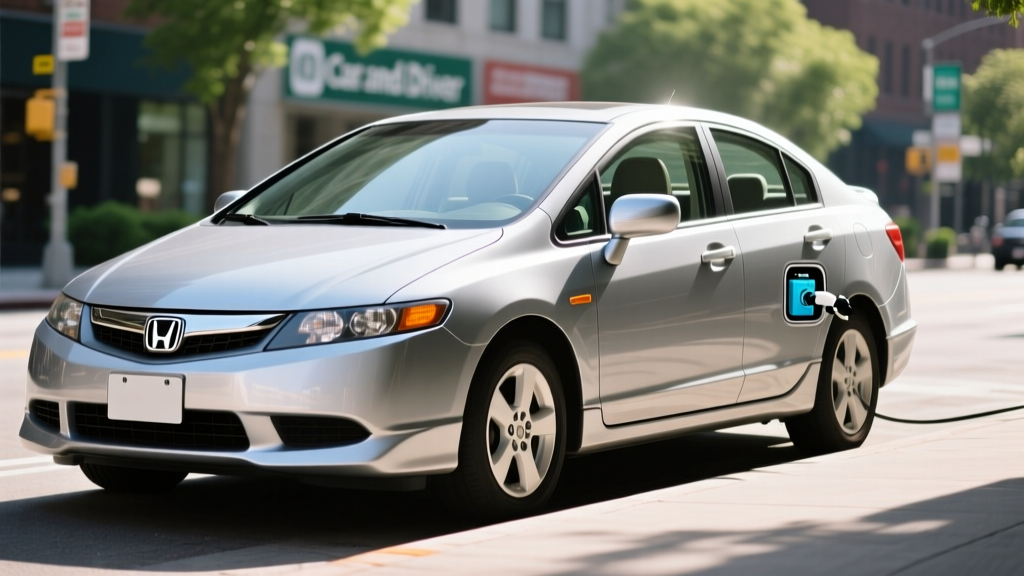
If you're researching the 2007 Honda Civic Hybrid in 2026, you're likely looking at one of the most affordable used hybrids on the market. With examples routinely selling for $3,500–$6,000 depending on mileage and condition, this second-generation Civic Hybrid remains a compelling budget commuter — provided you understand its battery risks and modest performance envelope.
This guide covers everything a used-car buyer needs: real-world MPG versus EPA estimates, the Integrated Motor Assist (IMA) battery's expected lifespan and replacement cost, powertrain specs, and whether this 17-year-old hybrid still makes financial sense compared to a newer used EV or gas car.
2007 Honda Civic Hybrid: Powertrain and Key Specs
The 2007 Civic Hybrid uses Honda's Integrated Motor Assist (IMA) system — a mild-hybrid architecture where a small electric motor is sandwiched between the gasoline engine and the transmission. Unlike Toyota's full-hybrid system (used in the Prius), the IMA motor cannot propel the car on electric power alone under normal conditions. The gasoline engine is always engaged during acceleration, though the system can shut off cylinders at cruising speeds and during deceleration to save fuel.
| Specification | Value |
|---|---|
| Gasoline Engine | 1.3L inline-4, i-VTEC, 93 hp @ 6,000 rpm |
| Electric Motor (IMA) | 15 kW (20 hp), 76 lb-ft torque |
| Combined System Output | 110 hp @ 6,000 rpm / 123 lb-ft @ 1,000–2,500 rpm |
| Transmission | CVT (Continuously Variable Transmission) |
| Hybrid Battery | NiMH (Nickel-Metal Hydride), ~0.6 kWh nominal |
| Drivetrain | Front-wheel drive |
| Curb Weight | ~2,850 lbs |
| 0–60 mph | ~10.5 seconds |
| Hybrid Type | Conventional HEV (no plug-in capability) |
The combined 110 hp sounds adequate on paper, but real-world acceleration feels modest — especially when merging onto highways or climbing grades. The CVT keeps engine revs high under hard acceleration, producing a characteristic drone. This is a car optimized for fuel economy, not performance.
Fuel Economy: EPA Ratings vs. Real-World MPG
The 2007 Civic Hybrid's fuel economy is the primary reason buyers seek it out. Here's what the EPA officially rates and what owners actually report:
| Driving Scenario | EPA Estimate | Real-World Owner Reports |
|---|---|---|
| City | 49 MPG | 38–45 MPG |
| Highway | 51 MPG | 40–48 MPG |
| Combined | 42 MPG (revised) / 50 MPG (original) | 38–44 MPG |
In practice, owners report that the 2007 Civic Hybrid falls short of its EPA numbers more noticeably than the competing Toyota Prius of the same era. Several factors contribute:
- IMA system limitations: The mild-hybrid system provides less electric assist in stop-and-go traffic compared to Toyota's full-hybrid system, reducing the city-driving advantage hybrids typically enjoy.
- Battery degradation: On a 17-year-old vehicle, the NiMH battery pack has likely lost significant capacity, reducing the electric motor's contribution and pushing the gasoline engine to work harder.
- Driving style sensitivity: Aggressive acceleration defeats the IMA system's efficiency gains. Owners who drive conservatively report numbers closer to EPA estimates.
Even at a real-world 40 MPG combined, the 2007 Civic Hybrid delivers roughly 33% better fuel economy than a comparable 2007 Civic EX (rated at ~30 MPG combined). At $3.50/gallon and 12,000 miles/year, that's approximately $350–$450 in annual fuel savings over the non-hybrid model.
HEV vs. PHEV vs. EV: Where Does This Civic Fit?
The 2007 Civic Hybrid is a conventional hybrid electric vehicle (HEV). It charges its small battery exclusively through regenerative braking and the gasoline engine — you never plug it in. This is fundamentally different from a plug-in hybrid (PHEV) or a battery-electric vehicle (BEV).
| Feature | HEV (e.g., 2007 Civic Hybrid) | PHEV (e.g., 2026 RAV4 Prime) | BEV (e.g., 2026 Tesla Model 3) |
|---|---|---|---|
| Plug-in Required? | No | Yes (Level 1 or 2) | Yes (Level 2 or DC fast) |
| Electric-Only Range | 0 miles (motor assists only) | 25–45 miles typical | 250–400+ miles |
| Gasoline Engine? | Yes (primary power) | Yes (backup after battery depletes) | No |
| Home Charging Needed? | No | Recommended for best value | Essential |
| Federal Tax Credit (New) | None | Up to $7,500 (§30D, if eligible) | Up to $7,500 (§30D, if eligible) |
| Used Purchase Price Range (2026) | $3,000–$6,000 | $25,000–$45,000 | $15,000–$55,000+ |
For a 2026 buyer, the 2007 Civic Hybrid makes sense if you want maximum fuel efficiency with zero lifestyle change — no charging infrastructure, no range planning, no electrical upgrades. You simply drive it like a gas car and visit the gas station less often.
IMA Battery Lifespan, Degradation, and Replacement Cost
The single biggest concern with any used hybrid is the traction battery. The 2007 Civic Hybrid uses a Nickel-Metal Hydride (NiMH) battery pack mounted behind the rear seat. Here's what you need to know about its longevity:
Expected battery lifespan: NiMH batteries in the IMA system typically last 10–15 years or 120,000–180,000 miles before degradation becomes significant enough to trigger an IMA warning light or noticeable fuel-economy decline. Many original batteries in 2007 Civic Hybrids have already failed or been replaced by now.
Battery replacement cost (2026 market):
- Remanufactured battery (most common): $1,500–$2,500 installed at an independent hybrid specialist
- New OEM Honda battery: $3,000–$4,000+ installed at a dealership (limited availability for a 2007 model)
- Used/salvage battery: $500–$1,000, but carries significant risk given age
- Aftermarket NiMH pack (e.g., Bumblebee, Dorman): $1,200–$2,000 installed
If you're evaluating a 2007 Civic Hybrid for purchase, ask whether the IMA battery has been replaced and request documentation. A recently replaced remanufactured battery with a warranty is a significant positive. An original 17-year-old battery that hasn't failed yet is living on borrowed time — budget $2,000 for a replacement within your first year of ownership.
Signs of IMA battery degradation to watch for:
- IMA warning light on the dashboard
- Noticeable drop in fuel economy (5+ MPG below expected)
- State of Charge (SoC) gauge fluctuating rapidly or never reaching full
- Reduced regenerative braking feel
- Engine running more frequently at stops (auto-stop not engaging)
Reliability, Common Issues, and Long-Term Ownership
Beyond the IMA battery, the 2007 Civic Hybrid shares most of its mechanical components with the conventional 8th-generation Civic (2006–2011), which is generally regarded as one of Honda's more reliable generations. However, there are known issues to investigate:
Common problems reported by owners:
- Engine block cracking (1.3L): Some 2006–2009 Civic Hybrids developed cracks in the engine block, leading to coolant leaks. Honda issued a service bulletin and extended warranty coverage for affected engines to 10 years. Check for coolant loss or milky oil.
- CVT shudder/judder: The continuously variable transmission can develop a shudder during low-speed acceleration, often resolved by a CVT fluid flush with Honda HCF-2 fluid.
- Motor mount wear: The additional weight and torque characteristics of the hybrid system can accelerate motor mount degradation, causing vibration at idle.
- 12V battery drain: If the car sits unused for extended periods, the 12V auxiliary battery can drain, preventing the hybrid system from booting. This is separate from the IMA traction battery.
For safety context, the 2007 Civic earned Good ratings from the IIHS in frontal offset and side-impact crash tests (with side airbags). NHTSA awarded it 5 stars for frontal crash protection. See nhtsa.gov for full crash-test data.
Does the 2007 Honda Civic Hybrid Qualify for Any Tax Credit?
No. The 2007 Honda Civic Hybrid does not qualify for the current federal §30D Clean Vehicle Credit. That credit applies only to new plug-in electric vehicles (PHEVs and BEVs) meeting specific battery-sourcing, MSRP, and buyer-income requirements as outlined by the IRS.
Additionally, the used EV tax credit (up to $4,000 under §25E) applies only to used plug-in electric vehicles — meaning PHEVs and BEVs with at least 7 kWh of battery capacity. The 2007 Civic Hybrid, as a conventional HEV with a ~0.6 kWh NiMH battery that cannot be plugged in, does not qualify for this credit either.
Some states or municipalities may offer registration fee reductions or HOV lane access for hybrids, but these programs vary by jurisdiction and have largely sunset for older vehicles. Check your state's DMV or energy office for current incentives.
Who Should Buy the 2007 Civic Hybrid — and Who Shouldn't
Choose This If:
- You need a sub-$5,000 commuter with excellent fuel economy
- You have no access to home or workplace charging (rules out PHEV/EV)
- Your commute is mostly city/suburban driving under 45 mph
- You want minimal maintenance and proven Honda mechanicals
- You drive 10,000–15,000 miles/year and want to minimize fuel spend
Look Elsewhere If:
- You want modern safety tech (AEB, lane-keep, blind-spot) — this car has none
- You need strong highway passing power or tow capability
- You want plug-in electric range or qualify for EV tax credits
- You're uncomfortable budgeting $2,000+ for a potential battery replacement
- You prioritize infotainment, Apple CarPlay, or driver-assist features
Frequently Asked Questions
How many MPG does the 2007 Honda Civic Hybrid actually get?
The EPA revised rating is 49 city / 51 highway / 42 combined MPG. In real-world driving with a healthy battery, expect 38–44 MPG combined. A degraded IMA battery can drop this to 32–36 MPG until replaced.
Is the 2007 Civic Hybrid a plug-in hybrid?
No. It is a conventional hybrid (HEV). The battery charges through regenerative braking and the gasoline engine. You never plug it in, and it cannot drive on electric power alone.
How much does it cost to replace the hybrid battery?
A remanufactured NiMH battery pack costs $1,500–$2,500 installed at an independent hybrid shop. New OEM Honda batteries run $3,000–$4,000+ but may be difficult to source for a 2007 model year vehicle.
Is the 2007 Honda Civic Hybrid reliable?
Mechanically, yes — the 1.3L engine and CVT are generally durable with proper maintenance. The primary reliability risk is IMA battery failure, which is nearly inevitable on an original battery at this age. Budget for a replacement if the battery hasn't been swapped.
Does the 2007 Civic Hybrid qualify for any federal tax credit?
No. Federal EV tax credits (§30D for new, §25E for used) apply only to plug-in vehicles. The 2007 Civic Hybrid is a conventional HEV and is ineligible for any federal purchase incentive.
How does it compare to a 2007 Toyota Prius?
The 2007 Prius (rated ~46 MPG combined revised) uses a full-hybrid system that delivers better real-world city MPG, more electric-only low-speed driving, and a more spacious hatchback body. The Civic Hybrid offers a more conventional driving feel and slightly sportier handling, but the Prius generally delivers better real-world efficiency and has a larger hybrid-battery replacement ecosystem.
What should I check before buying a used 2007 Civic Hybrid?
Prioritize: (1) IMA battery health — ask for a SoC test or scan-tool reading, (2) engine block condition — check for coolant leaks or a history of block replacement under Honda's extended warranty, (3) CVT fluid service history, (4) whether the IMA battery has been previously replaced and what warranty came with it. A pre-purchase inspection at a Honda dealer or hybrid specialist is strongly recommended.