Quick Verdict: A Pioneer That Still Delivers Real-World MPG
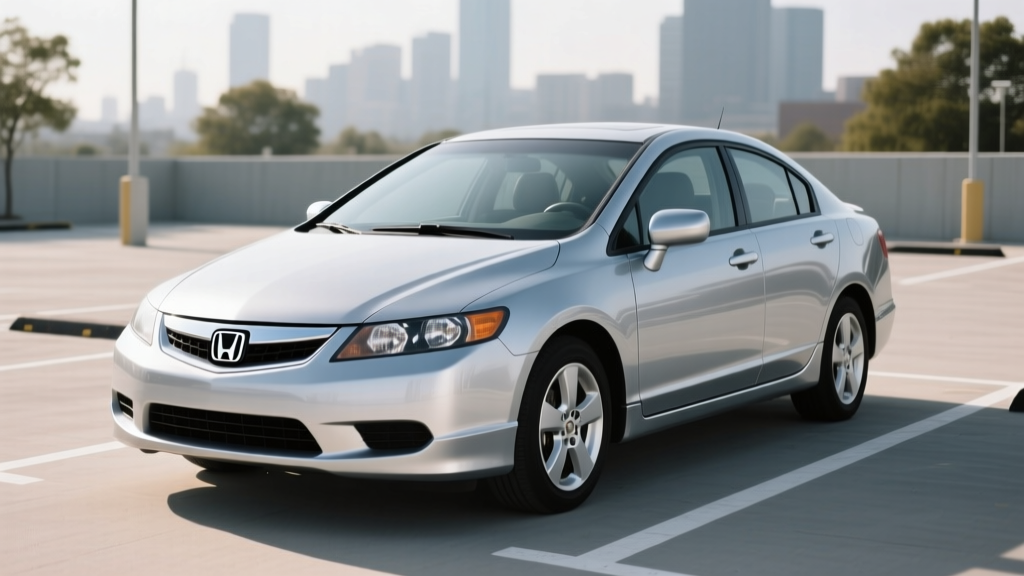
The 2007 Honda Civic Sedan Hybrid occupies a unique space in the used-car market nearly two decades after its debut. As one of the earliest mainstream gasoline-electric hybrids sold in the United States, it helped prove that electrified powertrains could work for everyday commuters. In 2026, this second-generation Civic Hybrid remains a budget-friendly entry point into hybrid ownership — typically changing hands for $3,500–$6,500 depending on mileage and condition — while still delivering fuel economy that rivals many modern non-hybrid compacts.
But buying a 19-year-old hybrid raises specific concerns that don't apply to conventional used cars: the health of the nickel-metal hydride (NiMH) traction battery, the availability of replacement cells, and whether the fuel savings justify the risk. This guide breaks down every number you need before handing over cash.
| Specification | Value |
|---|---|
| Powertrain | 1.3L i-VTEC 4-cylinder + IMA electric motor |
| Combined Horsepower | 110 hp @ 6,000 rpm |
| Combined Torque | 123 lb-ft @ 1,000–2,500 rpm |
| Transmission | CVT (continuously variable) |
| EPA MPG (City / Highway / Combined) | 49 / 51 / 50 (original EPA); revised to 40 / 45 / 42 |
| Fuel Tank | 12.4 gallons |
| Total Range | ~520 miles (at revised 42 MPG combined) |
| Traction Battery | NiMH, ~0.65 kWh (assist-only, no EV mode) |
| 0–60 mph | ~11.5 seconds |
| Curb Weight | 2,857 lbs |
| Original MSRP (2007) | $22,600 (single trim) |
| Typical Used Price (2026) | $3,500–$6,500 |
How Many MPG Does the 2007 Civic Hybrid Actually Get?
Fuel economy is the entire reason this car exists, and the numbers require some historical context. When the 2007 Civic Hybrid launched, Honda advertised an extraordinary 49 city / 51 highway / 50 combined MPG under the EPA's older testing methodology. However, the EPA revised its testing procedures for the 2008 model year to better reflect real-world driving (higher speeds, air conditioning use, cold starts), and the 2007 Civic Hybrid's window sticker was retroactively restated to 40 city / 45 highway / 42 combined MPG.
| Driving Scenario | Original EPA | Revised EPA | Real-World Owner Reports |
|---|---|---|---|
| City | 49 MPG | 40 MPG | 38–46 MPG |
| Highway | 51 MPG | 45 MPG | 40–50 MPG |
| Combined | 50 MPG | 42 MPG | 40–47 MPG |
The revised 42 MPG combined is the number to anchor on. According to data aggregated on fueleconomy.gov, owners of the 2007 Civic Hybrid report real-world averages clustering between 40 and 47 MPG combined, with several drivers exceeding the EPA estimate through hypermiling techniques and gentle city driving.
Hybrids typically exceed their EPA city estimate in stop-and-go traffic because regenerative braking recaptures energy that a conventional car wastes as heat. If your commute involves frequent stops — suburban arterials, school runs, downtown traffic — expect the 2007 Civic Hybrid to perform at or above its 40 MPG city rating. Sustained 75+ MPH highway driving with A/C running will pull numbers toward the low 40s.
Understanding the IMA Powertrain: How Honda's Hybrid System Works
The 2007 Civic Hybrid uses Honda's Integrated Motor Assist (IMA) system, which is fundamentally different from the series-parallel hybrid architecture Toyota popularized with the Prius. Understanding this distinction matters for both driving feel and long-term maintenance expectations.
In the IMA system, a thin electric motor (15 kW / 20 hp) is sandwiched directly between the 1.3-liter i-VTEC gasoline engine and the CVT transmission. The motor cannot propel the car on electric power alone — it exists solely to assist the gasoline engine during acceleration and to recapture energy during braking. This makes the Civic Hybrid what engineers call a mild parallel hybrid.
The gasoline engine produces 93 hp on its own, and the electric motor adds up to 20 hp during combined output, yielding the rated 110 hp system total. Because the electric assist is modest, the Civic Hybrid's fuel economy advantage comes primarily from three strategies:
- Idle stop: The engine shuts off at stops and restarts seamlessly when you lift off the brake — saving fuel that would otherwise be burned at zero MPH.
- Regenerative braking: The IMA motor acts as a generator during deceleration, converting kinetic energy back into battery charge.
- Cylinder deactivation: Under light-load cruising, the engine deactivates all four cylinders (VCM — Variable Cylinder Management), reducing pumping losses. The IMA motor provides just enough torque to maintain speed.
The result is a driving experience that feels nearly identical to a conventional Civic — the same steering, the same road manners — with notably fewer stops at the gas station. The CVT keeps the engine in its most efficient RPM range, though some drivers find its drone under hard acceleration unpleasant.
Conventional Hybrid (HEV) vs. Plug-In Hybrid (PHEV) — Where Does the Civic Fit?
| Feature | HEV (e.g., 2007 Civic Hybrid) | PHEV (e.g., 2026 RAV4 Prime) | BEV (e.g., 2026 Tesla Model 3) |
|---|---|---|---|
| Plugs in? | No — charges via regen & engine | Yes — Level 1/2 AC charging | Yes — Level 1/2/DC charging |
| Electric-only range | 0 miles (motor assist only) | 25–45 miles typical | 250–400+ miles (full range) |
| Gasoline engine? | Yes (primary power source) | Yes (backup after battery depletes) | No |
| Fueling / charging | Gas station only | Gas station + home outlet/charger | Home charger + public DC |
| Tailpipe emissions | Low (high MPG) | Low to zero (depends on EV-mode usage) | Zero at tailpipe |
| Federal tax credit (§30D) | Not eligible | Up to $7,500 (if eligible) | Up to $7,500 (if eligible) |
| Ideal for | No home charging; budget buyer | Home charging + occasional long trips | Home charging; daily commute <200 mi |
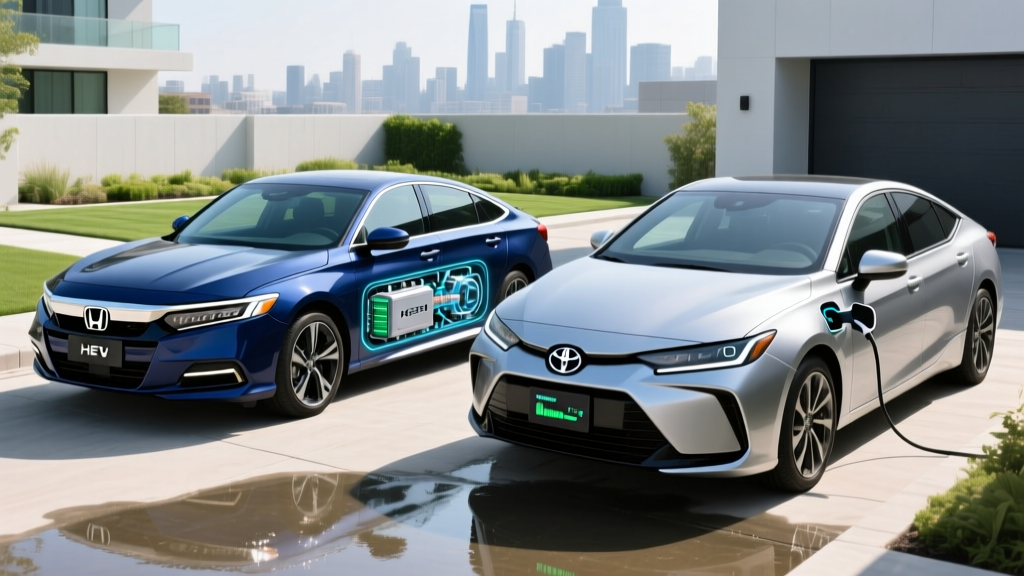
The 2007 Honda Civic Sedan Hybrid is a conventional hybrid electric vehicle (HEV). It has no plug, no charging port, and no electric-only driving mode. The small NiMH battery pack charges exclusively through regenerative braking and engine-driven generation. You fuel it at a gas station exactly like any other car — you simply visit less often.
This is a critical distinction because many shoppers new to electrified vehicles conflate all hybrids with plug-in hybrids. A PHEV like the Toyota RAV4 Prime or Chrysler Pacifica Hybrid carries a much larger battery (typically 12–20 kWh) that can be charged from a wall outlet and provides 25–45 miles of pure electric driving before the gasoline engine engages. A BEV (battery electric vehicle) has no gasoline engine at all.
The Civic Hybrid's HEV architecture is actually an advantage for certain buyers: no charging infrastructure is needed. If you live in an apartment without charging access, park on the street, or simply don't want to think about plugging in, a conventional hybrid delivers meaningful fuel savings with zero lifestyle change.
Battery Health, Lifespan, and Replacement Costs
The single biggest concern for any used hybrid buyer is the traction battery. The 2007 Civic Hybrid uses a nickel-metal hydride (NiMH) battery pack mounted behind the rear seat. This pack contains 11 modules (132 individual cells) operating at approximately 158 volts nominal, with a total capacity of roughly 0.65 kWh — tiny by modern standards, but sufficient for its assist-and-regen role.
Original Battery Warranty
Honda warranted the IMA battery for 8 years / 80,000 miles in most states, and 10 years / 150,000 miles in California Air Resources Board (CARB) states (CA, CT, MA, ME, NJ, NY, OR, RI, VT, WA). By 2026, all original factory warranties have expired regardless of mileage.
Real-World Battery Longevity
NiMH batteries in Honda's IMA system have a mixed track record. Many 2006–2011 Civic Hybrid owners reported IMA battery failures between 80,000 and 120,000 miles, and Honda faced a class-action lawsuit over premature battery degradation in these model years. Some owners experienced multiple battery replacements under warranty. However, a meaningful number of these cars have surpassed 200,000 miles on a second or third battery pack.
NiMH chemistry degrades differently than the lithium-ion packs in modern EVs. Rather than gradual capacity loss, NiMH modules tend to develop cell imbalances — one or two weak modules drag down the entire pack, triggering the IMA warning light and reducing fuel economy and assist performance.
Battery Replacement Options and Costs (2026)
| Option | Estimated Cost | Notes |
|---|---|---|
| New OEM Honda battery | $2,000–$2,800 (part) + $300–$500 labor | May be discontinued or backordered; check dealer |
| Remanufactured battery (e.g., BumbleBee, Dorman) | $1,200–$1,800 + labor | Replaced weak modules, reconditioned; 1–3 year warranty typical |
| Used/salvage battery | $400–$800 + labor | High risk — unknown remaining life; gamble |
| DIY module replacement | $150–$350 (parts) | Requires high-voltage safety knowledge; individual grid/stick replacement |
At current used-car values of $3,500–$6,500, a $2,000+ OEM battery replacement represents a substantial percentage of the vehicle's worth. Many owners opt for remanufactured packs or sell the car once the IMA light appears. Factor this cost into your purchase negotiation — an IMA warning light on a test drive is a $1,500+ bargaining chip.
Is the 2007 Civic Hybrid Reliable Beyond the Battery?
Outside the IMA battery, the 2007 Civic Hybrid shares most of its mechanical components with the conventional 2006–2011 Civic sedan, which carries a strong reliability reputation. The 1.3L i-VTEC engine is under-stressed and long-lived. The CVT, while not beloved for its driving feel, has proven durable with regular fluid changes (Honda HMMF fluid every 30,000–60,000 miles).
Common non-hybrid issues to inspect on any 2007 Civic include:
- Engine block cracking: Some 2006–2009 1.3L and 1.8L Civics developed coolant leaks from hairline cracks in the engine block. Check for coolant loss or sweet-smelling exhaust.
- Motor mount wear: The front and side engine mounts on this generation soften and collapse by 100,000+ miles, causing vibration at idle — especially noticeable when the IMA system restarts the engine.
- Clear coat peeling: Honda's paint from this era, particularly silver and white, is prone to clear coat failure on horizontal panels (hood, roof, trunk).
- A/C compressor: Compressor failures are not uncommon past 120,000 miles.
The NHTSA lists several recalls for the 2007 Civic Hybrid, including passenger airbag inflator recalls (Takata-related). Verify all recall work has been completed — Honda dealers perform recall repairs free of charge regardless of vehicle age.
Does the 2007 Civic Hybrid Qualify for Any Tax Credit?
No. The 2007 Honda Civic Hybrid does not qualify for the federal §30D Clean Vehicle Credit. This credit applies only to new plug-in electric vehicles (PHEVs and BEVs) purchased new, and it carries MSRP caps, buyer income limits, and battery-sourcing requirements under current IRS rules.
The 2007 Civic Hybrid originally qualified for a much smaller federal tax credit (up to $2,100) under the Energy Policy Act of 2005, but that credit phased out for Honda vehicles after mid-2007 and has been defunct for over a decade. There is no federal, and very rarely any state, incentive for purchasing a used conventional hybrid.
The one exception: if your state offers a used clean vehicle credit or rebate (a small number of states and localities do), a high-MPG used hybrid might qualify. Check your state energy office or department of environmental quality for current programs.
Who Should Buy the 2007 Civic Hybrid — And Who Shouldn't?
Pros
- 42 MPG combined EPA — still competitive with 2026 non-hybrid compacts
- No plug required — ideal for apartment dwellers and street parkers
- Low purchase price ($3,500–$6,500 typical)
- Honda Civic parts availability and mechanic familiarity
- Proven 1.3L engine longevity with proper maintenance
- Idle stop saves fuel in heavy city traffic
Cons
- IMA battery replacement risk ($1,500–$3,000) on aging NiMH pack
- No electric-only mode — not eligible for HOV lane access or tax credits
- Modest 110 hp — slow by modern standards (~11.5 sec 0–60)
- CVT drone under hard acceleration
- Outdated safety tech — no AEB, lane-keep, or blind-spot monitoring
- Original factory battery warranty expired
Decision Framework: Is This the Right Car for You?
Choose the 2007 Civic Hybrid if: You need a dirt-cheap, high-MPG commuter; you have no access to home charging; your commute is city-heavy with frequent stops; you can budget $1,500–$2,000 for a potential battery replacement; and you accept the absence of modern driver-assistance features.
Choose a newer used hybrid (2016+ Prius, 2018+ Insight) if: You want modern safety tech (AEB, lane departure), a more reliable lithium-ion hybrid battery, better infotainment, and are willing to spend $12,000–$20,000.
Choose a used PHEV or BEV if: You have home charging access, want electric-only commuting, and can access the used EV tax credit (§25E — up to $4,000 for qualifying used plug-in vehicles priced under $25,000).
Choose a conventional gas Civic if: You drive mostly highway miles (where the hybrid advantage shrinks), want to avoid battery replacement risk entirely, and can find a 2012+ Civic EX for a similar budget.
Pre-Purchase Inspection Checklist for the 2007 Civic Hybrid
Before buying, perform or commission these hybrid-specific checks:
- IMA battery state of charge: Using an OBD-II scanner with Honda-specific capability (or a visit to a Honda dealer), check the IMA battery's state of charge and any stored IMA-related diagnostic trouble codes (DTCs). A persistent P0A7F or P0A80 code signals pack degradation.
- IMA assist gauge behavior: During the test drive, watch the IMA assist/charge gauge. Full assist bars during acceleration and strong regen during braking indicate a healthy pack. Weak or absent assist suggests cell imbalance.
- Idle stop function: At a warm stoplight, the engine should shut off silently and restart instantly when you release the brake. If idle stop is disabled or the engine doesn't restart smoothly, the IMA system may be compromised.
- Recalibration events: If the IMA battery indicator shows a low charge and the engine runs at high RPM while parked (a "forced recalibration"), the battery is struggling. This is a yellow flag.
- CVT fluid history: Ask for maintenance records showing Honda HMMF fluid changes. Neglected CVT fluid leads to shudder and eventual transmission failure.
- Takata recall status: Run the VIN at nhtsa.gov/recalls to verify all open recalls — especially the passenger airbag inflator — have been addressed.
Frequently Asked Questions
How many MPG does the 2007 Honda Civic Hybrid get in real-world driving?
The revised EPA rating is 40 city / 45 highway / 42 combined MPG. Real-world owners report 40–47 MPG combined, with city-heavy driving often exceeding the EPA city estimate thanks to regenerative braking. Highway driving at 75+ MPH typically yields 40–43 MPG.
Is the 2007 Civic Hybrid a plug-in hybrid?
No. It is a conventional hybrid (HEV) with no plug and no electric-only driving mode. The battery charges exclusively through regenerative braking and engine generation. You never plug it in.
How much does it cost to replace the IMA battery?
A remanufactured IMA battery costs $1,200–$1,800 plus $300–$500 in labor. A new OEM Honda battery (if still available) runs $2,000–$2,800 plus labor. DIY module-level repairs can cost $150–$350 in parts but require high-voltage safety knowledge.
Does the 2007 Civic Hybrid qualify for any federal tax credit?
No. The federal §30D Clean Vehicle Credit applies only to new plug-in vehicles (PHEVs and BEVs). The 2007 Civic Hybrid's original tax credit (up to $2,100) expired in 2007. The used clean vehicle credit (§25E) also requires a plug-in vehicle.
How long do Honda IMA batteries last?
Original NiMH IMA batteries in the 2006–2011 Civic Hybrid commonly failed between 80,000 and 120,000 miles, prompting a class-action lawsuit. Replacement batteries (remanufactured or OEM) typically last 5–8 years or 60,000–100,000 miles depending on climate and driving patterns. Hot climates accelerate NiMH degradation.
Is the 2007 Civic Hybrid safe by modern standards?
By 2007 standards, it performed adequately — the NHTSA gave it 5 stars for frontal crash protection. However, it lacks any modern active safety features: no automatic emergency braking, no lane departure warning, no blind-spot monitoring, and no electronic stability control on early builds. If safety technology is a priority, look at 2016+ vehicles with standard AEB.
Can I still get parts for the 2007 Civic Hybrid?
Yes. The 2006–2011 Civic platform was produced in high volumes, and mechanical parts (brakes, suspension, engine components) remain widely available from Honda dealers, auto parts stores, and aftermarket suppliers. IMA-specific parts (battery modules, IMA inverter) are available through aftermarket and remanufactured channels, though OEM Honda IMA parts are becoming harder to source.
Hybrid vs. PHEV vs. EV — which should I choose?
If you lack home charging access and want maximum simplicity, a conventional hybrid like the Civic Hybrid is the right call. If you have a garage or driveway with an outlet and a commute under 40 miles, a PHEV lets you drive most days on electricity while keeping a gas engine for road trips. If you have reliable home charging and your daily driving stays under 200 miles, a BEV eliminates fuel costs entirely and qualifies for tax credits. Your charging access and commute distance should drive the decision.