The Original Hybrid SUV: 2007 Ford Escape Hybrid at a Glance
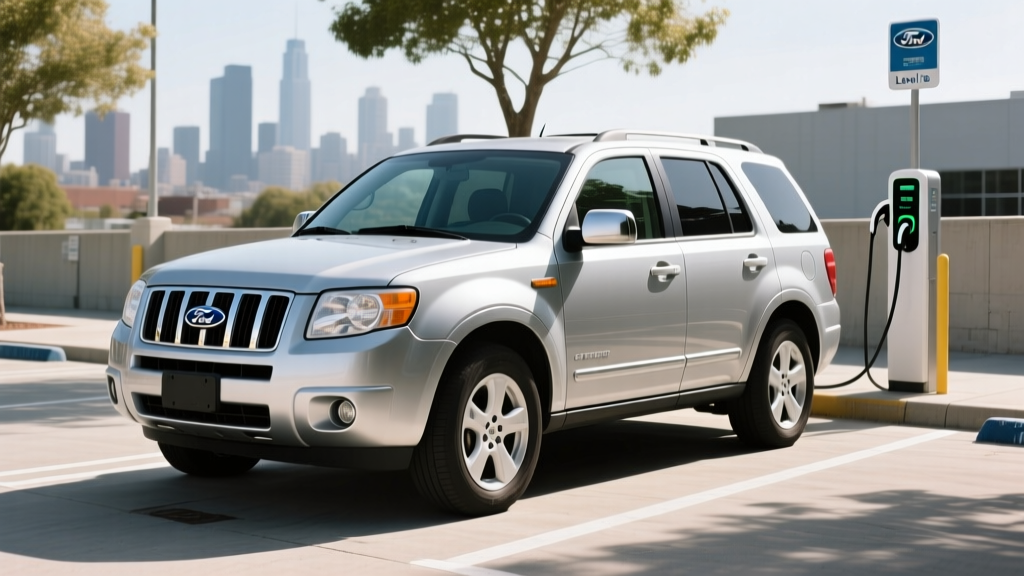
The 2007 Ford Escape Hybrid holds a specific place in automotive history: it was the first hybrid SUV ever sold in the United States, and by 2007, it had already accumulated several model years of real-world data. For used-car shoppers in 2026 considering an affordable hybrid commuter, the Escape Hybrid still appears on shortlists thanks to its low entry price and proven Toyota-licensed powertrain. But a nearly 20-year-old hybrid battery raises legitimate questions about longevity, replacement cost, and whether the fuel savings still pencil out.
This guide covers everything a prospective buyer needs: exact EPA fuel economy, the HEV vs. PHEV distinction (the 2007 Escape is strictly a conventional hybrid), battery health expectations, and how it stacks up against modern hybrid and plug-in hybrid alternatives.
| Spec | Value |
|---|---|
| Powertrain | 2.3L Atkinson-cycle I4 + permanent-magnet electric motor |
| Combined Horsepower | 155 hp (net system output) |
| Transmission | Electronically controlled CVT (eCVT) |
| EPA Fuel Economy (FWD) | 34 city / 30 highway / 32 combined MPG |
| EPA Fuel Economy (AWD) | 29 city / 27 highway / 28 combined MPG |
| Hybrid Battery | ~1.3 kWh, Nickel-Metal Hydride (NiMH), 330V nominal |
| Plug-In Capable? | No — conventional HEV only |
| Electric-Only Driving | Low-speed only, ~1–2 miles max under 25 mph |
| 0–60 mph | ~10.5 seconds |
| Cargo Volume | 29.3 cu ft (rear seats up), 66.4 cu ft (folded) |
| Towing Capacity | 1,000 lbs (not recommended for heavy towing) |
| Original MSRP (2007) | ~$26,970 (base Hybrid FWD) |
| Typical Used Price (2026) | $3,500–$7,000 depending on mileage and condition |
Fuel Economy: EPA Ratings vs. Real-World MPG
The front-wheel-drive 2007 Escape Hybrid carries an EPA rating of 34 city / 30 highway / 32 combined MPG, according to fueleconomy.gov. The all-wheel-drive variant drops to 29 city / 27 highway / 28 combined.
| Drivetrain | City MPG | Highway MPG | Combined MPG |
|---|---|---|---|
| FWD | 34 | 30 | 32 |
| AWD (eCVT w/ rear motor) | 29 | 27 | 28 |
Real-World MPG: What Owners Actually Report
Conventional hybrids like the Escape tend to exceed their EPA city ratings in stop-and-go driving because regenerative braking recaptures energy that a gas car wastes as heat. Owners on Fuelly and hybrid forums frequently report 33–36 MPG in mixed suburban driving with the FWD model. However, sustained highway driving at 75+ mph drops efficiency closer to 27–29 MPG, because the electric motor provides less assistance at high speeds and the Escape's boxy aerodynamics create significant drag.
Cold-weather penalty: Expect a 10–15% MPG reduction in winter months (sub-40°F). The engine runs more frequently to maintain cabin heat and bring the catalytic converter to operating temperature, reducing the time the vehicle spends in electric-only mode.
HEV vs. PHEV: Understanding What the 2007 Escape Is (and Isn't)
This is a critical distinction that trips up many used-car shoppers. The 2007 Ford Escape Hybrid is a conventional hybrid electric vehicle (HEV). It cannot be plugged in. It has no meaningful electric-only range. It is not a plug-in hybrid (PHEV) and not a battery electric vehicle (BEV).
| Feature | HEV (2007 Escape Hybrid) | PHEV (e.g., 2026 RAV4 Prime) | BEV (e.g., 2026 Tesla Model Y) |
|---|---|---|---|
| Plugs In? | No | Yes | Yes |
| Electric-Only Range | ~1–2 mi at low speed | 30–45 mi typical | 250–350 mi typical |
| Battery Size | ~1.3 kWh (NiMH) | 13–20 kWh (Li-ion) | 60–100 kWh (Li-ion) |
| Gas Engine? | Yes | Yes | No |
| Home Charging Needed? | No | Recommended (Level 2) | Essential |
| Federal Tax Credit (New) | None | Up to $7,500 (§30D) | Up to $7,500 (§30D) |
The Escape Hybrid's small NiMH battery recharges exclusively through regenerative braking and the gasoline engine. You never plug it in, and you never need to think about charging infrastructure. This makes it ideal for drivers who lack access to home charging — apartment dwellers, street parkers, or anyone who simply wants better fuel economy without changing their refueling habits.
Powertrain Deep Dive: How the Hybrid System Works
Ford licensed Toyota's Hybrid Synergy Drive technology for the first-generation Escape Hybrid, which is why its powertrain architecture closely mirrors the contemporaneous Toyota Highlander Hybrid. The system pairs a 2.3-liter Atkinson-cycle four-cylinder engine (producing 133 hp on its own) with a permanent-magnet AC synchronous electric motor (94 hp). Because peak outputs don't occur at the same RPM, the net system output is 155 combined horsepower.
The electronically controlled CVT (eCVT) is not a belt-and-pulley CVT like those found in Nissan or Subaru vehicles. It's a planetary gearset that blends engine and motor power seamlessly — there are no belts to wear out, and these units have proven extremely durable in long-term use. The AWD version adds a second electric motor on the rear axle (no mechanical driveshaft), providing on-demand all-wheel traction.
Under light acceleration from a stop, the Escape can operate on electric power alone up to roughly 25 mph for about a mile or two. Above that threshold, or under moderate-to-hard throttle, the gas engine engages. The transition is generally smooth, though drivers accustomed to modern hybrids may notice slightly more engine noise and vibration from the older 2.3L mill.
Battery Health, Warranty, and Replacement Cost
The high-voltage hybrid battery is the single biggest concern for any used hybrid buyer — and for a 2007 model, it's a nearly two-decade-old NiMH pack. Here's what you need to know.
Original Battery Warranty
Ford warranted the 2007 Escape Hybrid's high-voltage battery for 8 years / 100,000 miles (10 years / 150,000 miles in California and states that adopted CARB emissions standards). This warranty has long expired for all 2007 models. Any battery failure is now an out-of-pocket expense for the owner.
NiMH Battery Degradation: What to Expect
Nickel-metal hydride batteries degrade more gradually than early lithium-ion packs. Rather than sudden capacity cliff failure, NiMH cells slowly lose their ability to hold a charge, which manifests as:
- Reduced electric-only driving at low speeds
- More frequent engine engagement
- Gradual MPG decline (typically 2–4 MPG below original ratings as the pack ages)
- The battery cooling fan running more often (audible from the rear cargo area)
Many 2007 Escape Hybrids still running their original batteries in 2026 show measurable degradation but remain functional. The pack doesn't typically "die" catastrophically — it simply provides less electric assist over time, causing the vehicle to operate more like a conventional gas car.
Battery Replacement Cost
If the hybrid battery fails or degrades to an unacceptable level, replacement options include:
- OEM Ford replacement pack: $2,500–$3,500 (part only, if still available through dealers — supply is limited for this model year)
- Aftermarket/remanufactured NiMH pack: $1,500–$2,500 from suppliers like Green Bean Battery or similar hybrid-battery specialists
- Individual cell reconditioning: $800–$1,500 at hybrid-specialty shops that replace only the weak cells within the pack
- Used/salvage pack: $500–$1,000 (risky — you're inheriting someone else's degradation)
Labor for installation typically adds $300–$600. Total replacement cost at a hybrid specialist usually lands between $2,000 and $3,500. Given that a clean 2007 Escape Hybrid costs $3,500–$7,000 on the used market, a battery replacement can represent 30–60% of the vehicle's value — a critical factor in the buy/no-buy decision.
Pre-Purchase Battery Check
Before buying any used 2007 Escape Hybrid, request a hybrid battery health report from a shop with Ford IDS or equivalent scan tool access. This reads individual cell voltages and internal resistance. Look for:
- Cell voltage variance under 0.3V across all modules (larger spreads indicate weak cells)
- No stored high-voltage battery fault codes (P0A7F, P0A80, or similar)
- Battery temperature sensor readings within normal range
Tax Credits and Incentives: What Applies in 2026?
The short answer: no federal tax credits apply to the 2007 Ford Escape Hybrid in 2026, for several reasons:
- The federal §30D new clean vehicle credit applies only to new plug-in vehicles (PHEVs and BEVs) meeting battery-sourcing, MSRP, and buyer-income requirements. The Escape Hybrid is neither new nor plug-in.
- The used clean vehicle credit (up to $4,000 or 30% of sale price, whichever is less) under IRC §25E applies only to used PHEVs and BEVs — not conventional hybrids.
- The original hybrid vehicle tax credit that existed in 2006–2007 (up to $2,600 for the Escape Hybrid) expired long ago and was subject to Ford hitting its manufacturer cap, which it did.
Some states offer registration-fee reductions or HOV-lane access for hybrid vehicles, but these programs have largely sunset or shifted focus to plug-in vehicles. Check your state's current DMV or energy office for any remaining hybrid-specific benefits. For authoritative federal credit rules, consult the IRS clean vehicle credits page.
Reliability and Long-Term Ownership Costs
The 2007 Escape Hybrid benefits from its Toyota-licensed hybrid system, which is one of the most proven and durable powertrains ever put into production. The eCVT planetary gearset has virtually no wear components. The electric motors are essentially maintenance-free. And the 2.3L Duratec engine, while not the most refined, is mechanically simple and well-understood by independent mechanics.
Common non-hybrid reliability concerns for this model year include:
- Power transfer unit (PTU) failure on AWD models: The PTU couples the transaxle to the rear axle and is prone to overheating and failure if its fluid is never changed. Budget $1,500–$2,500 for replacement if it fails.
- Brake actuator assembly: The electrohydraulic brake system is specific to the hybrid. Replacement runs $1,200–$1,800 if the unit fails, though this is uncommon before 150,000 miles.
- Standard suspension and steering wear: Tie rods, struts, and sway bar links wear like any 18-year-old compact SUV.
- Rust: Check rocker panels, wheel arches, and the subframe — particularly on vehicles from the Rust Belt.
Annual Cost of Ownership Estimate
For a 2007 Escape Hybrid FWD driven 12,000 miles/year at 32 MPG with gas at $3.20/gallon:
- Annual fuel cost: ~$1,200
- Insurance (national avg for older compact SUV): ~$900–$1,200/year
- Maintenance reserve: ~$600–$1,000/year (higher than average due to age)
- Total estimated annual operating cost: ~$2,700–$3,400
For comparison, a 2007 gas-only Escape (20 city / 24 highway / 22 combined) would cost roughly $1,745 in fuel alone over the same distance — about $545 more per year in fuel. The hybrid's fuel savings are real but modest in absolute dollars, which means the payback period for a battery replacement is long.
Who Should Buy the 2007 Escape Hybrid — and Who Shouldn't
Pros
- Very low purchase price ($3,500–$7,000 used)
- No plug-in charging required — works like a normal gas car
- Proven Toyota-licensed hybrid system with strong reliability
- Good city MPG (34 EPA, often higher in real-world stop-and-go)
- Practical SUV cargo space and upright seating position
- Simple to service — many independent shops can work on it
Cons
- Hybrid battery is 18+ years old — replacement likely needed during ownership
- Battery replacement cost ($2,000–$3,500) can approach vehicle value
- Modest 155 hp — slow acceleration and limited highway passing power
- AWD models have PTU failure risk
- Outdated infotainment and safety technology by 2026 standards
- No federal tax credits or incentives available
- Highway MPG unremarkable (30 FWD, 27 AWD)
Decision Framework
Choose the 2007 Escape Hybrid if: You need an ultra-budget hybrid commuter under $7,000, you do mostly city/suburban driving where the 34 MPG city rating shines, you lack home charging access, and you're comfortable budgeting $2,000–$3,500 for a potential battery replacement.
Look at a newer hybrid (2016+ RAV4 Hybrid, CR-V Hybrid) if: You want modern safety features (automatic emergency braking, lane-keeping), a battery still under warranty, and better highway efficiency — and can spend $15,000–$25,000.
Consider a PHEV (e.g., used RAV4 Prime, Escape PHEV) if: You have home charging access and a short commute. A PHEV can cover 30–40 miles on electricity alone, cutting fuel costs far more than a conventional HEV.
Go full BEV if: You have reliable home Level 2 charging, your daily driving is under 250 miles, and you want to eliminate gasoline entirely. A used 2021+ Chevrolet Bolt EUV or Nissan Leaf can be found under $18,000 and may still qualify for the used clean vehicle credit (up to $4,000 under IRC §25E).
How the 2007 Escape Hybrid Compares to Modern Alternatives
For context, here's how the 2007 Escape Hybrid stacks up against current and recent hybrid SUVs a buyer might cross-shop:
| Model | Combined MPG | HP | Used Price Range (2026) | Battery Warranty Status |
|---|---|---|---|---|
| 2007 Ford Escape Hybrid (FWD) | 32 | 155 | $3,500–$7,000 | Expired |
| 2017 Toyota RAV4 Hybrid | 32 | 194 | $15,000–$20,000 | May still apply (10yr/150k mi) |
| 2020 Honda CR-V Hybrid | 40 | 212 | $20,000–$26,000 | Likely active |
| 2022 Ford Escape Hybrid | 41 | 200 | $22,000–$28,000 | Active |
| 2026 Toyota RAV4 Hybrid (new) | 39 | 219 | $33,000+ MSRP | 10yr/150,000 mi |
The efficiency gap between a 2007 hybrid and a 2022+ hybrid is meaningful: modern systems recapture more energy, use lighter lithium-ion batteries, and pair with more efficient engines. The 2022 Escape Hybrid achieves 41 MPG combined — 28% better than its 2007 ancestor — while delivering 45 more horsepower.
Frequently Asked Questions
How many MPG does the 2007 Ford Escape Hybrid get?
The FWD model is EPA-rated at 34 city / 30 highway / 32 combined MPG. The AWD model rates 29 city / 27 highway / 28 combined. Real-world city driving often yields 33–36 MPG, while sustained highway driving may drop to 27–29 MPG.
Is the 2007 Ford Escape Hybrid a plug-in hybrid?
No. The 2007 Escape Hybrid is a conventional hybrid (HEV). It cannot be plugged in and has no meaningful electric-only range. It recharges its small NiMH battery through regenerative braking and the gasoline engine.
How far can the 2007 Escape Hybrid drive on electric power alone?
Only about 1–2 miles at speeds under 25 mph under very light throttle. This is not a usable electric-only range — it's a low-speed assist feature for parking lots and stop-and-go traffic. For meaningful electric-only driving (30–45 miles), you need a plug-in hybrid like the 2020+ Ford Escape PHEV or Toyota RAV4 Prime.
Is the 2007 Escape Hybrid reliable?
The Toyota-licensed hybrid powertrain (eCVT, electric motors) is highly reliable and has proven durable well past 200,000 miles. The main reliability concern is the aging NiMH battery, which will likely need replacement or reconditioning if it hasn't been addressed already. AWD models also carry risk of PTU failure. For safety ratings and crash-test data, check NHTSA.gov.
What does a replacement hybrid battery cost for the 2007 Escape?
Expect $2,000–$3,500 total (parts and labor) for a remanufactured NiMH pack from a hybrid specialist. OEM Ford packs are increasingly difficult to source for this model year. Individual cell reconditioning may be possible for $800–$1,500 at specialized shops.
Does the 2007 Ford Escape Hybrid qualify for any tax credit in 2026?
No. Federal tax credits under §30D (new vehicles) and §25E (used clean vehicles) apply only to plug-in vehicles — PHEVs and BEVs. Conventional hybrids do not qualify for any federal purchase credit. The original hybrid tax credit that applied to the Escape Hybrid in 2006–2007 expired long ago.
Hybrid vs. PHEV vs. EV — which is right for me?
If you can't charge at home and want zero behavior change, a conventional HEV like the Escape Hybrid is the simplest path to better MPG. If you have home charging and a short commute (under 40 miles), a PHEV gives you electric-only daily driving with a gas engine for longer trips. If you have reliable home charging and want the lowest operating cost, a BEV eliminates gasoline entirely. For detailed guidance on current §30D credit eligibility — including MSRP caps, buyer income limits, and battery-sourcing requirements — see the IRS clean vehicle credits page.
Can I still get parts and service for a 2007 Escape Hybrid?
Yes. Ford dealers and independent hybrid specialists can still service the hybrid system. Mechanical parts for the 2.3L Duratec engine and suspension are widely available. The main challenge is sourcing the high-voltage NiMH battery — OEM packs are scarce, but the aftermarket remanufactured battery industry supports this model well.