Why the 2007 Camry Hybrid Still Matters for MPG Seekers
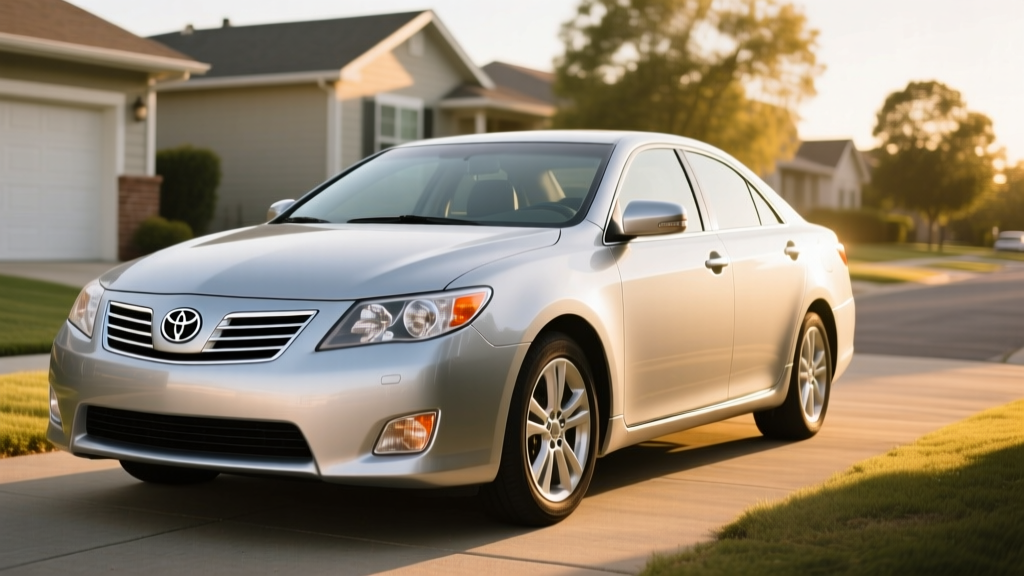
The 2007 Toyota Camry Hybrid was one of the first mainstream midsize sedans to pair a four-cylinder gasoline engine with an electric motor and a nickel-metal hydride (NiMH) battery pack. Nearly two decades later, used buyers still search for 2007 Camry Hybrid gas mileage data because this car became a benchmark for real-world fuel economy in the hybrid segment. If you are evaluating one on the used market or already own one and want to understand what to expect from the powertrain, battery health, and long-term costs, this guide covers the exact numbers.
Before we get into the data, a critical distinction: the 2007 Camry Hybrid is a conventional hybrid electric vehicle (HEV). It is not a plug-in hybrid (PHEV) and not a battery electric vehicle (BEV). You never plug it in. The car regenerates energy from braking and deceleration to recharge its small battery, and the gasoline engine handles the rest. This matters because some buyers confuse HEVs with PHEVs, which do offer electric-only driving range and require charging.
2007 Camry Hybrid EPA Gas Mileage: City, Highway, Combined
The EPA rated the 2007 Camry Hybrid at 33 MPG city / 34 MPG highway / 34 MPG combined when it was new. These figures come from fueleconomy.gov, the official U.S. Department of Energy source for vehicle efficiency data.
| Metric | EPA Rating | Real-World Expectation |
|---|---|---|
| City MPG | 33 MPG | 32–36 MPG (hybrids excel in stop-and-go) |
| Highway MPG | 34 MPG | 30–33 MPG (less regen benefit at steady speed) |
| Combined MPG | 34 MPG | 31–35 MPG depending on driving mix |
| Fuel Tank Capacity | 17.2 gallons | ~530–580 miles per tank |
Real-World MPG vs. EPA Sticker
The 2007 Camry Hybrid is one of those vehicles where real-world results often match or slightly exceed EPA estimates in city driving. Here is why: conventional hybrids recapture kinetic energy every time you brake or coast, converting it to battery charge. In heavy traffic with frequent stops, the electric motor does more of the work, reducing gasoline consumption. Many owners report 35–38 MPG in predominantly urban commutes.
Highway driving tells a different story. At sustained 70–80 MPH speeds, the gasoline engine runs almost continuously because there is minimal braking to regenerate energy. Expect 30–33 MPG on long highway trips. Cold weather also reduces MPG — the engine runs longer to warm up the cabin and the battery chemistry becomes less efficient, typically knocking 2–4 MPG off combined figures in winter months.
Powertrain Specs: Engine, Motor, and Combined Output
The 2007 Camry Hybrid uses Toyota's Hybrid Synergy Drive system, the same architecture that powered the Prius of that era but adapted for a larger, heavier sedan.
| Specification | Detail |
|---|---|
| Gasoline Engine | 2.4L inline-4 (2AZ-FXE), 147 HP @ 6,000 RPM |
| Electric Motor | Permanent magnet synchronous, 40 HP (30 kW) |
| Combined Net Output | 192 HP |
| Transmission | Electronically controlled CVT (eCVT) |
| Battery Type | Nickel-Metal Hydride (NiMH), 1.6 kWh (not usable like a PHEV) |
| Drivetrain | Front-wheel drive |
| 0–60 MPH | ~8.5 seconds |
| Curb Weight | ~3,680 lbs |
The combined 192 HP figure is not simply the engine plus motor added together — Toyota's power-split device blends the two power sources through the planetary gearset in the eCVT. The result is smooth, seamless acceleration with no traditional gear shifts. The electric motor provides instant torque from a standstill, which makes the Camry Hybrid feel surprisingly responsive in city traffic despite its weight.
HEV vs. PHEV vs. EV: Which Powertrain Fits You?
If you are researching the 2007 Camry Hybrid, you may also be considering newer plug-in hybrids or full electric vehicles. Here is how these three powertrain types differ in practical ownership terms.
| Factor | Conventional Hybrid (HEV) | Plug-In Hybrid (PHEV) | Battery Electric (BEV) |
|---|---|---|---|
| Plug in to charge? | No — self-charging via regen | Yes — for electric-only range | Yes — always |
| Electric-only range | None (motor assists engine) | 20–50 miles typical (2026 models) | 200–400+ miles |
| Gasoline needed? | Yes — primary fuel | Yes — for longer trips | No |
| Home charging required? | No | Recommended (Level 2) | Essential (Level 2) |
| Federal tax credit (new)? | No | Up to $7,500 (§30D, with rules) | Up to $7,500 (§30D, with rules) |
| Best for | No charging access, simple ownership | Short commutes + road trips | Home charging + daily driving |
Choose the 2007 Camry Hybrid (HEV) if: You want maximum fuel economy without changing your fueling habits. You do not have access to home or workplace charging. You want a low-cost used vehicle with proven reliability and cheap maintenance.
Choose a modern PHEV if: You have a short commute (under 40 miles round trip), can install a Level 2 charger at home, and still want a gas engine for long road trips without range concerns.
Choose a full BEV if: You have reliable home charging, want zero tailpipe emissions, and are ready to adopt a charging-first lifestyle with significantly lower per-mile energy costs.
Battery Lifespan, Replacement Cost, and Warranty
The single biggest concern for any used hybrid buyer is the traction battery. The 2007 Camry Hybrid uses a 1.6 kWh NiMH battery pack — fundamentally different from the lithium-ion batteries in modern EVs and PHEVs. NiMH chemistry is robust and tolerant of heat, but it does degrade over time and charge cycles.
Battery Replacement Cost
If the hybrid battery in a 2007 Camry Hybrid fails or degrades significantly, here are your options and approximate costs in 2026:
- New OEM Toyota battery: $2,500–$3,500 (parts + labor at a dealership)
- Remanufactured battery: $1,500–$2,200 (aftermarket rebuilt pack, common for older hybrids)
- Used/salvage battery: $500–$1,000 (risky — unknown remaining life)
- Individual module replacement: $300–$800 (a hybrid shop replaces only the failed cells within the pack — most cost-effective if only a few modules are bad)
Many independent hybrid specialists now offer module-level repair for NiMH packs, which can extend battery life for a fraction of a full replacement. A healthy replacement battery should restore the car's original EPA MPG figures. A degraded battery — one that has lost 30% or more of its original capacity — will cause the gasoline engine to run more frequently, dropping real-world MPG to 26–30 combined.
Signs of Battery Degradation
Watch for these indicators that the hybrid battery is losing capacity:
- Noticeable drop in fuel economy (5+ MPG below historical average)
- The gasoline engine starts more frequently, even at low speeds or when stopped
- The state-of-charge display on the dash swings rapidly between full and near-empty
- Reduced regenerative braking feel — the car does not slow as aggressively when you lift off the accelerator
- A check engine light with hybrid system diagnostic codes (a scan tool or hybrid shop can read these)
Tax Credits and Incentives: Does the 2007 Camry Hybrid Qualify?
No. The 2007 Camry Hybrid does not qualify for the federal §30D Clean Vehicle tax credit. There are two reasons:
- The §30D credit applies to new plug-in electric vehicles (PHEVs and BEVs) with a minimum battery capacity of 7 kWh. The Camry Hybrid is a conventional HEV with a 1.6 kWh NiMH pack and no plug-in capability.
- Even when the Camry Hybrid was new in 2007, it qualified for a different, now-expired tax provision — the §179A Alternative Motor Vehicle Credit — which offered up to $2,600 and phased out for Toyota after the manufacturer hit 60,000 qualifying units in 2007.
For 2026 buyers looking at used electrified vehicles, the IRS offers the Used Clean Vehicle Credit (§25E), which provides up to $4,000 or 30% of the sale price (whichever is lower) for qualifying used PHEVs and BEVs purchased from a dealer. However, this credit also excludes conventional hybrids like the Camry Hybrid. It only applies to plug-in vehicles. For current eligibility rules, check IRS.gov §25E guidelines.
Bottom line: buying a 2007 Camry Hybrid is a pure fuel-savings play. There are no federal purchase incentives available. Some states may offer minor registration or inspection fee discounts for hybrid vehicles, but these vary by jurisdiction — check your state DMV.
Is the 2007 Camry Hybrid Reliable?
The short answer is yes — with caveats appropriate for a vehicle approaching 20 years old. The 2007 Camry Hybrid benefits from Toyota's reputation for hybrid powertrain durability. The eCVT transmission has no traditional clutch packs, bands, or torque converter — it is a planetary gearset with far fewer wear components than a conventional automatic. Many 2007 Camry Hybrids have exceeded 200,000 miles with basic maintenance.
According to NHTSA records, the 2007 Camry Hybrid has relatively few recalls and complaints for its model year, with most issues relating to standard wear items rather than hybrid-specific failures. The 2AZ-FXE engine is a well-understood design with widely available parts.
Reliability risks to budget for:
- Hybrid battery replacement (see cost section above — plan $1,500–$3,500 if not recently done)
- Hybrid inverter coolant pump: A known wear item; replacement runs $300–$600
- Brake actuator: The regenerative braking system uses an electrohydraulic actuator that can fail on high-mileage examples; replacement is $1,200–$1,800
- Standard aging items: Suspension components, gaskets, seals, and the 12V auxiliary battery should be inspected as with any 18-year-old vehicle
Who Should Buy the 2007 Camry Hybrid — and Who Should Skip It
✓ Good Fit If You...
- Want 33+ MPG on a tight used-car budget ($4,000–$8,000 typical)
- Drive primarily in city or suburban traffic where hybrid regen shines
- Have no access to home or workplace EV charging
- Want Toyota reliability with widely available parts and hybrid-savvy mechanics
- Need a roomy midsize sedan with a usable 14.5 cu ft trunk
✗ Skip It If You...
- Primarily drive highway miles (a modern diesel or small turbo gas car may match its MPG)
- Want the latest safety tech — no automatic emergency braking, no lane-keeping assist
- Are not prepared for a potential $1,500–$3,500 battery replacement
- Want plug-in electric range or federal tax credit eligibility
- Prefer modern infotainment, Apple CarPlay, or advanced driver-assistance features
Frequently Asked Questions
How many MPG does the 2007 Camry Hybrid get?
The EPA rates it at 33 city / 34 highway / 34 combined. In real-world driving, owners typically see 32–38 MPG in the city and 30–33 MPG on the highway. A well-maintained example with a healthy battery should average 31–35 MPG combined.
Does the 2007 Camry Hybrid need to be plugged in?
No. It is a conventional hybrid (HEV), not a plug-in hybrid (PHEV). The battery charges through regenerative braking and the gasoline engine. You fuel it like any other gas car.
Can the 2007 Camry Hybrid drive on electric power alone?
Only at very low speeds (under ~25 MPH) and for short distances (a few hundred yards). The electric motor primarily assists the gasoline engine rather than powering the car independently. This is fundamentally different from a PHEV, which can drive 20–50 miles on electricity alone.
How much does it cost to replace the hybrid battery?
Expect $1,500–$3,500 depending on whether you choose a remanufactured pack, a new OEM battery, or module-level repair. A failing battery reduces fuel economy and should be addressed promptly to avoid straining other powertrain components.
Does the 2007 Camry Hybrid qualify for any tax credit?
No. The original Alternative Motor Vehicle Credit (§179A) phased out for Toyota in 2007 and no longer exists. The current federal §30D credit for new EVs/PHEVs and the §25E used EV credit both exclude conventional hybrids. There are no federal purchase incentives for this vehicle.
How does the 2007 Camry Hybrid compare to a 2026 hybrid?
Modern Toyota hybrids like the 2026 Camry Hybrid achieve 44–52 MPG combined — a 30–50% improvement over the 2007 model. They also feature lithium-ion batteries, more powerful electric motors, standard Toyota Safety Sense (automatic emergency braking, lane-keeping, adaptive cruise), and modern infotainment. If your budget allows a newer hybrid, the efficiency and safety gains are substantial.
What is the towing capacity?
The 2007 Camry Hybrid is not rated for towing. Toyota did not provide a tow rating for this model. If you need towing capability, look at hybrid SUVs like the Toyota Highlander Hybrid or RAV4 Hybrid.