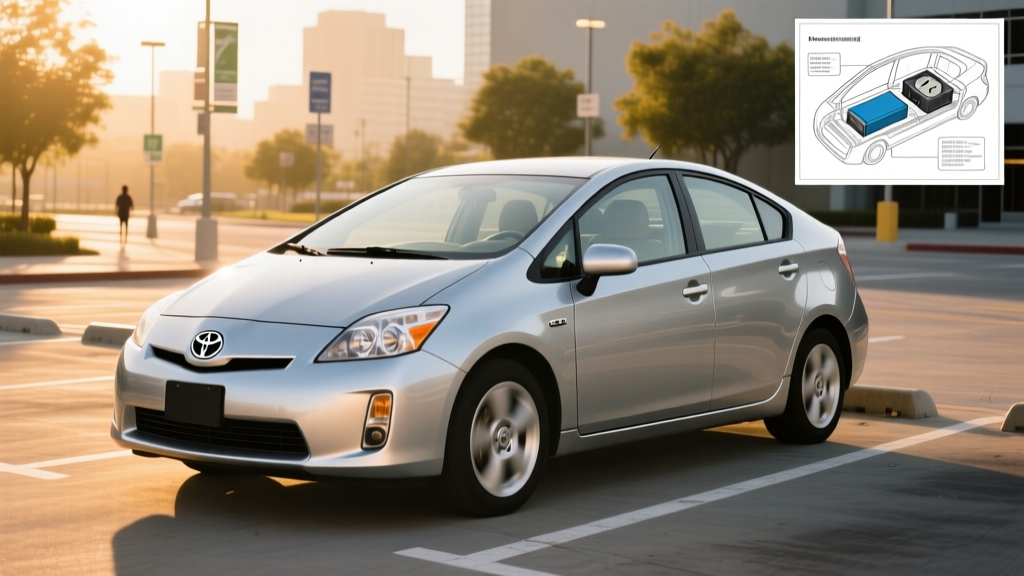
The 2006 Toyota Prius hybrid was a watershed vehicle — the model year that proved hybrid technology could deliver mainstream reliability alongside dramatic fuel savings. Nearly two decades later, the second-generation Prius (XW20) remains one of the most fuel-efficient used cars on the road, and its hybrid battery longevity has become the stuff of automotive legend. If you're researching the 06 Toyota Prius hybrid as a budget commuter, a first car for a teen driver, or a benchmark against which to measure modern hybrids and EVs, this guide covers the exact numbers you need.
We'll break down the EPA fuel economy, real-world MPG expectations, the hybrid battery's expected lifespan and replacement cost, and how this pioneering HEV stacks up against today's plug-in hybrids and full battery-electric vehicles.
2006 Toyota Prius Hybrid: Quick Verdict
The 2006 Prius is a conventional hybrid electric vehicle (HEV). It does not plug in. Its 1.5-liter gasoline engine and electric motor work together through Toyota's Hybrid Synergy Drive system, recharging a 1.3 kWh nickel-metal hydride (NiMH) battery through regenerative braking and engine power. The result was class-leading fuel economy that still holds up: an EPA-rated 46 MPG combined.
HEV vs. PHEV — What's the Difference?
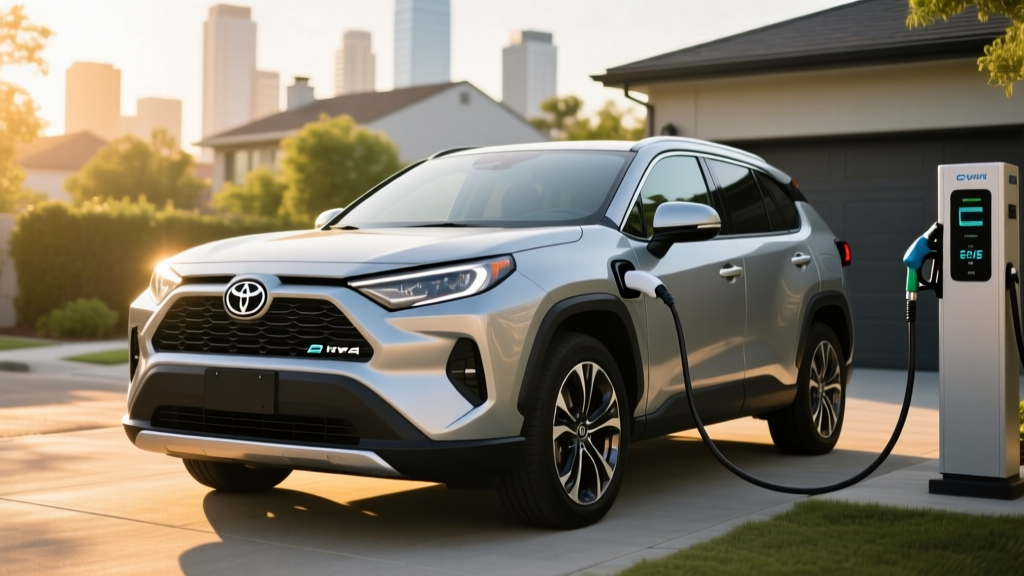
The 2006 Prius is a conventional hybrid (HEV). It has no plug, no electric-only driving range to speak of, and requires only gasoline. A plug-in hybrid (PHEV), like the modern Prius Prime, has a larger battery (13.6 kWh in 2026 models), charges from a wall outlet, and can drive 40+ miles on electricity alone before the gas engine kicks in. The 06 Prius predates the PHEV variant by several years.
Fuel Economy: EPA Ratings and Real-World MPG
The EPA rated the 2006 Toyota Prius at 48 MPG city / 45 MPG highway / 46 MPG combined under the testing methodology in effect at the time. (Note: the EPA revised its testing cycle for 2008+ models, which is why modern Prius listings show slightly different numbers for comparable powertrains.)
| Metric | EPA Rating |
|---|---|
| City MPG | 48 MPG |
| Highway MPG | 45 MPG |
| Combined MPG | 46 MPG |
| Fuel Tank Capacity | 11.9 gallons |
| Approximate Total Range | ~547 miles |
Real-World MPG: What Owners Actually Report
Real-world data from FuelEconomy.gov's My MPG tracker and owner forums like PriusChat consistently show the 2006 Prius averaging between 42 and 50 MPG in mixed driving. Several factors influence where a specific car lands:
- City-heavy driving favors the Prius. Hybrids excel in stop-and-go traffic where regenerative braking recaptures energy and the electric motor handles low-speed propulsion. Many owners report 50+ MPG in urban commutes.
- Sustained highway speeds above 70 MPH reduce efficiency. Aerodynamic drag increases exponentially, and the 1.5L Atkinson-cycle engine works harder. Expect 40–44 MPG at 75+ MPH.
- Cold weather reduces MPG by 5–10%. The engine runs more frequently to maintain cabin heat and bring the catalytic converter to operating temperature.
- Battery health matters. A degraded NiMH pack forces the engine to shoulder more of the load, reducing fuel economy by 2–5 MPG in cars with original, unrefreshed batteries.
Real-World Range Callout
EPA combined: 46 MPG / ~547 miles per tank. Real-world expectation: 42–48 MPG combined, yielding approximately 500–570 miles per fill-up depending on driving conditions, climate, and battery condition.
Powertrain and Hybrid System Specs
The 2006 Prius uses Toyota's second-generation Hybrid Synergy Drive (HSD), a series-parallel full hybrid system that can propel the car on electric power alone at very low speeds (under ~25 MPH, for short distances) but primarily blends engine and motor output.
| Specification | Value |
|---|---|
| Gasoline Engine | 1.5L 4-cylinder Atkinson-cycle (76 HP / 82 lb-ft) |
| Electric Motor | Permanent-magnet synchronous (67 HP / 295 lb-ft) |
| Net Combined Horsepower | 110 HP |
| Transmission | eCVT (planetary gearset, no traditional belts) |
| Hybrid Battery | 1.3 kWh Nickel-Metal Hydride (NiMH), 201.6V nominal |
| Drivetrain | Front-wheel drive |
| 0–60 MPH | ~10.0 seconds |
| Curb Weight | ~2,932 lbs |
The planetary eCVT is a key reliability advantage. Unlike belt-driven CVTs found in some competitors, Toyota's eCVT uses a fixed gearset with no friction components to wear. It's widely regarded as one of the most durable transmissions ever put into mass production.
Hybrid Battery Lifespan, Warranty, and Replacement Cost
Battery longevity is the single biggest concern for any used hybrid buyer, and it's where the 2006 Prius earns its reputation. Toyota's original hybrid battery warranty was 8 years / 100,000 miles (10 years / 150,000 miles in California Air Resources Board states). That warranty has long expired for a 2006 model, but the batteries themselves often outlast the coverage by a wide margin.
Battery Warranty & Lifespan Callout
Original warranty: 8 yr / 100,000 mi (10 yr / 150,000 mi in CARB states).
Typical real-world lifespan: 150,000–200,000+ miles before significant degradation. Many original packs are still functional at 18+ years old, though with reduced capacity.
Replacement cost (2026): $1,500–$2,500 for a refurbished/remanufactured pack; $3,000–$4,000 for a new OEM Toyota pack installed at a dealer.
What Happens When the Battery Degrades?
Unlike a full EV where battery degradation directly reduces your range, a degraded Prius NiMH pack primarily reduces the hybrid system's ability to assist the engine and capture regenerative energy. You'll notice:
- Fuel economy dropping from the mid-40s to the high 30s or low 40s
- The engine running more frequently and at higher RPMs
- Reduced acceleration assist from the electric motor
- Eventually, a hybrid system warning light on the dash
The car remains drivable even with a significantly degraded battery — it simply becomes a heavier, less efficient gasoline car. This is a critical distinction from full EVs, where a failed battery means the vehicle doesn't move.
Battery Replacement Options
If you're buying a 2006 Prius today, budget for a potential battery replacement. Your options in 2026:
- Refurbished/remanufactured pack: $1,500–$2,500 installed. Companies like Green Bean Battery and Dorman offer reconditioned packs with 1–3 year warranties. This is the most common route for a car of this age.
- New OEM Toyota pack: $3,000–$4,000 installed at a dealership. Often uneconomical relative to the car's value.
- Individual module replacement: $300–$800 if only a few cells have failed. Requires a knowledgeable independent shop or DIY skill.
Reliability and Long-Term Ownership Costs
The second-generation Prius (2004–2009) consistently ranks among the most reliable vehicles Toyota has ever built. The powertrain's simplicity — no traditional transmission, no starter motor, no alternator, no accessory belts — means fewer failure points. The regenerative braking system also reduces wear on the friction brakes, with many owners reporting original brake pads lasting 80,000+ miles.
According to data tracked by repair databases and owner communities, common issues on the 2006 Prius include:
- Hybrid battery degradation (age/mileage-dependent, discussed above)
- Combination meter (instrument cluster) failure: A known issue where the dashboard display goes dark. Repair runs $300–$600.
- Water pump (engine coolant): The mechanical water pump can fail around 100,000–120,000 miles. Replacement is ~$300–$500.
- Inverter coolant pump: An electric pump that circulates coolant through the hybrid inverter. Failure can trigger a hybrid system warning. ~$400–$600 replacement.
With proper maintenance — regular oil changes with 0W-20 synthetic, coolant flushes per schedule, and inverter coolant pump monitoring — a 2006 Prius routinely reaches 250,000+ miles. Taxi fleets in major cities have documented examples exceeding 300,000 miles on original powertrains.
2006 Prius vs. Modern Hybrids, PHEVs, and Full EVs
If you're weighing a used 2006 Prius against a new hybrid, plug-in hybrid, or battery-electric vehicle, here's how the comparison breaks down across the categories that matter:
| Category | 2006 Prius (HEV) | 2026 Prius (HEV) | 2026 Prius Prime (PHEV) | 2026 Tesla Model 3 (BEV) |
|---|---|---|---|---|
| Combined MPG / MPGe | 46 MPG | 57 MPG | 52 MPG + 127 MPGe | 132 MPGe |
| Electric-Only Range | None (micro at low speed) | None | 44 miles | 341 miles (EPA) |
| Plugs In? | No | No | Yes (Level 1/2) | Yes (Level 2/DC) |
| Net Horsepower | 110 HP | 196 HP | 220 HP | 271 HP (RWD) |
| Approx. Purchase Price | $4,000–$7,000 (used) | $28,550+ MSRP | $33,675+ MSRP | $38,990+ MSRP |
| Federal Tax Credit | None | None (HEV) | Up to $3,750 (§30D)* | Up to $7,500 (§30D)* |
* Federal tax credit eligibility under IRS §30D depends on buyer income, vehicle MSRP caps, battery sourcing requirements, and point-of-sale transfer rules. See IRS.gov clean vehicle credits for current eligibility details.
Who Should Buy a 2006 Prius?
✓ The 2006 Prius is ideal if you:
- Need the cheapest possible high-MPG commuter
- Can't install a home charger (apartment, street parking)
- Want proven reliability with cheap parts availability
- Drive 10,000–15,000 miles/year and want low fuel cost without EV upfront investment
✗ Look at a PHEV or BEV instead if you:
- Want electric-only commuting (PHEV or BEV)
- Need modern safety features (AEB, lane-keep, blind-spot)
- Want federal tax credits (up to $7,500 for qualifying EVs)
- Prefer warranty coverage — a 2006 has none remaining
Does the 2006 Prius Qualify for Any Tax Credits?
No. The 2006 Toyota Prius does not qualify for the current federal §30D clean vehicle tax credit. That credit is available only for new plug-in electric vehicles (BEVs and PHEVs) meeting specific battery sourcing, MSRP, and buyer income requirements. Conventional hybrids (HEVs) like the 06 Prius have never been eligible for §30D.
The original 2006 Prius did qualify for a much smaller federal tax credit when new — up to $3,150 under the Energy Policy Act of 2005 — but that credit phased out for Toyota in 2007 after the automaker hit the 60,000-vehicle cap. No retroactive credits are available.
Some states offer modest incentives for used hybrid or EV purchases, but these vary widely by jurisdiction. Check your state's department of revenue or energy office for current programs.
Buying a 2006 Prius in 2026: What to Inspect
If you're evaluating a specific 2006 Prius, here's a targeted checklist focused on the hybrid-specific components:
- Hybrid battery health: Ask for a hybrid battery diagnostic from a Toyota dealer or a shop with a Techstream scanner. Look at the voltage delta between modules — a spread greater than 0.3V under load suggests weak modules.
- Inverter coolant pump operation: With the car in READY mode, open the hood and check the inverter coolant reservoir (the pink fluid container near the inverter). You should see fluid turbulence, indicating the pump is circulating. No movement = failing pump.
- Combination meter: Turn the car on and verify all dashboard displays function — speedometer, energy monitor, fuel gauge. Intermittent or dead displays are a known failure point.
- Brake actuator: Press the brake pedal with the car off, then start the car. The pedal should drop slightly as the regenerative system engages. A hard, unyielding pedal may indicate a brake actuator issue — an expensive repair ($1,200+).
- 12V auxiliary battery: Located in the rear cargo area (not under the hood). If the car shows odd electrical gremlins or fails to enter READY mode, the 12V battery may need replacement. Use an AGM-type battery rated for the Prius's venting requirements.
Frequently Asked Questions
How many MPG does the 2006 Toyota Prius hybrid get?
The EPA rated the 2006 Prius at 48 city / 45 highway / 46 combined MPG. In real-world driving, most owners report 42–50 MPG combined, with city-heavy driving pushing toward the upper end and sustained highway driving at 75+ MPH pulling it toward the lower end. A well-maintained example with a healthy hybrid battery will typically deliver 44–48 MPG in mixed use.
Does the 2006 Prius plug in or have electric-only range?
No. The 2006 Prius is a conventional hybrid (HEV), not a plug-in hybrid (PHEV). It charges its small 1.3 kWh NiMH battery through regenerative braking and the gasoline engine. It can creep at very low speeds on electric power for a few hundred feet, but it has no meaningful electric-only driving range and no charging port. If you want electric-only commuting, look at a PHEV like the 2026 Prius Prime (44 miles electric) or a full BEV.
Is the 2006 Prius reliable? What does battery replacement cost?
Yes — the 2006 Prius is among the most reliable vehicles Toyota has ever produced. The eCVT planetary gearset has no wearable friction components, regenerative braking saves the brake pads, and the Atkinson-cycle engine is under-stressed. The main wear item is the NiMH hybrid battery, which typically lasts 150,000–200,000+ miles. A refurbished replacement pack costs $1,500–$2,500 installed; a new OEM pack runs $3,000–$4,000. Many specialists offer individual module replacement for $300–$800 when only a few cells have failed.
How does the 2006 Prius compare to a modern hybrid or EV?
The 2006 Prius delivers about 46 MPG combined versus 57 MPG for the 2026 Prius — an 11 MPG improvement over 20 years. The modern car also produces nearly double the horsepower (196 vs. 110), includes standard automatic emergency braking and lane-keeping, and offers Apple CarPlay/Android Auto. However, a used 2006 Prius costs $4,000–$7,000 versus $28,550+ for a new one. If your budget is under $8,000 and you want maximum fuel efficiency without plug-in infrastructure, the 06 Prius remains hard to beat on a cost-per-mile basis.
Does the 2006 Prius qualify for any federal or state tax credit?
No federal tax credit is available. The §30D clean vehicle credit applies only to new plug-in vehicles (BEVs and PHEVs) meeting current battery sourcing and MSRP rules. Conventional hybrids are not eligible. Some states or local utilities may offer small rebates for used hybrid purchases, but these vary by jurisdiction and change frequently. Check your state energy office or IRS.gov for the latest information.
Sources: EPA Fuel Economy (fueleconomy.gov), IRS Clean Vehicle Credits (irs.gov), Toyota Motor Corporation specifications.