Quick Verdict: A Pioneer Hybrid That Still Holds Up
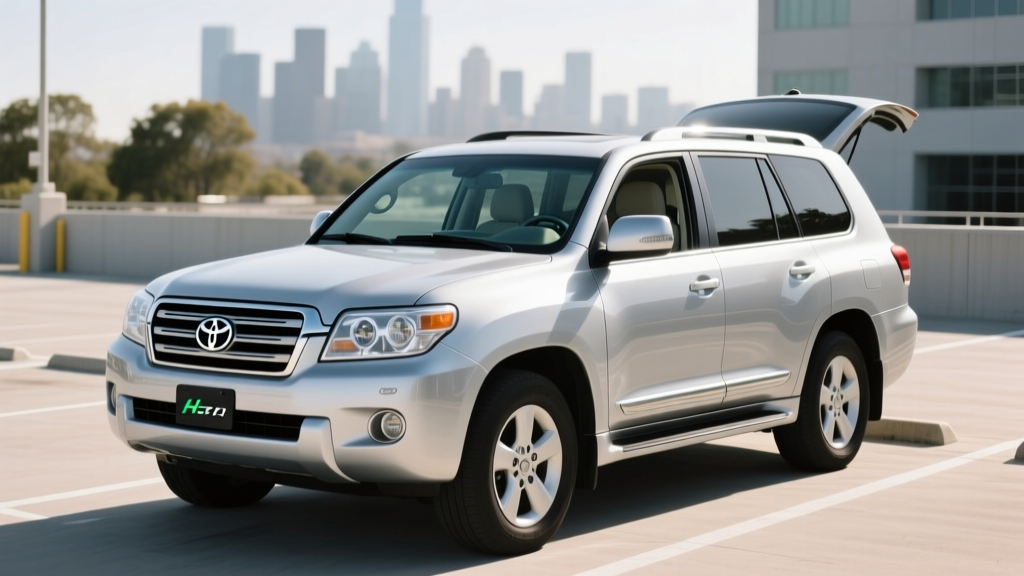
The 2006 Toyota Hybrid Highlander was one of the first mainstream hybrid SUVs to hit the American market, pairing a 3.3-liter V6 with Toyota's Hybrid Synergy Drive system. Nearly two decades later, it remains a fixture on the used market — and for good reason. With EPA-rated 31 MPG combined and Toyota's legendary hybrid powertrain durability, it offers budget-conscious buyers a proven entry point into electrified driving without the complexity or cost of a plug-in vehicle.
But buying a 19-to-20-year-old hybrid raises legitimate questions: How long does the battery last? What does replacement cost? And how does this first-generation system compare to modern hybrids and EVs? This guide breaks down every number that matters.
| Specification | Value |
|---|---|
| Powertrain | 3.3L V6 + electric motor (Hybrid Synergy Drive) |
| Combined Horsepower | 270 hp (net system output) |
| EPA MPG (City / Highway / Combined) | 31 / 27 / 29 (AWD-i: 31/27/29; FWD: 33/28/30) |
| Drivetrain | FWD or AWD-i (electric rear axle) |
| Hybrid Battery | NiMH (Nickel-Metal Hydride), ~1.8 kWh |
| Battery Warranty (Original) | 8 years / 100,000 miles (10 yr/150,000 mi in CARB states) |
| Towing Capacity | 3,500 lbs (with tow prep package) |
| 0–60 mph | ~7.8 seconds |
| Original MSRP (2006) | ~$33,030 (base) to ~$39,000 (Limited) |
| Typical Used Price (2026) | $4,000 – $8,500 depending on mileage/condition |
HEV vs. PHEV: What the 2006 Hybrid Highlander Actually Is
This is a conventional hybrid (HEV), not a plug-in hybrid (PHEV). That distinction matters enormously for ownership expectations:
| Feature | HEV (This Vehicle) | PHEV (e.g., Toyota RAV4 Prime) |
|---|---|---|
| Plug-in charging? | No — never plugs in | Yes — charges from wall outlet or charger |
| Electric-only range | None (electric assists gas engine) | 25–42 miles typical |
| Battery size | ~1.8 kWh NiMH | 13–18+ kWh (lithium-ion) |
| How it recharges | Regenerative braking + engine | Plug-in + regenerative braking + engine |
| Federal tax credit (§30D) | Not eligible | Eligible if meets sourcing/income rules |
| Best for | No home charging access; simple ownership | Home charging access; short electric commutes |
The 2006 Hybrid Highlander uses its electric motor to assist the gasoline engine during acceleration, enable idle stop-start, and capture energy during braking. It cannot drive on electricity alone for any meaningful distance. This is by design — it requires zero behavioral change from a conventional gas-car owner. You fuel it at a gas station and never think about plugging in.
Fuel Economy: EPA Ratings vs. Real-World MPG
The EPA rated the 2006 Hybrid Highlander at 33 MPG city / 28 MPG highway / 30 MPG combined for the front-wheel-drive model, and 31 MPG city / 27 MPG highway / 29 MPG combined for the AWD-i variant. These figures come from fueleconomy.gov, the official EPA source.
| Drivetrain | City MPG | Highway MPG | Combined MPG |
|---|---|---|---|
| FWD (XU30) | 33 | 28 | 30 |
| AWD-i | 31 | 27 | 29 |
Real-world expectations: Hybrid SUVs often exceed their EPA city rating in stop-and-go traffic because regenerative braking recaptures energy that a gas car wastes as heat. Many owners report 30–34 MPG in mixed city driving. Highway mileage tends to land closer to or slightly below the EPA estimate (25–28 MPG) because the electric motor provides minimal assist at sustained high speeds, and the vehicle's aerodynamic profile and 4,500-pound curb weight work against it.
For comparison, the non-hybrid 2006 Highlander V6 AWD was rated at 20 MPG combined — meaning the hybrid delivered roughly a 45% improvement in real-world fuel economy, a gap that remains meaningful at today's fuel prices.
Powertrain Deep Dive: How the Hybrid Synergy Drive Works
The 2006 Hybrid Highlander pairs a 3.3-liter 3MZ-FE V6 engine (producing 208 hp and 212 lb-ft of torque on its own) with a permanent-magnet electric motor integrated into the transmission housing. The combined net system output is 270 horsepower — substantially more than the 230 hp offered by the conventional V6 Highlander of the same year.
The AWD-i variant adds a second, independent electric motor on the rear axle (no mechanical driveshaft connects front to rear). This rear motor engages automatically when the system detects front-wheel slip or during hard acceleration, providing all-weather traction without the weight and friction losses of a traditional AWD system.
The continuously variable transmission (eCVT) uses a planetary gearset — not a belt-and-pulley CVT — to blend power from the engine and motor(s). This design is mechanically simple and extremely durable, which is a key reason Toyota's hybrid transaxles routinely exceed 200,000 miles without major service.
Hybrid Battery: Lifespan, Degradation, and Replacement Cost
Original Battery Warranty: 8 years / 100,000 miles nationwide; 10 years / 150,000 miles in CARB states (California, New York, Massachusetts, and others adopting CARB standards).
Current Status (2026): All 2006 models are well beyond original warranty coverage. Battery health varies by individual vehicle.
The 2006 Hybrid Highlander uses a nickel-metal hydride (NiMH) battery pack rated at approximately 1.8 kWh. NiMH chemistry is less energy-dense than modern lithium-ion but is remarkably tolerant of the shallow charge-discharge cycles that hybrid systems use. Toyota's hybrid battery management system keeps the pack between roughly 40% and 80% state of charge, avoiding the deep cycles that accelerate degradation.
How long do these batteries actually last? Real-world data from owner communities and repair shops shows most 2006-era Toyota hybrid batteries last 120,000 to 180,000 miles or 12–18 years before capacity loss triggers a check-engine light or noticeable fuel-economy decline. Many exceed 200,000 miles with the original pack. Climate matters: vehicles in hot desert states (Arizona, Texas) tend to see earlier degradation than those in moderate climates.
Battery replacement costs in 2026:
- Remanufactured battery pack: $1,500 – $2,500 installed (most common choice for a vehicle in this price range)
- New OEM Toyota battery: $3,000 – $4,500 installed (often uneconomical for the vehicle's value)
- Individual module replacement: $400 – $800 (a specialist can replace only the degraded cells within the pack, though this is a temporary fix if other modules are aging)
Given that a clean 2006 Hybrid Highlander sells for $4,000–$8,500 in 2026, a remanufactured battery at $1,500–$2,500 is a reasonable investment that can extend the vehicle's life by another 8–12 years. Many buyers specifically seek examples where the battery has already been replaced, eliminating the largest unknown cost.
Tax Credits and Incentives: What Applies to This Vehicle
The 2006 Toyota Hybrid Highlander does not qualify for the current federal §30D clean vehicle tax credit. That credit applies only to new plug-in vehicles (BEVs and PHEVs) meeting battery-sourcing, MSRP, and buyer-income requirements outlined on IRS.gov. Conventional hybrids are excluded.
Additionally, the original federal hybrid tax credit that was available when this vehicle was new (up to $2,200 for the Hybrid Highlander) expired for Toyota vehicles after September 30, 2007, due to the manufacturer sales cap of 60,000 qualifying units.
What incentives might still apply?
- State/local rebates: Some states offer used-EV or used-hybrid rebates, though these typically target plug-in vehicles. Check your state's energy office for current programs.
- Insurance discounts: Some insurers (Geico, Liberty Mutual) have historically offered small discounts for hybrid vehicles — typically 5–10%. Ask your provider directly.
- No HOV lane access: Unlike PHEVs and BEVs in many states, the conventional Hybrid Highlander does not qualify for carpool-lane stickers.
Reliability and Ownership Costs: The Long-Term Picture
The 2006 Hybrid Highlander benefits from Toyota's strongest era of build quality. The XU30-generation Highlander platform and the 3MZ-FE V6 are both well-documented for longevity. The hybrid system adds complexity (electric motor, inverter, battery pack) but Toyota's Hybrid Synergy Drive had already proven itself in the Prius by 2006, and the component failure rate is low.
Common issues to inspect on a used example:
- Hybrid battery health: Request a battery health report from a Toyota dealer or hybrid specialist. Voltage variance between modules indicates aging.
- Inverter coolant pump: The electric water pump circulating coolant through the inverter can fail (check for recall completion — Toyota issued a recall for this component).
- Brake actuator: The electro-hydraulic brake system can develop issues above 150,000 miles. Listen for unusual pump cycling when pressing the brake pedal.
- Standard V6 maintenance: Timing belt replacement (every 90,000 miles — critical), water pump, spark plugs, transmission fluid.
Estimated annual maintenance cost (2026): $800–$1,400/year for a well-maintained example — comparable to or slightly above a conventional Highlander of the same era, with the hybrid battery being the primary cost variable.
Who Should Buy the 2006 Hybrid Highlander vs. Alternatives
Pros
- Strong fuel economy (29–30 MPG combined) for a mid-size SUV
- 270 hp — quicker than the non-hybrid V6
- Proven, durable hybrid powertrain with massive repair-network support
- AWD-i provides capable all-weather traction
- 3,500-lb towing — rare for a hybrid in this era
- No plug-in required — zero infrastructure dependency
- Low entry price ($4,000–$8,500 used)
Cons
- Hybrid battery replacement likely needed if not already done
- Dated interior tech (no Bluetooth audio, basic infotainment)
- No federal tax credit or HOV lane access
- Highway MPG less impressive than city
- NiMH battery less efficient than modern lithium-ion hybrids
- Safety tech is minimal by 2026 standards (no auto emergency braking, lane-keep)
Hybrid vs. PHEV vs. Full EV: Which Fits Your Situation?
If you're researching the 2006 Hybrid Highlander, you're likely weighing it against other electrified options. Here's a practical decision framework:
Choose this 2006 Hybrid Highlander (HEV) if:
- You have no access to home or workplace charging
- Your budget is under $10,000
- You want proven simplicity with zero plug-in behavior change
- You drive mostly city/suburban miles where hybrid efficiency shines
Choose a used PHEV (e.g., 2019+ Toyota RAV4 Prime, Chrysler Pacifica Hybrid) if:
- You have Level 2 home charging and a commute under 30 miles
- You want electric-only daily driving with gas-engine backup for road trips
- Your budget is $20,000–$35,000
Choose a full EV (e.g., used Chevrolet Bolt, Tesla Model 3) if:
- You have reliable home charging
- You want minimal maintenance (no oil changes, timing belts, or hybrid battery concerns)
- You qualify for the used-EV federal tax credit (up to $4,000 on qualifying vehicles under $25,000)
- Your budget is $12,000–$30,000
Frequently Asked Questions
How many MPG does the 2006 Toyota Hybrid Highlander get?
The EPA rates the FWD model at 33 city / 28 highway / 30 combined MPG, and the AWD-i at 31 city / 27 highway / 29 combined MPG. Real-world city driving often matches or slightly exceeds these figures thanks to regenerative braking. Highway mileage typically lands in the 25–28 MPG range.
Does the 2006 Hybrid Highlander need to be plugged in?
No. This is a conventional hybrid (HEV), not a plug-in. It recharges its small battery entirely through regenerative braking and the gasoline engine. You never plug it in — just fill it at the gas station like any other vehicle.
How much does it cost to replace the hybrid battery?
A remanufactured NiMH battery pack costs $1,500–$2,500 installed at a hybrid specialist or independent shop. A new OEM Toyota battery runs $3,000–$4,500 installed. Individual module replacement is possible for $400–$800 but may not be a lasting fix on an aging pack.
Is the 2006 Hybrid Highlander reliable?
Yes, with caveats. The 3MZ-FE V6 and eCVT transaxle are exceptionally durable. The main reliability variable is the hybrid battery, which typically lasts 12–18 years or 120,000–180,000 miles. If the battery has been replaced or tests healthy, the vehicle is a strong long-term bet. Always verify timing-belt service history.
Does the 2006 Toyota Hybrid Highlander qualify for any tax credit?
No. The federal §30D clean vehicle credit applies only to new plug-in vehicles (BEVs and PHEVs). The original hybrid tax credit available at purchase expired for Toyota in 2007. Some states may offer minor used-hybrid incentives — check your local energy office.
Can the 2006 Hybrid Highlander tow?
Yes. With the factory tow prep package, it's rated for 3,500 pounds — sufficient for a small utility trailer, jet skis, or a lightweight pop-up camper. This was a notable advantage over many early hybrids that sacrificed utility for efficiency.
How does it compare to a modern hybrid like the 2026 Toyota Highlander Hybrid?
The current-generation Highlander Hybrid uses a 2.5L four-cylinder hybrid system producing 243 hp and achieving an EPA-estimated 35–36 MPG combined — a meaningful improvement. It also includes modern safety tech (automatic emergency braking, lane-keeping) and infotainment. However, a 2026 model starts above $42,000, making the 2006 a fraction-of-the-cost alternative for buyers prioritizing budget over features.
Sources: EPA Fuel Economy Guide — 2006 Toyota Hybrid Highlander; IRS Clean Vehicle Tax Credits; Toyota Motor Corporation historical specifications.