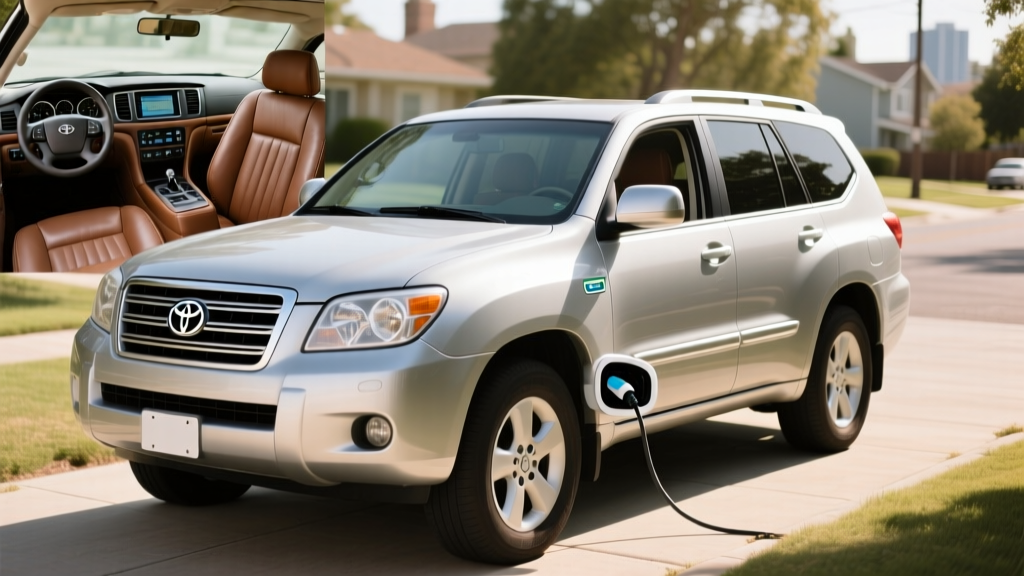
The 2006 Toyota Highlander Hybrid was one of the first mainstream hybrid SUVs to reach American families, pairing a 3.3-liter V6 with Toyota's Hybrid Synergy Drive. Nearly two decades later, it remains a popular used-car search — and a cautionary tale about aging hybrid components. If you're researching 2006 Toyota Highlander Hybrid problems before buying or keeping one, this guide covers the documented failure points, real-world fuel economy, battery replacement economics, and how this first-generation hybrid stacks up against modern HEVs, PHEVs, and full EVs in 2026.
2006 Highlander Hybrid Powertrain and Fuel Economy
The 2006 Highlander Hybrid uses Toyota's second-generation Hybrid Synergy Drive (THS-II), combining a 3.3L 3MZ-FE V6 gasoline engine with two electric motor-generators and a nickel-metal hydride (NiMH) traction battery. Unlike a plug-in hybrid (PHEV), this is a conventional hybrid (HEV) — it charges its battery exclusively through regenerative braking and the gasoline engine. You never plug it in.
| Spec | Value |
|---|---|
| Powertrain | 3.3L V6 + 2 electric motor-generators (THS-II) |
| Combined Horsepower | 272 hp (net system) |
| Traction Battery | NiMH, ~6.5 kWh (not plug-in) |
| EPA MPG (City / Hwy / Combined) | 31 / 27 / 29 |
| Drivetrain | AWD (e-4WD, rear electric motor) |
| 0-60 mph | ~7.8 seconds |
| Towing Capacity | 3,500 lbs |
| Original MSRP (2006) | ~$33,030 – $39,785 |
| Typical 2026 Used Price | $3,500 – $6,500 |
Real-World MPG vs. EPA Sticker
The EPA rated the 2006 Highlander Hybrid at 31 city / 27 highway / 29 combined MPG for the AWD Limited trim, per fueleconomy.gov. However, real-world owner data from Fuelly and Edmunds forums consistently shows combined averages between 24 and 27 MPG, with highway-heavy driving sometimes dipping to 22–24 MPG.
Several factors explain the gap. First, the EPA's 2006 test cycles were less aggressive than modern procedures, so older stickers tend to overstate highway efficiency. Second, a 20-year-old NiMH battery with degraded capacity forces the gasoline engine to run more frequently, eroding the hybrid advantage. Third, the AWD system's rear electric motor engages frequently in wet or hilly conditions, increasing energy draw. Expect roughly 25 MPG combined in typical mixed driving with a healthy battery — and closer to 22–23 MPG if the hybrid battery is aging.
Most Common 2006 Toyota Highlander Hybrid Problems
Two decades of owner reports, NHTSA recalls, and independent mechanic data have surfaced a clear pattern of issues. Here are the most documented problems:
1. Hybrid Inverter Failure
The inverter converts DC power from the battery to AC power for the electric motors. In the 2006–2007 Highlander Hybrid, inverter coolant pump failures can cause the inverter to overheat and fail catastrophically. Toyota issued a recall (campaign 13V-438) for inverter coolant pump inspection and replacement on affected models. A replacement inverter runs $2,000–$3,500 at a dealership, or $1,200–$1,800 for a refurbished unit from an independent hybrid specialist.
2. Hybrid Battery Degradation and Failure
The NiMH traction battery was warrantied for 8 years/100,000 miles (10 years/150,000 miles in CARB states). In 2026, virtually every surviving 2006 Highlander Hybrid is well past that window. NiMH batteries in this generation typically begin showing significant capacity loss between 120,000 and 180,000 miles. Symptoms include reduced MPG, frequent engine cycling, and dashboard warning lights. Full battery replacement costs $2,500–$4,000 at a Toyota dealer, or $1,800–$2,800 for aftermarket/reconditioned packs from suppliers like Green Bean Battery or Dorman.
3. Power Steering Issues
The electric power steering (EPS) system in this generation has a known failure mode where the steering becomes heavy or the EPS warning light illuminates. The EPS ECU or motor assembly may need replacement at a cost of $800–$1,500.
4. Transmission (eCVT) Concerns
Toyota's planetary-gear eCVT is generally robust, but high-mileage examples (200,000+ miles) can develop whining noises or shuddering. Unlike belt-driven CVTs from other manufacturers, Toyota's eCVT has no belts or clutches to wear — failures are usually related to bearing wear or fluid degradation. A fluid flush every 60,000 miles helps prevent issues.
5. Brake Actuator Failures
The regenerative braking system uses an electronic brake actuator that has been a known failure point across Toyota hybrids of this era. Replacement costs $1,200–$2,000. Symptoms include a spongy pedal, ABS warning lights, or loss of regenerative braking.
Pros of the 2006 Highlander Hybrid
- Strong 272 hp V6 hybrid powertrain for its era
- Standard AWD with rear electric motor
- 3,500-lb towing capacity (unusual for hybrids)
- Spacious 3-row cabin
- Low used-car entry price ($3,500–$6,500)
Cons of the 2006 Highlander Hybrid
- Inverter failure risk ($2,000–$3,500 repair)
- NiMH battery likely needs replacement ($2,500–$4,000)
- Real-world MPG often 22–27, below EPA sticker
- Outdated infotainment and no modern ADAS
- No EV-only driving mode beyond low-speed creep
- High-mileage examples carry stacked repair risk
Battery Warranty, Lifespan, and Replacement Costs in 2026
Original battery warranty: 8 years / 100,000 miles (10 years / 150,000 miles in CARB states including CA, NY, MA, and others). In 2026, all 2006 models are 20 years old — factory battery warranty has expired on every unit.
Expected NiMH lifespan: 150,000–200,000 miles with normal use, though calendar age (heat cycles, depth of discharge) degrades NiMH chemistry even on low-mileage examples.
Replacement options and costs:
- Toyota dealer OEM pack: $3,500–$4,000 (parts + labor)
- Aftermarket new (Dorman, etc.): $2,200–$2,800
- Reconditioned/remanufactured: $1,800–$2,400
- Individual cell/module replacement (specialist shops): $600–$1,200
A critical consideration: spending $3,000+ on a battery for a vehicle worth $4,000–$6,000 often doesn't make financial sense. Many owners opt for a reconditioned pack or individual module replacement to extend the vehicle's life by another 3–5 years at lower cost.
Hybrid vs. PHEV vs. EV: What Should You Choose in 2026?
If you're weighing a used 2006 Highlander Hybrid against modern electrified alternatives, here's how the decision breaks down:
| Factor | Used HEV (e.g., 2006 Highlander Hybrid) | New PHEV (e.g., 2026 Toyota RAV4 Prime) | New BEV (e.g., 2026 Hyundai Ioniq 5) |
|---|---|---|---|
| Plug-in Required? | No | Yes (for EV range) | Yes |
| Electric-Only Range | None (low-speed creep only) | 42 miles (RAV4 Prime EPA) | 310+ miles (EPA) |
| Combined MPG / MPGe | ~25 MPG real-world | 94 MPGe (EV) / 38 MPG (gas) | 110+ MPGe combined |
| Typical Cost | $3,500–$6,500 used | $44,000–$48,000 new | $42,000–$55,000 new |
| Federal Tax Credit (§30D) | Not eligible | Up to $7,500 (if eligible) | Up to $7,500 (if eligible) |
| Home Charging Needed? | No | Recommended (Level 2) | Essential (Level 2) |
| Battery Warranty | Expired | 10 yr / 150,000 mi | 10 yr / 100,000 mi |
Choose a used HEV like the 2006 Highlander Hybrid if: You need a cheap, no-plug-required family hauler, you lack home charging access, and you're willing to budget $1,500–$3,000 for potential hybrid-system repairs over the next few years.
Choose a new PHEV if: You want electric-only commuting (30–45 miles covers most daily trips), you have Level 2 home charging, you want a modern warranty, and you want to reduce gas consumption without full EV commitment. The 2026 RAV4 Prime delivers 42 miles of EV range and 38 MPG combined on gas.
Choose a full BEV if: You have reliable home charging, your daily driving is under 250 miles, you want the lowest per-mile energy cost, and you want zero tailpipe emissions. The $7,500 federal tax credit (subject to IRS §30D eligibility rules including income caps, MSRP limits, and battery sourcing requirements) can bring the effective price of a new BEV closer to a PHEV.
Does the 2006 Highlander Hybrid Qualify for Any Tax Credit?
No. The 2006 Toyota Highlander Hybrid does not qualify for any current federal tax credit. The original hybrid vehicle tax credit under the Energy Policy Act of 2005 expired for Toyota vehicles in 2007 after Toyota hit the 60,000-unit manufacturer cap. The current §30D Clean Vehicle Credit applies only to new qualifying plug-in vehicles (PHEVs and BEVs) meeting MSRP caps ($55,000 for sedans, $80,000 for SUVs/trucks), buyer income limits ($150K single / $300K joint), and critical-mineral/battery-component sourcing requirements. A 20-year-old conventional hybrid meets none of these criteria.
Some states offer used-EV credits or rebates for older hybrids, but these programs are limited and change frequently. Check your state's energy or environmental agency website for current offerings.
Is the 2006 Highlander Hybrid Worth Buying in 2026?
The honest answer depends on your budget and risk tolerance. At $3,500–$6,500, the 2006 Highlander Hybrid is one of the cheapest 3-row AWD vehicles on the used market, and its 272-hp V6 hybrid powertrain was genuinely impressive for its time. If you find a well-maintained example under 150,000 miles with a documented inverter coolant pump recall repair and a recently replaced hybrid battery, it can serve as a budget family hauler for another 3–5 years.
However, if the hybrid battery and inverter are original, you should budget $4,000–$6,000 in potential repairs — which can exceed the vehicle's value. At that point, financing a newer used hybrid (2018+ RAV4 Hybrid, 2019+ Highlander Hybrid) or a new PHEV with a full warranty becomes the more rational choice.
Frequently Asked Questions
How many MPG does the 2006 Toyota Highlander Hybrid actually get?
The EPA rated it at 31 city / 27 highway / 29 combined MPG, but real-world owners typically report 22–27 MPG combined depending on driving style, terrain, and battery health. Expect roughly 25 MPG in mixed driving with a healthy battery.
How much does it cost to replace the hybrid battery?
A new OEM battery from Toyota costs $3,500–$4,000 installed. Aftermarket new packs run $2,200–$2,800, and reconditioned packs cost $1,800–$2,400. Individual module replacement at a hybrid specialist can be as low as $600–$1,200.
What is the most expensive problem on the 2006 Highlander Hybrid?
The hybrid inverter is the single most expensive failure, costing $2,000–$3,500 to replace. Combined with a battery replacement ($2,500–$4,000), total hybrid-system repair costs can reach $5,000–$7,000 — often exceeding the vehicle's market value.
Can I drive a 2006 Highlander Hybrid on electric power only?
Not in any meaningful way. The THS-II system in this generation uses the electric motors for low-speed assist and regenerative braking, but there is no dedicated EV mode. The gasoline engine engages almost immediately under any significant acceleration or above roughly 25 mph.
Is the 2006 Highlander Hybrid AWD system reliable?
The e-4WD system (a separate rear electric motor powering the rear axle) is generally reliable, but it adds complexity. The rear motor and its inverter are additional potential failure points not found on FWD-only Toyota hybrids. Inspect for unusual rear-end whining or AWD warning lights before purchase.
Should I buy a 2006 Highlander Hybrid or a newer used hybrid?
If your budget allows, a 2016–2019 Toyota Highlander Hybrid or 2019+ RAV4 Hybrid offers dramatically better fuel economy (35–41 MPG combined), modern safety features (automatic emergency braking, lane-keeping), updated infotainment, and remaining hybrid battery warranty life. The upfront cost is higher ($15,000–$28,000) but the repair risk is far lower.
Does the 2006 Highlander Hybrid qualify for any tax credit?
No. The original hybrid tax credit expired for Toyota in 2007, and the current §30D federal credit applies only to new plug-in vehicles (PHEVs and BEVs). No federal incentive is available for purchasing a used conventional hybrid.
Sources: U.S. EPA / fueleconomy.gov, NHTSA Recall Database, IRS §30D Clean Vehicle Credit.