2006 Toyota Highlander Hybrid Mileage: The Numbers That Matter
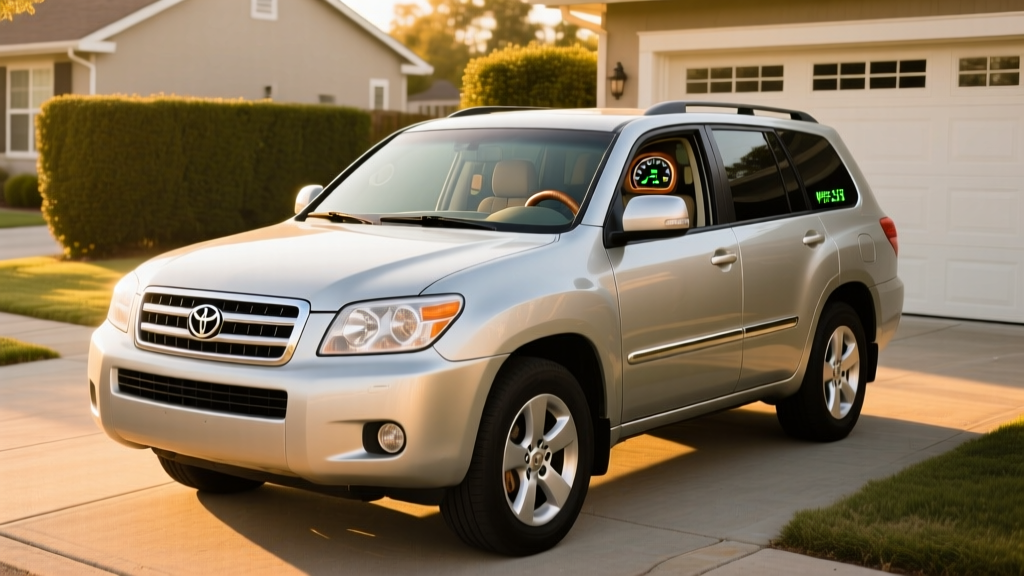
The 2006 Toyota Highlander Hybrid was one of the first mainstream hybrid SUVs to reach American driveways, and nearly two decades later, it remains a fixture on the used market. Buyers researching the 2006 Toyota Highlander Hybrid mileage typically want one thing: can this aging hybrid still deliver on its fuel-economy promise in 2026? The short answer is yes — with important caveats around battery health, driving style, and what you compare it to.
This guide covers the EPA-rated fuel economy, real-world MPG expectations, powertrain specifications, hybrid battery longevity and replacement cost, and whether a 20-year-old HEV still makes financial sense against modern hybrids, plug-in hybrids, and full EVs.
| Specification | Value |
|---|---|
| Powertrain | 3.3L V6 + 2 electric motors (HEV) |
| Combined Horsepower | 272 hp (net system) |
| EPA City MPG | 31 MPG |
| EPA Highway MPG | 27 MPG |
| EPA Combined MPG | 28 MPG |
| Drivetrain | AWD-i (electronic on-demand AWD) |
| Hybrid Battery | NiMH, ~1.6 kWh (not plug-in) |
| Curb Weight | ~4,500 lbs |
| Towing Capacity | 3,500 lbs |
| Original MSRP (2006) | $33,030 – $39,785 |
| 2026 Used Price Range | $3,500 – $7,500 |
EPA MPG vs. Real-World Fuel Economy
The EPA rates the 2006 Highlander Hybrid at 31 city / 27 highway / 28 combined MPG. For a mid-size SUV in 2006, those were exceptional numbers — the gas-only V6 Highlander of the same year managed roughly 20 MPG combined.
Real-world mileage tells a more nuanced story:
| Driving Scenario | Expected MPG | Notes |
|---|---|---|
| City / stop-and-go | 28 – 32 MPG | Hybrids excel here; regenerative braking recaptures energy |
| Suburban mixed | 26 – 29 MPG | Closest to EPA combined |
| Highway (70+ mph) | 23 – 26 MPG | Aerodynamic drag hurts; electric assist minimal at steady speed |
| Cold weather (below 32°F) | 22 – 25 MPG | Engine runs more to heat cabin and warm battery |
| Heavy load / towing | 18 – 22 MPG | Hybrid advantage diminishes under sustained high load |
Owner-reported data on Fuelly and EPA user submissions cluster around 25–28 MPG combined for vehicles with healthy hybrid batteries. The city-heavy advantage of the Toyota Hybrid Synergy Drive system remains real: if your commute involves frequent stops, you will beat the highway number.
One important 2026 reality: a 20-year-old NiMH battery that has lost capacity will force the gasoline engine to run more frequently, reducing observed MPG by 2–4 MPG below the figures above. Battery health is the single biggest variable in real-world mileage for this vehicle.
HEV vs. PHEV vs. EV: Where the 2006 Highlander Hybrid Fits
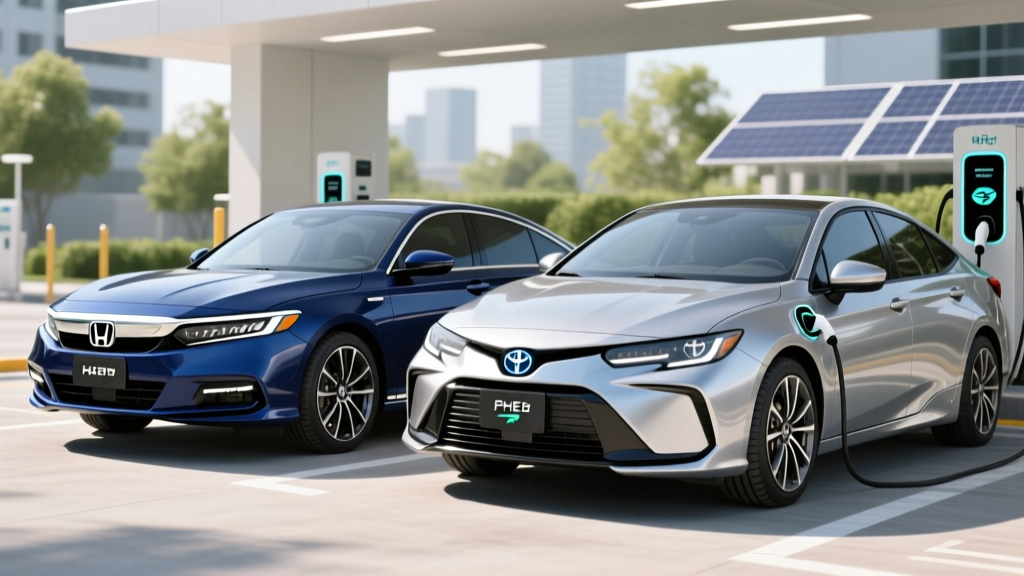
The 2006 Highlander Hybrid is a conventional hybrid (HEV). It has no plug, no electric-only driving mode of meaningful distance, and no external charging capability. The small 1.6 kWh NiMH battery charges exclusively through regenerative braking and the gasoline engine.
| Feature | HEV (this vehicle) | PHEV (e.g., 2026 RAV4 Prime) | BEV (e.g., 2026 Ioniq 5) |
|---|---|---|---|
| Plug-in charging? | No | Yes | Yes |
| Electric-only range | <1 mile at low speed | 35–42 miles | 250–350+ miles |
| Fuel/energy source | Gasoline only | Gasoline + electricity | Electricity only |
| Tailpipe emissions | Yes | Yes (when engine runs) | None |
| Federal tax credit (new) | None | Up to $7,500 (§30D) | Up to $7,500 (§30D) |
| Home charging needed? | No | Recommended | Essential |
If you are cross-shopping a used 2006 Highlander Hybrid against a new PHEV or EV, the calculus is purely financial. A new 2026 Toyota RAV4 Prime PHEV delivers 42 miles of electric-only range and 94 MPGe, but starts around $44,000 before incentives. The 2006 Highlander Hybrid costs $4,000–$7,500 on the used market and requires no charging infrastructure. They solve different problems.
Powertrain Deep Dive: 272 hp Hybrid V6
The 2006 Highlander Hybrid pairs a 3.3-liter 3MZ-FE V6 engine (208 hp, 212 lb-ft) with Toyota's Hybrid Synergy Drive system. Two electric motors — one integrated into the transaxle for front-wheel drive and one powering the rear axle — bring the net system output to 272 horsepower. That made it the quickest Highlander in the 2006 lineup, with a 0–60 mph time of approximately 7.8 seconds.
The AWD-i system is fully electronic: there is no mechanical driveshaft to the rear wheels. The rear electric motor engages when the front wheels slip or during hard acceleration, providing on-demand all-wheel drive without the parasitic loss of a traditional AWD system. This architecture contributes directly to the fuel-economy advantage over the gas-only AWD Highlander.
The continuously variable transmission (eCVT) is a planetary gearset, not a belt-driven CVT. Toyota's eCVT design is widely regarded as one of the most durable transmissions ever put into production — there are no belts, cones, or clutch packs to wear out.
Hybrid Battery Longevity, Replacement Cost, and Warranty
Original Battery Warranty
Toyota warranted the 2006 Highlander Hybrid battery for 8 years / 100,000 miles (10 years / 150,000 miles in California-emissions states). That factory warranty has long since expired on every surviving example.
The NiMH battery pack in the 2006 Highlander Hybrid typically lasts 120,000–180,000 miles before significant capacity loss triggers a check-engine light or noticeable MPG decline. Many original batteries are still functioning at 15+ years, but at reduced capacity.
Replacement options in 2026:
| Option | Cost Range | Warranty | Notes |
|---|---|---|---|
| New OEM Toyota battery | $2,500 – $3,200 | 1 year / 12,000 mi | Available through Toyota dealers |
| Remanufactured battery | $1,200 – $1,800 | 1–3 years | Third-party rebuilt packs; quality varies |
| Individual module replacement | $400 – $900 | Varies | Replaces only failed cells; requires diagnostic skill |
| Used/salvage yard battery | $300 – $700 | 30–90 days | High risk; unknown remaining life |
For a vehicle worth $4,000–$7,500, a $3,000 OEM battery replacement is a significant percentage of the car's value. Many owners opt for remanufactured packs or individual module replacement. A hybrid specialist shop can test individual NiMH modules and replace only the weak ones, extending the pack's life at a fraction of the full-replacement cost.
Warning sign of battery degradation: If the battery-charge indicator on the dash rarely rises above half or the engine runs constantly even at low speeds, the NiMH pack is likely losing capacity. Expect a 2–4 MPG drop before the hybrid-system warning light illuminates.
Tax Credits and Incentives in 2026
The 2006 Toyota Highlander Hybrid does not qualify for any current federal tax credit. The §30D Clean Vehicle Credit applies only to new qualifying plug-in electric vehicles (BEVs and PHEVs) that meet MSRP caps, buyer income limits, and battery-component/critical-mineral sourcing requirements as defined by the IRS. Conventional hybrids (HEVs) have not qualified for a federal purchase credit since the original Hybrid Tax Credit expired for Toyota in 2007.
On the used market, the Used Clean Vehicle Credit (also under §30D, up to $4,000 or 30% of sale price) similarly applies only to used BEVs and PHEVs — not conventional HEVs. There is no federal, and very rarely any state, incentive for purchasing a used hybrid-only vehicle in 2026.
The financial case for the 2006 Highlander Hybrid rests entirely on its low purchase price and fuel savings versus a comparable gas-only used SUV — not on incentives.
Who Should Buy This Hybrid in 2026?
Pros
- 28 MPG combined is still competitive for a mid-size AWD SUV
- 272 hp provides confident highway merging and passing
- eCVT planetary gearset is nearly bulletproof
- 3,500-lb towing capacity exceeds most modern crossovers
- No plug-in charging required — works with any gas station
- Very low purchase price ($3,500–$7,500)
- Strong parts availability and independent shop familiarity
Cons
- Hybrid battery replacement ($1,200–$3,200) is a real ownership risk
- No federal or state tax credit available
- Outdated infotainment, no modern ADAS (no AEB, no lane-keep)
- Highway MPG drops to 23–26 at sustained 70+ mph
- NiMH battery is heavier and less energy-dense than modern Li-ion
- Safety equipment is 2006-era (front airbags, side curtains — no knee airbags standard)
Choose the 2006 Highlander Hybrid If:
- Your budget is under $8,000 and you need AWD with decent fuel economy
- You drive mostly city/suburban routes where hybrid MPG shines
- You have access to a hybrid-knowledgeable mechanic
- You cannot install a home charger (apartment, no garage)
Look at a Newer PHEV or BEV Instead If:
- You can spend $25,000+ and want modern safety tech (AEB, blind-spot, lane-keep)
- You have home charging access and want to eliminate most gasoline use
- You want warranty coverage on the battery and powertrain
- You drive under 40 miles daily and could run purely on electricity with a PHEV
2006 Highlander Hybrid vs. Modern Alternatives
To put the 2006 Highlander Hybrid's mileage in 2026 context, here is how it compares to current options in the mid-size SUV segment:
| Vehicle | Type | EPA Combined | Used/New Price |
|---|---|---|---|
| 2006 Toyota Highlander Hybrid | HEV | 28 MPG | $4,000–$7,500 (used) |
| 2026 Toyota Highlander Hybrid | HEV | 35 MPG | $42,000–$53,000 (new) |
| 2026 Toyota RAV4 Prime | PHEV | 94 MPGe / 38 MPG | $44,000–$50,000 (new) |
| 2026 Hyundai Tucson PHEV | PHEV | 80 MPGe / 35 MPG | $39,000–$45,000 (new) |
| 2026 Kia EV9 | BEV | 85 MPGe (279 mi range) | $55,000–$70,000 (new) |
The 20-year MPG gap is meaningful but not enormous: modern hybrids improved roughly 20–25% in combined efficiency while adding substantially more power, weight, and technology. The real advantages of newer vehicles lie in safety systems, infotainment, and — for PHEVs and BEVs — the ability to run on electricity for daily commuting.
Frequently Asked Questions
How many MPG does the 2006 Toyota Highlander Hybrid get?
The EPA rates it at 31 city / 27 highway / 28 combined MPG. Real-world owners typically report 25–28 MPG combined, with city driving yielding the best results and sustained highway driving the worst. A degraded hybrid battery can reduce these numbers by 2–4 MPG.
Does the 2006 Highlander Hybrid need to be plugged in?
No. It is a conventional hybrid (HEV), not a plug-in hybrid. The small NiMH battery charges entirely through regenerative braking and the gasoline engine. You fuel it exclusively at gas stations.
How far can the 2006 Highlander Hybrid drive on electric only?
Less than one mile, and only at very low speeds (under 25 mph). The electric motors assist the gasoline engine and enable brief engine-off coasting, but this vehicle has no meaningful electric-only range. If electric-only driving matters to you, a PHEV like the RAV4 Prime (42 miles electric) or a full BEV is the right choice.
Is the 2006 Toyota Highlander Hybrid reliable?
The 3MZ-FE V6 engine and eCVT planetary gearset are among the most reliable powertrain components Toyota has ever built. The main reliability concern is the NiMH hybrid battery, which typically lasts 120,000–180,000 miles. At 20 years old, most surviving examples have either had a battery replacement or will need one soon. Factor $1,200–$3,200 into your ownership budget.
What does a replacement hybrid battery cost?
A new OEM Toyota battery runs $2,500–$3,200. Remanufactured third-party batteries cost $1,200–$1,800. Individual module replacement at a hybrid specialist can be done for $400–$900 if only a few cells have failed.
Does the 2006 Highlander Hybrid qualify for any tax credit?
No. Federal hybrid tax credits for Toyota ended in 2007, and current §30D credits apply only to plug-in vehicles (BEVs and PHEVs). There are no federal incentives for purchasing a used conventional hybrid in 2026. Check your IRS eligibility details for plug-in alternatives if credits matter to your decision.
Is the 2006 Highlander Hybrid a good buy in 2026?
At $4,000–$7,500 with a healthy hybrid battery, it remains one of the most fuel-efficient AWD SUVs available at that price point. It is a rational purchase for budget-conscious buyers who need AWD, cannot plug in at home, and accept the risk of eventual battery replacement. Buyers with larger budgets and home-charging access will find better efficiency, safety, and lower running costs in a modern PHEV or BEV.