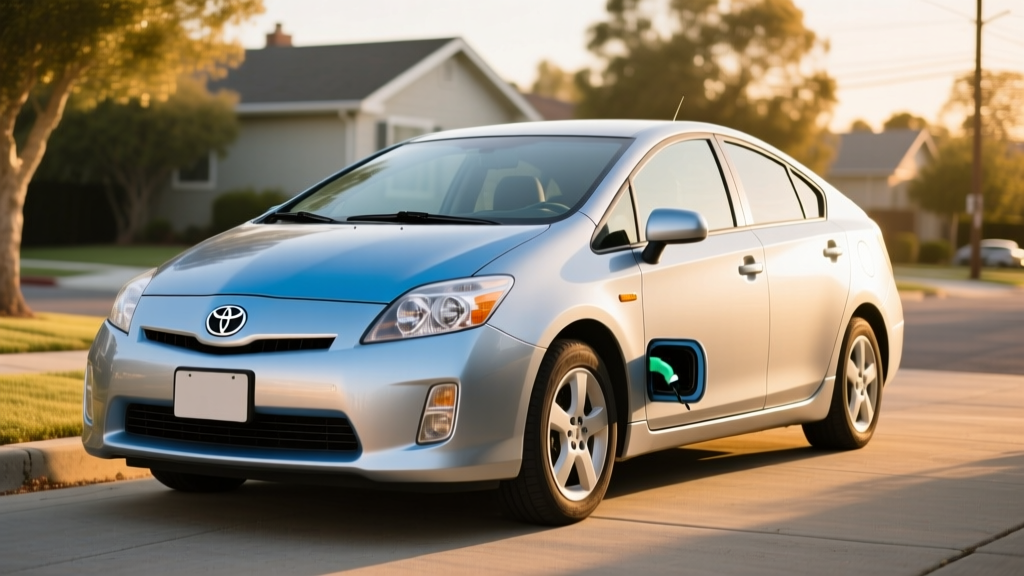
The second-generation Toyota Prius (model code XW20) launched the hybrid into the American mainstream. Nearly two decades later, the 2006 Prius hybrid remains one of the most searched used hybrids — and for good reason. With a proven powertrain, low running costs, and a massive aftermarket support network, this HEV (conventional hybrid electric vehicle) still punches above its weight as a budget commuter. But buying a 19-to-20-year-old hybrid in 2026 comes with specific considerations around battery health, replacement cost, and how it stacks up against modern PHEVs and BEVs.
This guide breaks down the 2006 Prius hybrid's EPA fuel economy, real-world MPG expectations, powertrain specs, battery longevity, and ownership economics — so you can decide whether this pioneer is still worth your money.
2006 Prius Hybrid Fuel Economy: EPA and Real-World MPG
The 2006 Toyota Prius is a conventional hybrid (HEV). It does not plug in. It charges its small nickel-metal hydride (NiMH) battery exclusively through regenerative braking and the gasoline engine. If you're looking for electric-only driving, you want a PHEV like the current Prius Prime — not this generation.
| Metric | Value |
|---|---|
| City MPG | 60 |
| Highway MPG | 51 |
| Combined MPG | 55 (revised EPA estimate ~46) |
| Fuel Tank Capacity | 11.9 gallons |
| Total Range | ~547–654 miles |
Real-World MPG Note: The EPA revised its testing methodology in 2008, retroactively adjusting older ratings downward. Under the current methodology, the 2006 Prius is rated at approximately 46 MPG combined (48 city / 45 highway) per fueleconomy.gov. In real-world driving, owners consistently report 42–50 MPG combined depending on driving style, climate, and battery condition. City driving often yields higher MPG than highway because regenerative braking recovers energy in stop-and-go traffic — a hallmark advantage of Toyota's Hybrid Synergy Drive system.
For context, a 2026 Toyota Corolla Hybrid achieves 50 MPG combined. The 2006 Prius is only a few MPG behind a brand-new hybrid sedan — a testament to how far ahead of its time this powertrain was.
Powertrain Specs: Engine, Motor, and Combined Output
The 2006 Prius pairs a 1.5-liter inline-four Atkinson-cycle gasoline engine with a permanent-magnet electric motor through Toyota's planetary-gear Hybrid Synergy Drive (HSD) continuously variable transmission.
| Specification | Value |
|---|---|
| Gasoline Engine | 1.5L I4 Atkinson-cycle (1NZ-FXE) |
| Engine Horsepower | 76 HP @ 5,000 RPM |
| Electric Motor | Permanent-magnet synchronous (500V) |
| Motor Horsepower | 67 HP |
| Combined Net Horsepower | 110 HP |
| Transmission | ECVT (planetary gearset) |
| Battery Type | NiMH (Nickel-Metal Hydride) |
| Battery Capacity | 1.3 kWh (nominal) |
| 0–60 MPH | ~10.0 seconds |
| Drivetrain | Front-wheel drive |
| Curb Weight | ~2,890 lbs |
The combined 110 HP output is modest by 2026 standards, but the Prius prioritizes efficiency over acceleration. The electric motor delivers instant torque from a standstill, making the car feel surprisingly responsive in city driving despite the 0–60 time. The ECVT has no physical gears or belts — it's a power-split device that seamlessly blends engine and motor output, contributing to the Prius's legendary reliability.
HEV vs. PHEV: Where the 2006 Prius Fits
Understanding the difference between a conventional hybrid (HEV) and a plug-in hybrid (PHEV) is critical before buying any electrified vehicle.
| Feature | HEV (2006 Prius) | PHEV (2026 Prius Prime) | BEV (e.g., Tesla Model 3) |
|---|---|---|---|
| Plugs In? | No | Yes | Yes |
| Electric-Only Range | ~1 mile (low-speed creep) | 44 miles (EPA) | 272–363 miles (EPA) |
| Battery Size | 1.3 kWh | 13.6 kWh | 60–82 kWh |
| Fueling | Gasoline only | Gasoline + electricity | Electricity only |
| Federal Tax Credit | None (used HEV) | Up to $3,750 (§30D) | Up to $7,500 (§30D) |
| Home Charging Needed? | No | Recommended | Essential |
| Best For | No-plug commuters | Short-commute + road trips | Home-charging access |
The 2006 Prius is a pure HEV. You never plug it in. You fuel it with gasoline, and the hybrid system handles the rest. This makes it ideal for drivers who lack home charging access — apartment dwellers, street parkers, or anyone who wants electrified efficiency without infrastructure changes.
Battery Health, Warranty, and Replacement Costs
Original Battery Warranty: Toyota covered the 2006 Prius hybrid battery for 8 years / 100,000 miles (10 years / 150,000 miles in CARB states like California, New York, and Massachusetts). That factory warranty has long since expired on every 2006 example.
The 2006 Prius uses a nickel-metal hydride (NiMH) battery pack — not the lithium-ion chemistry found in modern EVs and PHEVs. NiMH is less energy-dense but remarkably durable. Many 2006 Prius examples have surpassed 200,000 miles on the original battery pack, though capacity degradation is expected at this age.
Battery Replacement Options and Costs (2026)
| Option | Cost Range | Warranty | Notes |
|---|---|---|---|
| Remanufactured pack (e.g., Green Bean, Dorman) | $1,000–$1,600 installed | Limited lifetime to 3 yr | Most popular choice for this age |
| New OEM Toyota pack | $2,200–$3,000 installed | 1 year / 12,000 mi | Often uneconomical vs. car value |
| Used/salvage pack | $400–$800 installed | None to 90 days | Risky — unknown remaining life |
| Individual module replacement | $300–$600 (DIY-friendly shops) | Varies | Replaces only failed modules; requires balancing |
For a 2006 Prius with a market value of $3,500–$6,500 in 2026, a remanufactured battery at ~$1,200–$1,600 installed is the pragmatic choice. Several reputable companies specialize in Prius battery refurbishment, and the procedure takes 1–2 hours at a hybrid-specialist shop. Many owners report getting 100,000+ additional miles from a quality remanufactured pack.
Pre-purchase tip: Before buying any used 2006 Prius, have a hybrid-qualified mechanic run a battery health check using a Toyota Techstream scan tool or an aftermarket OBD-II reader that can read individual module voltages. A healthy pack should show module voltages within 0.2V of each other. Wider variance signals impending failure.
Reliability and Common Issues Beyond the Battery
The 2006 Prius is widely regarded as one of the most reliable vehicles Toyota has ever built. The HSD powertrain has no conventional transmission to fail, no starter motor, no alternator, and no accessory belts. The regenerative braking system significantly extends brake pad life — many owners report 80,000+ miles on original brake pads.
However, at nearly 20 years old, certain non-powertrain issues are common:
- Inverter coolant pump: The electric water pump circulating coolant through the hybrid inverter can fail. Toyota issued a recall for certain model years. Verify recall completion via NHTSA's recall lookup.
- Combination meter (dashboard): The LCD display in the instrument cluster can fail, showing a blank screen. Repair shops can rebuild these for $150–$300.
- Bladder-type fuel tank: The 2004–2009 Prius uses a bladder fuel tank to reduce evaporative emissions. This can make it difficult to fill the tank completely, and the fuel gauge can behave erratically.
- Steering intermediate shaft: Some owners report clunking from the steering column at low speeds — a known wear item.
- 12V auxiliary battery: Like any car, the small 12V battery under the hatch can die. The Prius uses a specific AGM-type 12V battery (Group 51R or auxiliary-size). A dead 12V battery will prevent the car from starting, even if the hybrid pack is fully charged.
2006 Prius Ownership Economics: Does It Still Save Money?
The financial case for a used 2006 Prius in 2026 hinges on fuel savings versus purchase price and potential battery replacement. Here's a realistic 5-year cost projection assuming 12,000 miles per year, $3.50/gallon gasoline, and one battery replacement.
| Category | 2006 Prius (46 MPG) | Comparable Gas Car (28 MPG) |
|---|---|---|
| Purchase Price | $5,000 | $5,000 |
| Fuel (5 yr, 60,000 mi) | $4,565 | $7,500 |
| Battery Replacement | $1,400 | $0 |
| Insurance (est. avg) | $4,500 | $4,500 |
| Maintenance (est.) | $2,000 | $2,500 |
| Total 5-Year | $17,465 | $19,500 |
Even factoring in a battery replacement, the 2006 Prius saves roughly $2,000 over five years compared to a typical 28 MPG gas car at the same purchase price. The savings widen if gas prices rise or if the hybrid battery is already recently replaced.
Tax Credit Eligibility
The 2006 Prius does not qualify for any federal tax credit in 2026. The IRS §30D new clean vehicle credit applies only to new PHEVs and BEVs meeting battery-sourcing, MSRP, and buyer income requirements. Used EVs and PHEVs can qualify for up to $4,000 under the §25E used clean vehicle credit, but conventional hybrids (HEVs) are excluded from both programs. The 2006 Prius, as a non-plug-in HEV, is ineligible for any federal electrification incentive.
Some states offer inspection fee exemptions or HOV lane access for hybrids, but these vary widely. Check your state's DMV or energy office for current programs.
Who Should Buy the 2006 Prius Hybrid in 2026?
Pros
- Proven, ultra-reliable Hybrid Synergy Drive powertrain
- 42–50 real-world MPG with no plug-in required
- Massive aftermarket and specialist repair network
- Low annual maintenance costs (no belts, extended brake life)
- Affordable entry point ($3,500–$6,500)
- Strong parts availability (OEM and aftermarket)
Cons
- Original battery warranty expired; replacement likely needed
- No electric-only driving capability
- Outdated infotainment and no modern ADAS features
- No federal tax credit eligibility
- Modest 110 HP — slow highway merging
- Age-related wear items (inverter pump, combination meter)
Decision Framework
Choose the 2006 Prius hybrid if: You need a no-plug commuter with maximum fuel efficiency, you lack home charging access, your budget is under $7,000, and you're comfortable with the possibility of a ~$1,400 battery replacement.
Choose a modern PHEV (e.g., 2026 Prius Prime) if: You have home charging, want 44 miles of electric-only commuting, need modern safety tech, and can spend $33,000+ (potentially offset by up to $3,750 in §30D credits).
Choose a full BEV if: You have reliable Level 2 home charging, want zero gasoline expenses, qualify for the up-to-$7,500 federal credit, and are ready for a new-vehicle purchase.
Frequently Asked Questions
How many MPG does the 2006 Prius hybrid get?
The original EPA sticker read 60 city / 51 highway / 55 combined, but under the revised EPA methodology used since 2008, the adjusted rating is approximately 48 city / 45 highway / 46 combined. Real-world owners typically report 42–50 MPG combined. Source: fueleconomy.gov.
Does the 2006 Prius plug in?
No. The 2006 Prius is a conventional hybrid (HEV). It never plugs in. The battery charges through regenerative braking and the gasoline engine. Only the Prius Prime (introduced later) is a plug-in hybrid.
How much does it cost to replace the hybrid battery?
A remanufactured NiMH battery pack for the 2006 Prius typically costs $1,000–$1,600 installed at a hybrid specialist shop. A new OEM pack runs $2,200–$3,000 but is rarely economical given the vehicle's value.
Is the 2006 Prius still reliable at this age?
Yes, with caveats. The hybrid powertrain itself is among the most reliable Toyota ever built. However, at nearly 20 years old, expect age-related issues: inverter coolant pump, combination meter display, and the hybrid battery itself may need attention. A pre-purchase inspection by a hybrid-qualified mechanic is essential.
Does the 2006 Prius qualify for any tax credit?
No. The 2006 Prius is a conventional hybrid (HEV), and neither the §30D new vehicle credit nor the §25E used vehicle credit covers non-plug-in hybrids. No federal tax incentive is available for this vehicle in 2026.
Can the 2006 Prius run on electric power alone?
Only at very low speeds (under ~25 MPH) for roughly one mile under light load. The 1.3 kWh NiMH battery is too small for meaningful electric-only driving. For substantial EV range, consider a PHEV or BEV.
How does the 2006 Prius compare to a 2026 hybrid?
A 2026 Toyota Prius achieves 57 MPG combined (LE trim), produces 194 HP, and includes Toyota Safety Sense 3.0 with automatic emergency braking, lane keeping, and adaptive cruise control. The 2006 model gives up roughly 11 MPG, 84 HP, and all modern safety technology. The trade-off is a purchase price of $5,000 versus $28,000+.