Why the 2006 Lexus RX400h Hybrid SUV Still Matters
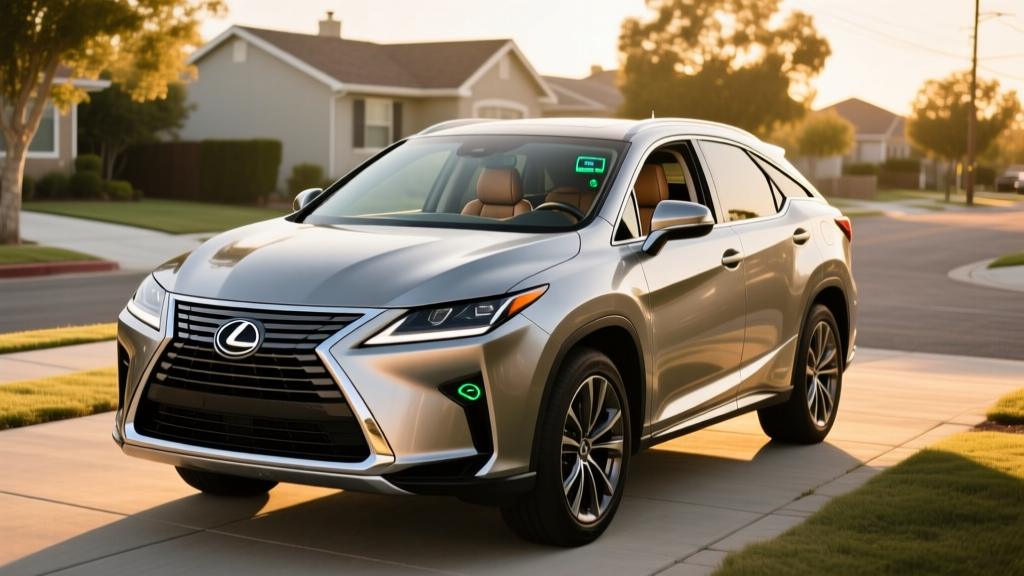
Two decades after it launched as one of the first luxury hybrid SUVs sold in the United States, the 2006 Lexus RX400h hybrid SUV remains a case study in Toyota's hybrid synergy drive durability. For used-car shoppers evaluating early hybrid technology — or current owners wondering about remaining battery life — this guide provides exact fuel economy figures, battery replacement economics, and a clear framework for whether this pioneering HEV still makes sense in 2026.
The RX400h is a conventional hybrid (HEV), not a plug-in hybrid (PHEV). It cannot be plugged in, has no electric-only driving range to speak of, and recharges its small nickel-metal hydride (NiMH) battery exclusively through regenerative braking and the gasoline engine. This distinction is critical for buyers comparing it against modern PHEVs like the Toyota RAV4 Prime or full BEVs like the Tesla Model Y.
HEV vs PHEV: Where the RX400h Fits
| Attribute | 2006 Lexus RX400h (HEV) | Modern PHEV (e.g., RAV4 Prime) | Full BEV (e.g., Model Y) |
|---|---|---|---|
| Plugs in? | No | Yes (Level 1/2) | Yes (Level 1/2/DC) |
| Electric-only range | ~1 mi at low speed | 42 mi (EPA) | 300+ mi (EPA) |
| Battery capacity | ~1.9 kWh (NiMH) | 18.1 kWh (Li-ion) | 75-82 kWh (Li-ion) |
| Federal tax credit | None (used HEV) | Up to $7,500 (§30D, if eligible) | Up to $7,500 (§30D, if eligible) |
| Fuel needed | Gasoline | Gasoline + electricity | Electricity only |
2006 Lexus RX400h Fuel Economy: EPA vs Real-World MPG
The EPA rated the 2006 Lexus RX400h hybrid SUV at 31 MPG city / 27 MPG highway / 29 MPG combined for the all-wheel-drive (AWD) configuration, which accounts for the vast majority of RX400h models sold. The front-wheel-drive variant was rated marginally higher at 33/28/31 MPG combined, per fueleconomy.gov.
| Drivetrain | City MPG | Highway MPG | Combined MPG | Annual Fuel Cost* |
|---|---|---|---|---|
| AWD (most common) | 31 | 27 | 29 | ~$2,250 |
| FWD | 33 | 28 | 31 | ~$2,100 |
*Based on 15,000 miles/year and $3.50/gallon regular unleaded (2026 estimate). Your costs will vary with local fuel prices.
Real-World MPG: What Owners Actually Report
The RX400h's hybrid system excels in stop-and-go city driving, where regenerative braking recaptures energy and the electric motor handles low-speed propulsion. In real-world driving, many owners report 28-32 MPG combined, with city driving sometimes exceeding the EPA estimate by 1-3 MPG. Highway driving at 75+ MPH tends to yield 24-26 MPG, as the 3.3L V6 engine carries more of the load without electric assist benefit at sustained speed.
Compared to its conventional gasoline counterpart, the 2006 RX350 (rated at roughly 19/24/21 MPG combined for AWD), the RX400h delivered approximately 38% better combined fuel economy — a substantial gap that translated to roughly $800-$1,000 in annual fuel savings at current prices.
Powertrain Specs: Engine, Motors, and Combined Horsepower
The 2006 RX400h uses Toyota's Hybrid Synergy Drive system pairing a 3.3-liter 3MZ-FE V6 engine with two electric motor-generators (MG1 and MG2) through a planetary gearset acting as a continuously variable transmission (eCVT). The AWD model adds a third, independent rear electric motor (MGR) that provides torque to the rear axle without a mechanical driveshaft.
| Component | Specification |
|---|---|
| Gasoline engine | 3.3L V6 (3MZ-FE), 211 hp @ 5,600 rpm |
| Front electric motor (MG2) | 123 kW (165 hp) |
| Rear electric motor (MGR, AWD only) | 50 kW (67 hp) |
| Net system horsepower | 272 hp (combined, not peak-sum) |
| Transmission | eCVT (planetary gearset) |
| 0-60 mph | 7.3 seconds (AWD) |
| Hybrid battery | NiMH, ~1.9 kWh (usable ~0.4 kWh) |
| Curb weight | 4,510 lbs (AWD) |
The 272 net system horsepower figure reflects the maximum combined output the powertrain can deliver simultaneously — not a simple sum of engine and motor peak outputs, which occur at different RPMs. This was competitive with the V8-powered BMW X5 and Mercedes ML of the era, while consuming roughly half the fuel.
Hybrid Battery Life, Warranty, and Replacement Cost
The single biggest concern for any used hybrid buyer is battery longevity. The 2006 RX400h uses a nickel-metal hydride (NiMH) pack manufactured by Panasonic EV Energy. Toyota/Lexus originally warranted the hybrid battery for 8 years / 100,000 miles in most states, extended to 10 years / 150,000 miles in California Air Resources Board (CARB) states.
Original Hybrid Battery Warranty
- Standard states: 8 years / 100,000 miles
- CARB states (CA, NY, MA, and others): 10 years / 150,000 miles
- Coverage: Defects and capacity loss below ~60% of original
- Status in 2026: Original warranty expired on all 2006 models
Real-World Battery Degradation Data
NiMH batteries in the RX400h have demonstrated remarkable longevity. Based on owner reports and fleet data, many original packs have exceeded 180,000-200,000 miles before requiring replacement, though measurable capacity loss (10-20%) is typical after 120,000 miles. The RX400h's battery management system is conservative — it never fully charges or fully depletes the pack, keeping the NiMH cells in a narrow state-of-charge window (~40-80%) that dramatically extends cycle life.
However, at 20 years old, any original battery is living on borrowed time. Heat is the primary degradation accelerant for NiMH chemistry, so RX400h examples from hot-climate states (AZ, TX, FL) tend to see earlier battery failures than those from cooler regions.
Battery Replacement Options and Costs
| Option | Cost Range | Warranty | Notes |
|---|---|---|---|
| New OEM (Lexus dealer) | $4,500 – $6,500 | 1 yr / 12,000 mi | OEM availability declining for 2006 MY |
| Refurbished / reconditioned | $1,800 – $3,000 | 1-3 yr (varies) | Individual cell modules replaced; quality varies by shop |
| Used / salvage yard | $500 – $1,200 | 30-90 days typical | High risk — unknown remaining life |
| Aftermarket new (e.g., Dorman) | $2,500 – $3,800 | 2-3 yr limited | Growing availability for popular Toyota/Lexus hybrids |
Independent hybrid-specialty shops can often refurbish the existing pack by replacing only the degraded cell modules for $1,800-$2,500, which is the most cost-effective path for most owners. Labor typically adds $300-$500 regardless of battery source.
Tax Credits and Incentives: What Applies in 2026?
The 2006 Lexus RX400h does not qualify for any federal tax credit under current IRS §30D rules. The federal new clean vehicle credit applies only to new plug-in vehicles (BEVs and PHEVs) meeting battery sourcing, MSRP caps, and buyer income requirements. As a used conventional hybrid, the RX400h is ineligible for:
- The §30D new clean vehicle credit (up to $7,500)
- The §25E used clean vehicle credit (up to $4,000 — applies only to used BEVs and PHEVs, not HEVs)
- Most state-level EV rebates (which target plug-in vehicles)
Some states and localities offer minor registration-fee reductions or HOV lane access for hybrids, but these programs have largely sunset or been restricted to zero-emission vehicles. Check your state's DMV or energy office for any remaining hybrid-specific benefits.
Reliability, Common Issues, and Ownership Costs
The 2006 RX400h earns strong reliability marks overall, consistent with Lexus's reputation and the proven durability of the Toyota Hybrid Synergy Drive. The 3MZ-FE V6 is one of Toyota's most reliable engines, and the eCVT has no belts, clutch packs, or torque converters to fail. Beyond the hybrid battery, key considerations include:
Pros
- Proven 272-hp hybrid powertrain with strong 0-60 performance
- 29 MPG combined is impressive for a 4,500-lb luxury SUV
- eCVT eliminates transmission failure risk
- Lexus build quality and interior materials hold up well
- Strong aftermarket support for hybrid battery refurbishment
- No plug-in infrastructure needed — fuel and go
Cons
- Hybrid battery likely needs replacement if original (20 years old)
- Inverter coolant pump failures reported (can damage inverter if ignored)
- Outdated infotainment — no Apple CarPlay, Android Auto, or Bluetooth audio
- No modern ADAS features (no automatic emergency braking, lane keeping)
- Heavy vehicle accelerates brake wear despite regen braking
- Zero federal or state tax incentives
Known Failure Points to Inspect
- Inverter coolant pump: A $150-$250 part that, if it fails silently, can overheat and destroy the $3,000+ hybrid inverter. Listen for pump hum when the vehicle is in READY mode with the hood open.
- Hybrid battery cooling fan: Located under the rear seat; clogged dust filters cause overheating and accelerated battery degradation. Clean or replace the filter regularly.
- Brake actuator assembly: The RX400h uses an electrohydraulic brake-by-wire system. Actuator failures are expensive ($1,500-$2,500) and trigger multiple dashboard warnings.
- 12V auxiliary battery: Located in the rear cargo area; a weak 12V battery can prevent the hybrid system from booting, mimicking a traction battery failure.
Who Should Buy the 2006 RX400h — And Who Shouldn't
Decision Framework
Choose the 2006 RX400h if:
- You want a low-cost entry into hybrid ownership ($4,000-$8,000 used)
- Your commute is city-heavy where hybrid efficiency shines
- You lack home charging access and can't use a PHEV or BEV
- You're comfortable budgeting $2,000-$3,500 for a hybrid battery replacement
- You value Lexus comfort and don't need modern infotainment or ADAS
Skip the 2006 RX400h if:
- You want modern safety tech (AEB, blind-spot monitoring, lane-keeping)
- You need Apple CarPlay/Android Auto or current connectivity
- You want any federal tax credit (look at new PHEVs or BEVs instead)
- You primarily drive highway miles where the hybrid advantage narrows
- You want zero risk of a near-term hybrid battery replacement
Hybrid vs PHEV vs EV: Which Fits Your Situation?
For buyers cross-shopping a used 2006 RX400h against other options, the decision largely comes down to charging access, budget, and daily mileage:
- No charging access, tight budget: The RX400h (or a newer used Toyota Highlander Hybrid) is the right call. No plug needed, proven reliability, low purchase price.
- Home charging available, moderate budget: A used PHEV like the 2018+ Toyota RAV4 Hybrid or Chrysler Pacifica Hybrid gives you 25-42 miles of electric commuting plus a gas engine for road trips.
- Home charging, higher budget, short-ish commute: A new or used BEV eliminates gasoline entirely, qualifies for tax credits (if eligible), and offers dramatically lower per-mile fuel costs.
Frequently Asked Questions
How many MPG does the 2006 Lexus RX400h get?
The EPA rates the AWD 2006 RX400h at 31 MPG city, 27 MPG highway, and 29 MPG combined. The FWD variant is rated at 33/28/31. Real-world owners typically report 28-32 MPG combined, with city driving often matching or slightly exceeding the EPA estimate thanks to regenerative braking.
Can the 2006 RX400h drive on electric power only?
Only marginally. The RX400h can creep at very low speeds (under 25 mph) on electric power alone for roughly one mile or less under light load. It is not designed for meaningful electric-only driving. This is a conventional hybrid (HEV), not a plug-in hybrid — it has no charge port and no usable electric-only range for commuting.
How much does it cost to replace the hybrid battery in a 2006 RX400h?
Expect to pay $1,800-$3,000 for a refurbished pack from a hybrid-specialty shop (the most common and cost-effective route), or $4,500-$6,500 for a new OEM battery from a Lexus dealer. Aftermarket new batteries from suppliers like Dorman run $2,500-$3,800. Labor adds $300-$500.
Is the 2006 Lexus RX400h reliable?
Yes, with caveats. The powertrain (3MZ-FE V6 + eCVT + hybrid system) is among the most reliable Toyota/Lexus has ever produced. The main risk at this vehicle's age is hybrid battery end-of-life and the inverter coolant pump. With a fresh or verified battery and a functioning coolant pump, the RX400h can reliably reach 250,000+ miles.
Does the 2006 RX400h qualify for any tax credit in 2026?
No. The federal §30D new clean vehicle credit and §25E used clean vehicle credit both apply only to plug-in vehicles (BEVs and PHEVs). The RX400h is a conventional hybrid (HEV) and does not qualify for any federal tax incentive. Some state programs that once covered hybrids have expired or been restricted to zero-emission vehicles. Consult IRS.gov for current credit rules.
What is the difference between the RX400h and the RX350 from the same year?
The 2006 RX350 uses a conventional 3.5L V6 with a 5-speed automatic transmission, rated at roughly 19/24 MPG (AWD). The RX400h pairs a 3.3L V6 with electric motors and an eCVT for 29 MPG combined, plus 272 system horsepower versus 230 hp in the RX350. The RX400h was also priced roughly $5,000-$7,000 higher when new, reflecting the hybrid premium.
Should I buy a 2006 RX400h with the original battery?
Only if the price reflects an imminent battery replacement ($2,000-$3,500). A 20-year-old NiMH pack is at or near end-of-life regardless of mileage. Request a hybrid battery health check (many dealers and hybrid shops can read individual cell module voltages) before purchasing. If any modules read significantly lower voltage than others, replacement is overdue.