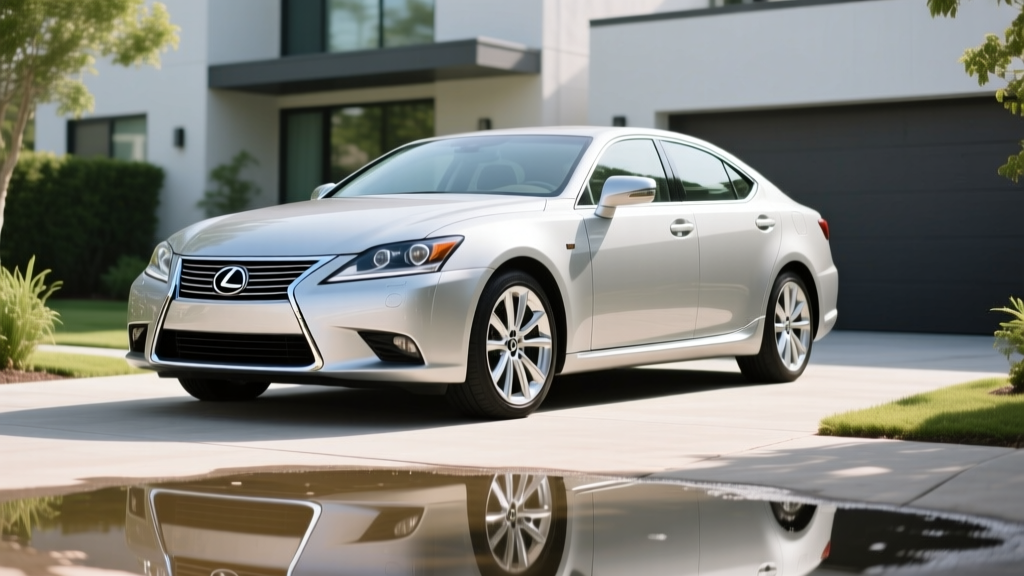
The 2006 Lexus RX 400h was the luxury brand's first hybrid SUV and one of the earliest mainstream hybrid crossovers sold in the United States. Built on the second-generation RX platform, it paired a 3.3-liter V6 with Toyota's Hybrid Synergy Drive system to deliver V8-like acceleration with four-cylinder fuel economy — a compelling proposition when it launched, and still an interesting used buy two decades later.
If you're researching the 2006 Lexus 400h hybrid as a potential used purchase, this guide covers everything you need: real-world MPG data, hybrid battery longevity and replacement costs, powertrain specs, and how this pioneering HEV stacks up against modern hybrids, PHEVs, and full EVs in 2026.
2006 Lexus RX 400h Hybrid Powertrain Specs
The RX 400h uses Toyota's well-proven Hybrid Synergy Drive (HSD) system — a series-parallel full hybrid architecture. This is a conventional hybrid (HEV), not a plug-in. You never plug it in; the battery charges through regenerative braking and the gasoline engine.
| Specification | Value |
|---|---|
| Gasoline Engine | 3.3L V6 (3MZ-FE), 211 hp |
| Electric Motors | Front motor (123 kW) + Rear motor (50 kW) |
| Combined System Output | 272 hp (net) |
| Transmission | eCVT (planetary gearset) |
| Hybrid Battery | NiMH, ~6.5 kWh (gross), ~1.5 kWh usable |
| Drivetrain | AWD (e-four, electric rear axle) |
| 0–60 mph | ~7.3 seconds |
| Curb Weight | ~4,500 lbs |
| EPA Fuel Economy | 31 city / 27 hwy / 29 combined MPG |
| Original MSRP (2006) | ~$46,310 (base) |
| Typical Used Price (2026) | $4,500–$8,000 depending on mileage/condition |
The eCVT is not a belt-driven CVT like those found in some conventional cars. It uses a planetary gearset that seamlessly blends power from the engine and electric motors with no fixed gear ratios — and no belts or clutches to wear out. This design is a major reason Toyota/Lexus hybrids from this era have exceptional powertrain longevity.
Fuel Economy: EPA vs. Real-World MPG
The EPA rated the 2006 RX 400h at 31 MPG city, 27 MPG highway, and 29 MPG combined according to fueleconomy.gov. Note that the 2006 model year used revised EPA testing methodology, so these numbers are more comparable to modern stickers than pre-2008 figures.
| Driving Cycle | EPA MPG | Real-World Expectation |
|---|---|---|
| City | 31 MPG | 28–33 MPG (hybrids often exceed EPA in stop-and-go) |
| Highway | 27 MPG | 24–27 MPG (aerodynamic drag at 75+ mph reduces gains) |
| Combined | 29 MPG | 26–30 MPG depending on driving mix |
For context, the 2006 non-hybrid Lexus RX 350 (3.3L V6, AWD) was rated at roughly 19 city / 24 highway / 21 combined — meaning the 400h delivered about a 38% combined fuel economy improvement over its conventional sibling.
HEV vs. PHEV vs. EV: Where Does the RX 400h Fit?
The 2006 RX 400h is a conventional hybrid electric vehicle (HEV). Understanding the distinctions matters for setting expectations:
| Feature | HEV (RX 400h) | PHEV (e.g., 2026 RAV4 Prime) | BEV (e.g., 2026 Tesla Model Y) |
|---|---|---|---|
| Plug-in Required? | No — self-charging | Yes — plug in for EV range | Yes — plug in to charge |
| Electric-Only Range | ~1 mile at low speed | 35–42 miles (typical) | 260–330+ miles |
| Battery Size | ~6.5 kWh (NiMH) | ~18 kWh (Li-ion) | 60–82 kWh (Li-ion) |
| Fuel | Gasoline only | Gasoline + electricity | Electricity only |
| Home Charging Needed? | No | Recommended (Level 2) | Essential (Level 2) |
| Federal Tax Credit | None (expired) | Up to $7,500 (§30D, if eligible) | Up to $7,500 (§30D, if eligible) |
The RX 400h's tiny NiMH battery (roughly 1.5 kWh usable) provides electric-only propulsion only at very low speeds for short distances — think creeping through a parking lot. The electric motor primarily assists the gasoline engine during acceleration and enables engine-off coasting and idle-stop, reducing fuel consumption without requiring any change in driver behavior or charging infrastructure.
Hybrid Battery Longevity and Replacement Cost
The most common question about any 20-year-old hybrid: what shape is the battery in, and what does it cost to replace?
The 2006 RX 400h uses a nickel-metal hydride (NiMH) battery pack. Toyota/Lexus originally warranted the hybrid battery for 8 years / 100,000 miles (extended to 10 years / 150,000 miles in California and other CARB-adopting states). By 2026, every original battery is well past its factory warranty period.
- New OEM battery (Lexus dealer): $3,000–$4,500 including labor
- Remanufactured battery: $1,500–$2,800 including labor
- Used/salvage battery: $500–$1,200 plus installation ($300–$500)
- Individual module replacement: $150–$400 per module (the pack contains 30 modules; some independent shops replace only failed modules for $500–$1,000 total)
The good news: Toyota/Lexus NiMH hybrid batteries have proven remarkably durable. Many RX 400h examples have exceeded 200,000 miles on the original pack. Degradation is gradual — you'll notice reduced electric-assist frequency and slightly lower MPG rather than sudden failure. According to data aggregated by hybrid specialists, approximately 70–80% of first-generation Toyota/Lexus hybrids reach 150,000+ miles before needing battery service.
Warning signs of a failing hybrid battery include: a dashboard warning message ("Check Hybrid System"), the engine running almost constantly, reduced acceleration, and a noticeable drop in fuel economy. A hybrid battery health check at a Toyota/Lexus dealer or qualified independent shop typically costs $50–$100 and can read individual module voltages to identify weak cells.
Reliability and Common Issues
The 2006 RX 400h benefits from one of the most thoroughly tested hybrid drivetrains ever produced. The 3MZ-FE V6 engine and HSD system were shared across the Toyota Highlander Hybrid and other models, with millions of miles of fleet data supporting their durability. NHTSA records show no major systemic powertrain recalls specific to the hybrid system.
Known issues to check before buying:
- Inverter coolant pump: Toyota issued a recall for the hybrid inverter coolant pump on some model years. Verify this recall was performed (check with a Lexus dealer using the VIN).
- Brake actuator: The electro-hydraulic brake system can develop issues at high mileage. Replacement of the brake actuator assembly runs $1,200–$2,000. Test for a firm, consistent pedal feel and listen for unusual pump cycling.
- Air suspension (if equipped): Some RX 400h models came with optional adaptive air suspension. Air struts and compressors commonly fail past 100,000 miles, with replacement costs of $1,500–$3,000 per corner. Many owners convert to standard coil springs for $800–$1,200.
- 12V auxiliary battery: Like all hybrids, the RX 400h has a conventional 12V battery that powers electronics and boots the hybrid system. A dead 12V battery will prevent the vehicle from starting even if the hybrid battery is fully charged. Replacement is straightforward (~$150–$250).
- Power steering: Electric power steering rack can develop noise or leaks at high mileage. Budget $800–$1,500 for replacement if needed.
Overall, the RX 400h's reliability profile is strong for a vehicle of its age, provided maintenance records are available and major hybrid-specific components have been inspected.
Does the 2006 Lexus RX 400h Qualify for a Tax Credit?
No. The 2006 Lexus RX 400h does not qualify for any current federal tax credit.
When new, the RX 400h was eligible for a federal hybrid tax credit under the Energy Policy Act of 2005 — but this credit was subject to a manufacturer phase-out cap. Toyota/Lexus hit the 60,000-vehicle cap in 2007, after which the credit was gradually reduced and eliminated. The current IRS §30D Clean Vehicle Credit applies only to new battery electric vehicles (BEVs) and plug-in hybrid electric vehicles (PHEVs) meeting specific battery sourcing, MSRP, and buyer income requirements. Conventional hybrids like the RX 400h have never been eligible under the current §30D framework.
Some states may offer minimal incentives for used hybrid purchases or registration, but these vary by jurisdiction and are typically small. Check your state's energy or environmental agency for current programs.
Who Should Buy the 2006 Lexus RX 400h in 2026?
Pros
- Strong combined fuel economy (29 MPG EPA) for a 4,500-lb luxury AWD SUV
- Proven, durable hybrid powertrain with extensive service network
- No plug-in charging required — drives exactly like a conventional car
- Smooth, quiet operation with strong low-end electric torque
- AWD capability via electric rear motor (no mechanical driveshaft)
- Luxury features and build quality at a budget used price ($4,500–$8,000)
- Lower annual fuel cost vs. non-hybrid RX 350 (~$400–$600/year savings at 12,000 mi)
Cons
- Hybrid battery is 20 years old — replacement may be needed ($1,500–$4,500)
- No federal or state tax credit eligibility
- Outdated infotainment and no modern ADAS (no automatic emergency braking, lane keep, etc.)
- NiMH battery is heavy and energy-dense by 2006 standards only
- Potentially expensive brake actuator or air suspension repairs
- MPG advantage over modern hybrids is minimal (2026 RAV4 Hybrid gets 40 MPG combined)
Choose the 2006 RX 400h If:
- You want a cheap, reliable luxury AWD SUV and can't install a home charger
- Your budget is under $8,000 and you value fuel savings over modern tech
- You drive a city-heavy commute where the hybrid system delivers maximum benefit
- You have access to a good independent mechanic familiar with Toyota hybrids
Look at a Modern Hybrid or PHEV Instead If:
- You want current safety features (AEB, blind-spot monitoring, lane-keep assist)
- You have home charging access and could benefit from 35+ miles of EV range (consider a used PHEV like the RAV4 Prime or a new Hyundai Tucson PHEV)
- You want a warranty — a new 2026 Toyota RAV4 Hybrid starts around $33,000 with a 10-year/150,000-mile hybrid battery warranty and 40 MPG combined
- You're eligible for the §30D tax credit on a new PHEV, which can offset $3,750–$7,500 of the purchase price
2006 RX 400h vs. Modern Alternatives: A Cost Comparison
To put the value proposition in perspective, here's how the 2006 RX 400h stacks up against current options for a buyer who needs an AWD SUV with good fuel economy:
| Vehicle | Approx. Price | EPA Combined MPG | Annual Fuel Cost* | Tax Credit |
|---|---|---|---|---|
| 2006 Lexus RX 400h (used) | $6,000 | 29 MPG | ~$1,930 | None |
| 2026 Toyota RAV4 Hybrid AWD | $33,000 | 40 MPG | ~$1,400 | None (HEV) |
| 2026 Toyota RAV4 Prime (PHEV) | $44,500 | 94 MPGe / 38 MPG (gas) | ~$700–$1,100 | Up to $7,500 |
| 2026 Hyundai Tucson PHEV | $39,500 | 80 MPGe / 35 MPG (gas) | ~$800–$1,200 | Up to $7,500 |
*Annual fuel cost based on 12,000 miles/year, $3.40/gallon regular, $0.15/kWh electricity. PHEV costs assume 70% of driving on electricity.
The RX 400h wins on upfront cost by a wide margin. But a new RAV4 Hybrid saves roughly $530/year on fuel, includes a full warranty, modern safety tech, and will likely last another 15+ years. The break-even point on the ~$27,000 price premium is roughly 50 years of fuel savings — meaning the used RX 400h is the clear financial winner if you can accept the age-related risks.
Frequently Asked Questions
How many MPG does the 2006 Lexus RX 400h hybrid get?
The EPA rates the 2006 RX 400h at 31 MPG city, 27 MPG highway, and 29 MPG combined. In real-world driving, expect 26–30 MPG combined depending on your driving mix. City-heavy drivers often match or slightly exceed the EPA city figure thanks to frequent regenerative braking, while highway-heavy drivers should expect 24–27 MPG.
Is the 2006 Lexus RX 400h a plug-in hybrid?
No. The 2006 RX 400h is a conventional hybrid (HEV). It does not have a plug and cannot be charged from an external power source. The hybrid battery charges exclusively through regenerative braking and the gasoline engine. You fuel it like any other car — just with better MPG.
How far can the 2006 RX 400h drive on electric power alone?
Effectively less than one mile, and only at very low speeds (under 25 mph). The hybrid system uses the electric motor primarily to assist the gasoline engine during acceleration, enable engine-off coasting, and provide idle-stop. This is fundamentally different from a PHEV, which can drive 30–40+ miles on electricity alone.
Is the 2006 Lexus RX 400h hybrid reliable?
Yes, with caveats appropriate for a 20-year-old vehicle. The hybrid powertrain (engine, eCVT, motors) is exceptionally durable — many examples exceed 200,000 miles with basic maintenance. The main risk is hybrid battery degradation, which may require a $1,500–$4,500 replacement. Other potential expenses include the brake actuator, air suspension (if equipped), and the inverter coolant pump (subject to a recall). A pre-purchase inspection by a Toyota/Lexus-qualified mechanic is strongly recommended.
What does it cost to replace the hybrid battery in a 2006 RX 400h?
A new OEM battery from a Lexus dealer runs $3,000–$4,500 including labor. Remanufactured batteries cost $1,500–$2,800 installed. Some independent hybrid specialists can replace individual failed modules within the pack for $500–$1,000, which is often sufficient if only one or two modules are weak. Used salvage batteries are available for $500–$1,200 but carry unknown remaining life.
Does the 2006 Lexus RX 400h qualify for any tax credit?
No. The original federal hybrid tax credit for the RX 400h was eliminated in 2007 after Toyota/Lexus reached the 60,000-vehicle manufacturer cap. The current IRS §30D Clean Vehicle Credit applies only to new plug-in vehicles (BEVs and PHEVs), not conventional hybrids. No federal incentive is available for purchasing a used 2006 RX 400h.
Should I buy a 2006 RX 400h or a newer hybrid?
If your budget is strictly under $8,000, you don't have home charging, and you accept the risk of age-related repairs, the RX 400h offers good value as an efficient luxury AWD SUV. If you can spend $33,000+, a new 2026 RAV4 Hybrid delivers 40 MPG combined, a full warranty, modern safety features, and decades of remaining service life — making it the better long-term choice for most buyers.
The 2006 Lexus RX 400h remains a testament to Toyota's early hybrid engineering. Twenty years on, it's a budget-friendly way to access hybrid fuel savings without changing your driving habits or installing charging infrastructure — just be sure to budget for the possibility of a hybrid battery replacement and verify the vehicle's service history before signing any paperwork.