Quick Verdict: A Pioneer That Still Commutes
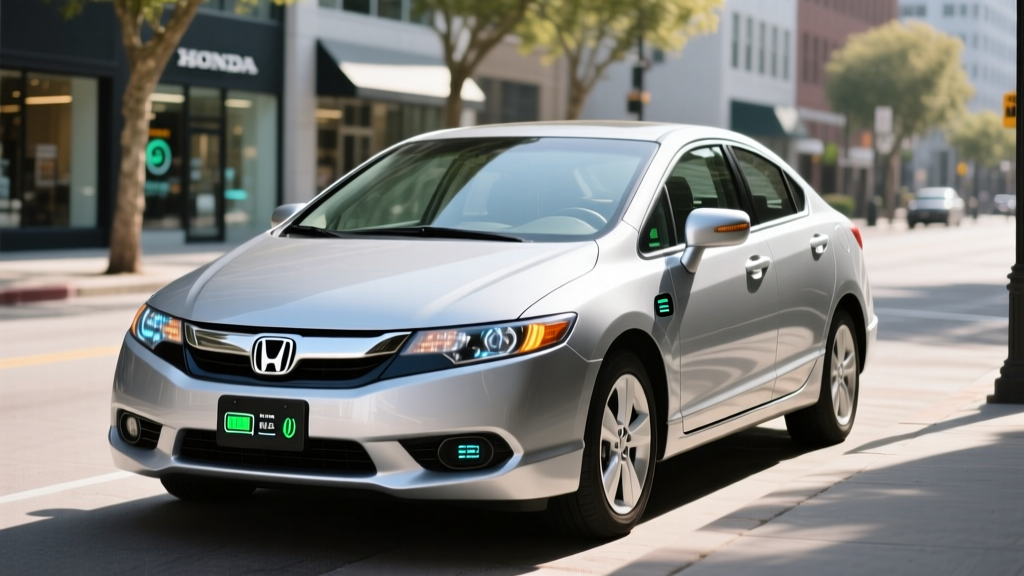
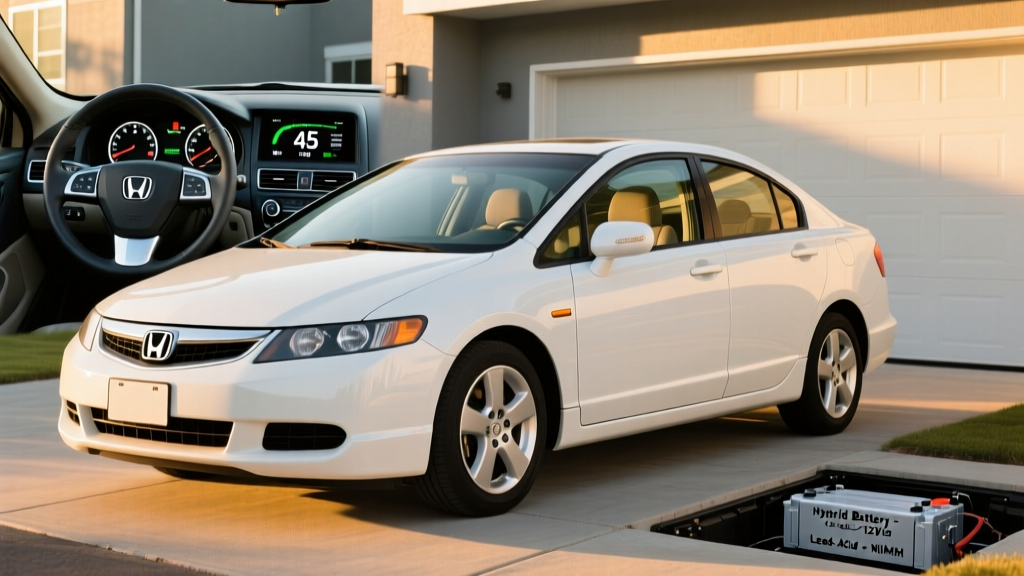
The 2006 Honda Civic Hybrid sedan was one of the first mainstream hybrids to challenge the Toyota Prius, and nearly two decades later, it remains a viable ultra-low-budget commuter car — if you go in with eyes wide open. Its Integrated Motor Assist (IMA) system delivers an EPA-estimated 49 city / 51 highway / 50 combined MPG, and examples with well-maintained hybrid batteries still achieve 45–52 MPG in real-world driving. But the IMA nickel-metal hydride (NiMH) battery is now 20 years old in surviving examples, and replacement cost is the single biggest variable in whether this car is a bargain or a money pit.
This guide covers everything a used buyer needs to know: fuel economy, powertrain specs, battery health, replacement costs, reliability patterns, and how the 2006 Civic Hybrid stacks up against modern hybrids, PHEVs, and EVs available in 2026.
HEV vs PHEV vs EV: Where the 2006 Civic Hybrid Fits
The 2006 Honda Civic Hybrid is a conventional hybrid (HEV). It cannot be plugged in. It has no electric-only driving range. The gasoline engine and a small electric motor work together, and regenerative braking plus the engine recharge the battery. This is fundamentally different from a plug-in hybrid (PHEV) or a battery-electric vehicle (BEV).
| Feature | HEV (2006 Civic Hybrid) | PHEV (e.g., 2026 Prius Prime) | BEV (e.g., 2026 Tesla Model 3) |
|---|---|---|---|
| Plug-in charging? | No | Yes | Yes |
| Electric-only range | 0 miles | ~44 miles | ~300+ miles |
| Gas engine? | Yes (primary) | Yes (backup) | No |
| Home charging needed? | No | Recommended | Essential |
| Federal tax credit (new) | None | Up to $7,500 (§30D) | Up to $7,500 (§30D) |
| Typical used price (2026) | $2,500–$5,500 | $28,000–$38,000 | $22,000–$45,000 |
If you have no access to charging at home or work and simply want maximum fuel economy from a gas station fill-up, a conventional HEV like the 2006 Civic Hybrid still serves that niche. But for buyers who can charge at home, a modern PHEV or EV delivers dramatically lower operating costs.
Fuel Economy: EPA Ratings and Real-World MPG
The EPA rated the 2006 Honda Civic Hybrid (with CVT automatic transmission) at:
| Cycle | EPA Estimate |
|---|---|
| City | 49 MPG |
| Highway | 51 MPG |
| Combined | 50 MPG |
Real-world expectations: The Civic Hybrid's IMA system provides mild electric assist primarily during acceleration and low-speed driving. Unlike Toyota's more robust Hybrid Synergy Drive, the Honda IMA system cannot propel the car on electric power alone. In practice:
- City driving (stop-and-go): 45–52 MPG. Regenerative braking is most effective here, and the engine shuts off at stops (auto idle-stop).
- Highway cruising (65–75 mph): 42–48 MPG. The electric motor provides less benefit at sustained speed, and the 1.3L engine works harder.
- Cold weather (below 35°F): Expect a 5–12% drop. The engine runs longer to warm the cabin and the NiMH battery is less efficient when cold.
- Aged battery (degraded IMA pack): If the hybrid battery has lost significant capacity, city MPG can drop to 35–40 as the engine compensates.
Many owners report lifetime averages of 44–48 MPG when the IMA system is functioning properly — slightly below the 50 MPG combined sticker but still exceptional for a non-plug-in vehicle.
Powertrain and Performance Specifications
| Specification | 2006 Honda Civic Hybrid (CVT) |
|---|---|
| Engine | 1.3L i-DSI inline-4 (8-valve, i-VTEC) |
| Engine horsepower | 93 hp @ 6,000 rpm |
| Engine torque | 89 lb-ft @ 4,600 rpm |
| Electric motor (IMA) | 15 kW (20 hp), 76 lb-ft |
| Combined system output | ~110 hp (combined peak) |
| Transmission | Continuously Variable (CVT) |
| Hybrid battery | NiMH, ~0.35 kWh (nominal) |
| Drivetrain | Front-wheel drive |
| 0–60 mph | ~11.0 seconds |
| Curb weight | ~2,806 lbs |
| Fuel tank | 13.2 gallons |
| Total range (est.) | ~600–660 miles |
The IMA system in the 2006 Civic Hybrid is best understood as an assist hybrid, not a full hybrid like the Prius. The electric motor sits between the engine and transmission, providing torque fill during acceleration and enabling idle stop. It cannot move the car without the gasoline engine running. The 1.3L i-DSI engine uses twin spark plugs per cylinder for more complete combustion, which was Honda's efficiency strategy before adopting Atkinson-cycle engines in later generations.
Performance is modest. The ~110 combined horsepower and CVT make this a car built for fuel economy, not acceleration. Highway merging requires planning, and the CVT drone under hard throttle is noticeable. But in urban commuting, the electric torque fill at low RPM gives the Civic Hybrid adequate responsiveness around town.
IMA Battery Health, Degradation, and Replacement Cost
This is the single most important factor when buying a 2006 Civic Hybrid today. The original NiMH IMA battery pack was never designed to last 20 years, and most surviving examples have either had a replacement or are running on a degraded original.
Original battery warranty: Honda covered the IMA battery for 8 years / 80,000 miles (10 years / 150,000 miles in CARB states including California, New York, Massachusetts, and others that adopted California emissions standards). This warranty expired for all 2006 models by 2016 at the latest.
Signs of IMA battery degradation:
- IMA warning light on the dashboard
- Reduced regenerative braking (charge bar rarely reaches full)
- Lower-than-expected MPG (below 40 combined)
- Engine runs more frequently at stops (idle-stop not engaging)
- Recalibration cycles (charge/discharge gauge cycling repeatedly)
Replacement cost breakdown:
| Option | Cost Range | Notes |
|---|---|---|
| New OEM Honda IMA battery | $2,000–$3,500 (if still available) | Increasingly difficult to source for this model year; check with Honda parts departments |
| Remanufactured aftermarket pack | $1,000–$1,800 | Most common option; quality varies by supplier; typically 1–3 year warranty |
| Used/salvage yard pack | $300–$700 | Highest risk — unknown remaining life; a gamble |
| Individual cell replacement (DIY) | $200–$500 (parts) | Requires technical skill; replaces only failed sub-cells; temporary fix in many cases |
| Installation labor | $150–$400 | The pack is under the rear seat; accessible but requires high-voltage safety protocol |
Total realistic replacement cost: $1,200–$2,200 for a remanufactured pack with professional installation. This is a significant expense relative to the car's value, which typically ranges from $2,500 to $5,500 in 2026 depending on mileage and condition.
Key buyer tip: Before purchasing, use an OBD-II scanner compatible with Honda IMA systems (or have a Honda specialist perform a diagnostic) to check the battery's state of health. Look for the IMA battery's actual capacity versus its design capacity. A pack showing less than 60% of original capacity will noticeably impact fuel economy and drivability.
Reliability and Common Issues
The 2006 Civic Hybrid's conventional components — engine, suspension, brakes, interior — follow the strong reliability tradition of the 8th-generation Civic platform. However, the hybrid-specific systems introduce age-related concerns:
Common issues beyond the IMA battery:
- CVT transmission: The CVT in this generation has a mixed reliability record. Fluid changes every 30,000 miles (using Honda HCF-2 or the specified CVT fluid for this year) are critical. Shuddering, whining, or hesitation can signal impending failure. A CVT replacement runs $2,500–$4,000.
- Motor mount (rear): The active engine mount that dampens vibration during idle-stop is known to fail. Symptoms include excessive vibration at stops. Replacement: $300–$500.
- 12V auxiliary battery: Like any car, the 12V battery will need periodic replacement (~$120–$180). A weak 12V can cause IMA system errors even if the hybrid battery is fine.
- A/C compressor: The electric A/C compressor is driven independently of the engine. Failures are not common but are expensive ($800–$1,200) when they occur.
- Rust: In salt-belt states, check the subframe, rocker panels, and brake lines. This is a 20-year-old vehicle and corrosion is a primary structural concern.
What holds up well: The 1.3L i-DSI engine is under-stressed and can exceed 250,000 miles with basic maintenance. Brakes last longer than on conventional cars thanks to regenerative braking reducing pad wear. The interior, while dated, was well-assembled for its price point.
Tax Credits and Incentives in 2026
The 2006 Honda Civic Hybrid does not qualify for any federal tax credit when purchased used in 2026. Here is the full picture:
- Federal §30D new EV/PHEV credit ($7,500): Applies only to new plug-in vehicles with ≥7 kWh battery capacity. The Civic Hybrid is a conventional HEV with a ~0.35 kWh pack and cannot be plugged in. Not eligible.
- Federal used EV/PHEV credit (§25E, up to $4,000): Applies only to used plug-in vehicles (PHEVs and BEVs) with a battery ≥7 kWh, purchased from a dealer for under $25,000, with buyer income caps. The Civic Hybrid is not a plug-in vehicle. Not eligible.
- Original hybrid credit (expired): When new, the 2006 Civic Hybrid qualified for a federal hybrid tax credit of up to $2,100 under the Energy Policy Act of 2005. This credit phased out for Honda after mid-2007 and is long expired for any purchase.
- State incentives: Some states offer registration fee reductions, HOV lane access, or emissions-test exemptions for hybrid vehicles. Check your state's DMV or energy office for current programs. Most HOV lane stickers for this model year have expired.
Bottom line: You are buying this car purely on its fuel-economy merits and low purchase price. There is no tax-credit math to factor in. See the IRS clean vehicle credit page for current rules on vehicles that do qualify.
Who Should Buy This Hybrid vs. a Modern PHEV or EV?
Pros
- Ultra-low purchase price ($2,500–$5,500)
- 45–52 MPG real-world with a healthy IMA battery
- No plug-in charging required — works like a regular gas car
- ~600+ mile total range per tank
- Low insurance costs
- Simple to maintain (no complex thermal management, no charging port)
Cons
- 20-year-old hybrid battery is a ticking expense ($1,200–$2,200 replacement)
- Sluggish performance (11-second 0–60)
- No electric-only driving, no plug-in capability
- Outdated safety features (no ESC standard, no backup camera, basic airbags)
- CVT reliability concern if maintenance history is unknown
- No tax credits or incentives available
Choose the 2006 Civic Hybrid if:
- Your budget is under $6,000 and you need a commuter car now
- You drive 15,000+ miles per year and want to minimize fuel spend without plugging in
- You have no access to home or workplace charging
- You are mechanically inclined or have a trusted independent Honda shop
- You understand the IMA battery may need replacement and budget accordingly
Choose a modern hybrid (e.g., 2026 Toyota Prius or Honda Civic Hybrid) if:
- You can spend $28,000–$35,000 and want a full new-car warranty
- You want modern safety (automatic emergency braking, lane keeping, backup camera)
- You want 50+ MPG with a more robust hybrid system and 10-year/150,000-mile battery warranty
Choose a PHEV (e.g., 2026 Prius Prime) if:
- You have home charging and a commute under 40 miles — you may rarely use gas
- You want up to $7,500 in federal tax credits (subject to income, MSRP, and sourcing rules per IRS §30D guidelines)
- You want electric-only daily driving with a gas engine for road trips
Choose a full EV (e.g., 2026 Chevy Equinox EV, Tesla Model 3) if:
- You have reliable home Level 2 charging
- You want zero tailpipe emissions and minimal maintenance (no oil changes, no spark plugs, no transmission fluid)
- Your daily driving is under 250 miles and you want the lowest per-mile fuel cost
Pre-Purchase Checklist for a Used 2006 Civic Hybrid
If you're seriously considering one, run through this checklist before handing over cash:
- IMA battery diagnostic: Have a Honda specialist or use an OBD-II tool to read the IMA battery's state of health. Look for capacity percentage and any stored IMA fault codes.
- Check for IMA warning light: Turn the key to "ON" (don't start) — the IMA light should illuminate briefly then go off. If it stays on, the system has a fault.
- Test idle-stop: At a warm stoplight, the engine should shut off silently. If it doesn't, the IMA system may be disabled or the battery too weak.
- CVT fluid history: Ask for maintenance records. If there's no record of CVT fluid changes, factor in a $150–$250 fluid change immediately after purchase.
- Recall status: Check the VIN at NHTSA's recall lookup for any open recalls (there were recalls related to the passenger-side airbag inflator under the Takata campaign).
- Rust inspection: Get the car on a lift and inspect the subframe, brake lines, and fuel tank straps.
- 12V battery age: If it's over 4 years old, budget $150 for a replacement.
- Verify title status: Salvage or rebuilt titles on a car this cheap often mean the IMA system was never repaired after a failure.
Frequently Asked Questions
How many MPG does the 2006 Honda Civic Hybrid actually get?
The EPA rates it at 49 city / 51 highway / 50 combined MPG. In real-world driving with a healthy IMA battery, expect 45–52 MPG in mixed driving. Highway-only trips at 75 mph typically return 42–48 MPG. A degraded battery will drop city mileage to 35–40 MPG.
Is the 2006 Honda Civic Hybrid a plug-in?
No. It is a conventional hybrid (HEV). You never plug it in. The battery recharges through regenerative braking and the gasoline engine. There is no electric-only driving mode and no charging port.
How much does it cost to replace the IMA battery?
Expect $1,200–$2,200 for a remanufactured IMA battery pack with professional installation. A new OEM pack (if available) can cost $2,000–$3,500. Used/salvage packs are cheaper ($300–$700) but carry significant risk given their age.
How long does the IMA battery last?
Original IMA batteries typically lasted 8–12 years or 100,000–150,000 miles before significant degradation. Remanufactured replacements generally last 5–8 years depending on quality and driving patterns. Since all 2006 models are now 20 years old, any original battery is well past its expected life.
Does the 2006 Civic Hybrid qualify for any tax credit in 2026?
No. It does not qualify for the federal §30D new-vehicle credit (it's not a plug-in) or the §25E used-vehicle credit (same reason). The original hybrid tax credit of up to $2,100 expired in 2007. Some states may offer minor registration or inspection benefits for hybrids — check your local DMV.
Is the 2006 Civic Hybrid reliable?
The underlying Civic platform is mechanically sound, and the 1.3L engine can exceed 250,000 miles. The main reliability concerns are the IMA battery (a known wear item at this age), the CVT transmission (requires regular fluid changes), and the rear motor mount. With proper maintenance and a healthy IMA pack, it can be a dependable commuter. Without maintenance records, it's a risk.
How does it compare to a Toyota Prius of the same era?
The 2004–2009 Toyota Prius (2nd generation) offers similar fuel economy (~46 MPG combined EPA) but uses Toyota's more capable Hybrid Synergy Drive, which allows limited electric-only driving at low speeds. The Prius has a larger hybrid battery and more robust electric motor, giving it better low-speed responsiveness. However, the Prius battery replacement is similarly expensive ($1,500–$2,500). Both are viable budget commuters, but the Prius is generally considered the more refined hybrid system of that era.
What should I budget annually to own this car?
Beyond fuel (roughly $900–$1,100/year at 15,000 miles and 48 MPG with $3.20/gallon gas), budget $500–$800/year for insurance, $200–$400 for basic maintenance (oil changes, filters, tires), and set aside $1,500–$2,000 for an eventual IMA battery replacement if the current pack hasn't been replaced recently. Total annual operating cost is typically $1,800–$2,500 excluding the battery reserve.