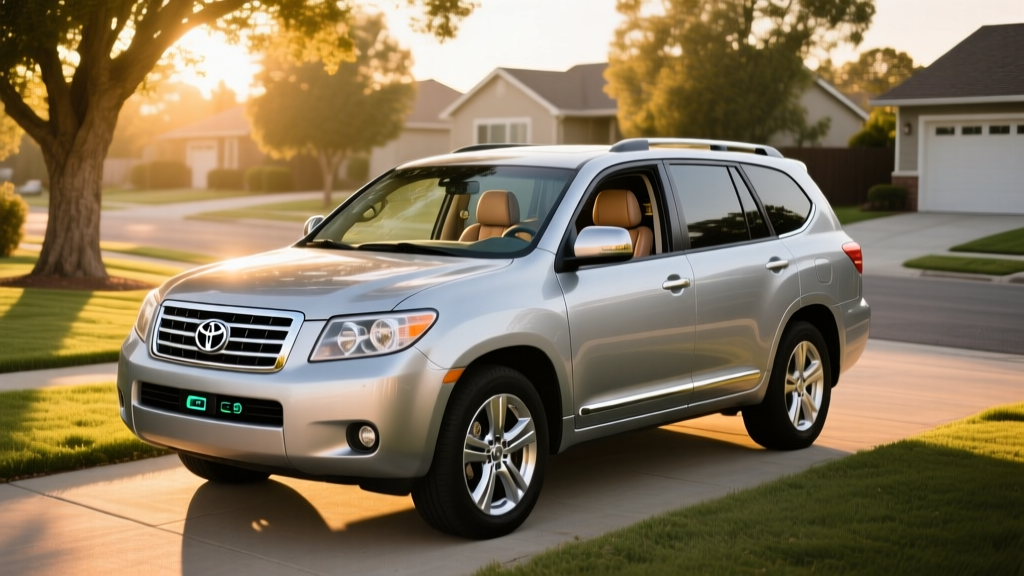
The 2006 Toyota Highlander Hybrid Limited was one of the first mainstream hybrid SUVs to reach American driveways, combining a 3.3-liter V6 with Toyota's Hybrid Synergy Drive. Nearly two decades later, it remains a fixture on the used market — often selling for $4,000–$7,000 depending on mileage and battery condition. For budget-conscious shoppers exploring hybrid ownership without the premium of a new vehicle, this early hybrid pioneer deserves a careful, data-driven look.
This guide breaks down the 2006 Highlander Hybrid Limited's real-world fuel economy, powertrain specs, battery longevity, ownership costs, and whether it still makes sense compared to modern hybrids, plug-in hybrids, and full EVs available in 2026.
Understanding the 2006 Highlander Hybrid: HEV, Not PHEV
Hybrid Type: Conventional Hybrid (HEV)
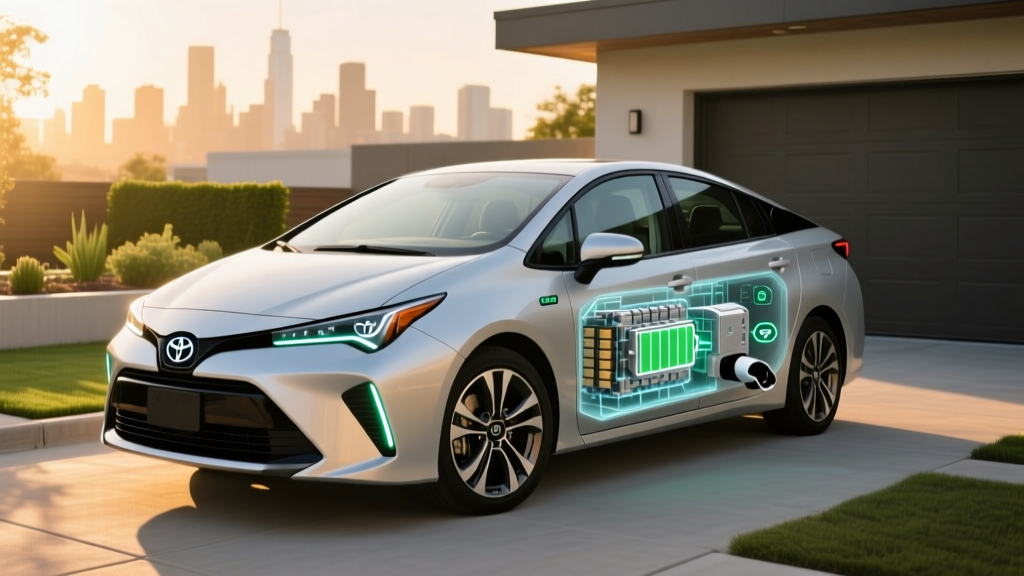
The 2006 Highlander Hybrid is a conventional hybrid electric vehicle (HEV) — not a plug-in hybrid (PHEV). It charges its 1.0 kWh nickel-metal hydride (NiMH) battery entirely through regenerative braking and the gasoline engine. You never plug it in. There is no electric-only driving range to speak of; the electric motor assists the gas engine during acceleration and enables brief low-speed electric-only movement (typically under 1 mile at parking-lot speeds).
This distinction matters because federal §30D tax credits apply only to plug-in vehicles with batteries of at least 7 kWh. The 2006 Highlander Hybrid has never qualified for federal EV or PHEV purchase incentives — and as a used vehicle, it also falls outside the Used Clean Vehicle Credit (§25E) for the same reason.
Fuel Economy: EPA Ratings vs. Real-World MPG
The EPA rated the 2006 Highlander Hybrid Limited with front-wheel drive (FWD) at 31 city / 27 highway / 29 combined MPG. The all-wheel-drive (AWD-i) variant — which adds a rear electric motor — was rated slightly lower at 31 city / 25 highway / 28 combined MPG. These figures were impressive for a 7-passenger SUV in 2006, when the average new vehicle achieved roughly 21 MPG combined.
| Drivetrain | City MPG | Highway MPG | Combined MPG |
|---|---|---|---|
| FWD | 31 | 27 | 29 |
| AWD-i | 31 | 25 | 28 |
Source: fueleconomy.gov
Real-World MPG Reality Check
Toyota hybrids tend to exceed their EPA city rating in stop-and-go traffic because regenerative braking recaptures energy that gas-only vehicles waste as heat. Owner-reported data on Fuelly and similar platforms shows many 2006 Highlander Hybrid drivers averaging 26–30 MPG combined in mixed driving, with city-heavy commuters occasionally reaching 32–33 MPG. Highway-only driving at 75+ mph drops economy to roughly 23–25 MPG due to the vehicle's 4,500-lb curb weight and aerodynamic drag.
At 20 years old, battery degradation can reduce hybrid system efficiency. A healthy hybrid battery enables the electric motor to shoulder more of the acceleration load, keeping the V6 in its most efficient operating range. A degraded battery forces the engine to work harder, potentially dropping real-world MPG by 2–4 MPG below original ratings.
Powertrain Specs: 272 HP V6 Hybrid System
| Specification | Detail |
|---|---|
| Engine | 3.3L V6 (3MZ-FE), 208 HP @ 5,600 rpm |
| Front Electric Motor | 120 kW (161 HP) |
| Rear Electric Motor (AWD-i) | 50 kW (67 HP) |
| Net System Horsepower | 272 HP |
| Hybrid Battery | ~1.0 kWh NiMH (240V nominal) |
| Transmission | eCVT (electronically controlled CVT) |
| 0-60 MPH | ~7.3 seconds (FWD) |
| Curb Weight | ~4,505 lbs |
| Seating | 7 passengers (3-row) |
| Towing Capacity | 3,500 lbs |
Toyota's Hybrid Synergy Drive in this generation pairs the 3.3L V6 with two front motor-generators through a planetary gearset (the eCVT). There are no traditional gears or clutch packs — the system seamlessly blends engine and motor power. The AWD-i variant eliminates a mechanical driveshaft entirely, using the rear 50 kW motor to power the rear wheels only when traction is needed.
At 272 net HP, the 2006 Highlander Hybrid Limited was surprisingly quick for its era — outpacing the non-hybrid V6 Highlander by roughly 40 HP. The electric motor's instant torque delivery gives strong off-the-line acceleration, though highway passing at speed relies more heavily on the V6.
Hybrid Battery Lifespan, Warranty & Replacement Cost
Original Battery Warranty
Toyota originally warranted the 2006 Highlander Hybrid battery for 8 years / 100,000 miles (extended to 10 years / 150,000 miles in California Air Resources Board (CARB) states). That warranty has long expired for every surviving example. Any hybrid battery issue on a 2006 model is now an out-of-pocket expense for the owner.
Battery Degradation and Real-World Lifespan
The NiMH battery pack in the 2006 Highlander Hybrid was engineered for durability. Toyota's early hybrid batteries have demonstrated remarkable longevity — many original Prius and Highlander Hybrid packs have reached 150,000–200,000 miles before requiring replacement. However, at nearly 20 years old, age-related degradation is the primary concern regardless of mileage.
NiMH cells lose capacity gradually. When the pack degrades to roughly 60–70% of its original capacity, you'll notice:
- Reduced MPG (engine runs more frequently)
- More aggressive engine cycling on and off
- Reduced regenerative braking effectiveness
- Potential hybrid system warning lights
Replacement Cost Breakdown
| Option | Estimated Cost | Notes |
|---|---|---|
| New OEM Toyota Battery | $3,000–$4,000 | Dealer-installed; increasingly scarce for this model year |
| Refurbished / Reconditioned Pack | $1,200–$2,200 | Third-party suppliers; 1–3 year warranty typical |
| Individual Cell Replacement | $500–$1,000 | Specialist hybrid shops; replaces only failed cells |
| DIY Rebuild Kit | $400–$800 | For experienced hobbyists; high-voltage risk |
Before purchasing any used 2006 Highlander Hybrid, request a hybrid battery health check from a Toyota dealer or qualified hybrid specialist. This diagnostic reads individual cell voltages and internal resistance — revealing whether the pack is balanced and how much capacity remains.
Is the 2006 Highlander Hybrid Reliable?
Toyota's first-generation Highlander Hybrid has earned a strong reliability reputation, consistent with Toyota's broader hybrid track record. The eCVT transmission — which has no conventional gears, bands, or torque converter — is one of the most durable transmissions ever put into production. There are no fluid changes required, and failure is rare.
The primary reliability concerns for a 20-year-old example are age-related, not design-related:
- Hybrid battery degradation (detailed above)
- Inverter coolant pump — known to fail around 120,000–160,000 miles; replacement ~$400–$700
- Brake actuator assembly — the electro-hydraulic brake system can develop leaks or sensor faults; replacement is expensive ($1,200–$2,000)
- Standard aging items — suspension bushings, water pump, timing belt (the 3MZ-FE is an interference engine; belt replacement every 90,000 miles is critical)
The Limited trim added leather seats, a premium JBL audio system, heated front seats, and a rear-seat DVD entertainment system. These luxury features are now 20 years old and may require refurbishment — particularly the leather, which tends to crack on high-mileage examples.
Used Market Pricing & Tax Credit Eligibility
As of early 2026, the 2006 Highlander Hybrid Limited trades on the used market in a narrow band:
- High mileage (150,000+ miles, fair condition): $3,500–$5,000
- Average mileage (100,000–150,000 miles, good condition): $5,000–$7,000
- Lower mileage (under 100,000 miles, excellent condition): $7,000–$9,500
Tax Credit: Not Eligible
The 2006 Highlander Hybrid does not qualify for any current federal tax credit. The IRS §25E Used Clean Vehicle Credit (up to $4,000) applies only to used plug-in electric vehicles and fuel cell vehicles — not conventional hybrids. The original hybrid tax credit that existed in 2006 (up to $2,200 for this model) expired for Toyota in 2007 after the manufacturer hit its 60,000-unit cap. No state incentives currently cover the purchase of a 20-year-old conventional hybrid.
2006 Highlander Hybrid vs. Modern Alternatives
For shoppers cross-referencing this used hybrid against newer options, the comparison is instructive:
| Vehicle | Combined MPG / MPGe | Electric-Only Range | Typical Price (2026) | Federal Credit |
|---|---|---|---|---|
| 2006 Highlander Hybrid Limited | 28–29 MPG | None | $4,000–$9,500 | None |
| 2026 Toyota Highlander Hybrid | 35–36 MPG | None | $42,000–$53,000 | None (HEV) |
| 2026 Toyota RAV4 Prime (PHEV) | 42 mi EV / 38 MPG gas | 42 miles | $45,000–$50,000 | Up to $7,500* |
| 2026 Hyundai Ioniq 5 (BEV) | 114–132 MPGe | 290–325 miles | $42,000–$58,000 | Up to $7,500* |
*Federal credit eligibility depends on MSRP caps, buyer income limits, and battery component sourcing per IRS §30D rules. Verify with a tax professional.
Which Should You Choose?
Choose the used 2006 Highlander Hybrid if: Your budget is under $10,000, you need 7-passenger seating, your commute is city-heavy (where hybrids shine), and you can budget $1,500–$3,000 for a potential battery replacement.
Choose a modern HEV (new Highlander Hybrid) if: You want current safety tech (automatic emergency braking, lane-keeping, adaptive cruise), a full warranty, and 35+ MPG — and can afford $42,000+.
Choose a PHEV (RAV4 Prime) if: You have home charging, your daily commute is under 42 miles, and you want electric-only weekday driving with gas flexibility for road trips.
Choose a full EV (Ioniq 5) if: You have reliable home Level 2 charging, want the lowest per-mile fuel cost, and are ready to plan road trips around DC fast-charging infrastructure.
Pros and Cons at a Glance
Pros
- Strong 272 HP with smooth eCVT acceleration
- 28–31 MPG in a 7-seat SUV (excellent for 2006)
- eCVT is virtually bulletproof — no conventional transmission wear
- AWD-i provides electric all-wheel drive without a mechanical driveshaft
- 3,500-lb towing capacity
- Low used purchase price ($4,000–$9,500)
- Toyota reliability and parts availability
Cons
- 20-year-old hybrid battery is a $1,500–$4,000 liability
- No federal or state tax credits available
- Outdated safety tech — no AEB, lane assist, or blind-spot monitoring
- NiMH battery is heavier and less energy-dense than modern Li-ion
- Brake actuator replacement is expensive ($1,200–$2,000)
- Highway MPG (25–27) is unremarkable by 2026 standards
- Limited trim luxury features are aging poorly
Pre-Purchase Checklist for Used Buyers
If you're seriously considering a 2006 Highlander Hybrid Limited, take these steps before handing over cash:
- Hybrid battery diagnostic: Have a Toyota dealer or hybrid specialist read individual cell voltages. Voltage spread between cells should be under 0.2V; wider spreads indicate imbalance and impending failure.
- Timing belt history: Confirm the timing belt was replaced within the last 90,000 miles. The 3MZ-FE is an interference engine — a snapped belt means catastrophic valve damage.
- Inverter coolant pump: Check for recalls (Toyota issued a recall for this component). Verify the pump is operating — it should be audible when the hybrid system is on.
- Brake actuator inspection: Listen for unusual pump cycling when pressing the brake pedal. Excessive cycling suggests internal leakage.
- Pre-purchase inspection (PPI): Budget $150–$250 for an independent mechanic to perform a comprehensive inspection including compression test, suspension, and undercarriage rust assessment.
Frequently Asked Questions
How many MPG does the 2006 Highlander Hybrid get?
The EPA rated it at 31 city / 27 highway / 29 combined MPG for FWD, and 31 city / 25 highway / 28 combined for AWD-i. Real-world owners typically report 26–30 MPG combined depending on driving style, battery health, and climate. City-heavy driving yields the best results thanks to regenerative braking.
Does the 2006 Highlander Hybrid need to be plugged in?
No. This is a conventional hybrid (HEV), not a plug-in hybrid. The battery charges itself through regenerative braking and the gasoline engine. There is no charging port and no electric-only driving range beyond very low-speed parking-lot movement.
How long does the hybrid battery last?
Toyota's NiMH packs in this generation commonly last 150,000–200,000 miles or 10–15 years. However, any surviving 2006 model is now at or beyond that window. Expect to budget for a battery replacement ($1,200–$4,000 depending on option chosen) if the original pack hasn't been replaced.
Is the 2006 Highlander Hybrid reliable?
The powertrain — particularly the eCVT and hybrid system — is highly reliable by design. Age-related concerns include the hybrid battery, inverter coolant pump, and brake actuator. Standard maintenance items (timing belt, water pump, suspension) follow typical Toyota V6 intervals. Overall, it's one of the more reliable used SUVs from its era, provided maintenance has been kept current.
Does it qualify for any tax credit?
No. The 2006 Highlander Hybrid does not qualify for the federal §30D New Clean Vehicle Credit or the §25E Used Clean Vehicle Credit. Both credits require plug-in capability with a minimum battery capacity. The original hybrid tax credit available in 2006 expired for Toyota in 2007. Check your state's current incentive programs, but no state currently offers credits for 20-year-old conventional hybrids.
Hybrid vs. PHEV vs. EV — which fits me?
HEV (this vehicle): Best for buyers who can't charge at home, want zero behavior change from a gas car, and need a low purchase price. No plug, no range anxiety, modest fuel savings.
PHEV: Best for households with home charging and short commutes (under 30–40 miles). You drive on electricity daily and use gas only for longer trips.
Full EV: Best for those with reliable Level 2 home charging who want the lowest operating cost, zero tailpipe emissions, and are willing to plan road trips around DC fast-charging stops.
What does a replacement hybrid battery cost?
A new OEM battery runs $3,000–$4,000 installed at a dealer. Refurbished packs from third-party suppliers cost $1,200–$2,200 with a 1–3 year warranty. Individual cell replacement at a hybrid specialist costs $500–$1,000. For a vehicle worth $5,000–$7,000, a refurbished pack often makes the most financial sense.