The Original Hybrid SUV: Does the 2006 Ford Escape Hybrid Still Hold Up?
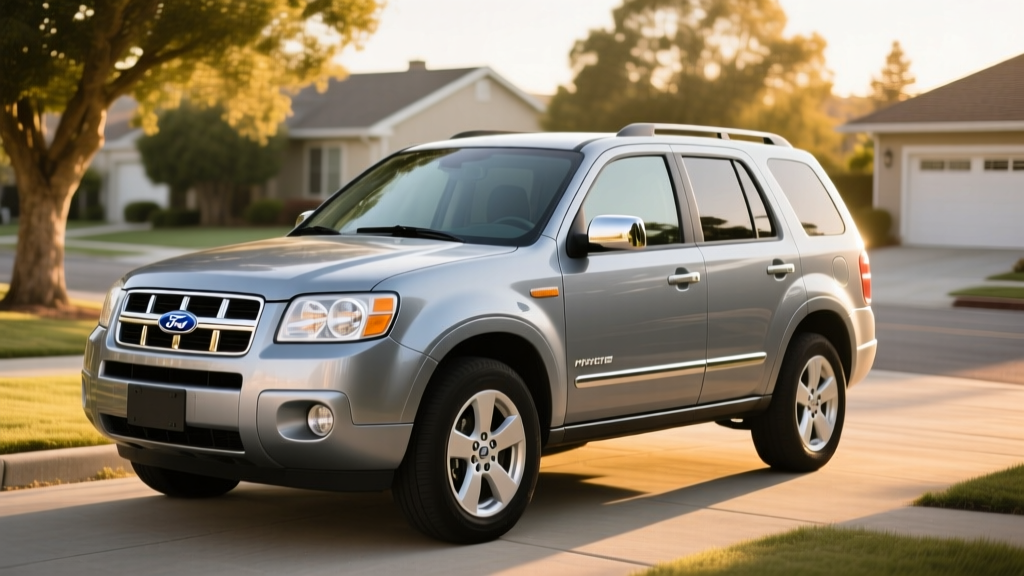
The 2006 Ford Escape Hybrid SUV occupies a unique place in automotive history. It was the first hybrid SUV ever sold in the United States, beating the Toyota Highlander Hybrid to market by several months and predating the current wave of electrified crossovers by nearly two decades. For buyers browsing the used market today, this compact SUV presents an intriguing proposition: proven hybrid technology wrapped in an affordable, practical package — but one that carries real considerations around battery age, parts availability, and efficiency expectations.
This guide breaks down everything a 2026 buyer needs to know about the 2006 Ford Escape Hybrid, from its EPA fuel economy figures to real-world reliability, battery replacement economics, and how it stacks up against modern hybrids, plug-in hybrids, and full EVs.
HEV vs. PHEV: What the 2006 Escape Hybrid Actually Is
Before evaluating the vehicle, it's essential to understand its powertrain classification. The 2006 Ford Escape Hybrid is a conventional hybrid electric vehicle (HEV) — not a plug-in hybrid (PHEV). This distinction matters enormously for ownership expectations.
| Feature | HEV (2006 Escape Hybrid) | PHEV (e.g., 2026 Ford Escape PHEV) | BEV (Full Electric) |
|---|---|---|---|
| Plug-in charging | No — charges via engine & regen | Yes — Level 1/Level 2 | Yes — Level 1/2/DC fast |
| Electric-only range | ~1 mile at low speed | 30–40 miles typical | 200–400+ miles |
| Battery size | ~1.8 kWh (NiMH) | 14–20 kWh (Li-ion) | 60–100+ kWh (Li-ion) |
| Gas engine | Yes — primary power source | Yes — backup after battery depletes | None |
| Federal tax credit (new) | None | Up to $7,500 (§30D, if eligible) | Up to $7,500 (§30D, if eligible) |
| Fuel cost | Gasoline only | Gasoline + electricity | Electricity only |
The 2006 Escape Hybrid uses regenerative braking and its gasoline engine to charge the battery. You never plug it in. The electric motor assists the engine during acceleration and enables brief electric-only driving at very low speeds (typically under 25 mph), but the gasoline engine does the vast majority of the work.
Fuel Economy: EPA Ratings and Real-World MPG
The 2006 Ford Escape Hybrid was rated by the EPA with the following fuel economy figures. Note that the EPA revised its testing methodology in 2008, so pre-2008 figures were adjusted downward retroactively to reflect more realistic driving conditions.
| Drivetrain | City MPG | Highway MPG | Combined MPG |
|---|---|---|---|
| FWD (2006 EPA revised) | 33 | 29 | 31 |
| AWD / 4WD (2006 EPA revised) | 29 | 27 | 28 |
| Non-hybrid 2006 Escape (I4 FWD) | 20 | 25 | 22 |
Source: fueleconomy.gov
Real-World MPG: What Owners Actually Report
Hybrid vehicles frequently exceed their EPA city ratings in stop-and-go driving because regenerative braking recaptures energy that a conventional car wastes as heat. However, the 2006 Escape Hybrid's age introduces variables:
- Best case (city, mild weather, healthy battery): 30–34 MPG combined
- Typical mixed driving: 26–30 MPG combined
- Highway-dominant (70+ mph): 25–28 MPG — hybrids lose their advantage at sustained high speeds
- With degraded battery (20-year-old NiMH): 22–26 MPG if the battery can no longer hold meaningful charge
The real-world gap between a healthy 2006 Escape Hybrid and its non-hybrid sibling is roughly 6–9 MPG combined — a meaningful savings of $300–$500 per year at 2026 fuel prices, depending on mileage and local gas costs.
Powertrain Specs: Engine, Motor, and Combined Output
The 2006 Escape Hybrid pairs Ford's 2.3-liter Atkinson-cycle four-cylinder engine with a permanent-magnet AC electric motor, mated to an electronically controlled continuously variable transmission (eCVT). This is fundamentally different from a belt-driven CVT — the eCVT uses a planetary gearset to blend engine and motor power seamlessly, the same architecture Toyota pioneered with its Hybrid Synergy Drive (Ford licensed similar patents).
| Specification | Detail |
|---|---|
| Engine | 2.3L Atkinson-cycle I4 |
| Engine horsepower | 133 HP @ 6,000 rpm |
| Electric motor | Permanent-magnet AC synchronous |
| Motor horsepower | 94 HP |
| Combined net output | 155 HP |
| Transmission | eCVT (planetary gearset) |
| Battery type | Nickel-metal hydride (NiMH) |
| Battery voltage | 330V nominal |
| Battery capacity | ~1.8 kWh (gross) |
| Drivetrain options | FWD or AWD (electronic rear motor on AWD) |
| 0–60 mph | ~10.8 seconds |
| Curb weight | ~3,780 lbs (FWD) |
The AWD version uses a second, smaller electric motor to drive the rear wheels when slip is detected — there is no mechanical driveshaft connecting the front and rear axles. This was an innovative approach in 2006 and remains common in modern hybrid crossovers.
Battery Lifespan, Warranty, and Replacement Cost
This is the single most important consideration for anyone buying a 2006 Ford Escape Hybrid in 2026. The vehicle is now 20 years old, and its original NiMH battery pack was engineered for a different era.
Original Battery Warranty
Ford warranted the 2006 Escape Hybrid's battery pack for 8 years / 100,000 miles (10 years / 150,000 miles in California Air Resources Board states). This warranty expired no later than 2016 for all original owners. Any battery still operating on its original cells in 2026 is living on borrowed time — or has already been replaced.
How Long Do These Batteries Actually Last?
NiMH batteries degrade differently than modern lithium-ion packs. They lose capacity gradually but can remain functional at reduced capacity for a very long time. Real-world data from Escape Hybrid taxis (many of which accumulated 200,000+ miles) shows:
- Original battery lifespan: Typically 150,000–200,000 miles or 10–15 years before significant degradation
- Failure mode: Unlike lithium-ion, NiMH cells tend to develop individual weak cells rather than uniform degradation — one bad cell can drag down the entire pack
- Symptoms of a failing battery: Reduced MPG (5–10 MPG drop), frequent engine running, reduced regenerative braking, dashboard warning lights
Battery Replacement Options and Costs (2026)
| Option | Cost Range | Notes |
|---|---|---|
| OEM new battery (Ford dealer) | $3,500–$5,500 | Availability may be limited for a 2006 model; contact dealer to confirm |
| Aftermarket remanufactured pack | $1,500–$3,000 | Companies like Green Bean Battery and Dorman offer remanufactured NiMH packs with 1–3 year warranties |
| Individual cell replacement | $300–$800 | Requires diagnostic scan to identify weak cells; DIY-friendly for experienced technicians |
| Used/salvage pack | $400–$1,000 | Risky — unknown remaining life; typically from wrecked vehicles |
For a vehicle with a 2026 market value of roughly $2,500–$5,000 depending on condition and mileage, a full OEM battery replacement can approach or exceed the car's value. A remanufactured pack is usually the most economically rational choice.
Is the 2006 Escape Hybrid Reliable?
Beyond the battery, the 2006 Escape Hybrid has a mixed reliability record:
Strengths
- eCVT transmission: The planetary gearset is remarkably durable — far more reliable than belt-driven CVTs and comparable to Toyota's Hybrid Synergy Drive in longevity
- 2.3L engine: The Duratec 23 is a simple, well-understood engine with adequate timing chain life and widely available parts
- Brake longevity: Regenerative braking significantly reduces wear on friction brakes — many owners report 80,000+ miles on original brake pads
Known Issues
- Electric power steering (EPS): The 2006 model year introduced EPS, and some units develop torque sensor failures — a $1,200–$1,800 repair
- Cooling system: The hybrid-specific cooling system for the battery and inverter requires maintenance that conventional Escape owners don't face
- Rust: Frame and underbody corrosion is common in salt-belt states, independent of the hybrid system
- Parts availability: Hybrid-specific components (inverter, battery cooling fan, HV cables) are becoming harder to source from dealers as Ford prioritizes current-model parts
Tax Credits and Incentives: What Applies in 2026?
The 2006 Ford Escape Hybrid originally qualified for a federal tax credit of up to $2,600 under the Energy Policy Act of 2005 — but this credit had a phase-out cap tied to manufacturer volume. Ford's credit pool was exhausted by 2009. No federal tax credit is available for purchasing a used 2006 Escape Hybrid in 2026.
The current IRS §30D Clean Vehicle Credit applies only to new and qualifying used (model year 2022 or newer) plug-in electric vehicles. A 2006 conventional hybrid does not meet the criteria. The used EV credit (§25E) of up to $4,000 requires the vehicle to be a plug-in EV or fuel cell vehicle with a battery of at least 7 kWh — the Escape Hybrid's 1.8 kWh NiMH pack and non-plug-in architecture disqualify it entirely.
Some states offer inspection exemptions or HOV lane access for hybrids, but most of these programs have sunset or been replaced by EV-focused incentives. Check your state's current regulations for any residual benefits.
Who Should Buy the 2006 Ford Escape Hybrid — And Who Shouldn't
Pros
- Low purchase price ($2,500–$5,000 used)
- Proven eCVT powertrain with Toyota-shared architecture
- Significantly better MPG than non-hybrid Escape (31 vs 22 combined)
- No plug-in charging required — works like a normal gas car
- AWD available with electric rear axle
- Strong regenerative braking extends brake life
Cons
- 20-year-old NiMH battery likely needs replacement ($1,500–$5,500)
- Parts for hybrid-specific components are increasingly scarce
- No federal or state tax credits available
- Slow acceleration (10.8 sec 0–60) and dated interior
- No modern safety features (no AEB, no lane-keep, no backup camera standard)
- Hybrid-specific repair knowledge required — not all shops can service HV systems
Choose the 2006 Escape Hybrid If:
- You need a cheap, efficient AWD commuter and can accept the battery risk
- You have access to a hybrid-qualified mechanic or are comfortable with DIY diagnostics
- You drive mostly city miles where the hybrid system delivers maximum benefit
- You plan to keep the vehicle 2–4 years and are comfortable with a potential battery investment
Look Elsewhere If:
- You want a warranty-backed, worry-free hybrid — consider a 2018+ Toyota RAV4 Hybrid or 2020+ Ford Escape Hybrid instead
- You want plug-in electric range — the 2026 Ford Escape PHEV offers 37 miles of electric-only driving and qualifies for the §30D tax credit
- You want zero tailpipe emissions — a used BEV like the Chevrolet Bolt EUV or Nissan Leaf may be a better fit, especially with the $4,000 used-EV tax credit
How It Compares: 2006 Escape Hybrid vs. Modern Alternatives
| Vehicle | Combined MPG / MPGe | Battery | Used Price (2026 est.) | Tax Credit |
|---|---|---|---|---|
| 2006 Ford Escape Hybrid (FWD) | 31 MPG | 1.8 kWh NiMH | $2,500–$5,000 | None |
| 2020 Toyota RAV4 Hybrid (FWD) | 40 MPG | 1.6 kWh NiMH | $18,000–$24,000 | None (HEV) |
| 2022 Ford Escape PHEV | 105 MPGe / 37 mi electric | 14.4 kWh Li-ion | $20,000–$26,000 | Up to $4,000 (§25E used) |
| 2021 Chevrolet Bolt EUV | 115 MPGe / 247 mi range | 65 kWh Li-ion | $14,000–$19,000 | Up to $4,000 (§25E used) |
The 2006 Escape Hybrid's only real advantage over these alternatives is its rock-bottom purchase price. A 2020 RAV4 Hybrid delivers 29% better fuel economy with a battery that's 14 years newer and likely has a decade of life remaining. A used PHEV or BEV unlocks tax credits and dramatically lower per-mile energy costs if you have home charging access.
Frequently Asked Questions
How many MPG does the 2006 Ford Escape Hybrid get?
The EPA rates the FWD model at 33 city / 29 highway / 31 combined MPG. The AWD model is rated at 29 city / 27 highway / 28 combined. Real-world results for a 20-year-old vehicle with a healthy battery typically fall between 26–32 MPG combined depending on driving conditions.
Does the 2006 Escape Hybrid need to be plugged in?
No. It is a conventional hybrid (HEV), not a plug-in hybrid. The battery charges through regenerative braking and the gasoline engine. You fuel it exactly like a standard gas vehicle.
How far can it drive on electric power alone?
Approximately 1 mile at speeds under 25 mph under light load. The 2006 Escape Hybrid was not designed for meaningful electric-only driving — the motor assists the engine rather than replacing it. If you want substantial electric-only range, you need a PHEV (30–40 miles) or a BEV (200+ miles).
What does a replacement battery cost?
A remanufactured NiMH pack costs $1,500–$3,000 installed. An OEM replacement from Ford runs $3,500–$5,500 if still available. Individual cell repairs can cost $300–$800. Given the vehicle's $2,500–$5,000 market value, battery replacement is a significant economic decision.
Is the 2006 Ford Escape Hybrid reliable?
The eCVT transmission and 2.3L engine are durable. The main reliability risk is the 20-year-old NiMH battery, which is at or beyond its designed lifespan. Electric power steering failures and hybrid cooling system issues are also known concerns. Overall reliability depends heavily on maintenance history and battery condition.
Does it qualify for any tax credit in 2026?
No. The original $2,600 federal credit expired over a decade ago. The current IRS §30D and §25E credits require plug-in vehicles with minimum battery capacities. A conventional HEV does not qualify for any federal incentive.
Can any mechanic work on the hybrid system?
No. The 330V high-voltage system requires specific training and safety protocols. Many independent shops won't service hybrid HV components. Look for a shop with ASE L3 (Light Duty Hybrid/Electric Vehicle Specialist) certification or a Ford dealer with hybrid-trained technicians.
Hybrid vs. PHEV vs. EV — which should I choose?
A conventional hybrid like the 2006 Escape is best if you want simplicity, no charging infrastructure, and the lowest purchase price. A PHEV is ideal if you have home charging and a short commute (under 35 miles) but want gas-engine flexibility for road trips. A full EV makes the most sense if you have reliable home charging, want minimal maintenance, and can benefit from the $4,000 used-EV tax credit or $7,500 new-EV credit.