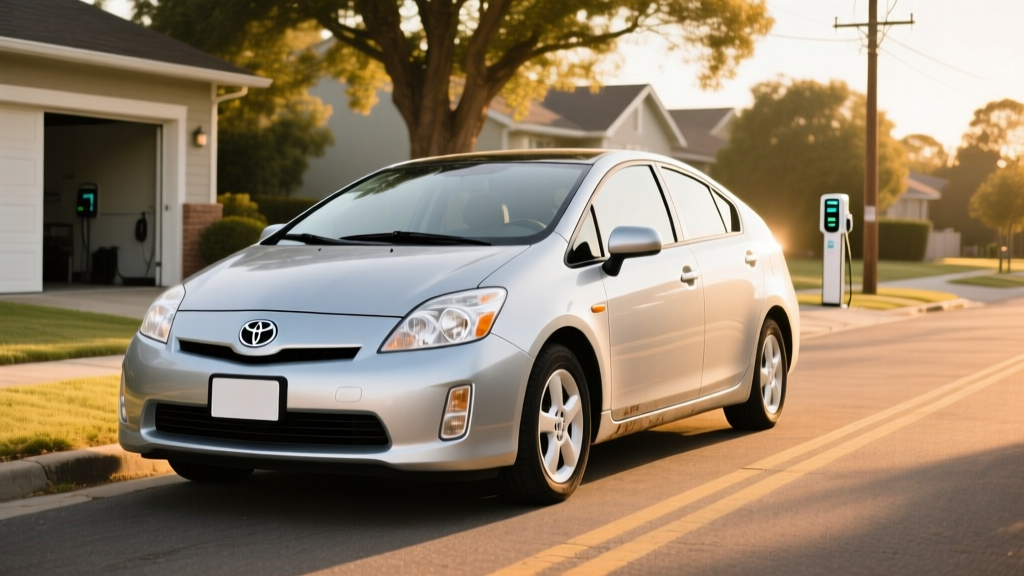
The 2005 Toyota Prius was the vehicle that proved hybrid technology could work for everyday drivers. As the second generation of Toyota's pioneering hybrid, it introduced the Hybrid Synergy Drive system and an aerodynamic hatchback body that would define the Prius lineage for decades. Today, with over 20 years of real-world data behind it, the 2005 Prius remains a fascinating case study in hybrid longevity and efficiency — and a practical budget commuter for buyers who know what to look for.
If you're researching the 2005 Toyota Prius hybrid MPG — whether out of curiosity, ownership pride, or because you're considering one as an ultra-affordable used hybrid — this guide covers the EPA numbers, real-world fuel economy, battery health expectations, and how this pioneering HEV stacks up against modern hybrids and plug-in hybrids.
2005 Toyota Prius Hybrid MPG: EPA Ratings vs. Real-World Numbers
The 2005 Toyota Prius carries an EPA fuel economy rating that was remarkable for its era and still respectable today. Here's the official breakdown from fueleconomy.gov:
| Metric | Value |
|---|---|
| City MPG | 48 MPG |
| Highway MPG | 45 MPG |
| Combined MPG | 46 MPG |
| Annual Fuel Cost (est.) | ~$950 (at $3.10/gal, 15k mi/yr) |
| Fuel Tank Capacity | 11.9 gallons |
| Total Range (est.) | ~547 miles |
It's worth noting that the 2005 Prius was originally rated under the EPA's older testing methodology at 60 city / 51 highway. The EPA revised its testing procedures in 2008 to better reflect real-world driving (more aggressive acceleration, air conditioning use, cold starts), and the restated figures of 48/45/46 are the ones that matter for comparison with modern vehicles.
How the 2005 Prius Hybrid Powertrain Works
The 2005 Prius uses Toyota's second-generation Hybrid Synergy Drive (HSD), a series-parallel full hybrid system. Understanding this powertrain helps explain why its MPG remains competitive:
- Gasoline Engine: 1.5-liter inline-4 (1NZ-FXE), producing 76 hp and 82 lb-ft of torque, running on the Atkinson cycle for higher thermal efficiency
- Electric Motor (MG2): 67 hp (50 kW), 295 lb-ft of torque — drives the front wheels
- Generator (MG1): Starts the engine, generates electricity, and controls the planetary gearset
- Combined System Output: 110 hp (net)
- NiMH Battery Pack: 1.3 kWh (nominal), located under the rear seat
- Transmission: eCVT (planetary gearset, no traditional belts or fixed gears)
The Prius is a conventional hybrid (HEV), not a plug-in hybrid (PHEV). It cannot be plugged in and has no meaningful electric-only range. The battery charges exclusively through regenerative braking and the gasoline engine. You never need to find a charger — you simply fill up at any gas station.
HEV vs. PHEV vs. EV: Where Does the 2005 Prius Fit?
If you're weighing a used 2005 Prius against modern electrified options, understanding the categories is essential:
| Feature | HEV (2005 Prius) | PHEV (e.g., Prius Prime) | BEV (e.g., Tesla Model 3) |
|---|---|---|---|
| Plugs in? | No | Yes | Yes |
| Electric-only range | 0 miles | 25–44 miles | 250–350+ miles |
| Gasoline engine? | Yes | Yes | No |
| Fuel economy (combined) | 46 MPG | 48–52 MPG (gas) + 114–127 MPGe | N/A (MPGe: 120–140) |
| Home charging needed? | No | Recommended (Level 2, ~4 hrs) | Required (Level 2, 8–12 hrs) |
| Used price range (2026) | $3,500–$7,000 | $18,000–$28,000 | $18,000–$35,000 |
| Federal tax credit | None | Up to $7,500 (new, §30D rules) | Up to $7,500 (new, §30D rules) |
Choose a PHEV if you have home charging access and a commute under 40 miles — you'll drive mostly on electricity and rarely buy gas. Choose a BEV if you have reliable home or workplace charging, want zero tailpipe emissions, and are ready for the lowest per-mile fuel cost (typically $0.04–$0.06/mile on home electricity vs. $0.10–$0.14/mile for a 46-MPG hybrid at $3.10/gallon).
Battery Lifespan, Replacement Cost, and Warranty
The single biggest concern for any used hybrid buyer is the traction battery. Here's what 20 years of Prius ownership data tells us:
Real-world battery longevity: The nickel-metal hydride (NiMH) pack in the 2005 Prius has proven remarkably durable. Many original batteries lasted 150,000–200,000 miles before significant degradation. However, at 20+ years old, most surviving 2005 Priuses have either had a battery replacement or are running on a pack with reduced capacity.
Replacement costs in 2026:
- New OEM Toyota battery: $2,000–$2,500 (installed at a dealer)
- Refurbished/reconditioned battery: $1,000–$1,500 (installed at a hybrid specialist)
- Individual module replacement: $300–$600 (a single bad module can be replaced by a skilled technician, extending pack life at minimal cost)
Signs of a failing hybrid battery include a noticeable drop in MPG (below 38–40 combined), the battery charge indicator fluctuating rapidly, or a check engine light with codes P0A80 (replace hybrid battery) or P0A7F (hybrid battery pack deterioration). A pre-purchase scan with an OBD-II reader capable of reading hybrid-specific codes is strongly recommended.
Reliability Record and Common Issues
The 2005 Prius earned a reputation as one of the most reliable vehicles Toyota has ever built. The eCVT transmission has no belts, no clutch packs, and no torque converter — just a planetary gearset with three moving components — making it virtually bulletproof. Consumer surveys and long-term ownership reports consistently rank this generation among the lowest cost-of-ownership vehicles ever sold.
That said, at two decades old, certain non-powertrain items deserve attention:
- Inverter coolant pump: Known to fail around 100,000–150,000 miles. Replacement is ~$300–$500. Check for inverter-related warning lights.
- 12V auxiliary battery: Located in the rear cargo area (not under the hood). A standard AGM replacement costs ~$180–$250. If the car won't "start" (power on), this is often the culprit, not the hybrid battery.
- Bladder-type fuel tank: The 2004–2009 Prius uses a sealed bladder fuel tank to reduce evaporative emissions. It can make refueling slow or cause the pump to click off prematurely — a known annoyance, not a safety issue.
- Combination meter (dashboard display): Some units fail, causing the multi-info display to go dark. Refurbished units are available for ~$200–$400.
2005 Prius vs. Modern Hybrids: How Does the MPG Compare?
Two decades of hybrid advancement have yielded meaningful but not dramatic MPG gains. Here's how the 2005 model compares to current benchmarks, per fueleconomy.gov:
| Vehicle | Combined MPG | City / Highway | HP |
|---|---|---|---|
| 2005 Toyota Prius | 46 MPG | 48 / 45 | 110 |
| 2026 Toyota Prius (LE) | 57 MPG | 57 / 56 | 194 |
| 2026 Toyota Prius Prime (PHEV) | 52 MPG + 127 MPGe | 44 mi electric-only | 220 |
| 2026 Hyundai Elantra Hybrid | 54 MPG | 51 / 58 | 139 |
| 2026 Honda Accord Hybrid | 48 MPG | 51 / 44 | 204 |
The 2026 Prius achieves roughly 24% better combined fuel economy than the 2005 model while delivering nearly double the horsepower. That's significant progress — but the 2005 Prius's 46 MPG combined still beats nearly every non-hybrid vehicle on the road today, and its fuel cost per mile remains competitive with hybrids costing four to six times more on the used market.
Does the 2005 Prius Qualify for Any Tax Credits?
No. The 2005 Toyota Prius does not qualify for any federal tax credit. The original federal hybrid tax credit (up to $3,150 for the 2005 Prius) was phased out for Toyota in 2007 after the manufacturer hit the 60,000-unit cap. The current IRS §30D Clean Vehicle Credit (up to $7,500) applies only to new plug-in hybrids and battery electric vehicles meeting battery sourcing, critical minerals, MSRP caps, and buyer income requirements. Conventional hybrids like the 2005 Prius are not eligible.
The used clean vehicle credit (up to $4,000 or 30% of sale price, whichever is less) also requires a plug-in hybrid or BEV with at least 7 kWh of battery capacity. The 2005 Prius's 1.3 kWh NiMH pack does not qualify.
For buyers seeking maximum fuel savings on a minimal budget, the 2005 Prius makes up for the lack of incentives with its low purchase price (typically $3,500–$7,000 in 2026) and rock-bottom operating costs.
Frequently Asked Questions
How many MPG does the 2005 Toyota Prius hybrid get in real driving?
The EPA rates it at 48 city / 45 highway / 46 combined. In real-world use, city-heavy drivers often see 48–52 MPG thanks to regenerative braking, while highway-dominant commutes at 70+ mph tend to return 40–43 MPG. Cold weather reduces economy by 5–10%.
Can I plug in the 2005 Toyota Prius to charge it?
No. The 2005 Prius is a conventional hybrid (HEV), not a plug-in hybrid (PHEV). It charges its battery solely through regenerative braking and the gasoline engine. You never plug it in — you only refuel at a gas station.
How much does it cost to replace the hybrid battery in a 2005 Prius?
A new OEM battery costs $2,000–$2,500 installed at a dealer. Refurbished batteries run $1,000–$1,500, and individual module replacement can cost as little as $300–$600 if only one cell group has failed.
Is the 2005 Prius still reliable at 200,000+ miles?
Yes, provided the hybrid battery is in good condition and routine maintenance (oil changes, coolant flushes, inverter coolant pump inspection) has been performed. The eCVT transmission is essentially maintenance-free. Many 2005 Priuses have exceeded 300,000 miles with proper care.
Should I buy a 2005 Prius or save for a newer hybrid?
If your budget is under $8,000 and you need maximum MPG with no charging infrastructure, the 2005 Prius is arguably the best value in used hybrids. If you can spend $20,000+, a newer Prius or Prius Prime PHEV offers better fuel economy, modern safety features (automatic emergency braking, lane keeping), Apple CarPlay/Android Auto, and available tax credits (on new PHEV models meeting §30D requirements).