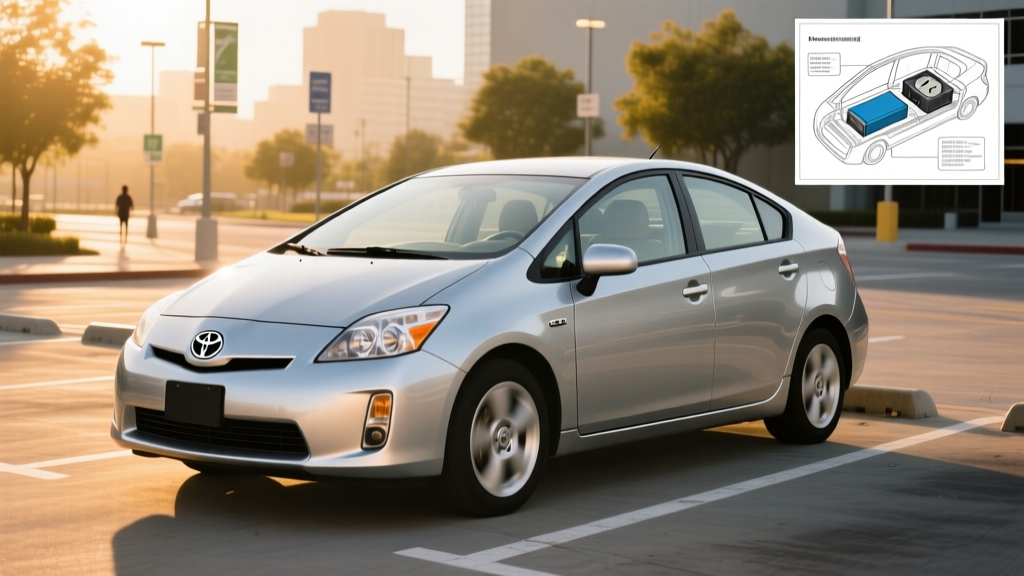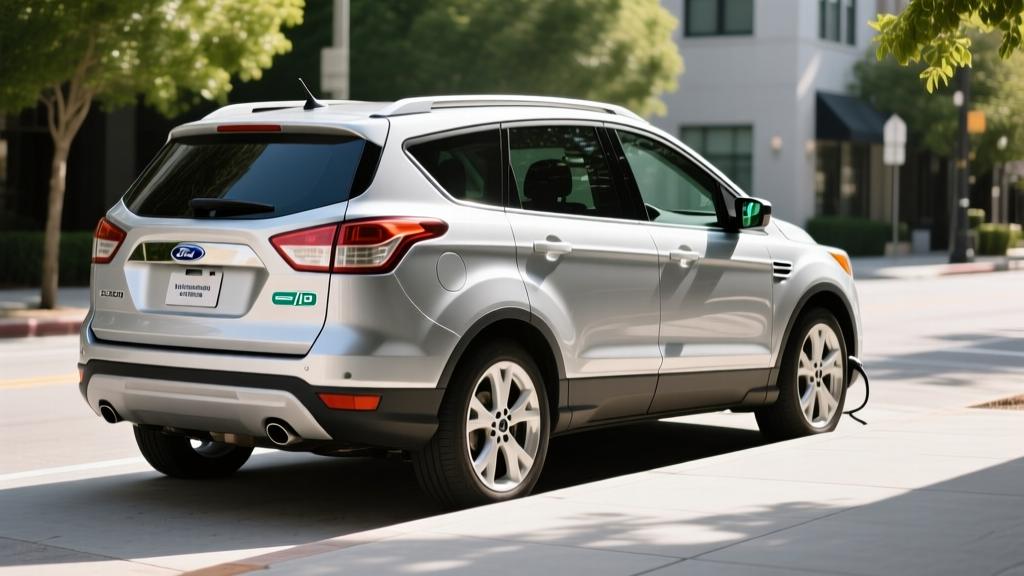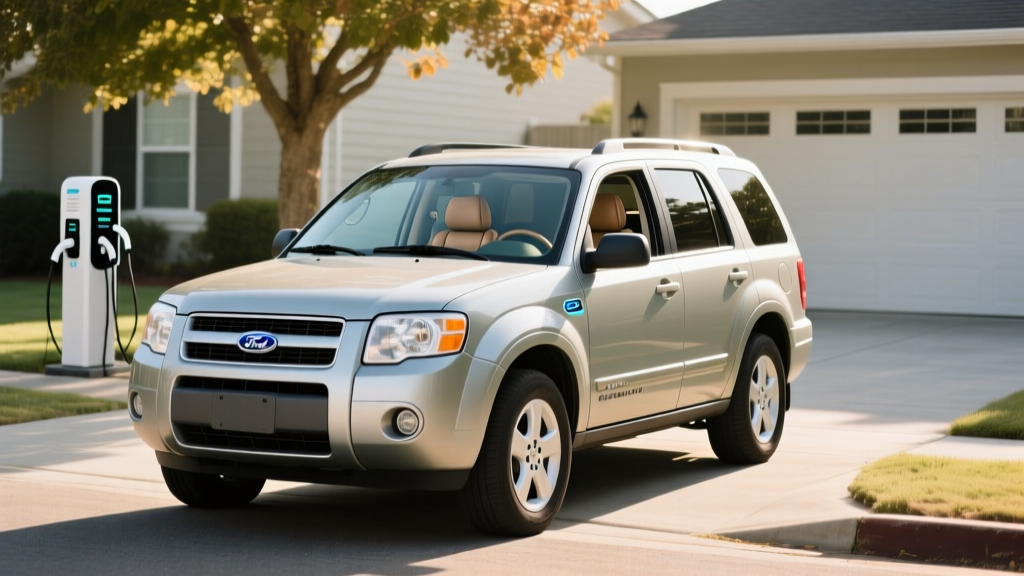
The 2005 Ford Escape Hybrid holds a unique place in automotive history: it was the first hybrid SUV ever sold in the United States and the first hybrid from a domestic automaker. Launched when the Toyota Prius was still a niche sedan, the Escape Hybrid proved that hybrid powertrains could work in a practical, family-friendly utility vehicle. More than two decades later, these SUVs are still on the road, often available for under $5,000 on the used market. But is a 20-year-old hybrid a smart buy or a money pit waiting to happen?
This guide breaks down the 2005 Escape Hybrid's fuel economy, powertrain specs, battery longevity, real-world reliability, and what you need to know before purchasing one today.
HEV vs PHEV vs EV: Where the 2005 Escape Hybrid Fits
Before diving into specs, it is essential to understand what type of electrified vehicle the 2005 Escape Hybrid is — and what it is not.
| Feature | HEV (Conventional Hybrid) | PHEV (Plug-In Hybrid) | BEV (Battery Electric) |
|---|---|---|---|
| Plugs in to charge? | No — charges via engine & regen | Yes — has a charge port | Yes — only way to refuel |
| Electric-only driving | Limited (low speed, short distance) | 20–50 mi typical | 200–400+ mi typical |
| Gas engine? | Yes (primary power source) | Yes (backup + highway) | No |
| Battery size | 1–2 kWh | 10–25 kWh | 50–120 kWh |
| 2005 Escape Hybrid? | ✓ This vehicle | ✗ | ✗ |
The 2005 Ford Escape Hybrid is a conventional hybrid electric vehicle (HEV). It has no plug, no charging port, and no meaningful electric-only range. You fuel it with gasoline like any other car. The hybrid system recovers energy during braking and deceleration, stores it in a small nickel-metal hydride (NiMH) battery, and uses an electric motor to assist the gas engine — reducing fuel consumption, especially in stop-and-go city driving.
If you are looking for a plug-in hybrid with electric-only commuting range or a full battery-electric vehicle, the 2005 Escape Hybrid is neither. For a modern PHEV comparison, consider the current Ford Escape PHEV (37 miles electric-only, ~$33,000 new) or a used Toyota RAV4 Prime.
Fuel Economy: EPA Ratings and Real-World MPG
The headline number on any hybrid is fuel economy. Here is what the EPA rated the 2005 Escape Hybrid at, broken down by driving condition:
| Drivetrain | City MPG | Highway MPG | Combined MPG |
|---|---|---|---|
| FWD (Front-Wheel Drive) | 33 | 29 | 31 |
| AWD (All-Wheel Drive, eCVT) | 30 | 27 | 28 |
| 2005 Escape Gas (2.3L I4, FWD, auto) | 20 | 25 | 22 |
Source: EPA Fuel Economy
Real-World MPG: What Owners Actually Report
Hybrid fuel economy is famously sensitive to driving style, and the 2005 Escape Hybrid is no exception. The EPA city rating of 33 MPG is higher than the highway rating — a hallmark of conventional hybrids, which benefit enormously from regenerative braking and electric-motor assist at low speeds.
Based on owner-reported data from Fuelly and hybrid-owner forums, real-world combined fuel economy for a well-maintained 2005 Escape Hybrid typically falls between 27 and 32 MPG. Several factors influence where you land:
- City-heavy driving: Hybrids shine here. Owners with mostly urban commutes often match or exceed the 33 MPG city EPA figure, particularly in warm weather.
- Highway-heavy driving: At sustained 70+ MPH speeds, the electric motor contributes less and the 2.3L Atkinson-cycle engine does most of the work. Expect 26–29 MPG highway in real conditions.
- Cold weather: NiMH batteries lose efficiency in freezing temperatures, and the engine runs more often to provide cabin heat. Winter MPG can drop to 24–27 MPG combined.
- Battery age: A degraded hybrid battery forces the engine to run more frequently. A 20-year-old original battery will noticeably reduce fuel economy versus a fresh replacement.
Powertrain and Performance Specifications
The 2005 Escape Hybrid pairs a 2.3-liter Atkinson-cycle four-cylinder engine with an electric motor through a planetary-gear electronically controlled continuously variable transmission (eCVT) — the same type of power-split device Toyota pioneered with the Prius. Ford licensed hybrid technology from Toyota's supplier network for this generation, and the architecture is mechanically similar to the contemporaneous Toyota Highlander Hybrid.
| Specification | 2005 Ford Escape Hybrid |
|---|---|
| Engine | 2.3L Atkinson-cycle I4 |
| Engine horsepower | 133 HP @ 6,000 RPM |
| Electric motor output | 94 HP (70 kW) |
| Combined net horsepower | 155 HP |
| Transmission | eCVT (power-split planetary gearset) |
| Battery type | Nickel-Metal Hydride (NiMH) |
| Battery capacity | ~1.8 kWh (gross) |
| Battery location | Under cargo floor (reduces cargo space slightly) |
| Drivetrain options | FWD or AWD |
| 0–60 MPH (est.) | ~10.8 seconds |
| Towing capacity | 1,000 lbs (not rated for heavy towing) |
| Curb weight | ~3,670 lbs (FWD) |
The combined 155 HP is adequate for merging and passing but not quick by modern standards. The eCVT delivers smooth, gear-shift-free acceleration, though it produces the characteristic "rubber-band" engine drone under hard acceleration that early hybrid buyers learned to accept. The AWD model uses a second, smaller electric motor to drive the rear wheels on demand — there is no mechanical driveshaft connecting the engine to the rear axle.
Battery Longevity, Warranty, and Replacement Cost
For any used hybrid purchase, the traction battery is the single biggest financial risk. Here is what you need to know about the 2005 Escape Hybrid's NiMH pack.
Original Battery Warranty
Ford originally warranted the 2005 Escape Hybrid battery for 8 years / 100,000 miles (10 years / 150,000 miles in California Air Resources Board states). That warranty expired long ago for every 2005 model on the road today.
Expected Battery Lifespan
NiMH batteries in Ford's first-generation hybrid system have proven reasonably durable. Many original packs lasted 120,000–160,000 miles before significant degradation, and some exceeded 200,000 miles with reduced efficiency. At 20+ years old, however, virtually every 2005 Escape Hybrid still on the road has either already had a battery replacement or is running on a significantly degraded original pack.
Battery Replacement Cost
This is the critical number for used buyers:
- Remanufactured NiMH pack: $1,500–$2,500 installed at an independent hybrid specialist
- New OEM Ford pack: $3,000–$4,500+ (availability is increasingly limited for this model year)
- Used/salvage pack: $500–$1,200 (risky — unknown remaining life)
- DIY reconditioning (cell-level): $300–$800 in parts, requires technical skill and high-voltage safety knowledge
Signs of a failing hybrid battery include: noticeably reduced fuel economy, the engine running constantly even at low speeds, reduced regenerative braking feel, and a dashboard warning light (the "Check Hybrid System" message). An OBD-II scan can reveal battery state-of-health codes.
Reliability and Common Issues
The 2005 Escape Hybrid's powertrain is mechanically robust. The eCVT has no traditional transmission clutches or bands to wear out — the planetary gearset is extremely durable. The 2.3L Duratec engine is understressed and generally reliable. Common non-hybrid issues include:
- Brake actuator assembly: The electrohydraulic brake system is unique to the hybrid. Replacement of the brake actuator (which integrates regen braking with friction braking) can cost $1,200–$2,000. Symptoms include a firm brake pedal or brake warning lights.
- Electric power steering: The Escape Hybrid uses electric-assist steering. Failures of the steering torque sensor or motor are reported at higher mileages.
- Standard Escape issues: Suspension components, window regulators, and HVAC blend doors wear like any 20-year-old Ford SUV.
- 12V battery: Like all hybrids, a dead 12V auxiliary battery will prevent the vehicle from starting — even if the high-voltage traction battery is fully charged. Keep the 12V battery in good condition.
Overall, the 2005 Escape Hybrid earns a reputation for above-average reliability among vehicles of its era, provided the hybrid battery is addressed. The power-split eCVT is arguably more durable than the conventional automatic transmissions in the gas-only Escape.
Pricing, Tax Credits, and Ownership Economics
Used Market Pricing (2026)
The 2005 Ford Escape Hybrid trades on the used market in a narrow price band:
- High-mileage / needs battery: $2,000–$3,500
- Average condition, functional hybrid system: $3,500–$5,500
- Low miles, recent battery replacement, clean title: $5,500–$7,500
Tax Credit Eligibility
The 2005 Escape Hybrid does not qualify for any current federal tax credit. The original hybrid vehicle tax credit under the Energy Policy Act of 2005 was a one-time credit of up to $2,600 that applied only to the original purchaser and expired for Ford hybrids after 2009. The current IRS §30D Clean Vehicle Credit applies only to new EVs and PHEVs (and certain used EVs under the §25E used-vehicle credit, which requires a battery capacity of at least 7 kWh — far above the Escape Hybrid's ~1.8 kWh NiMH pack).
Check current IRS rules at IRS.gov Clean Vehicle Credits for the latest eligibility requirements on electrified vehicles.
Cost to Operate
At 30 MPG combined and $3.20/gallon gasoline (a reasonable 2026 national average), the 2005 Escape Hybrid costs approximately $0.107 per mile in fuel. Compare that to the gas-only 2005 Escape at 22 MPG combined: $0.145 per mile. Over 12,000 miles per year, the hybrid saves roughly $460 annually in fuel. Over five years, that is approximately $2,300 in fuel savings — enough to offset a battery replacement.
Who Should Buy the 2005 Escape Hybrid?
Pros
- Strong city MPG (33 EPA, often exceeded in real driving)
- Low used-car entry price ($3,000–$6,000 typical)
- Proven, durable eCVT powertrain
- SUV utility with hybrid efficiency
- No plug-in charging required — fuel like a normal car
- Good parts availability for non-hybrid components
Cons
- 20-year-old vehicle with age-related wear throughout
- Hybrid battery replacement is likely needed ($1,500–$4,000)
- No electric-only driving, no plug-in capability
- Modest 155 HP — sluggish by modern standards
- Outdated safety features (no ESC on early builds, no backup camera)
- No federal tax credit or incentive eligibility
- Limited cargo space due to battery placement under floor
Choose the 2005 Escape Hybrid If:
- You need a cheap, fuel-efficient commuter SUV and your budget is under $6,000.
- Your driving is mostly city and suburban — this is where the hybrid system delivers the biggest MPG advantage.
- You have no access to plug-in charging at home or work, ruling out PHEVs and BEVs.
- You or your mechanic are comfortable with older Ford vehicles and can source hybrid battery replacements from independent specialists.
Look Elsewhere If:
- You want modern safety technology — electronic stability control, side curtain airbags (standard only on later builds), automatic emergency braking, and backup cameras are absent or optional on the 2005 model.
- You want electric-only driving — consider a used Chevrolet Volt (38 mi electric), Toyota Prius Prime, or Ford Escape PHEV.
- You want zero fuel costs — a used BEV like the Nissan Leaf or Chevrolet Bolt offers 100–250 miles of electric range with far lower per-mile energy costs.
- You cannot budget $2,000–$3,000 for a potential battery replacement in the near term.
Frequently Asked Questions
How many MPG does the 2005 Ford Escape Hybrid get?
The EPA rates the FWD model at 33 city / 29 highway / 31 combined MPG, and the AWD model at 30 city / 27 highway / 28 combined MPG. Real-world fuel economy typically falls between 27 and 32 MPG combined, depending on driving conditions, weather, and battery health.
Does the 2005 Escape Hybrid need to be plugged in?
No. The 2005 Escape Hybrid is a conventional hybrid (HEV), not a plug-in hybrid. It charges its battery entirely through regenerative braking and the gas engine. There is no charging port and no plug. You refuel it with gasoline at any gas station.
How far can it drive on electric power alone?
The 2005 Escape Hybrid can creep at very low speeds (under ~25 MPH) on electric power for roughly one mile or less under ideal conditions. This is not meaningful electric-only range — it is a launch-assist feature. The gas engine is always the primary power source. If you need real electric-only commuting range, you need a PHEV or BEV.
Is the 2005 Escape Hybrid reliable?
The powertrain — specifically the eCVT and 2.3L engine — is mechanically durable and has a strong track record. The main reliability concern is the age of the NiMH hybrid battery. At 20+ years old, any original battery is near or past end-of-life. Budget for a $1,500–$3,000 battery replacement if no recent replacement documentation is available. The electrohydraulic brake actuator is another known expensive failure point.
What does it cost to replace the hybrid battery?
A remanufactured NiMH battery pack installed at an independent hybrid shop typically costs $1,500–$2,500. A new OEM Ford pack, if available, can cost $3,000–$4,500 or more. Used salvage packs are cheaper ($500–$1,200) but carry unknown remaining lifespan. Some owners opt for cell-level reconditioning at $300–$800 in parts, though this requires high-voltage safety expertise.
Does the 2005 Escape Hybrid qualify for any tax credit?
No. The original federal hybrid tax credit (up to $2,600) applied only to the original purchaser and expired over a decade ago. The current IRS §30D Clean Vehicle Credit and §25E Used Clean Vehicle Credit require a minimum battery capacity of 7 kWh — the Escape Hybrid's ~1.8 kWh pack does not qualify. No federal or typical state incentive applies to this vehicle today.
Hybrid vs PHEV vs EV — which should I choose?
A conventional hybrid (HEV) like the 2005 Escape Hybrid is best if you have no plug-in charging access and want better fuel economy with zero lifestyle change — just fill up with gas. A plug-in hybrid (PHEV) is ideal if you can charge at home and want 25–40 miles of electric commuting with a gas engine for longer trips. A full BEV is the right choice if you want the lowest per-mile fuel cost, can charge at home, and your daily driving is under 250 miles. For a budget under $6,000, a used HEV like this Escape is often the only electrified option available.
Is the 2005 Escape Hybrid good in snow?
The AWD version uses an electric motor to power the rear wheels when slip is detected, providing reasonable traction in light snow and rain. However, it lacks modern traction-control sophistication and electronic stability control (not standard on all 2005 builds). Ground clearance is 8.1 inches. With proper winter tires, the AWD model is capable in moderate winter conditions, but it is not a dedicated off-road or deep-snow vehicle.
The Bottom Line
The 2005 Ford Escape Hybrid is a piece of electrified-vehicle history that still serves a practical purpose: affordable, fuel-efficient SUV transportation for budget-conscious buyers who cannot plug in. At $3,000–$6,000 on the used market, it offers 30+ MPG in city driving, SUV cargo space, and a proven powertrain. The catch is age — every example is 20+ years old, and the hybrid battery is either already replaced or on borrowed time. Factor a $2,000 battery-replacement reserve into your purchase budget, verify the brake actuator and steering systems, and the 2005 Escape Hybrid can deliver reliable, thrifty transportation for several more years.
For buyers with a larger budget and home charging access, a used PHEV or BEV will offer dramatically lower operating costs and modern safety technology. But for pure budget hybrid motoring, Ford's first electrified SUV still gets the job done.