Why the 2004 Honda Civic Hybrid Sedan Still Matters in 2026
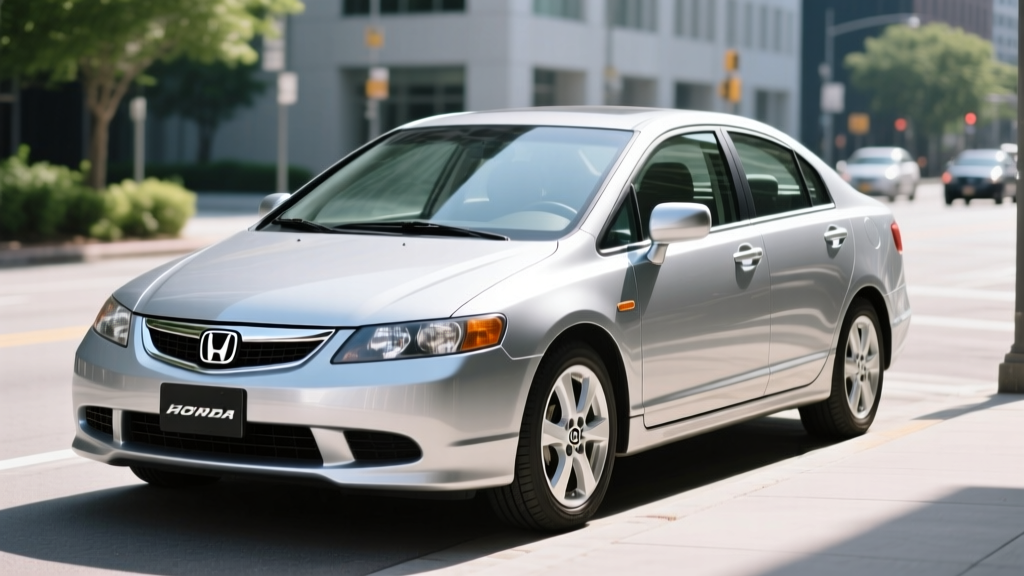
Long before plug-in hybrids and 300-mile EVs, the 2004 Honda Civic Hybrid sedan helped pioneer mainstream gasoline-electric drivetrains. Honda's Integrated Motor Assist (IMA) system paired a lean 1.3-liter four-cylinder engine with a compact electric motor sandwiched between the engine and transmission — a mild hybrid architecture that boosted fuel economy without requiring any plug-in charging. For used-car shoppers in 2026 hunting an ultra-cheap, fuel-sipping commuter, this two-decade-old hybrid still shows up in classifieds at bargain prices. But is a 22-year-old hybrid battery a ticking time bomb? This guide breaks down every number that matters.
HEV vs PHEV: Where the 2004 Civic Hybrid Fits
Conventional Hybrid (HEV): The 2004 Civic Hybrid is a conventional hybrid, meaning it generates all its electricity internally. A small battery pack is charged via regenerative braking and the gasoline engine. You never plug it in. The electric motor assists the gas engine during acceleration and enables idle stop-start, but cannot propel the car on electricity alone.
Plug-in Hybrid (PHEV): Modern PHEVs like the 2026 Toyota Prius Prime carry larger battery packs (13.6 kWh usable) that charge from a wall outlet or public charger, delivering 30-45 miles of pure electric driving before the gas engine engages. The 2004 Civic Hybrid has none of this capability — its 0.35 kWh nickel-metal hydride (NiMH) pack is far too small for electric-only propulsion.
Bottom line: The 2004 Civic Hybrid is strictly an HEV. There is no plug, no electric-only range, and no kWh to manage. You simply fill it with gasoline and drive.
Powertrain Specs: Honda's IMA System Explained
| Specification | 2004 Honda Civic Hybrid Sedan |
|---|---|
| Engine | 1.3L i-DSI 4-cylinder (lean-burn) |
| Engine Horsepower | 85 hp @ 5,700 rpm |
| Electric Motor (IMA) | 15 kW (20 hp), 13 kW continuous |
| Combined System Output | 93 hp |
| Combined Torque | 105 lb-ft |
| Transmission | 5-speed manual or CVT (continuously variable) |
| Drivetrain | Front-wheel drive |
| Hybrid Battery | 0.35 kWh NiMH (nickel-metal hydride), 132 cells |
| Curb Weight | ~2,645 lbs (CVT) |
| 0-60 mph | ~11.5 seconds (CVT) |
The IMA system in the 2004 Civic is what engineers call a mild hybrid. The electric motor cannot drive the wheels independently — it only assists the gasoline engine during acceleration, smooths out the idle stop-start function, and recovers energy during braking. This is fundamentally different from Toyota's Hybrid Synergy Drive (used in the Prius), which can operate in electric-only mode at low speeds. Honda's approach was simpler, lighter, and cheaper, but less versatile.
Fuel Economy: EPA Ratings and Real-World MPG
| Transmission | City MPG | Highway MPG | Combined MPG |
|---|---|---|---|
| CVT (Automatic) | 48 | 47 | 47 |
| 5-Speed Manual | 47 | 48 | 47 |
Source: EPA Fuel Economy Guide — 2004 Honda Civic Hybrid
Real-World MPG vs. EPA Sticker
The 2004 Civic Hybrid's EPA ratings of 47-48 MPG combined were impressive for their era. However, real-world fuel economy depends heavily on battery health:
- Healthy IMA battery: Owners consistently report 42-50 MPG combined in mixed driving, with city MPG sometimes exceeding highway thanks to regenerative braking and idle stop. Highway-only trips at 75+ mph may drop to 38-42 MPG.
- Degraded IMA battery: When the NiMH pack loses capacity (common after 120,000+ miles or 15+ years), the electric motor contributes less assist. Expect 34-40 MPG combined — still better than a non-hybrid Civic of the same era (~32 MPG combined), but a noticeable drop from the 47 MPG sticker.
- Failed IMA battery: If the hybrid system throws an IMA warning light and the battery is disabled, fuel economy falls to roughly 30-35 MPG combined. The car remains drivable on the gasoline engine alone.
Cold weather note: NiMH batteries lose efficiency below 40°F. Winter MPG in northern climates typically drops 5-10% due to reduced regenerative braking capture and longer engine warm-up periods.
IMA Battery Lifespan, Reliability, and Replacement Costs
The single biggest concern for any 2026 buyer of a 2004 Civic Hybrid is the IMA battery. This 132-cell NiMH pack was warrantied by Honda for 8 years / 80,000 miles (10 years / 150,000 miles in California-emissions states). In 2026, every original battery is well past warranty expiration.
| Battery Item | Details |
|---|---|
| Original Warranty | 8 yr / 80,000 mi (10 yr / 150,000 mi in CARB states) |
| Typical Lifespan | 120,000–180,000 miles before significant degradation |
| New OEM Replacement | $2,000–$3,000 (dealer-installed, if still available) |
| Refurbished / Aftermarket | $800–$1,500 (third-party suppliers like BumbleBee Batteries, Hybrid Automotive) |
| DIY Grid Charger Reconditioning | $200–$400 (balance-charging individual cells; extends life 1-3 years) |
| Warranty on Replacements | Typically 1–3 years from aftermarket suppliers |
Reliability track record: The 2004 Civic Hybrid's IMA system was more prone to battery issues than Toyota's competing Prius system. Common failure modes include individual cell voltage imbalance (causing the entire pack to underperform), heat-related degradation in hot climates, and IMA warning lights triggered by a single weak cell among the 132. The NHTSA vehicle page lists owner complaints, with IMA battery failures being a recurring theme.
What to look for when buying used:
- Check for IMA warning lights on the dash during a cold start
- Ask if the battery has been replaced or reconditioned (get receipts)
- Verify the "assist" and "charge" bars on the IMA display during a test drive — both should cycle normally
- Budget $1,000-$1,500 for a battery replacement or reconditioning as a contingency
Pricing in 2026: What You'll Actually Pay
The 2004 Honda Civic Hybrid sedan originally carried an MSRP of approximately $19,900 (CVT) to $20,500 with navigation — a roughly $3,500 premium over the equivalent gas-only Civic EX. In the 2026 used market, examples typically sell for:
- $1,500–$2,500: High-mileage examples (150,000+ miles), likely with degraded or replaced IMA batteries
- $2,500–$4,000: Mid-mileage examples (90,000–140,000 miles) in good condition, battery health varies
- $4,000–$5,500: Low-mileage or recently battery-replaced examples in excellent condition
Tax Credit Eligibility
The 2004 Honda Civic Hybrid does not qualify for the current federal §30D new clean vehicle tax credit (up to $7,500) — that credit applies only to new vehicles meeting battery-sourcing, MSRP, and buyer income requirements per IRS guidelines.
For used vehicles, the Used Clean Vehicle Credit (§25E) offers up to $4,000 (30% of sale price, capped at $4,000) for qualifying used EVs and fuel-cell vehicles. However, conventional hybrids like the 2004 Civic Hybrid do not qualify — the §25E credit requires a plug-in electric vehicle or fuel cell vehicle. No federal tax credit is available for this car.
Some states offer their own used-vehicle rebates for hybrids, but these vary widely by jurisdiction. Check your state's energy or environmental agency for current programs.
Who Should Buy the 2004 Civic Hybrid vs. a Modern EV or PHEV?
Pros
- Extremely low purchase price ($1,500–$4,000)
- 47 MPG EPA combined when the IMA battery is healthy
- No plug-in charging required — simple ownership
- Honda's proven mechanical reliability (engine, transmission, suspension)
- Low insurance costs and cheap parts availability
- Lightweight, easy to park, nimble city car
Cons
- IMA battery almost certainly degraded or replaced at this age
- No electric-only driving capability
- Very slow acceleration (11.5 sec 0-60 mph)
- Outdated safety tech — no electronic stability control, side airbags optional
- No federal or state EV/PHEV tax credits available
- NiMH battery chemistry is obsolete; replacement supply may dwindle
- Minimal cargo space (12.9 cu ft trunk)
Choose the 2004 Civic Hybrid if:
- Your total budget is under $4,000 and you need maximum MPG for the dollar
- You drive primarily in the city where regenerative braking maximizes hybrid benefit
- You're comfortable budgeting $1,000-$1,500 for a potential IMA battery replacement
- You have no access to home or workplace charging (ruling out PHEVs and EVs)
Choose a modern PHEV or EV instead if:
- You want warranty coverage and modern safety features (AEB, lane-keeping, backup camera)
- You have home Level 2 charging access and want electric-only commuting
- You want to claim the §30D new vehicle credit ($7,500) or §25E used EV credit (up to $4,000)
- Your daily commute is under 35 miles — a used Chevrolet Volt or Prius Prime could cover it entirely on electricity
Frequently Asked Questions
How many MPG does the 2004 Honda Civic Hybrid get?
The EPA rates the 2004 Civic Hybrid at 48 city / 47 highway / 47 combined MPG (CVT transmission). In real-world driving with a healthy IMA battery, owners report 42-50 MPG combined. With a degraded battery, expect 34-40 MPG. Cold weather and sustained highway speeds above 70 mph reduce these figures by 5-15%.
Does the 2004 Civic Hybrid need to be plugged in?
No. The 2004 Civic Hybrid is a conventional hybrid (HEV). Its small NiMH battery charges entirely through regenerative braking and the gasoline engine. There is no plug, no charging port, and no electric-only driving mode. You simply refuel with gasoline like any other car.
How far can it go on electric only?
The 2004 Civic Hybrid cannot drive on electric power alone. Honda's IMA system in this generation is a mild hybrid — the electric motor only assists the gasoline engine during acceleration. It cannot propel the car independently at any speed. If you need electric-only driving, look at a PHEV like the Toyota Prius Prime (up to 44 miles electric) or a full BEV.
Is the 2004 Civic Hybrid reliable?
The gasoline engine and transmission are generally very reliable — Honda's 1.3L i-DSI and CVT are durable with proper maintenance. The weak link is the IMA NiMH battery, which typically lasts 120,000-180,000 miles before significant degradation. In 2026, any original battery is past its expected lifespan. Budget for a replacement or reconditioning. The rest of the car — suspension, brakes, interior — follows typical early-2000s Honda durability.
What does an IMA battery replacement cost?
A new OEM replacement battery (if available through Honda) costs $2,000-$3,000 installed. Aftermarket refurbished packs run $800-$1,500. DIY grid-charger reconditioning kits cost $200-$400 and can extend a degraded battery's life by 1-3 years. Most used buyers in 2026 opt for an aftermarket refurb or reconditioning, as a $2,500 OEM battery would exceed the car's total value.
Does the 2004 Civic Hybrid qualify for any tax credit?
No. The federal §30D new clean vehicle credit and §25E used clean vehicle credit both require plug-in electric vehicles or fuel cell vehicles. The 2004 Civic Hybrid is a conventional (non-plug-in) hybrid and does not qualify for any federal tax credit. Check your state's energy agency for any local hybrid incentives, though most have shifted to EV/PHEV-only programs.
Hybrid vs PHEV vs EV — which should I choose?
HEV (like this Civic Hybrid): Best for buyers with no charging access, tight budgets, and city-heavy driving. No plug, no range anxiety, but no electric-only mode and no tax credits.
PHEV (like a Prius Prime or RAV4 Prime): Best for buyers with home charging who want 30-45 miles of electric commuting but gas flexibility for road trips. Eligible for tax credits when new.
BEV (like a Model 3 or Ioniq 5): Best for buyers with reliable home/work charging, daily commutes under 250 miles, and desire for lowest per-mile fuel cost and zero tailpipe emissions. Eligible for up to $7,500 federal credit on qualifying new models.