The Original Hybrid Bargain: What the 2003 Civic Hybrid Offers Two Decades Later
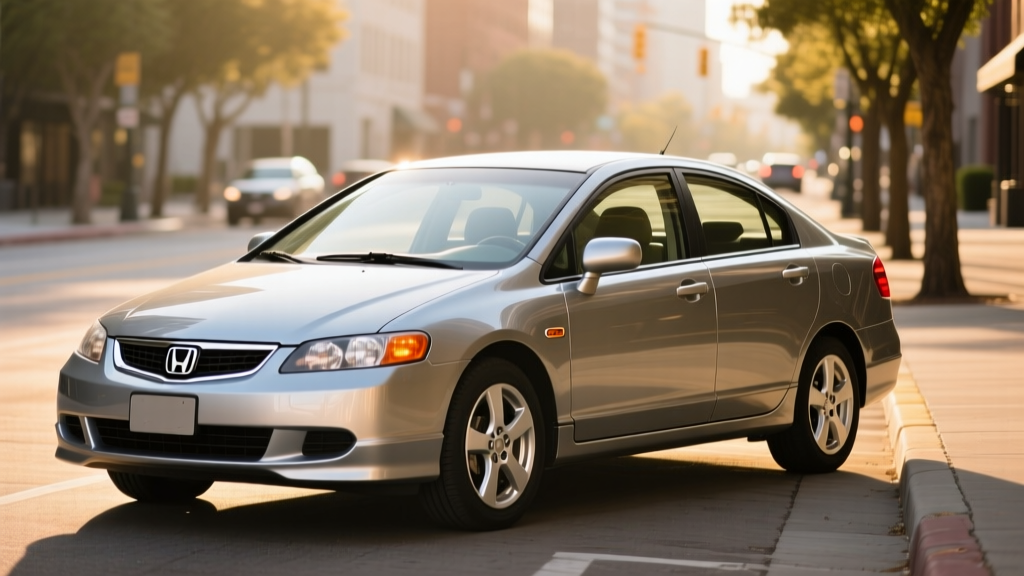
Long before plug-in hybrids and 400-mile EVs, the 2003 Honda Civic Hybrid Sedan helped define what an electrified daily driver could be. As one of the first mass-market hybrid vehicles sold in the United States — arriving just a year after the Toyota Prius debuted stateside — this compact sedan paired a tiny 1.3L gasoline engine with Honda's Integrated Motor Assist (IMA) system to deliver fuel economy figures that still hold up in 2026's used-car market.
If you're researching the 2003 Honda Civic Hybrid Sedan today, you're likely weighing it as an ultra-low-cost commuter, a first car for a new driver, or a budget-friendly alternative to today's pricier electrified vehicles. This guide covers the real-world MPG, the IMA hybrid system's strengths and weaknesses, battery replacement economics, and whether this 20-year-old hybrid still earns a spot in your driveway.
Fuel Economy: EPA Ratings vs Real-World MPG
The headline number that drew buyers to the 2003 Civic Hybrid two decades ago was its exceptional fuel economy. Here's what the EPA rated this sedan at, alongside what owners typically report in mixed driving:
| Metric | EPA Rating | Real-World Expectation (2026) |
|---|---|---|
| City MPG | 46 MPG | 42–48 MPG |
| Highway MPG | 51 MPG | 44–50 MPG |
| Combined MPG | 48 MPG | 43–49 MPG |
| Fuel Tank Capacity | 13.2 gallons | 13.2 gallons |
| Estimated Total Range | ~634 miles | ~565–645 miles |
Real-world note: Honda's IMA system, like Toyota's Hybrid Synergy Drive, tends to deliver its best numbers in city driving where regenerative braking recaptures energy at every stoplight. Highway cruising at 75+ MPH will push the 1.3L engine harder and reduce the electric motor's contribution, so expect highway figures to fall closer to 44 MPG on flat terrain and potentially lower in mountainous routes. Cold weather reduces battery assist contribution, dropping combined economy by roughly 3–5 MPG in freezing conditions.
Notably, the 2003 Civic Hybrid was rated at higher highway MPG than city — unusual for early hybrids. This was partly due to Honda's lean-burn i-DSI engine, which could run extremely efficiently at steady-state cruising. Subsequent EPA testing methodology changes in 2008 would have revised these numbers downward if retested under modern standards, so treat the original 46/51 split as optimistic by today's measurement conventions.
Powertrain and IMA Hybrid System Explained
The 2003 Civic Hybrid uses Honda's first-generation Integrated Motor Assist (IMA) system — a fundamentally different approach than the Toyota Prius's power-split design. Here's the complete powertrain breakdown:
| Component | Specification |
|---|---|
| Gasoline Engine | 1.3L i-DSI inline-4, 8-valve, SOHC |
| Engine Power | 85 HP @ 5,700 RPM |
| Electric Motor | 15 kW (20 HP) brushless DC, sandwiched between engine and transmission |
| Combined System Output | 93 HP @ 5,700 RPM / 105 lb-ft torque @ 3,300 RPM |
| Transmission | 5-speed manual or CVT (continuously variable) |
| Hybrid Battery | Nickel-Metal Hydride (NiMH), ~0.35 kWh usable, 144V nominal |
| Drivetrain | Front-wheel drive |
| 0–60 MPH | ~11.5 seconds (CVT) |
How IMA differs from modern hybrids: The IMA motor is mounted directly on the engine crankshaft — it cannot drive the car on electric power alone. Unlike a Toyota Prius or a modern PHEV that can creep through a parking lot in EV mode, the Civic Hybrid's engine is always mechanically connected to the wheels when moving. The electric motor assists during acceleration and provides regenerative braking during deceleration, but pure electric-only driving is not possible.
This also means the Civic Hybrid cannot achieve the dramatic city-MPG advantages of full-parallel or series-parallel hybrid systems. The 46 MPG city rating is impressive, but the gap between city and highway is narrow compared to a 2026 Toyota Prius (57 city / 56 highway on the LE trim) which can run on electric power at low speeds for short distances.
Hybrid Battery Lifespan, Warranty, and Replacement Cost
The single biggest concern for any buyer considering a 2003 Honda Civic Hybrid Sedan today is the condition of its NiMH hybrid battery. Here's what you need to know:
Expected Battery Lifespan
Honda's first-generation IMA batteries typically lasted between 80,000 and 120,000 miles before significant capacity degradation triggered an IMA warning light or noticeable fuel-economy decline. Some units have survived past 150,000 miles with careful use, but this is the exception. Calendar age is also a factor — a 23-year-old NiMH pack will have degraded regardless of mileage.
Replacement Cost in 2026
If the IMA battery fails or has degraded to the point of minimal assist, you have three options:
- Remanufactured IMA battery pack: $1,200–$2,000 installed (most common choice for this vehicle's value bracket)
- Aftermarket NiMH replacement cells: $800–$1,400 for parts; DIY-friendly for mechanically inclined owners
- New OEM Honda battery: $2,500–$3,500 if still available through Honda parts channels (supply is limited for this model year)
Given that a well-maintained 2003 Civic Hybrid Sedan trades for $2,500–$5,500 in the 2026 used-car market depending on mileage and condition, a battery replacement can represent 25–60% of the vehicle's value. Budget accordingly and ask for proof of battery replacement or recent IMA system diagnostics before purchasing.
Signs of IMA Battery Degradation
- IMA warning light illuminated on the dashboard
- Noticeable drop in fuel economy (5+ MPG below expected)
- Reduced regenerative braking feel (brakes feel more "conventional")
- SOC (state of charge) gauge that rarely rises above 2–3 bars
- Engine running more frequently at stops (auto-stop feature failing to engage)
Reliability, Maintenance, and Long-Term Ownership
The 2003 Honda Civic platform — hybrid or otherwise — has earned a reputation as one of the most durable compact cars of its era. The seventh-generation Civic (2001–2005) benefits from simple mechanicals, abundant aftermarket parts, and a massive owner community that has documented every common failure point.
Known issues beyond the IMA battery:
- CVT transmission shudder: Early Honda CVTs from this era can develop a judder during low-speed acceleration around 60,000–100,000 miles. Honda issued service bulletins recommending CVT fluid flushes with their proprietary HMMF fluid; some units required replacement ($2,000–$3,000). The 5-speed manual avoids this entirely.
- Motor mount wear: The engine-side motor mount tends to collapse around 100,000 miles, causing vibration at idle. Replacement is ~$150–$300 for the part.
- Power steering hose leaks: Common on all seventh-gen Civics; a $30–$60 hose replacement.
- Cracked exhaust manifold: The 1.3L i-DSI engine's integrated exhaust manifold can develop hairline cracks, triggering a check-engine light. ~$200–$400 repair.
For a full safety and recall history, check the NHTSA database using the VIN of any specific vehicle you're considering.
Pricing in 2026 and Tax Credit Eligibility
| Condition / Mileage | Estimated Price Range |
|---|---|
| High mileage (150K+), as-is battery | $2,000–$3,200 |
| Average mileage (100K–140K), good condition | $3,200–$4,500 |
| Lower mileage (<100K), new battery, excellent | $4,500–$5,500 |
Tax Credit Reality Check
The 2003 Honda Civic Hybrid Sedan does not qualify for the federal §30D new clean vehicle tax credit — that credit applies only to new vehicle purchases, and the original $7,500 credit for this model was capped out under the old IRS rules when Honda hit its 60,000-unit manufacturer threshold years ago.
For used hybrid purchases, the IRS Previously-Owned Clean Vehicle Credit (§25E) offers up to $4,000 or 30% of the sale price (whichever is lower) — but this credit only applies to qualified plug-in electric vehicles and fuel cell vehicles. Conventional hybrids like the Civic Hybrid that cannot be plugged in do not qualify. This is a common point of confusion: the used-EV credit requires the vehicle to have a battery capacity of at least 7 kWh and the ability to be recharged from an external source.
Bottom line: expect to pay the full purchase price out of pocket with no federal tax incentives. Some states may offer minimal registration-fee discounts for hybrid vehicles, but these are nominal ($25–$50/year savings at most).
Who Should Buy the 2003 Civic Hybrid vs a Modern EV or PHEV?
✓ Choose the 2003 Civic Hybrid If
- Your total vehicle budget is under $5,000
- You want 45+ MPG without plugging in anything
- You drive mostly city/suburban with frequent stops
- You can verify a recently replaced IMA battery
- You want minimal insurance costs and simple maintenance
- You don't have access to home or workplace charging
✗ Look at a Modern PHEV or EV Instead If
- You can spend $25,000+ and want modern safety features (AEB, lane-keep)
- You want electric-only driving for short commutes (PHEV: 25–45 mi EV range)
- You qualify for the $7,500 federal tax credit on a new EV/PHEV
- You want regenerative braking strong enough for one-pedal driving
- You need Apple CarPlay, backup camera, or modern infotainment
- You drive 15,000+ miles/year and want warranty coverage
Decision Framework: HEV vs PHEV vs EV
The 2003 Civic Hybrid sits at one end of the electrification spectrum. Here's how to decide which category fits your situation:
- Conventional Hybrid (HEV) like this Civic: No plug needed. Best for buyers who lack charging access, want maximum simplicity, and prioritize the lowest purchase price. MPG gains come from engine optimization and regen — typically 35–50 MPG combined.
- Plug-in Hybrid (PHEV) like a used Prius Prime or RAV4 Prime: Plugs into a standard 120V outlet overnight for 25–45 miles of electric-only range, then operates as a regular hybrid. Best for drivers with short commutes who still need road-trip flexibility. Higher purchase price but lower fuel costs if you charge regularly.
- Battery Electric Vehicle (BEV) like a used Chevy Bolt or Tesla Model 3: Zero gasoline. 200–350+ miles of range. Best for drivers with reliable home charging who want the lowest cost-per-mile and zero tailpipe emissions. Higher upfront cost but qualifies for tax credits (new) and has far fewer moving parts to maintain.
Frequently Asked Questions
How many MPG does the 2003 Honda Civic Hybrid get?
The EPA originally rated the 2003 Civic Hybrid at 46 city / 51 highway / 48 combined MPG. In real-world 2026 driving with an aged battery, expect 43–49 MPG combined, with city driving yielding the best results thanks to regenerative braking at stoplights. If the IMA battery is significantly degraded, fuel economy may drop to 38–42 MPG as the 1.3L engine works without electric assist.
Can the 2003 Civic Hybrid drive on electric power alone?
No. The IMA system cannot propel the car using only the electric motor. The gasoline engine is always mechanically connected to the drivetrain when the car is moving. The electric motor only assists during acceleration and captures energy during braking. There is no EV mode and no electric-only range — this is a key difference from plug-in hybrids and full EVs.
Is the 2003 Honda Civic Hybrid reliable?
The underlying Civic platform is highly reliable, with many examples exceeding 200,000 miles with basic maintenance. The primary reliability concern is the IMA NiMH battery, which typically requires replacement between 80,000–120,000 miles at a cost of $1,200–$2,000 for a remanufactured unit. The CVT transmission on automatic-equipped models is also a known wear item. Manual-transmission examples tend to be more trouble-free long-term.
Does the 2003 Civic Hybrid qualify for any tax credit?
No. As a used conventional hybrid, the 2003 Civic Hybrid does not qualify for the federal §30D new vehicle credit or the §25E used clean vehicle credit. The §25E credit requires a plug-in capable vehicle with at least 7 kWh of battery capacity. No current federal incentives apply to this purchase. Check your state's DMV for any nominal hybrid registration discounts.
What is the total cost of ownership compared to a gas-only 2003 Civic?
At 48 MPG combined vs the gas-only 2003 Civic's ~32 MPG combined, the hybrid saves roughly 2.2 gallons per 100 miles driven. At $3.50/gallon gas (2026 national average), that's approximately $770/year in fuel savings for a driver covering 12,000 miles annually. Over five years, fuel savings total ~$3,850 — but this must be weighed against a potential $1,500 battery replacement and the hybrid's slightly higher purchase price on the used market.
Can I replace the hybrid battery myself?
The IMA battery is located behind the rear seat and is serviceable with basic hand tools. However, the pack operates at 144V DC — a potentially lethal voltage if handled improperly. Experienced DIYers have successfully swapped IMA packs using remanufactured units ordered online, but if you're not comfortable working around high-voltage systems, pay a hybrid-specialist shop. Labor is typically 2–3 hours at $100–$150/hour.