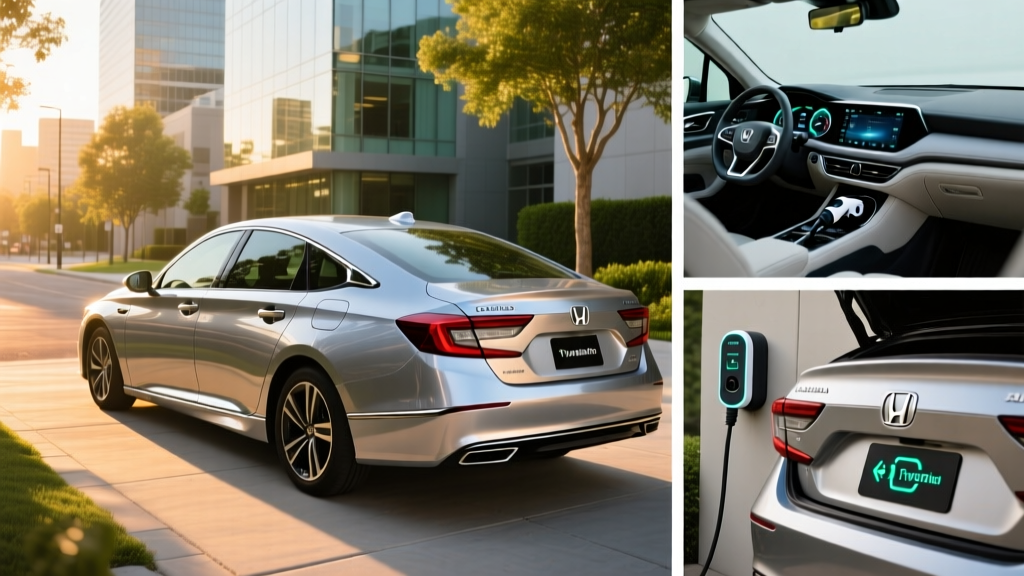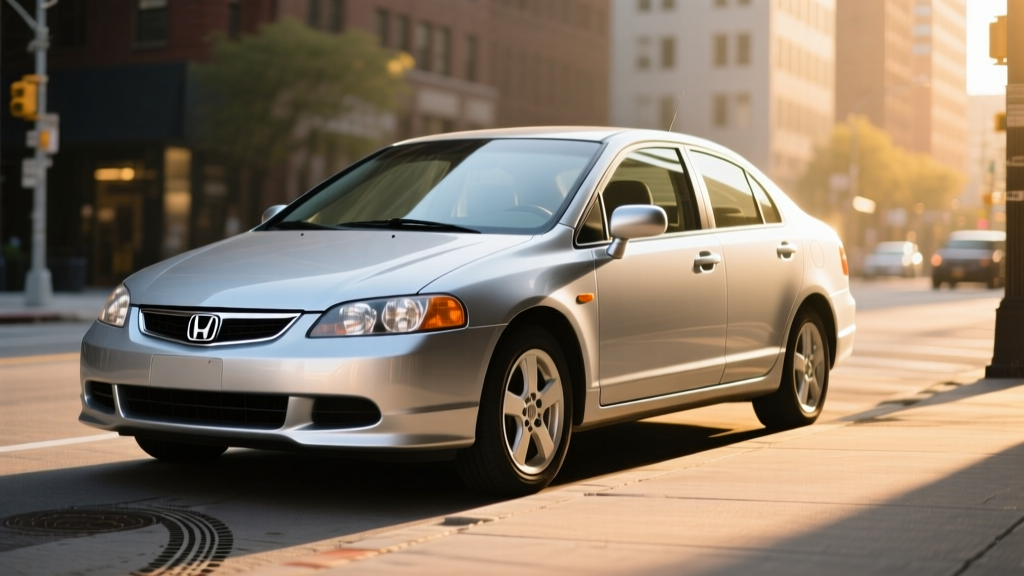
In 2003, Honda introduced the Civic Hybrid to the U.S. market — one of the earliest mainstream gasoline-electric hybrids available to American buyers. Predating even the widespread dominance of the Toyota Prius, the 2003 Honda Civic Hybrid used Honda's Integrated Motor Assist (IMA) system, a mild-hybrid architecture that paired a small electric motor with a 1.3-liter gasoline engine. For collectors, hypermilers, and budget-conscious used-car shoppers, this car remains a fascinating artifact of hybrid history. But does a 2003 Honda hybrid still deliver meaningful fuel savings in 2026, and what should you know about its aging battery?
The 2003 Honda Civic Hybrid: What Exactly Is It?
The 2003 Honda Civic Hybrid (seventh-generation Civic, chassis code ES9) is a conventional hybrid electric vehicle (HEV). It is not a plug-in hybrid (PHEV) and not a battery electric vehicle (BEV). You never plug it in. The small nickel-metal hydride (NiMH) battery pack charges exclusively through regenerative braking and the gasoline engine.
HEV (this car): No plug. Small battery (~0.3 kWh). Electric motor assists the gas engine. Cannot drive on electric power alone at meaningful speeds.
PHEV: Plug-in capable. Larger battery (typically 10–20 kWh). Can drive 20–50 miles on electricity alone before the gas engine starts.
BEV: Fully electric. No gasoline engine. Battery sizes from 40–130+ kWh. Requires charging infrastructure.
Honda's IMA system was a mild hybrid — meaning the electric motor could not propel the car independently under normal conditions. Instead, it supplemented the gasoline engine during acceleration, enabled idle stop (auto stop-start), and captured energy during braking. This is fundamentally different from Toyota's Hybrid Synergy Drive (used in the Prius), which can operate in pure electric mode at low speeds.
Fuel Economy: EPA Ratings and Real-World MPG
Fuel economy was the entire reason the 2003 Honda Civic Hybrid existed. Here is how it stacks up by the numbers:
| Metric | CVT Automatic | 5-Speed Manual |
|---|---|---|
| City MPG | 47 | 45 |
| Highway MPG | 48 | 49 |
| Combined MPG | 47 | 47 |
Real-World MPG: What to Expect in 2026
The EPA ratings above were calculated using the pre-2008 testing methodology, which tends to overstate real-world fuel economy compared to modern EPA tests. Owners consistently reported actual combined fuel economy in the 38–44 MPG range under mixed driving conditions. In city driving, where regenerative braking and idle stop provide the most benefit, many drivers saw 42–46 MPG. Highway cruising at sustained speeds above 70 mph typically yielded 38–42 MPG.
For a 2003 vehicle now over 20 years old, real-world MPG depends heavily on the condition of the IMA battery, engine maintenance, tire pressure, and whether the original low-rolling-resistance tires have been replaced. A degraded IMA battery that no longer provides meaningful assist will reduce fuel economy by 3–6 MPG compared to its original performance.
Powertrain: The IMA System Explained
| Component | Specification |
|---|---|
| Gasoline Engine | 1.3L i-DSI 4-cylinder, 8-valve |
| Engine Power | 85 hp @ 5,700 rpm |
| Engine Torque | 87 lb-ft @ 3,300 rpm |
| Electric Motor (IMA) | Thin DC brushless, 10 kW (13 hp) |
| Motor Torque | 36 lb-ft @ 0–1,160 rpm |
| Combined System Output | 93 hp @ 5,700 rpm |
| Combined Torque | 105 lb-ft @ 3,300 rpm |
| Transmission | CVT (standard) or 5-speed manual |
| IMA Battery Type | Nickel-Metal Hydride (NiMH) |
| IMA Battery Capacity | ~0.3 kWh (nominal) |
| Battery Voltage | 144V nominal |
| 0–60 mph | ~11.0 seconds (CVT) |
The IMA motor sits sandwiched between the engine and transmission, replacing the traditional flywheel. It provides torque fill at low RPMs where the tiny 1.3L engine is weakest, smooths out the engine's power delivery, and enables the idle-stop feature that shuts the engine off at red lights. When the car decelerates, the motor reverses function and acts as a generator, sending energy back into the NiMH battery pack located behind the rear seat.
Acceleration is leisurely by modern standards. The combined 93 hp moves roughly 2,600 lbs, resulting in 0–60 times around 11 seconds. This car was designed for efficiency, not performance.
Hybrid Battery: Lifespan, Degradation, and Replacement Cost
The 2003 Civic Hybrid's NiMH battery pack is the single biggest concern for any used buyer. Here is the honest picture:
Expected Battery Lifespan
Honda's first-generation IMA batteries had a troubled reliability history. Many original packs failed between 80,000 and 120,000 miles, with some failing as early as 60,000 miles. This was notably worse than the Toyota Prius battery of the same era, which commonly exceeded 150,000 miles. Honda extended the IMA warranty to 10 years / 150,000 miles in CARB states partly in response to widespread failures and a class-action settlement.
Battery Replacement Options and Costs (2026)
| Option | Cost Range | Notes |
|---|---|---|
| OEM Honda (if available) | $2,000–$2,800 + labor | OEM supply largely discontinued for this generation |
| Aftermarket refurbished pack | $800–$1,400 | Mixed quality; limited warranties (6–12 months typical) |
| Individual cell rebuild (DIY/specialist) | $300–$700 | Requires technical skill; replaces only failed sub-cells |
| Used pack from salvage yard | $200–$500 | High risk — unknown remaining capacity and age |
Given that a clean 2003 Civic Hybrid has a market value of roughly $2,500–$4,500 in 2026, a full OEM battery replacement at $3,000+ installed often exceeds the car's value. Most owners opt for aftermarket refurbished packs or individual cell rebuilds if they choose to keep the hybrid system functional at all.
Driving With a Dead IMA Battery
Unlike some hybrids, the 2003 Civic Hybrid can be driven with a completely non-functional IMA battery. The gasoline engine will still run and propel the car normally. However, you lose all hybrid benefits: no regenerative braking assist, no idle stop, no torque fill. Fuel economy drops to roughly 30–34 MPG combined — essentially the same as a conventional 2003 Civic with the 1.3L engine. The IMA warning light will illuminate on the dash, and in some states, this will cause an emissions inspection failure.
Does the 2003 Honda Civic Hybrid Qualify for Any Tax Credit?
No. The 2003 Honda Civic Hybrid does not qualify for any current federal tax credit.
- Federal §30D Clean Vehicle Credit: This credit (up to $7,500) applies only to new qualifying plug-in electric vehicles and fuel cell vehicles. Conventional hybrids (HEVs) have never been eligible under the current §30D rules. See the IRS Clean Vehicle Credit page for current eligibility.
- Used Clean Vehicle Credit (§25E): This credit (up to $4,000 or 30% of sale price) applies to used plug-in EVs and fuel cell vehicles sold for $25,000 or less. Conventional hybrids are excluded.
- Original hybrid credit (expired): The Energy Policy Act of 2005 created a tax credit for hybrids, but it was limited to specific models purchased between 2006–2010 and was subject to manufacturer phase-out caps. Honda's allocation was exhausted by 2007. This credit has been expired for over 15 years.
Bottom line: there is no federal or typical state tax incentive available for purchasing a 2003 Honda Civic Hybrid today.
2003 Civic Hybrid vs. Modern Alternatives: Which Makes Sense?
If you are researching the 2003 Honda hybrid, you are likely weighing it against other options. Here is a practical decision framework:
Choose the 2003 Civic Hybrid If:
- You need a vehicle under $4,000
- You want a simple, lightweight hybrid with no plug-in requirement
- You are mechanically inclined and can handle IMA battery maintenance
- You drive primarily in the city where regen braking helps most
- You appreciate early hybrid technology as a conversation piece
Skip It and Consider Instead If:
- You want warranty-backed reliability → Buy a 2016+ Toyota Prius (52 MPG combined, widely available used, proven battery longevity)
- You want electric-only commuting → Buy a PHEV like the Toyota Prius Prime (44 mi electric-only) or Hyundai Tucson PHEV
- You have home charging and want maximum savings → Buy a used BEV like the Chevrolet Bolt EV ($8,000–$12,000 used, eligible for the $4,000 used-EV tax credit)
- You want modern safety features (AEB, lane-keep, backup camera) — the 2003 Civic has none of these
| Vehicle | Combined MPG / MPGe | Type | Approx. Used Price (2026) | Tax Credit? |
|---|---|---|---|---|
| 2003 Honda Civic Hybrid | 47 EPA (38–44 real) | HEV | $2,500–$4,500 | None |
| 2020 Toyota Prius | 52 EPA combined | HEV | $16,000–$22,000 | None |
| 2024 Toyota Prius Prime | 44 mi EV + 48 MPG | PHEV | $28,000–$35,000 | Up to $7,500 (§30D) |
| 2021 Chevrolet Bolt EV | 259 mi range / 120 MPGe | BEV | $12,000–$17,000 | Up to $4,000 (§25E used) |
Pros and Cons: Honest Assessment
Pros
- Extremely low purchase price (under $4,000)
- Strong city fuel economy (42–46 MPG real-world)
- No plug-in charging required — works like a normal gas car
- Lightweight (~2,600 lbs) and nimble in urban driving
- Conventional Civic mechanicals are generally robust (engine, transmission, suspension)
- Manual transmission option appeals to enthusiasts
Cons
- IMA battery is the Achilles heel — high failure rate, replacement often exceeds car value
- No electric-only driving capability whatsoever
- Very slow acceleration (11-second 0–60)
- No modern safety technology (no AEB, lane assist, airbags beyond front two)
- No tax credit eligibility of any kind
- Parts availability declining for IMA-specific components
- Pre-2008 EPA testing methodology overstates real-world MPG
Frequently Asked Questions
How many MPG does the 2003 Honda Civic Hybrid actually get?
The EPA rated it at 47 city / 48 highway / 47 combined (CVT). In real-world 2026 driving with an aging powertrain, expect 38–44 MPG combined. City driving favors the hybrid system more than highway cruising.
How far can the 2003 Honda Civic Hybrid drive on electric power alone?
It cannot. This is a conventional mild hybrid (HEV), not a plug-in hybrid. The electric motor only assists the gasoline engine — it never drives the wheels independently. There is zero electric-only range.
Is the 2003 Honda Civic Hybrid reliable?
The gasoline engine and transmission are generally reliable Honda components. The IMA hybrid system, however, is the weak point. Original NiMH battery packs had high failure rates (many before 120,000 miles). At 20+ years old, any surviving original battery is on borrowed time. Budget $800–$1,400 for an aftermarket replacement if the IMA system fails.
What does it cost to replace the hybrid battery?
An OEM battery (if still obtainable) costs $2,000–$2,800 plus labor — often more than the car is worth. Aftermarket refurbished packs run $800–$1,400. Individual cell rebuilds by specialists cost $300–$700. Many owners simply disable the IMA system and drive on the gasoline engine alone, accepting reduced fuel economy (~30–34 MPG).
Does the 2003 Honda Civic Hybrid qualify for any tax credit?
No. Federal tax credits (§30D for new vehicles, §25E for used) apply only to plug-in electric vehicles and fuel cell vehicles. Conventional hybrids (HEVs) are not eligible for any current federal incentive. The original hybrid tax credit from the mid-2000s expired over 15 years ago.
Should I buy a 2003 Honda Civic Hybrid in 2026?
Only if your budget is extremely tight (under $4,000), you are mechanically resourceful, and you accept the IMA battery risk. For most buyers, spending $12,000–$18,000 on a 2016–2020 Toyota Prius delivers better real-world MPG (50+ combined), modern safety features, a far more reliable hybrid battery, and dramatically lower ownership headaches. If you can charge at home, a used BEV like the Chevy Bolt EV with the $4,000 used-EV credit offers even greater fuel-cost savings.
Can I convert the 2003 Civic Hybrid to a plug-in hybrid?
Technically, aftermarket PHEV conversion kits existed for this generation (notably from companies like Enginer and Hymotion circa 2008–2012), adding 5–15 kWh of lithium batteries and plug-in capability. However, these kits are largely discontinued, unsupported, and present significant safety and reliability concerns. We do not recommend PHEV conversions on a vehicle of this age and value.