The 2006 Ford Escape Hybrid at a Glance
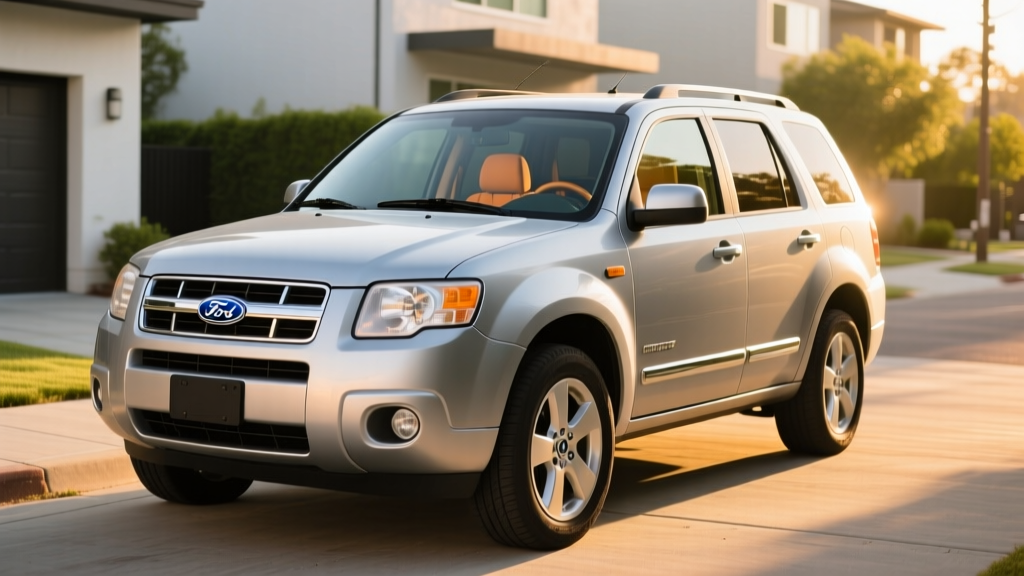
The 2006 Ford Escape Hybrid holds a unique place in automotive history: it was the first hybrid SUV sold in the United States and the first hybrid from a domestic automaker. Nearly two decades later, budget-conscious shoppers and eco-minded drivers still search for this model on the used market, drawn by its promise of SUV practicality with sedan-like fuel economy. But with a vehicle this old, the critical questions center on hybrid battery health, real-world efficiency, and whether a 20-year-old hybrid is a smart buy or a money pit.
This guide breaks down everything a prospective buyer or current owner needs to know about the 2006 Escape Hybrid — from its EPA MPG figures and powertrain specs to battery replacement costs and how it stacks up against modern hybrid and EV alternatives.
HEV vs. PHEV: What the 2006 Escape Hybrid Actually Is
Before diving into specs, it's essential to clarify what type of electrified vehicle the 2006 Escape Hybrid is, because confusion between hybrid types is one of the most common buyer mistakes.
Conventional Hybrid (HEV) — This Is the 2006 Escape Hybrid
- No plug. You never plug it in. The battery charges via regenerative braking and the gasoline engine.
- No electric-only driving range beyond very low-speed, short-distance creep (under ~1 mile at parking-lot speeds).
- No federal tax credit available today for used HEVs.
- Fuel savings come from the engine shutting off at stops and the electric motor assisting during acceleration.
Plug-In Hybrid (PHEV) — Not This Vehicle
- Has a plug. You charge it from a wall outlet or charging station.
- Electric-only range of 20–50 miles (in modern PHEVs) before the gas engine engages.
- May qualify for federal or state incentives (depending on current §30D rules and battery sourcing).
- Larger battery (typically 10–25 kWh) vs. the Escape Hybrid's ~1.3 kWh pack.
Bottom line: The 2006 Ford Escape Hybrid is a conventional, self-charging hybrid (HEV). You fuel it with gasoline and drive it exactly like any other car. There is no plug, no charging cable, and no electric-only highway driving.
Fuel Economy: EPA MPG and Real-World Numbers
The headline reason buyers seek out the 2006 Escape Hybrid is fuel efficiency. Here's how the EPA rated it when new, per fueleconomy.gov:
| Configuration | City MPG | Highway MPG | Combined MPG |
|---|---|---|---|
| FWD (Front-Wheel Drive) | 33 | 29 | 31 |
| 4WD / AWD (Four-Wheel Drive) | 30 | 27 | 29 |
Real-World MPG: What Owners Actually Report
Hybrid vehicles — particularly older Toyota- and Ford-derived systems — tend to perform very close to or even slightly above their EPA city ratings in stop-and-go urban driving, because regenerative braking recaptures energy that a gas car wastes as heat. However, the 2006 Escape Hybrid's real-world results vary based on several factors:
- City driving (stop-and-go): Many owners report 29–34 MPG in the FWD model, roughly matching or slightly exceeding the EPA city figure. The hybrid system shines here, with frequent engine shutoff and regen braking.
- Highway driving (sustained 65–75 mph): Expect 26–29 MPG. At highway speeds, the electric motor provides minimal assistance, and aerodynamic drag dominates.
- Cold weather impact: Hybrid batteries are less efficient in cold temperatures. Expect a 5–15% MPG reduction in winter months (roughly 2–4 MPG less), as the engine runs more frequently to maintain cabin heat and battery temperature.
- Battery degradation effect: A 20-year-old hybrid battery that has lost capacity will force the gasoline engine to run more often. Owners of high-mileage examples with original batteries report combined MPG dropping to 24–27 — a meaningful decline from the EPA sticker.
Key insight: If you're evaluating a used 2006 Escape Hybrid, ask the seller for recent fuel receipts or a fuel-economy readout. A well-maintained example with a healthy battery should still deliver 28–32 MPG combined in mixed driving.
Powertrain Specs: Engine, Motor, and Combined Output
| Specification | 2006 Ford Escape Hybrid |
|---|---|
| Gasoline Engine | 2.3L Atkinson-cycle inline-4 |
| Engine Horsepower | 133 hp @ 6,000 rpm |
| Engine Torque | 129 lb-ft @ 4,500 rpm |
| Electric Motor | Permanent-magnet synchronous AC motor |
| Electric Motor Output | ~94 hp (70 kW) |
| Combined System Horsepower | 155 hp |
| Transmission | Electronically controlled CVT (eCVT) |
| Hybrid Battery | NiMH (Nickel-Metal Hydride), ~1.3 kWh, 330V nominal |
| 0–60 mph | ~10.5 seconds (FWD) |
| Drivetrain Options | FWD or 4WD (AWD) |
| Towing Capacity | 1,000 lbs (not recommended for heavy towing) |
The powertrain uses Ford's interpretation of the Toyota-derived "power-split" hybrid architecture (Ford licensed Toyota's hybrid patents). The Atkinson-cycle engine sacrifices low-end torque for thermal efficiency, while the electric motor fills in the gap during acceleration. The eCVT is not a belt-and-cone CVT like those in some Nissan models — it's a planetary gearset that seamlessly blends engine and motor power with no fixed gear ratios. This design is mechanically simple and has proven highly durable.
The 4WD version uses a second, smaller electric motor to drive the rear wheels when traction is needed, eliminating the need for a mechanical driveshaft. This is an "e-AWD" system, not a traditional 4WD with a transfer case.
Hybrid Battery Health: Lifespan, Degradation, and Replacement Cost
Original Battery Warranty
When new, Ford covered the 2006 Escape Hybrid's NiMH battery pack for 8 years / 100,000 miles (extended to 10 years / 150,000 miles in California Air Resources Board states: CA, CT, MA, ME, NJ, NY, OR, RI, VT, WA). This warranty expired for all examples by 2014 at the latest.
How Long Do These Batteries Actually Last?
The NiMH battery in the 2006 Escape Hybrid has proven more durable than many skeptics predicted. Here's what two decades of ownership data tells us:
- Typical lifespan: 120,000–180,000 miles, or 12–18 years, before significant degradation forces noticeable MPG loss or triggers a check-engine light related to battery performance.
- High-mileage survivors: Some fleet-owned Escape Hybrids (notably New York City taxis) surpassed 200,000 miles on the original battery pack, though with measurable capacity loss.
- Failure mode: NiMH batteries rarely fail catastrophically. Instead, individual cells within the pack weaken over time, reducing overall voltage and capacity. The vehicle's computer detects the imbalance and triggers a diagnostic trouble code (DTC), often P0A7F or similar.
Battery Replacement: Options and Costs
If you're buying a 2006 Escape Hybrid in 2026, the battery is the single biggest financial variable. Here are your options:
- OEM replacement from Ford: A new factory battery pack costs approximately $2,500–$3,500 (parts only). With dealer labor, total cost lands around $3,500–$5,000. Availability may be limited for a 2006 model — check with a Ford dealer's parts department.
- Aftermarket / refurbished pack: Companies like Green Bean Battery and Dorman offer reconditioned NiMH packs for $1,500–$2,500 installed. These typically come with a 1–3 year warranty and are the most popular choice for older hybrids.
- Individual cell replacement: A skilled hybrid specialist can identify and replace only the weak cells within the pack for $500–$1,200. This is cost-effective but requires a technician with NiMH diagnostic equipment.
- Junkyard / salvage pack: Risky. A used pack from a wrecked Escape Hybrid may cost $300–$800, but its remaining lifespan is unknown. Only consider this as a temporary fix.
Buyer's rule of thumb: If a 2006 Escape Hybrid has over 130,000 miles and the seller cannot prove the battery has been replaced, budget $2,000–$3,500 for a battery replacement within your first year of ownership.
Pricing, Tax Credits, and the Used Market in 2026
The 2006 Ford Escape Hybrid has been out of production for nearly 20 years, so all examples are sold on the used market. Here's what pricing looks like:
- Typical asking price (2026 used market): $3,000–$7,500, depending on mileage, condition, and whether the hybrid battery has been recently replaced.
- Low-mileage, battery-replaced examples: $6,000–$9,000 from private sellers or small dealerships.
- High-mileage project cars (150,000+ miles, original battery): $2,000–$4,000.
Does the 2006 Escape Hybrid Qualify for Any Tax Credit?
No. The 2006 Escape Hybrid originally qualified for a federal income tax credit of up to $2,600 when purchased new — but that credit was subject to a manufacturer cap (Ford hit its 60,000-unit limit in 2007, phasing out the credit). Under current IRS §30D rules, the used-EV credit (up to $4,000) applies only to battery-electric vehicles (BEVs), fuel-cell vehicles (FCVs), and qualifying plug-in hybrids — not conventional hybrids. Since the 2006 Escape Hybrid has no plug, it does not qualify for any federal purchase incentive.
Some states offer rebates for used hybrid purchases or for vehicle retirement/scrappage programs. Check your state's environmental or DMV agency for current programs — these vary by jurisdiction and change frequently.
Reliability Record: What Breaks and What Doesn't
The 2006 Escape Hybrid's overall reliability is a mixed story — the hybrid powertrain itself is remarkably robust, but the rest of the vehicle reflects Ford's mid-2000s build quality.
Strong Points
- eCVT transmission: The planetary-gear hybrid transaxle has no belts, no clutches, and no traditional wear items. Failures are extremely rare.
- NiMH battery: As discussed, 12–18 year lifespans are common. Unlike early lithium-ion packs, NiMH degrades gradually rather than failing suddenly.
- Brakes: Regenerative braking handles most deceleration, so the friction brake pads and rotors last significantly longer than on a gas-only Escape — often 80,000+ miles before service.
Known Weak Points
- Electric power steering (EPS): The 2006 Escape Hybrid uses an electric steering rack that can fail, with replacement costing $800–$1,500. Listen for groaning or notchy steering feel during a test drive.
- A/C compressor: The hybrid uses an electric A/C compressor (to allow cabin cooling with the engine off). These are more expensive to replace than belt-driven compressors — budget $1,000–$1,800 if it fails.
- Rust: The 2006 Escape's body and subframe are prone to corrosion, especially in salt-belt states. Inspect the rocker panels, wheel arches, and rear subframe mounts carefully.
- Interior wear: Cloth seats, dashboard plastics, and headliners from this era degrade noticeably after 15+ years. Expect cosmetic issues on any example you find.
Who Should Buy the 2006 Escape Hybrid — and Who Shouldn't
Pros
- Strong city MPG (33 EPA, often matched in real-world driving)
- SUV cargo space and ride height in a fuel-efficient package
- Proven, durable hybrid powertrain with simple mechanicals
- Low purchase price on the used market ($3,000–$7,500)
- No plug-in charging required — fuel it like any gas car
- Long brake life thanks to regenerative braking
Cons
- Hybrid battery replacement is likely needed ($1,500–$5,000)
- Slow acceleration (10.5 sec 0–60) — underpowered for highway merging
- Dated interior, infotainment, and safety technology (no backup camera, no electronic stability control on early builds)
- No federal tax credit or incentive eligibility
- Highway MPG is unremarkable (27–29 EPA) — a modern hybrid like the Toyota RAV4 Hybrid achieves 39–41 combined
- Rust and age-related maintenance costs (suspension, steering, A/C)
Hybrid vs. PHEV vs. EV: Which Fits You?
If you're considering the 2006 Escape Hybrid, here's how to decide whether it's the right electrified vehicle for your situation:
- Choose this 2006 Escape Hybrid (used HEV) if: Your budget is under $8,000, you drive mostly in the city, you have no access to plug-in charging (apartment, street parking), and you want a cheap, fuel-efficient commuter SUV without monthly charging hassle.
- Choose a modern used PHEV (e.g., 2017+ Toyota Prius Prime, 2018+ Chrysler Pacifica Hybrid) if: You have home or workplace charging, your daily commute is under 30 miles, and you want to drive mostly on electricity with a gas backup for longer trips. Budget: $15,000–$25,000 used.
- Choose a used BEV (e.g., 2018+ Chevrolet Bolt EV, 2019+ Nissan Leaf) if: You can install a Level 2 home charger, your daily driving is under 150 miles, and you want zero gasoline costs. Budget: $12,000–$20,000 used. The IRS used clean vehicle credit may provide up to $4,000 off the purchase price if you meet income and dealer requirements.
- Choose a new hybrid (e.g., 2026 Toyota RAV4 Hybrid, 2026 Honda CR-V Hybrid) if: You want a full warranty, modern safety tech (automatic emergency braking, lane-keeping), and 38–42 MPG combined. Budget: $32,000–$40,000 new.
Buying Checklist: What to Inspect Before You Buy
If you've decided the 2006 Escape Hybrid fits your needs, use this checklist during your pre-purchase evaluation:
- Check the hybrid battery state of health (SoH). Ask a mechanic with a Ford-compatible scan tool to read the battery's voltage delta across all modules. A healthy pack shows less than 0.3V difference between the highest and lowest cells.
- Verify maintenance records. Look for regular engine oil changes (5W-20 synthetic), coolant flushes (the hybrid system has a separate inverter coolant loop), and transmission fluid service.
- Inspect for rust. Focus on the rear subframe, rocker panels, and brake lines. Surface rust is expected; structural rust is a dealbreaker.
- Test the A/C. The electric compressor must produce cold air immediately. A delay or warm air suggests a failing compressor — an expensive repair.
- Test-drive in city traffic. Pay attention to how often the engine shuts off at stops and during low-speed coasting. If the engine runs constantly, the battery may be degraded.
- Check for recalls. Visit NHTSA.gov and enter the VIN to verify all safety recalls were performed.
- Budget for the battery. Unless the seller provides a receipt for a recent battery replacement, set aside $2,000–$3,500 in your first-year maintenance budget.
Frequently Asked Questions
How many MPG does the 2006 Ford Escape Hybrid get?
The EPA rates the FWD model at 33 city / 29 highway / 31 combined MPG. The 4WD version drops to 30 city / 27 highway / 29 combined. In real-world city driving, many owners report matching or slightly exceeding the EPA city figure. Highway driving and cold weather reduce efficiency by 5–15%.
Does the 2006 Escape Hybrid need to be plugged in?
No. It is a conventional hybrid (HEV), not a plug-in hybrid. The battery charges itself through regenerative braking and the gasoline engine. You never plug it in — you simply fill it with regular unleaded gasoline.
How much does it cost to replace the hybrid battery?
A reconditioned aftermarket pack costs $1,500–$2,500 installed. A new OEM pack from Ford costs $3,500–$5,000 installed (if still available). Individual cell repair by a hybrid specialist runs $500–$1,200.
Is the 2006 Escape Hybrid reliable?
The hybrid powertrain (engine, eCVT, battery) is highly reliable and has proven durable to 150,000+ miles. However, the vehicle's age means non-hybrid components — suspension, steering rack, A/C compressor, body rust — are the primary sources of costly repairs.
Does the 2006 Escape Hybrid qualify for a tax credit?
No. The original federal tax credit (up to $2,600) applied only to new purchases and was phased out after Ford hit its cap in 2007. Under current IRS rules, conventional hybrids do not qualify for any federal purchase credit. Some state-level programs may offer small incentives — check your local jurisdiction.
Can the 2006 Escape Hybrid drive on electric power alone?
Only at very low speeds (under ~25 mph) for very short distances (under a mile), such as creeping through a parking lot. It cannot sustain highway speeds on electric power alone. This is fundamentally different from a PHEV or BEV.
What's the difference between the 2006 Escape Hybrid and a modern hybrid SUV?
A 2026 Toyota RAV4 Hybrid delivers 39–41 MPG combined (vs. 29–31 for the Escape), has 219 combined horsepower (vs. 155), includes modern safety tech (AEB, lane-keeping, adaptive cruise), and comes with a full 10-year / 150,000-mile hybrid battery warranty. The trade-off is price: a new RAV4 Hybrid starts around $33,000, while a used 2006 Escape Hybrid costs $3,000–$7,500.