Quick Verdict: The Camry Hybrid Is a Sleeper Performer
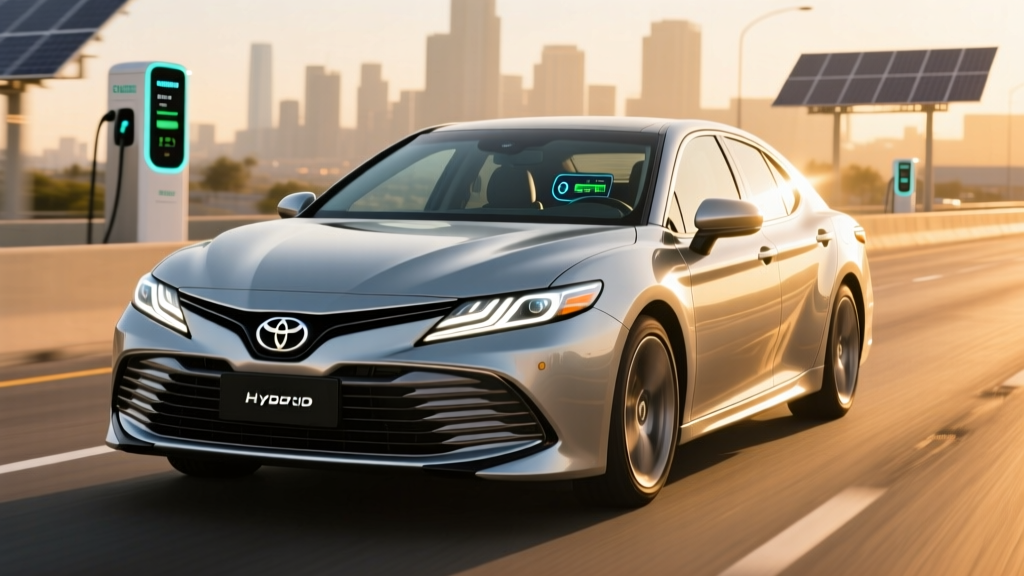
The Toyota Camry Hybrid has quietly become one of the most capable midsize sedans on the market — and its straight-line performance tells a story most buyers underestimate. The 2025 Camry Hybrid, now exclusively a hybrid across all trims, delivers a 0-60 mph time of 7.2 seconds in AWD form and 7.6 seconds in front-wheel drive, according to independent testing. That's competitive with turbocharged gas sedans costing thousands more, while returning over 50 MPG combined.
For 2025, Toyota eliminated the gas-only Camry entirely. Every Camry now ships with the fifth-generation Toyota Hybrid System (THS), a 2.5-liter four-cylinder paired with electric motors producing a combined 225 hp (FWD) or 232 hp (AWD). The result is a sedan that hits 60 mph in the low-to-mid sevens, sips fuel at a rate that embarrasses most compacts, and carries Toyota's reputation for long-term hybrid reliability.
This guide breaks down the Camry Hybrid's real acceleration performance, fuel economy, powertrain engineering, battery longevity, and total ownership cost — with the exact numbers you need to decide if it's the right electrified vehicle for you.
0-60 Camry Hybrid: Acceleration and Performance by the Numbers
| Specification | FWD (LE/SE/XLE) | AWD (SE/XLE/SE AWD) |
|---|---|---|
| 0-60 mph | ~7.6 seconds | ~7.2 seconds |
| Combined Horsepower | 225 hp | 232 hp |
| Engine | 2.5L 4-cyl + electric motor(s) | |
| Engine Output | 184 hp / 163 lb-ft (gas engine alone) | |
| Front Motor Output | 100 kW (134 hp) / 153 lb-ft | |
| Rear Motor (AWD only) | N/A | 30 kW (40 hp) / 89 lb-ft |
| Transmission | eCVT (planetary gearset) | |
| Top Speed | ~112 mph (electronically limited) | |
| Curb Weight | ~3,490 lbs | ~3,595 lbs |
The AWD variant's quicker 0-60 time comes from the additional rear electric motor, which provides instant torque to all four wheels off the line. Unlike mechanical AWD systems that add weight and drivetrain loss, Toyota's electronic AWD (eAWD) uses a standalone rear motor that engages only when needed — during hard acceleration, slippery conditions, or cornering. Under steady cruising, the Camry Hybrid AWD operates primarily as a front-wheel-drive car, which is why the fuel economy penalty is minimal.
For context, the 7.2-second AWD time puts the Camry Hybrid in the same acceleration bracket as the Honda Accord Hybrid (7.3s) and noticeably ahead of most compact crossovers. It won't challenge a Tesla Model 3 or a sport sedan, but for a midsize family sedan optimized for efficiency, this is genuinely quick.
Fuel Economy: EPA Ratings vs. Real-World MPG
| Trim / Drivetrain | City MPG | Highway MPG | Combined MPG |
|---|---|---|---|
| LE (FWD) | 53 | 50 | 52 |
| SE (FWD) | 48 | 47 | 47 |
| XLE (FWD) | 48 | 47 | 47 |
| SE (AWD) | 46 | 46 | 46 |
| XLE (AWD) | 46 | 46 | 46 |
Data sourced from fueleconomy.gov. The LE trim achieves its higher 52 MPG combined rating through lighter wheels, lower rolling-resistance tires, and the absence of the AWD rear motor. Moving to SE or XLE trims — or adding AWD — costs you 5-6 MPG, which is still exceptional for a 3,500+ lb sedan with 232 hp.
Real-World MPG: What Owners Actually Report
The Camry Hybrid is one of those rare vehicles where real-world fuel economy often meets or exceeds EPA estimates, particularly in city driving. The hybrid system recovers significant energy through regenerative braking, and stop-and-go traffic actually plays to its advantage. Based on aggregated owner data from Fuelly and Edmunds long-term testing:
- City driving: 49-56 MPG (often exceeds EPA for LE trim)
- Highway driving (70+ mph): 42-47 MPG (slightly below EPA due to aerodynamic drag and reduced regen opportunity)
- Mixed commuting: 46-52 MPG
- Cold weather (below 30°F): Expect a 5-10% reduction, bringing the LE to ~45-48 MPG combined. The engine runs more frequently to provide cabin heat and warm the catalytic converter.
With a 13.2-gallon fuel tank, the Camry Hybrid LE can theoretically travel 686 miles on a single fill-up at its combined EPA rating. Real-world mixed driving yields 580-650 miles between fill-ups for most owners.
HEV vs. PHEV vs. EV: Where the Camry Hybrid Fits
The Camry Hybrid is a conventional hybrid electric vehicle (HEV), not a plug-in hybrid (PHEV). This is a critical distinction that confuses many shoppers. Here's what that means for your ownership experience:
| Feature | Camry Hybrid (HEV) | PHEV (e.g., RAV4 Prime) | Full EV (e.g., Model 3) |
|---|---|---|---|
| Plug in to charge? | No — charges via engine + regen | Yes — Level 1 or Level 2 | Yes — Level 1, 2, or DC fast |
| Electric-only range | ~1 mile at low speed | 25-42 miles (typical) | 250-350+ miles (full battery) |
| Battery size | ~1.0 kWh (small buffer) | 13-18 kWh usable | 60-82 kWh usable |
| Home charging needed? | No | Recommended for full benefit | Essential for convenience |
| Gas required? | Yes — primary fuel | Yes — backup after EV range | No |
| Federal tax credit (§30D) | Not eligible | May qualify (see below) | May qualify (see below) |
| Best for | No home charging access; high-mileage commuters | Home charging + short daily commute + road trips | Home charging + daily driving + moderate road trips |
Who should choose the Camry Hybrid (HEV)? You want maximum fuel efficiency without changing your fueling habits. You don't have access to home or workplace charging. You drive high annual mileage (15,000+ miles/year) and want to minimize fuel costs. You want Toyota's proven hybrid reliability with minimal behavioral change.
Who should consider a PHEV instead? You have access to Level 2 home charging, your daily commute is under 35 miles round-trip (so you'd drive mostly on electricity), and you still want gas flexibility for road trips. The Toyota RAV4 Prime (42 miles EV range) or a plug-in Prius Prime (44 miles EV range) may serve you better.
Who should go full EV? You have reliable home charging, you're ready to eliminate gas entirely, and your typical road trips are under 250 miles or along well-served charging corridors. The Tesla Model 3, Hyundai Ioniq 6, or Chevrolet Equinox EV are strong alternatives in this price range.
Powertrain Deep Dive: Fifth-Generation Toyota Hybrid System
The 2025 Camry Hybrid uses Toyota's fifth-generation THS, which debuted with the current-generation Prius. Key improvements over the previous generation include a more compact transaxle, a lighter lithium-ion hybrid battery (replacing the older nickel-metal hydride pack), and revised power management software that allows more aggressive electric-motor assist during acceleration.
The powertrain combines:
- A25A-FXS 2.5L Dynamic Force engine: 184 hp, 163 lb-ft, running on the Atkinson cycle for maximum thermal efficiency (~41%)
- Front electric motor/generator: 100 kW (134 hp), integrated into the transaxle
- Rear electric motor (AWD only): 30 kW (40 hp), independent — no mechanical driveshaft
- Lithium-ion hybrid battery: Approximately 1.0 kWh total capacity (usable buffer is smaller), mounted under the rear seat
The combined system output is managed by a power-split device (planetary gearset) that seamlessly blends engine and motor power. There are no fixed "gears" — the eCVT provides infinitely variable ratios, which is why acceleration feels smooth and uninterrupted. The lithium-ion battery is small by EV standards because it only needs to buffer energy recovered from braking and recaptured from the engine; it's not designed for sustained electric-only driving.
Pricing, Trims, and Tax Credit Eligibility
The 2025 Toyota Camry Hybrid starts at an MSRP of $29,495 (LE trim, including destination charge). Here's the full trim breakdown:
| Trim | Drivetrain | MSRP (incl. destination) |
|---|---|---|
| LE | FWD | $29,495 |
| LE | AWD | $31,095 |
| SE | FWD | $30,795 |
| SE | AWD | $32,395 |
| XLE | FWD | $33,495 |
| XLE | AWD | $35,095 |
Does the Camry Hybrid Qualify for a Federal Tax Credit?
No. The Camry Hybrid is a conventional HEV, and the IRS §30D New Clean Vehicle Credit applies only to plug-in electric vehicles (BEVs and PHEVs) with a minimum battery capacity of 7 kWh. The Camry Hybrid's ~1.0 kWh battery does not meet this threshold.
If federal tax incentives are a priority, you'd need to look at a PHEV like the Prius Prime (potentially eligible for up to $3,750 depending on battery sourcing compliance) or a full EV. Note that §30D credit eligibility depends on MSRP caps ($55,000 for sedans), buyer income limits ($150,000 single / $300,000 joint AGI), and critical-mineral/battery-component sourcing requirements that change annually. Consult a tax professional and check the latest IRS guidance before purchasing.
Some states and utilities offer rebates for conventional hybrids — check your local utility and state energy office for current programs, though these are less common than EV incentives.
Battery Warranty, Reliability, and Replacement Costs
• 10 years / 150,000 miles (whichever comes first) — for all 50 states
• Covers hybrid battery and all hybrid system components (inverter, motor, eCVT)
• Warranty is fully transferable to subsequent owners
• If the battery drops below a defined capacity threshold during the warranty period, Toyota replaces it at no cost
Toyota's hybrid battery track record is among the best in the industry. The Camry Hybrid has been on the market since 2007, and data from long-term owners, taxi fleets, and Consumer Reports reliability surveys consistently show hybrid battery failure rates well below 5% within the warranty period. Many first-generation Camry Hybrid batteries lasted 200,000+ miles before needing replacement.
The switch to lithium-ion chemistry (from NiMH in earlier generations) improves energy density and reduces weight, though long-term degradation data for this specific pack is still accumulating. Based on Toyota's Prius lithium-ion battery experience (in use since 2016), degradation of 10-15% over 10 years is typical — and since the hybrid battery is a buffer rather than the sole energy source, moderate degradation has minimal impact on fuel economy or performance.
What Does a Camry Hybrid Battery Replacement Cost?
If your hybrid battery fails out of warranty (beyond 10 years/150,000 miles), expect the following:
- New OEM battery from Toyota: $2,500 - $4,000 (parts + labor at a dealership)
- Refurbished/remanufactured battery: $1,500 - $2,500 (from authorized aftermarket suppliers)
- Individual cell/module replacement: $500 - $1,200 (if only specific cells have degraded — requires a specialist shop)
For comparison, a conventional gas car's timing belt, water pump, and transmission service over the same 150,000-mile period can easily total $2,000-$4,000 in maintenance the hybrid avoids or reduces (the hybrid also uses regenerative braking, which significantly extends brake pad life).
5-Year Ownership Cost: Camry Hybrid vs. Gas Competitors
With no plug-in tax credit available, the Camry Hybrid's value proposition rests entirely on fuel savings and lower maintenance costs. Here's a 5-year / 75,000-mile ownership comparison at $3.40/gallon regular unleaded and 15,000 miles/year:
| Cost Factor | Camry Hybrid LE (52 MPG) | Honda Accord 1.5T (33 MPG combined) | Toyota Camry Gas (2024, 32 MPG combined) |
|---|---|---|---|
| Purchase Price (MSRP) | $29,495 | $29,390 | $28,400* |
| Fuel Cost (5 yr / 75k mi) | $4,904 | $7,727 | $7,969 |
| Fuel Savings vs. Gas | Baseline | +$2,823 | +$3,065 |
| Estimated Maintenance (5 yr) | ~$2,200 | ~$3,100 | ~$3,200 |
| Total 5-Year Operating Cost | ~$7,104 | ~$10,827 | ~$11,169 |
*2024 Camry gas model shown for comparison; the 2025 Camry is hybrid-only.
The Camry Hybrid saves approximately $2,800-$3,100 in fuel alone over five years compared to a similarly priced gas midsize sedan. Factor in reduced brake wear (regenerative braking extends pad life 30-50%), no transmission fluid changes (the eCVT is sealed), and fewer engine-on miles, and total maintenance savings add another $800-$1,000.
Pros
- 0-60 in 7.2s (AWD) — quicker than most buyers expect
- 52 MPG combined (LE) — among the best of any non-plug-in sedan
- No charging infrastructure required — fuel like a normal car
- 10-year / 150,000-mile hybrid battery warranty
- Strong resale value — Camry Hybrids hold value exceptionally well
- AWD available without significant MPG penalty
- Toyota Safety Sense 3.0 standard on all trims
Cons
- No federal tax credit (HEV, not PHEV)
- No electric-only driving beyond very low-speed crawling
- Engine drone under hard acceleration (eCVT characteristic)
- SE/XLE trims drop to 46-47 MPG combined
- Rear battery placement slightly reduces under-floor cargo space
- No DC fast charging capability (not applicable to HEV)
Frequently Asked Questions
How fast is the Camry Hybrid 0 to 60?
The 2025 Camry Hybrid reaches 0-60 mph in approximately 7.6 seconds (FWD) or 7.2 seconds (AWD). The AWD model is quicker because the rear electric motor provides additional launch torque. Both times are competitive with turbocharged gas midsize sedans.
How many MPG does the Camry Hybrid get in real-world driving?
The EPA rates the Camry Hybrid LE at 53 city / 50 highway / 52 combined. Real-world owners typically report 46-52 MPG in mixed driving, with city MPG often exceeding EPA estimates due to regenerative braking. Highway-heavy driving at 75+ mph may return 42-46 MPG. Cold weather reduces efficiency by roughly 5-10%.
Is the Camry Hybrid a plug-in? Do I need to charge it?
No. The Camry Hybrid is a conventional hybrid (HEV). It charges its small lithium-ion battery through regenerative braking and the gasoline engine. You never plug it in. If you want a Toyota with plug-in capability, consider the Prius Prime (44 miles electric-only) or RAV4 Prime (42 miles electric-only).
Is the Camry Hybrid reliable, and what is battery replacement cost?
Yes. Toyota's hybrid system has been in production since 1997 (Prius), and the Camry Hybrid has been sold since 2007. Hybrid battery failure within the 10-year/150,000-mile warranty period is rare. Out-of-warranty replacement costs $2,500-$4,000 for a new OEM battery, or $1,500-$2,500 for a refurbished unit. The hybrid system's reliability is consistently rated above average by Consumer Reports and J.D. Power.
Does the Camry Hybrid qualify for any tax credit?
The Camry Hybrid does not qualify for the federal §30D New Clean Vehicle Credit, which requires a minimum 7 kWh battery and plug-in capability. Some states or utilities may offer small incentives for hybrids — check your local programs. If the federal credit is important to you, consider a PHEV or full EV.
Camry Hybrid vs. full EV — which should I choose?
Choose the Camry Hybrid if you lack home charging access, drive 15,000+ miles per year, frequently take road trips over 300 miles, or want to minimize upfront cost while still cutting fuel expenses. Choose a full EV (like the Tesla Model 3 or Hyundai Ioniq 6) if you have reliable home charging, want to eliminate gas entirely, qualify for the federal tax credit, and your daily driving is under 250 miles. A PHEV like the Prius Prime splits the difference: electric-only commuting with gas backup.
What is the Camry Hybrid's top speed and passing power?
The Camry Hybrid is electronically limited to approximately 112 mph. Its 30-50 mph passing time is approximately 3.5 seconds, which is where the electric motor's instant torque provides the most benefit. Highway merging and overtaking feel confident, especially in the 232-hp AWD configuration.
Editorial note: Specifications reflect 2025 model-year data as published by Toyota and the EPA. Pricing, tax credit rules, and availability are subject to change. Always verify current IRS §30D eligibility at irs.gov and confirm trim pricing with your local dealer before purchasing.