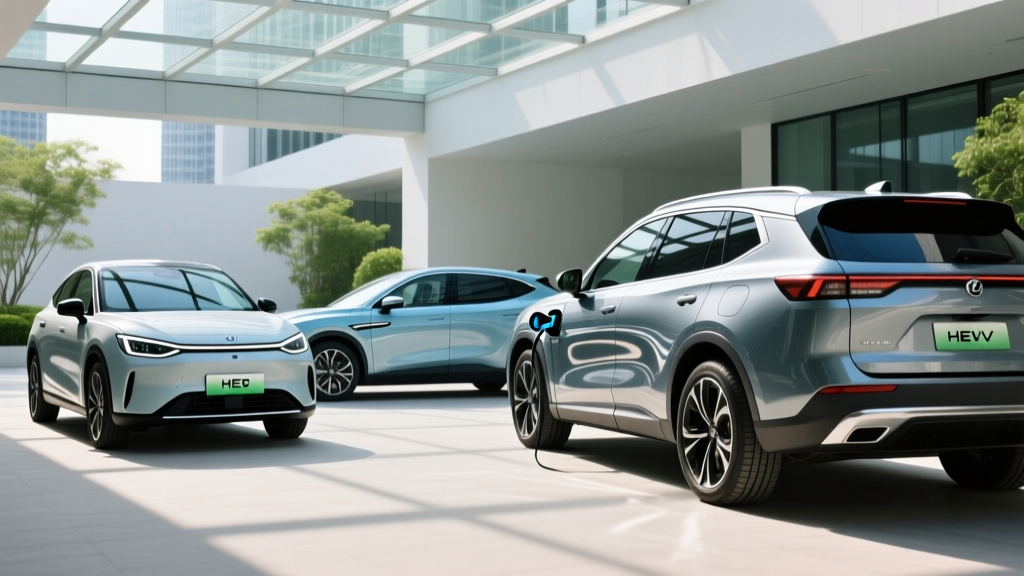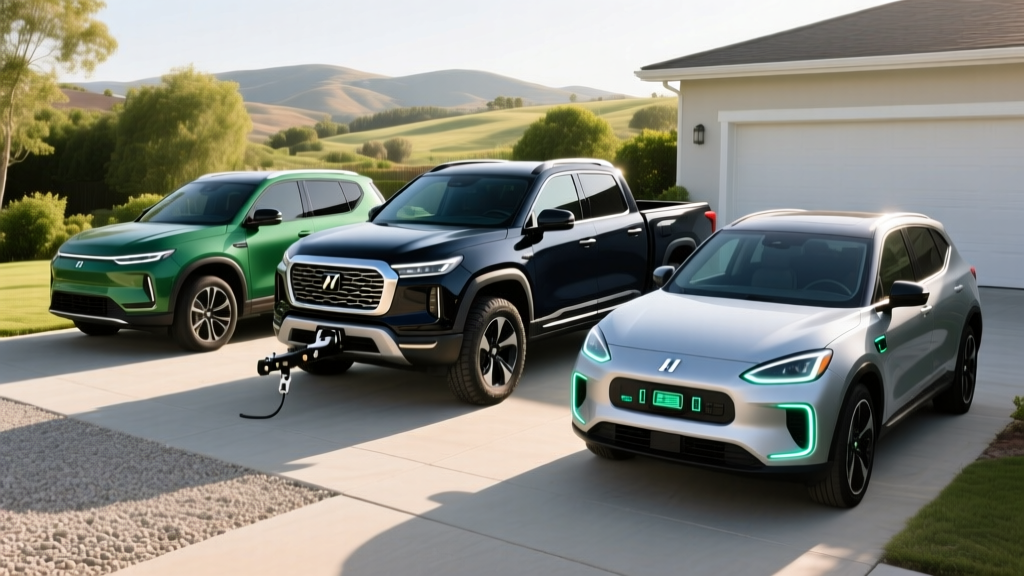
Why a Truck or SUV Hybrid Makes Sense in 2026
Full-size trucks and three-row SUVs have historically been the least efficient vehicles on the road. A body-on-frame truck pushing 5,000+ pounds through the air at 70 mph was never going to sip fuel. But the latest generation of truck and SUV hybrids has fundamentally changed that equation. By pairing a turbocharged or naturally aspirated gasoline engine with one or more electric motors, these vehicles recapture braking energy, provide electric torque fill off the line, and — in the case of plug-in hybrids — enable short electric-only commutes.
If you need towing capacity, cargo volume, and passenger space but want to cut fuel costs without committing to a full battery-electric vehicle (which still faces charging-infrastructure gaps for heavy hauling), a hybrid truck or SUV is the pragmatic middle ground. Here we break down the top contenders for 2026 with hard numbers, not marketing fluff.
HEV vs PHEV: Know the Difference Before You Buy
Conventional Hybrid (HEV): A small battery (typically 1–2 kWh) recharges through regenerative braking and the engine. You never plug it in. The electric motor assists the gas engine, improving MPG — especially in stop-and-go city driving. Think Toyota Highlander Hybrid or Ford F-150 PowerBoost.
Plug-in Hybrid (PHEV): A larger battery (12–25+ kWh) that you can charge from a wall outlet or public charger. It provides 20–45+ miles of pure electric driving before the gas engine kicks in. Once the battery depletes, it operates as a conventional hybrid. Think Jeep Wrangler 4xe or Toyota RAV4 Prime.
The choice is straightforward: if you can charge at home and your daily commute is under 40 miles, a PHEV can run almost entirely on electricity for daily driving while keeping gas-engine range for road trips and towing. If you lack home charging access or drive long distances regularly, an HEV delivers meaningful MPG gains with zero lifestyle change.
Top Truck & SUV Hybrids: Side-by-Side Specs
| Vehicle | Type | Powertrain | Combined HP | EPA MPG (City/Hwy/Combined) | PHEV Electric Range | Max Towing | Base MSRP (2026) |
|---|---|---|---|---|---|---|---|
| Ford F-150 PowerBoost | HEV | 3.5L Twin-Turbo V6 + 47-hp electric motor | 430 hp / 570 lb-ft | 25 / 26 / 25 | N/A | 12,700 lbs | $58,690 |
| Toyota Grand Highlander Hybrid | HEV | 2.5L I4 + 3 electric motors (AWD) | 245 hp | 36 / 32 / 35 | N/A | 5,000 lbs | $46,120 |
| Toyota Grand Highlander Hybrid MAX | HEV | 2.4L Turbo I4 + electric motor | 362 hp / 400 lb-ft | 27 / 28 / 27 | N/A | 5,000 lbs | $53,405 |
| Jeep Wrangler 4xe | PHEV | 2.0L Turbo I4 + 2 electric motors + 17.3 kWh battery | 375 hp / 470 lb-ft | 20 combined (gas) / 49 MPGe | 22 mi electric | 3,500 lbs | $51,790 |
| Jeep Grand Cherokee 4xe | PHEV | 2.0L Turbo I4 + 2 electric motors + 17.3 kWh battery | 375 hp / 470 lb-ft | 23 combined (gas) / 56 MPGe | 26 mi electric | 6,125 lbs | $60,490 |
| Ford Maverick Hybrid | HEV | 2.5L I4 + electric motor | 191 hp | 42 / 33 / 38 | N/A | 2,000 lbs | $29,495 |
| Toyota Tacoma i-FORCE MAX | HEV | 2.4L Turbo I4 + electric motor | 326 hp / 465 lb-ft | 24 / 27 / 25 | N/A | 6,000 lbs | $47,095 |
Source: EPA fuel economy data via fueleconomy.gov and manufacturer specifications. MSRP reflects base hybrid-equipped trims for the 2026 model year before destination charges.
Real-World MPG: What the EPA Sticker Doesn't Tell You
Hybrids, particularly conventional HEVs, tend to exceed their EPA city ratings in real-world stop-and-go traffic because regenerative braking is most effective at low speeds. The Ford Maverick Hybrid, EPA-rated at 42 city / 33 highway / 38 combined, regularly returns 40–45 MPG in urban driving based on owner-reported data. On the highway, however, aerodynamic drag dominates and the hybrid advantage shrinks — expect 30–33 MPG at 75 mph.
Real-world MPG expectations for truck/SUV hybrids:
- City driving (under 45 mph): Typically meets or exceeds EPA city estimate by 2–5 MPG thanks to regen braking
- Highway cruising (70–80 mph): Often 1–3 MPG below EPA highway estimate due to aerodynamic drag on tall, heavy vehicles
- Towing: Expect a 40–60% MPG drop. An F-150 PowerBoost rated at 25 combined may return 10–14 MPG while towing near its max capacity
- Cold weather (below 30°F): Expect 5–15% MPG reduction as the engine runs more frequently for cabin heat and the battery is less efficient
For PHEVs like the Wrangler 4xe and Grand Cherokee 4xe, real-world electric-only range varies with temperature and driving style. The EPA-rated 22 miles (Wrangler) or 26 miles (Grand Cherokee) assumes moderate temperatures and gentle acceleration. In winter or at highway speeds, expect 15–20 miles of electric range from the Wrangler 4xe and 18–22 miles from the Grand Cherokee 4xe.
PHEV Charging: Battery Size, Charge Time, and the DC Fast-Charge Gap
Most PHEV truck and SUV batteries fall in the 12–20 kWh range. Here's what that means for charging:
| Charging Method | Power (kW) | Time to Full (17.3 kWh battery) | Notes |
|---|---|---|---|
| Level 1 (120V household outlet) | ~1.4 kW | 12–14 hours | Works overnight for daily top-up |
| Level 2 (240V home/public charger) | ~3.3–7.2 kW | 2.5–5 hours | Most PHEVs max at 3.3–6.6 kW onboard |
| DC Fast Charge | Varies | 30–45 min (10–80%) | Rarely available on PHEVs — most lack DC port |
Critical limitation: Most PHEV trucks and SUVs — including the Wrangler 4xe and Grand Cherokee 4xe — do not support DC fast charging. They are limited to Level 2 AC charging at roughly 6.6 kW (the 4xe models) or 3.3 kW. This means you cannot rapidly top up on a road trip. For PHEVs, the assumption is that you charge at home overnight and use the gas engine for longer trips. If you need fast-charging capability, a full BEV is the answer.
Hybrid vs PHEV vs Full EV: Which Powertrain Fits Your Life?
Choose a conventional hybrid (HEV) if:
- You cannot install a home charger (apartment, street parking)
- You regularly tow heavy loads (towing depletes PHEV batteries rapidly)
- You drive long highway distances where electric range provides minimal benefit
- You want lower upfront cost — HEVs carry a smaller price premium over gas models
Choose a plug-in hybrid (PHEV) if:
- You have Level 2 home charging and a commute under 30–40 miles round-trip
- You want electric daily driving but gas-engine flexibility for road trips
- You want to reduce fuel consumption by 60–80% on typical weekday driving
- You qualify for the federal §30D tax credit (up to $7,500 — see eligibility below)
Choose a full battery-electric vehicle (BEV) if:
- You have reliable home Level 2 charging
- Your daily driving is under 250 miles and you can plan charging for road trips
- You want zero tailpipe emissions and the lowest per-mile energy cost
- You don't need max towing capacity (EV towing range drops dramatically)
Tax Credits and Incentives: What You Can Actually Claim
Under current IRS §30D rules, only plug-in hybrids qualify for the federal EV tax credit — conventional hybrids do not. The credit can be worth up to $7,500, but eligibility depends on several factors:
- Vehicle MSRP cap: SUVs, trucks, and vans must have an MSRP under $80,000; sedans under $55,000
- Buyer income cap: Modified adjusted gross income must not exceed $300,000 (joint), $225,000 (head of household), or $150,000 (individual)
- Battery sourcing: A percentage of critical minerals and battery components must be sourced from the U.S. or free-trade-agreement partners — this requirement tightens annually
- Point-of-sale transfer: As of 2024, you can transfer the credit to the dealer at purchase for an immediate price reduction rather than waiting for a tax refund
- Manufacturer cap eliminated: The old per-manufacturer 200,000-vehicle cap no longer applies
For 2026, the Jeep Grand Cherokee 4xe and Wrangler 4xe have historically qualified for partial or full credits, but battery-sourcing requirements change yearly. Always verify current eligibility on the IRS clean vehicle credits page before purchasing. Conventional hybrids like the F-150 PowerBoost, Grand Highlander Hybrid, Maverick Hybrid, and Tacoma i-FORCE MAX do not qualify for §30D.
Reliability, Battery Warranty, and Replacement Costs
Hybrid battery warranties — what's covered:
- Ford: Hybrid battery covered for 8 years / 100,000 miles (10 years / 150,000 miles in CARB states)
- Toyota: Hybrid battery covered for 10 years / 150,000 miles (all states, from 2020+ models)
- Stellantis (Jeep): PHEV battery covered for 8 years / 100,000 miles; 10 years / 150,000 in CARB states
What triggers a warranty claim: Battery capacity falling below ~60–70% of original capacity, depending on manufacturer. Most hybrid batteries are designed to last the life of the vehicle.
Real-world reliability data: Toyota's hybrid systems (used in the Grand Highlander, Tacoma, and RAV4) have the longest track record in the industry, with many first-generation Prius and Highlander Hybrid batteries lasting 200,000+ miles. Ford's PowerBoost system is newer but has proven robust in F-150 fleet use. The Jeep 4xe systems have had some software-related recalls but the battery hardware has been generally reliable.
Battery replacement cost (out of warranty):
- Toyota HEV battery pack: $3,000–$5,000 (smaller packs, proven supply chain for refurbished units)
- Ford F-150 PowerBoost battery: $4,000–$6,000
- Jeep 4xe PHEV battery (17.3 kWh): $8,000–$12,000 (larger pack, more cells)
For context, hybrid battery replacement is rare. Most failures occur within the warranty period, and refurbished/remanufactured packs are increasingly available at lower cost.
Pros and Cons: Truck & SUV Hybrids at a Glance
Pros
- 20–40% better fuel economy than gas-only equivalents, especially in city driving
- Instant electric torque improves acceleration and low-speed towing response
- No range anxiety — gas engine provides 500+ miles total range
- Lower operating costs vs. gas models without charging infrastructure dependency (HEV)
- PHEV models can run electric-only for daily commuting, slashing fuel bills
- Strong resale value — hybrid trucks and SUVs hold value well due to demand
Cons
- Higher upfront cost: hybrid premium of $2,000–$8,000 over gas-only trims
- Towing MPG drops sharply — hybrid advantage nearly disappears under heavy load
- PHEV models add 300–500 lbs of battery weight, reducing payload capacity
- Most PHEVs lack DC fast charging, limiting road-trip electric top-ups
- Complex powertrain means more components that could theoretically fail long-term
- PHEV tax credit eligibility depends on sourcing rules that tighten annually
Frequently Asked Questions
How many MPG does a hybrid truck or SUV actually get?
It varies widely by model. The Ford Maverick Hybrid leads at 38 MPG combined (42 city / 33 highway). The Toyota Grand Highlander Hybrid achieves 35 combined. Full-size trucks like the F-150 PowerBoost return 25 combined. In real-world city driving, expect to meet or slightly exceed EPA city estimates; on the highway at 75+ mph, expect 1–3 MPG below the EPA highway number.
How far can a PHEV truck or SUV go on electric only?
Current PHEV trucks and SUVs offer 22–26 miles of EPA-rated electric range (Jeep Wrangler 4xe: 22 mi; Grand Cherokee 4xe: 26 mi). Real-world electric range in cold weather or at highway speeds drops to 15–22 miles. This is sufficient for many daily commutes but not for highway road trips.
Do conventional hybrids need to be plugged in?
No. Conventional hybrids (HEVs) like the F-150 PowerBoost, Grand Highlander Hybrid, Maverick Hybrid, and Tacoma i-FORCE MAX charge their batteries entirely through regenerative braking and the gasoline engine. You fuel them like a normal gas vehicle and never need a charger.
Is a hybrid truck or SUV reliable long-term?
Yes. Toyota's hybrid systems have a 25+ year track record with batteries commonly lasting 200,000+ miles. Ford's PowerBoost and Jeep's 4xe systems are newer but have shown good reliability in fleet and consumer use. All major manufacturers provide 8–10 year / 100,000–150,000 mile hybrid battery warranties.
Do hybrid trucks and SUVs qualify for tax credits?
Only plug-in hybrids (PHEVs) qualify for the federal §30D clean vehicle credit, which can be up to $7,500. Conventional hybrids (HEVs) do not qualify. PHEV eligibility depends on MSRP caps, buyer income limits, and battery-sourcing requirements that change annually. Check IRS.gov for current rules.
How much does it cost to replace a hybrid battery?
Out-of-warranty replacement ranges from $3,000–$5,000 for Toyota HEV packs to $8,000–$12,000 for larger Jeep 4xe PHEV packs. However, most hybrid batteries last the life of the vehicle, and failures within the 8–10 year warranty period are covered. Refurbished packs are increasingly available at 30–50% below new pricing.
Can I tow with a hybrid truck or SUV?
Absolutely. The Ford F-150 PowerBoost tows up to 12,700 lbs — comparable to many gas-only F-150 configurations. The Toyota Tacoma i-FORCE MAX handles 6,000 lbs. However, expect MPG to drop to 10–14 MPG when towing near max capacity. The hybrid system provides excellent low-speed torque response when getting a trailer moving.