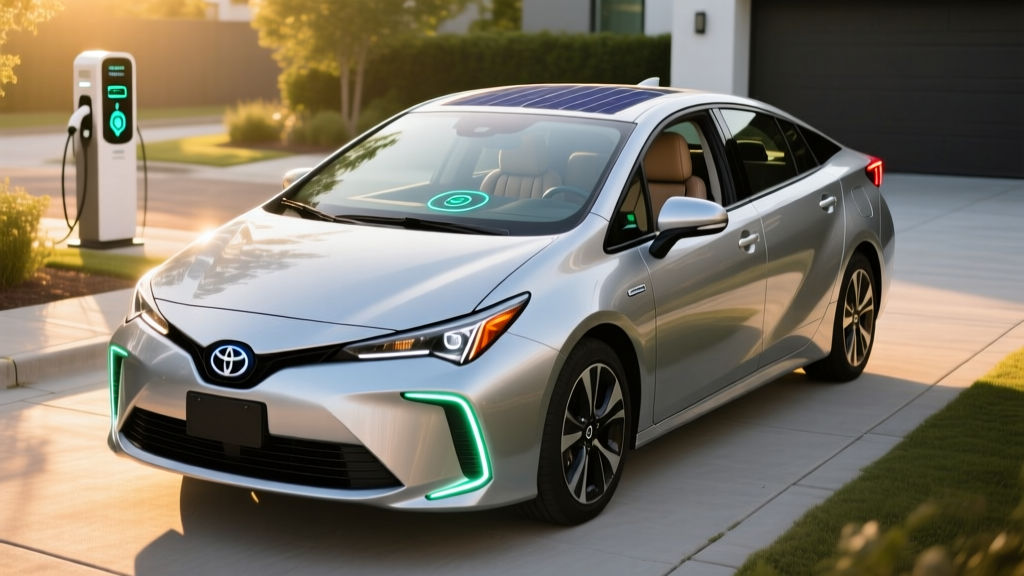
If you are hunting for a hybrid car deal that bridges the gap between a conventional gas-sipper and a full battery-electric vehicle, the 2026 Toyota Prius Prime (the plug-in hybrid variant) remains one of the most compelling options on the market. With a usable electric-only range that covers most daily commutes, excellent fuel economy once the battery depletes, and a starting price that undercuts many pure EVs, it earns its reputation as a pragmatic electrified purchase. Below, we dissect the numbers, the ownership math, and the real-world caveats so you can decide whether this PHEV fits your garage.
HEV vs PHEV: Which Prius Are We Talking About?
Toyota sells two distinct Prius models. Understanding the difference is critical before you sign any paperwork.
- Prius (conventional HEV): Self-charging hybrid. You never plug it in. A small 0.9 kWh battery assists the gasoline engine, delivering excellent MPG but zero electric-only driving. Starting MSRP around $29,450.
- Prius Prime (PHEV): Plug-in hybrid. A larger 13.6 kWh lithium-ion battery enables up to 44 miles of pure electric driving before the gasoline engine seamlessly engages. You plug it in to recharge (Level 1 or Level 2). Starting MSRP around $34,370.
This review focuses on the Prius Prime PHEV, since its plug-in capability and tax-credit potential make it the more interesting hybrid car deal for electrified-vehicle shoppers. If you have no access to any charging — not even a standard 120V outlet — the conventional HEV is your better pick.
Fuel Economy and Electric-Only Range
The 2026 Prius Prime pairs a 2.0-liter four-cylinder engine with two electric motor-generators for a combined system output of 220 horsepower. Here is how the efficiency breaks down according to EPA data on fueleconomy.gov:
| Metric | Value |
|---|---|
| Electric-only range (EV mode) | 44 miles (SE trim); 40 miles (XSE/XSE Premium) |
| MPGe (electric + gas combined) | 127 MPGe |
| Gas-only MPG — Combined | 52 MPG (SE); 50 MPG (XSE) |
| Gas-only MPG — City | 53 MPG (SE) |
| Gas-only MPG — Highway | 51 MPG (SE) |
| Total range (EV + gas tank) | ~480 miles |
| Fuel tank capacity | 10.6 gallons |
Real-world MPG note: Toyota hybrids consistently exceed their EPA city estimates in stop-and-go traffic because regenerative braking recovers energy that a gas car wastes as heat. In our experience and owner reports, expect 54–58 MPG city in warm weather. Highway MPG tends to land closer to EPA or slightly below — around 48–50 MPG at 75 mph — because the electric motor contributes less at sustained high speed. In winter, expect a 5–10% efficiency drop due to cold engine operation and cabin heating demands.
Battery, Charging, and Powertrain Specs
| Specification | 2026 Prius Prime |
|---|---|
| Battery chemistry | Lithium-ion (NMC) |
| Battery capacity (gross / usable) | 13.6 kWh / ~10.9 kWh usable |
| Engine | 2.0L 4-cylinder Atkinson-cycle (150 hp) |
| Electric motors | Two motor-generators (MG1 + MG2) |
| Combined system horsepower | 220 hp |
| 0–60 mph | 6.6 seconds |
| Drivetrain | Front-wheel drive (eCVT) |
| Level 1 charging (120V / 12A) | ~11 hours (0–100%) |
| Level 2 charging (240V / 32A) | ~4 hours (0–100%) |
| DC fast charging | Not available |
| Charge port | J1772 (Level 1 and Level 2) |
The absence of DC fast charging is a deliberate engineering choice: the 13.6 kWh pack is small enough that Level 2 replenishes it fully in about four hours, and adding DC hardware would increase cost and weight for minimal benefit. Overnight home charging is the intended use case. If you rely exclusively on public fast chargers, a PHEV is not the right tool — consider a full BEV instead.
Pricing, Trims, and Tax Credit Eligibility
For the 2026 model year, Toyota offers the Prius Prime in three trims:
- SE: ~$34,370 MSRP — 44-mile EV range, 17-inch wheels, Toyota Safety Sense 3.0
- XSE: ~$37,820 MSRP — 40-mile EV range, 19-inch wheels, heated front seats, power liftgate
- XSE Premium: ~$41,190 MSRP — adds panoramic fixed glass roof, premium audio, digital rearview mirror
Does the Prius Prime qualify for the federal §30D tax credit? Under current IRS rules, the Prius Prime is eligible for up to $3,750 (partial credit dependent on critical-mineral and battery-component sourcing). Full $7,500 eligibility depends on supply-chain compliance that shifts periodically. Key buyer requirements:
- Modified adjusted gross income: ≤ $150,000 (single) or ≤ $300,000 (joint)
- Vehicle MSRP cap: ≤ $80,000 for SUVs/vans/pickups; ≤ $55,000 for sedans (Prius Prime qualifies)
- Vehicle must be new, purchased for personal use in the U.S.
- Point-of-sale transfer available — the credit can reduce your purchase price at the dealer
Always verify current eligibility on irs.gov before purchasing, as battery-sourcing requirements update throughout the year.
After a potential $3,750 federal credit, the Prius Prime SE effectively starts around $30,620 — a price point that competes directly with well-equipped conventional hybrids and entry-level EVs. Many states also offer additional rebates for PHEVs (check your state energy office), though amounts vary by jurisdiction.
Hybrid Car Deal Comparison: Prius Prime vs Rivals
| Spec | 2026 Prius Prime SE | 2026 Hyundai Tucson PHEV | 2026 Ford Escape PHEV |
|---|---|---|---|
| EV range | 44 mi | 33 mi | 37 mi |
| Combined MPG (gas only) | 52 | 35 | 40 |
| Combined HP | 220 | 261 | 210 |
| 0–60 mph | 6.6 sec | 7.0 sec | 7.5 sec |
| Cargo (rear seats up) | 20.3 cu ft | 38.7 cu ft | 34.4 cu ft |
| Starting MSRP | $34,370 | $39,900 | $38,500 |
| Federal credit potential | Up to $3,750 | Up to $7,500 | Up to $3,750 |
The Prius Prime wins on efficiency and price. The Tucson PHEV wins on cargo space and AWD availability. The Escape PHEV sits in between. If maximizing MPG and minimizing cost define your ideal hybrid car deal, the Prius Prime SE is the segment leader.
Battery Warranty, Reliability, and Replacement Cost
Hybrid battery warranty: Toyota covers the Prius Prime's hybrid battery for 10 years or 150,000 miles (whichever comes first) in all 50 states. This applies to both the traction battery and hybrid system components. Toyota's hybrid batteries have demonstrated strong longevity — data from fleet operators and long-term owners shows typical degradation of 10–15% over 10 years for the plug-in pack, meaning you might see EV range drop from 44 miles to roughly 37–40 miles after a decade of use.
Replacement cost: If the battery fails outside warranty, expect a dealer replacement cost of approximately $4,000–$6,000 for the Prius Prime's 13.6 kWh pack — significantly less than a full EV battery replacement ($10,000–$20,000+). Independent hybrid specialists often offer refurbished packs for $2,500–$3,500.
Reliability: The Prius nameplate carries one of the strongest long-term reliability records in the industry. IIHS has historically rated the Prius a Top Safety Pick. Toyota's eCVT transmission has no traditional gears or belts — it uses planetary gearsets that are remarkably durable with minimal maintenance.
Who Should Buy the Prius Prime (and Who Shouldn't)
Pros
- Best-in-class 44-mile EV range covers most commutes gas-free
- 52 MPG combined in hybrid mode — among the highest of any PHEV
- Low starting MSRP for a plug-in hybrid
- 10-year/150,000-mile hybrid battery warranty
- Strong resale value and proven reliability track record
- Point-of-sale federal tax credit reduces upfront cost
Cons
- No DC fast charging — Level 2 only
- Modest 20.3 cu ft cargo space (sedan-like hatch)
- FWD only — no AWD option (unlike Tucson PHEV)
- Rear seat is tighter than crossover PHEV competitors
- Partial federal tax credit ($3,750 vs full $7,500) depending on sourcing rules
Choose the Prius Prime PHEV if: You have home charging access (even a 120V outlet works), your daily round-trip commute is under 40 miles, you want to drive electric most days but need gas-engine flexibility for road trips, and you want the lowest total cost of ownership in the PHEV segment.
Choose a full EV (like a Tesla Model 3 or Chevy Equinox EV) if: You have reliable Level 2 home charging, your daily driving is under 250 miles, you want zero gasoline maintenance (no oil changes, no spark plugs), and you qualify for the full $7,500 federal credit on a BEV.
Choose the conventional Prius HEV if: You have no plug-in access at all — no garage outlet, no workplace charger, no realistic way to charge overnight. The HEV still delivers 57 MPG combined without ever needing a plug.
5-Year Cost of Ownership Snapshot
| Cost Factor (5 yr / 75,000 mi) | Prius Prime PHEV | Prius HEV | Comparable Gas Sedan (30 MPG) |
|---|---|---|---|
| Purchase price (after credit) | ~$30,620 | ~$29,450 | ~$28,000 |
| Fuel / electricity | ~$3,200 | ~$5,100 | ~$8,750 |
| Maintenance | ~$2,800 | ~$3,000 | ~$4,200 |
| Insurance (avg) | ~$7,500 | ~$7,000 | ~$6,500 |
| Estimated depreciation | ~$12,000 | ~$11,500 | ~$14,000 |
| 5-year total | ~$56,120 | ~$56,050 | ~$61,450 |
The PHEV and HEV converge on total cost because the PHEV's lower fuel spend is offset by a slightly higher purchase price and insurance premium. Both significantly undercut a conventional gas sedan over five years. The PHEV pulls further ahead if your electricity rate is low (under $0.14/kWh) or if your state offers additional rebates.
Frequently Asked Questions
How many MPG does the Prius Prime get?
The EPA rates the 2026 Prius Prime SE at 52 MPG combined (53 city / 51 highway) in hybrid mode after the battery depletes. In real-world city driving, many owners report 54–58 MPG thanks to aggressive regenerative braking. Highway driving at 75 mph typically returns 48–50 MPG.
How far can the Prius Prime go on electric only?
The SE trim delivers an EPA-rated 44 miles of electric-only range; the XSE and XSE Premium trims are rated at 40 miles due to larger 19-inch wheels and added weight. Real-world EV range in mild weather often reaches 46–48 miles on the SE if you drive conservatively. In freezing temperatures, expect 35–38 miles.
Do I have to plug in the Prius Prime?
You don't have to — it will operate as a regular hybrid if you never plug it in, getting 52 MPG. But you'll miss the entire point of the PHEV. Plugging in (even overnight on a standard 120V outlet) lets you drive 44 miles on cheap electricity instead of gasoline. The conventional Prius HEV is the right choice if you cannot plug in at all.
Does the Prius Prime qualify for a federal tax credit?
Under current IRS §30D rules, the Prius Prime qualifies for a partial federal credit — typically $3,750 — depending on battery-component and critical-mineral sourcing requirements that update periodically. You must meet income caps ($150K single / $300K joint) and the vehicle's MSRP must be under $55,000 (it is). The credit can be transferred at the point of sale to reduce your purchase price directly. Confirm eligibility at the time of purchase.
Is the hybrid battery reliable and what does replacement cost?
Toyota's hybrid batteries are among the most proven in the industry, with millions of units on the road. The Prius Prime battery carries a 10-year / 150,000-mile warranty. Typical degradation is 10–15% over a decade. Out-of-warranty replacement runs $4,000–$6,000 at a dealer, or $2,500–$3,500 through an independent hybrid specialist with a refurbished unit.
Hybrid vs PHEV vs EV — which is right for me?
If you can charge at home and your commute is under 40 miles round-trip, the PHEV gives you daily electric driving with road-trip flexibility. If you can charge at home and rarely drive over 250 miles in a day, a full EV eliminates gas entirely and has lower maintenance costs. If you have zero charging access — no garage, no workplace plug — a conventional HEV delivers excellent MPG with no lifestyle change required.