Why an SUV or Truck Hybrid Makes Sense in 2026
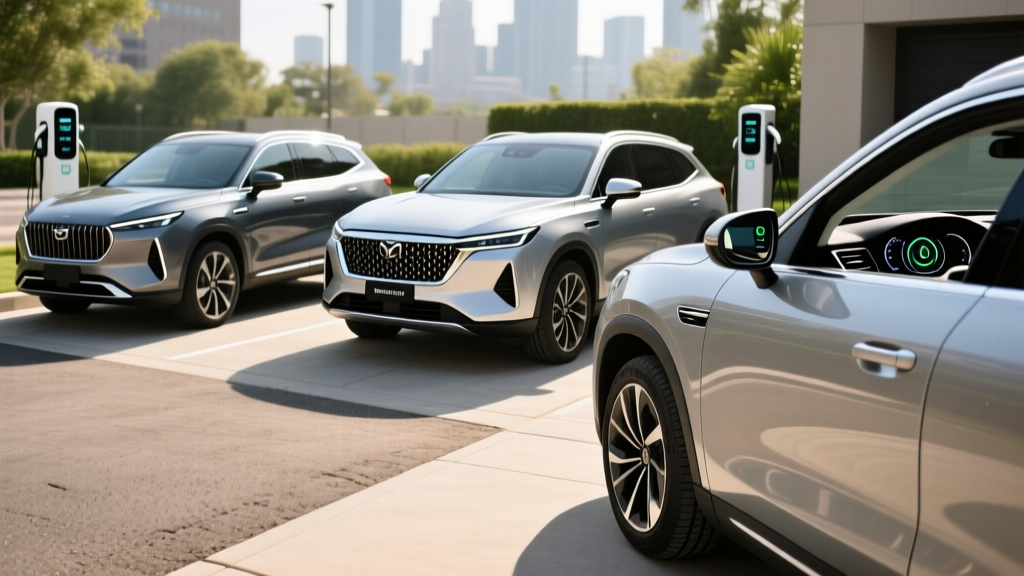
If you need cargo space, towing capability, or ground clearance but want to cut fuel costs without committing to a fully electric vehicle, a hybrid SUV or truck is the practical middle ground. The 2026 lineup of hybridized trucks and SUVs spans conventional hybrids (HEVs) that never need a plug, and plug-in hybrids (PHEVs) that deliver 30–40 miles of electric-only driving before the gas engine takes over. This guide breaks down the standout models with exact EPA numbers, real-world expectations, and ownership costs so you can match the right powertrain to your driving pattern.
HEV vs PHEV: Which Hybrid Type Fits You?
Conventional Hybrid (HEV): Uses a small battery (typically 1–2 kWh) recharged by regenerative braking and the engine. You never plug it in. Best for drivers without home charging access who want better MPG with zero behavior change.
Plug-in Hybrid (PHEV): Carries a larger battery (12–20+ kWh) that you plug in to recharge, giving 25–45 miles of electric-only range. Once depleted, it operates like a regular hybrid. Best for drivers with home Level 2 charging who commute short distances but still need long-range capability for road trips or towing.
Top SUV & Truck Hybrids: Spec Comparison
The table below covers the most popular hybrid SUVs and trucks available for the 2026 model year. All figures reflect EPA data and manufacturer specifications as published on fueleconomy.gov and official press materials.
| Model | Type | Combined HP | Battery (kWh) | EV Range (mi) | EPA Combined MPG | Max Tow (lbs) | Base MSRP |
|---|---|---|---|---|---|---|---|
| Toyota RAV4 Hybrid | HEV | 219 hp | 1.6 kWh | N/A | 39 MPG | 1,500 | $33,575 |
| Toyota RAV4 Prime | PHEV | 302 hp | 18.1 kWh | 42 mi | 94 MPGe / 38 MPG gas | 1,500 | $44,590 |
| Ford Maverick Hybrid | HEV | 191 hp | 1.1 kWh | N/A | 37 MPG | 2,000 | $29,495 |
| Toyota Tacoma i-FORCE MAX | HEV | 326 hp / 465 lb-ft | 1.87 kWh | N/A | 23 MPG | 6,000 | $42,900 |
| Jeep Wrangler 4xe | PHEV | 375 hp / 470 lb-ft | 17.3 kWh | 22 mi | 49 MPGe / 20 MPG gas | 3,500 | $51,790 |
| Toyota Grand Highlander Hybrid | HEV | 245 hp (Hybrid) / 362 hp (Hybrid MAX) | 1.4 kWh | N/A | 36 MPG (Hybrid) | 5,000 (MAX) | $41,270 |
| Ford F-150 PowerBoost | HEV | 430 hp / 570 lb-ft | 1.5 kWh | N/A | 24 MPG | 11,200 | $60,595 |
| Hyundai Tucson PHEV | PHEV | 261 hp | 13.8 kWh | 33 mi | 80 MPGe / 35 MPG gas | 2,000 | $39,990 |
Fuel Economy: EPA vs Real-World MPG
Hybrids, especially HEVs, tend to exceed their EPA combined rating in city driving because regenerative braking recovers energy in stop-and-go traffic. Highway driving is where hybrids lose their edge — at sustained 75+ mph speeds, the electric motor contributes less and the gas engine does most of the work.
| Model | EPA City | EPA Highway | EPA Combined | Real-World Expectation |
|---|---|---|---|---|
| Toyota RAV4 Hybrid | 41 | 38 | 39 | City: 42–45 | Highway: 33–36 |
| Ford Maverick Hybrid | 42 | 33 | 37 | City: 43–48 | Highway: 30–33 |
| Toyota Tacoma i-FORCE MAX | 23 | 24 | 23 | City: 21–23 | Highway: 23–25 | Towing: 14–17 |
| Ford F-150 PowerBoost | 25 | 24 | 24 | City: 24–27 | Highway: 21–23 | Towing: 13–16 |
| Toyota Grand Highlander Hybrid | 37 | 34 | 36 | City: 38–41 | Highway: 30–33 |
For PHEVs, the real-world electric range varies with temperature. Expect the RAV4 Prime's 42-mile EPA EV range to drop to 32–36 miles in freezing weather, and the Wrangler 4xe's 22-mile range to fall to roughly 16–18 miles in winter. Battery preconditioning is limited in most PHEVs compared to full BEVs, so cold-weather EV range loss is more pronounced.
PHEV Electric Range, Charging & Powertrain Details
If you're considering a plug-in hybrid, charging logistics matter. Here's what you need to know about the leading PHEV SUVs and trucks:
- Toyota RAV4 Prime (18.1 kWh): Charges in ~2.5 hours on a 240V Level 2 outlet (3.3 kW onboard charger). No DC fast charging. Full 42 miles EV range makes it viable for most daily commutes without touching gas.
- Jeep Wrangler 4xe (17.3 kWh): Level 2 charges in ~2 hours (7.2 kW onboard charger). No DC fast charging. The 22-mile EV range is modest, but the 470 lb-ft of combined torque is exceptional for off-road and towing scenarios.
- Hyundai Tucson PHEV (13.8 kWh): Level 2 charges in ~1.75 hours (7.2 kW onboard). No DC fast charging. The 33-mile EV range covers most suburban commutes.
No mainstream PHEV SUV or truck currently offers DC fast charging. The smaller batteries make it unnecessary — Level 2 tops them up well within a typical overnight window or workday.
Tax Credits & Pricing: What You'll Actually Pay
Under current IRS §30D rules, only PHEVs with sufficient battery capacity qualify for the federal clean vehicle credit — and even then, eligibility depends on MSRP caps, buyer income limits, and battery component/critical mineral sourcing requirements.
- RAV4 Prime: MSRP cap for SUVs is $80,000. Buyer AGI limits: $150K single / $300K joint. The RAV4 Prime has historically qualified for a partial credit ($3,750) due to critical mineral sourcing rules, but this changes periodically — verify current status on the IRS clean vehicle credit page before purchasing.
- Jeep Wrangler 4xe: The Wrangler 4xe has qualified for the full $7,500 credit in prior years. With the point-of-sale transfer option now available, qualified buyers can apply the credit directly at the dealership, reducing the out-of-pocket price to roughly $44,290 before destination and options.
- Hyundai Tucson PHEV: Assembled in South Korea, the Tucson PHEV does not meet the North American final assembly requirement under §30D and is not eligible for the federal credit. Some state incentives may apply — check your state energy office.
- Conventional hybrids (HEVs): The RAV4 Hybrid, Maverick Hybrid, F-150 PowerBoost, Tacoma i-FORCE MAX, and Grand Highlander Hybrid do not qualify for the §30D federal tax credit. That credit is reserved for PHEVs and BEVs meeting battery and sourcing thresholds.
Reliability & Battery Warranty
Hybrid battery warranties are federally mandated to cover at least 8 years / 80,000 miles for emissions-related components. Most manufacturers exceed this:
- Toyota: 10 years / 150,000 miles on the hybrid battery (all 2026 hybrid models including RAV4, Tacoma, Grand Highlander).
- Ford: 8 years / 100,000 miles on hybrid/PHEV battery components (Maverick, F-150 PowerBoost).
- Hyundai: 10 years / 100,000 miles on PHEV battery (Tucson).
- Jeep (Stellantis): 8 years / 100,000 miles on the 4xe battery and electric drive components.
Real-world hybrid battery longevity data is strong. Toyota's nickel-metal hydride and lithium-ion hybrid batteries routinely last 200,000+ miles with minimal degradation. Out-of-warranty replacement costs range from approximately $2,500–$4,000 for an HEV battery and $6,000–$9,000 for a PHEV battery pack, depending on the model and whether refurbished units are available.
Who Should Choose a Hybrid SUV or Truck vs a Full EV or Gas Vehicle?
Choose a conventional hybrid (HEV) if:
- You don't have access to home or workplace charging.
- You tow frequently and need maximum range without stopping (hybrid trucks like the F-150 PowerBoost deliver 500+ miles of total range).
- You want lower fuel costs with zero lifestyle change — just fill up less often.
- Upfront cost matters: HEVs carry only a modest premium ($1,000–$3,000) over gas-only trims.
Choose a plug-in hybrid (PHEV) if:
- You have Level 2 charging at home and your daily commute is under 35 miles.
- You want to drive electric most days but need gas-engine range for weekend trips, towing, or rural travel.
- You want to capture a federal tax credit (verify current eligibility on IRS.gov).
Choose a full EV instead if:
- Your daily driving is under 250 miles and you have reliable home charging.
- You want zero tailpipe emissions and the lowest per-mile energy cost (~$0.04–$0.06/mile on home electricity vs ~$0.12–$0.18/mile for hybrid gas).
- You don't tow heavy loads regularly (EV towing range drops 40–50%).
Pros & Cons at a Glance
Pros
- Significant fuel savings in city driving (HEVs average 35–42 MPG combined vs 18–24 MPG for gas-only trucks/SUVs)
- No range anxiety — total range of 500–650+ miles on a tank
- PHEVs offer daily electric driving with gas backup for road trips
- Strong resale value — Toyota and Ford hybrids hold value well
- Proven reliability with 10-year battery warranties
Cons
- Highway MPG advantage over gas models is smaller (5–10 MPG improvement vs 15–20 MPG in city)
- PHEVs carry a $5,000–$10,000 premium over HEV equivalents
- Towing fuel economy drops sharply for all hybrids (expect 13–17 MPG under load)
- No DC fast charging on any current PHEV SUV/truck
- Federal tax credit eligibility for PHEVs is uncertain and changes with sourcing rules
Frequently Asked Questions
How many MPG does a hybrid SUV or truck actually get?
It depends on the model and driving conditions. The Toyota RAV4 Hybrid achieves 41 city / 38 highway / 39 combined. The Ford Maverick Hybrid delivers 42 city / 33 highway / 37 combined. For trucks, the F-150 PowerBoost returns 25 city / 24 highway / 24 combined — a meaningful improvement over the gas V6's ~20 MPG combined. Real-world city MPG often exceeds EPA estimates by 3–5 MPG thanks to regenerative braking.
How far can a PHEV SUV go on electric only?
The Toyota RAV4 Prime leads the segment with 42 miles of EPA-rated EV range. The Hyundai Tucson PHEV delivers 33 miles, and the Jeep Wrangler 4xe provides 22 miles. In cold weather (below 32°F), expect a 20–25% reduction in EV range across all PHEVs due to cabin heating demands and reduced battery efficiency.
Do hybrid SUVs and trucks qualify for a tax credit?
Conventional hybrids (HEVs) do not qualify for the federal §30D clean vehicle credit. Only PHEVs with sufficient battery capacity may qualify, and eligibility depends on MSRP caps ($80,000 for SUVs, $55,000 for sedans), buyer income limits ($150K single / $300K joint AGI), North American assembly, and battery sourcing requirements. Check current eligibility at IRS.gov before purchasing.
Are hybrid batteries expensive to replace?
Hybrid battery replacement is rarely needed within the vehicle's normal lifespan. Toyota's hybrid batteries are warrantied for 10 years / 150,000 miles and routinely last beyond 200,000 miles. If replacement is needed out of warranty, expect $2,500–$4,000 for an HEV battery and $6,000–$9,000 for a PHEV pack. Refurbished batteries are increasingly available at 40–50% lower cost.
Can a hybrid truck tow as much as a gas truck?
Towing capacity is comparable. The Ford F-150 PowerBoost hybrid tows up to 11,200 lbs — matching or exceeding most gas V6 F-150 configurations. The Toyota Tacoma i-FORCE MAX hybrid tows 6,000 lbs, competitive with the gas V6 Tacoma. However, fuel economy while towing drops significantly for all powertrains; expect 13–17 MPG from hybrid trucks under heavy tow load.
Is a hybrid better than a full EV for my situation?
If you lack home charging, tow frequently, or regularly drive 300+ miles in a single day, a hybrid is the more practical choice. If you have home Level 2 charging, commute under 50 miles daily, and want the lowest operating cost, a full EV will save more over time. A PHEV splits the difference — electric for daily driving, gas for everything else.