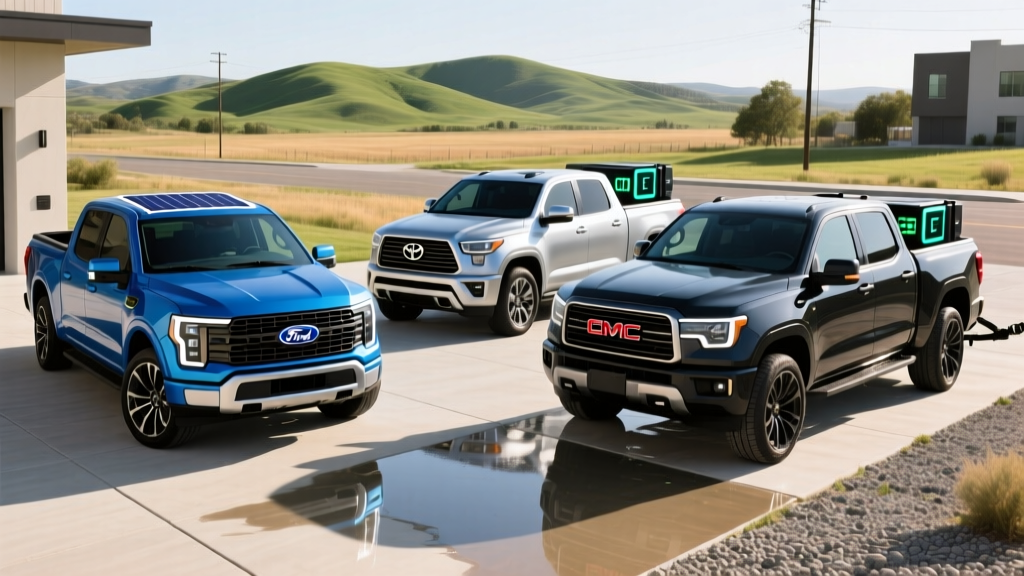
The pickup truck market is splitting into three camps: traditional gas V8s, full battery-electric trucks, and a middle ground that's gaining serious traction — plug in hybrid trucks. For buyers who need real towing capability and long highway range but want some electric-only driving for daily commutes, PHEV pickups offer a compelling compromise. But the landscape is shifting fast for the 2026 model year, with new entrants challenging established players.
This guide breaks down every plug in hybrid truck currently on sale or confirmed for 2026, with exact EPA numbers, battery specs, real-world efficiency observations, and a clear framework for deciding whether a PHEV truck, a conventional hybrid, or a full EV fits your life.
HEV vs PHEV Trucks: What's the Actual Difference?
Before comparing models, the distinction between hybrid types matters enormously for your wallet and daily routine.
Conventional Hybrid (HEV)
Example: Ford F-150 PowerBoost Hybrid
- No plug — charges itself via regenerative braking and the engine
- Small battery (~1.5 kWh usable)
- Cannot drive on electric power alone beyond very low speeds
- Better MPG than gas-only, but no electric-only range
Plug-In Hybrid (PHEV)
Example: Ram 1500 Ramcharger
- Plugs into a wall outlet or charger to fill a larger battery (10–40+ kWh)
- Can drive 20–140+ miles on electricity alone before the engine starts
- Once the battery depletes, operates as a conventional hybrid
- Best of both worlds — but only if you actually plug it in regularly
The math is simple: if you can charge at home every night and your commute falls within the electric-only range, a PHEV truck runs mostly on electricity during the week while retaining full gas-engine range for weekend towing or road trips. If you can't charge regularly, you're paying extra for battery capacity you'll never use — and a conventional HEV makes more sense.
2026 Plug In Hybrid Trucks: Full Spec Comparison
Here's how the current and incoming PHEV pickups stack up on the numbers that matter.
| Spec | 2026 Ram 1500 Ramcharger | 2026 Ford F-150 PowerBoost (HEV)* | 2026 Chevrolet Silverado 1500 PHEV (Announced) |
|---|---|---|---|
| Powertrain Type | Series PHEV (EREV) | Parallel HEV (not plug-in) | Parallel PHEV (preliminary) |
| Combined Horsepower | 663 hp / 615 lb-ft | 430 hp / 570 lb-ft | TBA (est. 500+ hp) |
| Engine | 3.6L V6 (generator only) | 3.5L Twin-Turbo V6 | TBA |
| Battery Capacity | 92 kWh (usable ~80 kWh) | 1.5 kWh | Est. 20–25 kWh |
| Electric-Only Range | ~145 miles (EPA est.) | N/A (HEV) | Est. 35–45 miles |
| Total Combined Range | ~690 miles | ~700 miles | TBA |
| EPA MPG (Combined, gas) | TBA (charge-sustaining) | 24 city / 24 hwy / 24 combined | TBA |
| MPGe (electric mode) | ~70 MPGe (est.) | N/A | TBA |
| Max Tow Capacity | 14,000 lbs | 12,700 lbs | TBA |
| 0–60 mph | 4.4 sec | 5.4 sec | TBA |
| DC Fast Charge | Yes, ~150 kW peak | No (HEV) | TBA |
| Level 2 Charge Time | ~10 hrs at 7.2 kW | N/A | TBA |
| Starting MSRP | ~$62,995 | ~$58,960 (HEV trim) | TBA (est. $55,000–$65,000) |
*The Ford F-150 PowerBoost is included as a conventional HEV baseline. It does not plug in and has no electric-only range. Ford has not announced a plug-in F-150 for 2026.
Ram 1500 Ramcharger: The Range-Extender Disruptor
The 2026 Ram 1500 Ramcharger isn't a PHEV in the traditional sense — it's an extended-range electric vehicle (EREV). The 3.6-liter V6 under the hood never drives the wheels. Instead, it acts as a generator, charging the 92 kWh battery pack when it runs low. The electric motors handle 100% of propulsion.
This architecture delivers a unique combination: 145 miles of EPA-estimated electric range for daily driving, plus a gas generator that extends total range to roughly 690 miles. For a truck buyer, that means most weekday commutes happen silently on electricity, while weekend trips to the job site or the campground don't require route-planning around chargers.
Real-World Range Reality
EPA estimate: ~145 miles electric / ~690 miles combined
Expect in practice: Highway driving at 70+ mph will reduce electric range to roughly 110–125 miles. Cold weather (below 30°F) can cut EV range by 20–30%, bringing it to ~100 miles. The gas generator range is more stable but fuel economy in charge-sustaining mode drops significantly when towing — expect 10–13 MPG combined with a heavy trailer, versus the sticker rating when driving unloaded.
The Ramcharger's 150 kW DC fast-charging capability is genuinely useful for a PHEV/EREV — most plug-in hybrids max out at 7–10 kW on Level 2 and skip DC fast charging entirely. A 10–80% charge takes roughly 35–40 minutes at a compatible station, which is practical for road-trip top-ups.
Towing capacity hits 14,000 pounds, which is competitive with the best half-ton trucks on the market. The 663 combined horsepower and 615 lb-ft of torque also make it the quickest truck in this comparison at 4.4 seconds to 60 mph.
Ford F-150 PowerBoost: The Proven HEV Workhorse
Ford's 3.5-liter PowerBoost V6 hybrid has been the segment benchmark since its introduction. For 2026, it remains a conventional hybrid — no plug, no electric-only mode. The 1.5 kWh battery is charged entirely through regenerative braking and the engine.
The EPA rates the 2026 F-150 PowerBoost at 24 MPG combined (24 city / 24 highway) per fueleconomy.gov. In real-world driving, many owners report exceeding that city figure — hybrids shine in stop-and-go traffic where regenerative braking recaptures energy. Highway mileage tends to land right at or slightly below the EPA number, especially with a bed load or headwinds.
The PowerBoost's 430 hp and 570 lb-ft of torque, combined with a 12,700-pound max tow rating, make it a legitimate work truck. The available Pro Power Onboard system (up to 7.2 kW) turns the truck into a mobile generator — a feature tradespeople and campers value highly.
The trade-off: without a plug, you'll never drive on pure electricity. If your goal is reducing fuel consumption and you don't have home charging access, the PowerBoost is the right call. If you want EV-mode commuting, you need a PHEV.
Chevrolet Silverado 1500 PHEV: What We Know So Far
GM announced a plug-in hybrid Silverado 1500 for the 2026 model year, positioning it as a competitor to the Ramcharger and a bridge for buyers not ready to commit to the Silverado EV. Final EPA numbers haven't been published as of this writing, but based on GM's Ultium-derived PHEV architecture, we expect:
- A 20–25 kWh battery pack delivering roughly 35–45 miles of electric-only range
- A turbocharged gas engine paired with front and rear electric motors
- Combined output above 500 hp
- Level 2 charging at ~7.7 kW (roughly 2.5–3 hours for a full charge)
- No DC fast charging (consistent with most PHEVs in this class)
This is a more traditional parallel PHEV layout than the Ramcharger's series EREV setup — the engine can drive the wheels directly, which tends to improve highway fuel economy in charge-sustaining mode. We'll update this section with official EPA data once GM publishes it.
Fuel Economy and Real-World MPG Breakdown
Hybrid truck efficiency depends heavily on how and where you drive. Here's what the data shows.
| Truck | EPA City | EPA Highway | EPA Combined | Real-World Observed |
|---|---|---|---|---|
| Ford F-150 PowerBoost (HEV) | 24 MPG | 24 MPG | 24 MPG | 22–26 MPG (varies by load/terrain) |
| Ram 1500 Ramcharger (gas mode) | TBA | TBA | TBA | 18–22 MPG (charge-sustaining, unloaded) |
| Ram 1500 Ramcharger (EV mode) | ~70 MPGe | ~65 MPGe | ~70 MPGe | ~2.0–2.5 kWh/mile |
| Chevy Silverado PHEV | TBA | TBA | TBA | Est. 22–25 MPG combined (gas) |
Key insight for truck buyers: Conventional hybrids like the F-150 PowerBoost often exceed their EPA city rating in real stop-and-go driving because regenerative braking is most effective at low speeds. Highway efficiency drops because aerodynamic drag dominates and there's less braking to recapture energy. PHEVs flip this dynamic — if you charge nightly and stay within electric range, your effective "MPG" during the week is essentially infinite (zero gasoline consumed). But once the battery depletes and you're running on the gas engine alone, PHEVs can actually underperform conventional hybrids because they're hauling extra battery weight.
Tax Credits, Pricing, and Total Cost
Federal tax incentives for plug in hybrid trucks are governed by the same IRS §30D Clean Vehicle Credit rules as full EVs, but PHEVs face additional scrutiny on battery sourcing and electric-range minimums.
§30D Credit Requirements for PHEV Trucks (2026)
- Minimum battery capacity: 7 kWh or greater (all trucks above qualify)
- MSRP cap: Trucks/vans/SUVs — $80,000 maximum MSRP
- Buyer income cap: $150,000 single / $225,000 head of household / $300,000 joint
- Battery sourcing: Critical minerals and battery components must meet phased-in percentages from US or FTA partners
- Point-of-sale transfer: You can apply the credit at purchase to reduce the sale price
- Maximum credit: Up to $7,500 ($3,750 for critical minerals + $3,750 for battery components)
The Ramcharger's ~$62,995 starting MSRP clears the $80,000 truck cap. Whether it earns the full $7,500, a partial $3,750, or zero depends on where its battery cells and critical minerals are sourced — this changes throughout the year as supply chains shift. Always verify current eligibility on fueleconomy.gov before purchasing.
The Ford F-150 PowerBoost, as a conventional HEV, does not qualify for the §30D federal tax credit. That credit applies only to plug-in vehicles (PHEVs and BEVs). Some state-level incentives exist for conventional hybrids, but they vary widely — check your state's energy office for current programs.
Battery Warranty, Reliability, and Replacement Costs
Truck buyers prioritize longevity, and hybrid battery anxiety is the number-one objection we hear. Here's what the data shows.
Hybrid & PHEV Battery Warranties (2026 Models)
- Ford F-150 PowerBoost: 8 years / 100,000 miles (hybrid battery & components)
- Ram 1500 Ramcharger: 8 years / 100,000 miles (battery pack, 70% capacity retention threshold)
- Chevy Silverado PHEV: Expected 8 years / 100,000 miles (GM standard for electrified powertrains)
Federal law mandates that hybrid and EV battery warranties cover a minimum of 8 years / 100,000 miles in CARB states (California and states adopting CARB standards), and most manufacturers apply this nationally.
Replacement cost reality: If a hybrid battery fails out of warranty, replacement costs vary significantly by architecture. The F-150 PowerBoost's small 1.5 kWh HEV battery is relatively affordable — typically $2,000–$4,000 installed. The Ramcharger's 92 kWh pack is a much larger and more expensive component; out-of-warranty replacement could exceed $15,000–$20,000, though the modular design may allow partial pack repairs.
Long-term reliability data for the Ramcharger is limited since it's a new nameplate. The F-150 PowerBoost, now in its fifth model year, has accumulated a solid track record — the hybrid system has proven no more failure-prone than the conventional 3.5L EcoBoost, and the small battery rarely requires replacement. Consumer Reports and J.D. Power both rate the PowerBoost's powertrain reliability as average to above-average for the full-size truck segment.
Which Truck Should You Choose?
Choose the Ram 1500 Ramcharger if:
- You can charge at home nightly (Level 2 strongly recommended for the 92 kWh pack)
- Your daily driving is under 120 miles round-trip
- You want EV-mode commuting but also tow heavy loads on weekends
- You value performance (663 hp, 4.4-sec 0–60) alongside efficiency
- You're willing to pay a premium for the EREV architecture
Choose the Ford F-150 PowerBoost (HEV) if:
- You don't have reliable home or workplace charging access
- You want better MPG than a gas truck without changing your habits
- You value Pro Power Onboard for job-site or camping use
- You want a proven powertrain with established long-term reliability data
- Lower purchase price matters more than electric-only driving
Wait for the Chevy Silverado PHEV if:
- You prefer a traditional parallel PHEV with the engine driving wheels directly
- You want a moderate electric range (35–45 mi) with simpler charging needs
- You're a GM loyalist or prefer the Silverado's platform and dealer network
- You want competitive pricing below the Ramcharger's MSRP
Frequently Asked Questions
How many MPG do plug in hybrid trucks get?
It depends on the mode and the model. The Ford F-150 PowerBoost (conventional HEV) is EPA-rated at 24 MPG combined. The Ram 1500 Ramcharger operates on electricity for its first ~145 miles (rated ~70 MPGe), then switches to gas-generator mode with estimated fuel economy of 18–22 MPG combined when unloaded. The Chevy Silverado PHEV's final EPA numbers are pending.
How far can a PHEV truck go on electric power only?
The 2026 Ram 1500 Ramcharger leads the segment at approximately 145 miles of EPA-estimated electric range, thanks to its massive 92 kWh battery. The upcoming Chevy Silverado PHEV is expected to deliver 35–45 miles on electricity. Real-world EV range drops 15–30% in cold weather or at sustained highway speeds above 70 mph.
Do plug in hybrid trucks qualify for the federal tax credit?
Yes — if they meet all §30D requirements. The PHEV truck must have a battery capacity of at least 7 kWh, an MSRP under $80,000 (for trucks), and meet battery-sourcing and buyer-income thresholds. The Ramcharger qualifies on MSRP and battery size, but the exact credit amount ($0, $3,750, or $7,500) depends on current critical-mineral and battery-component sourcing rules. Always check fueleconomy.gov for up-to-date eligibility. Conventional hybrids like the F-150 PowerBoost do not qualify for §30D.
Are hybrid truck batteries reliable and expensive to replace?
Hybrid and PHEV batteries are covered by 8-year/100,000-mile warranties, and failure rates within that period are low. The Ford PowerBoost's small 1.5 kWh battery has proven reliable over five model years, with replacement costs of $2,000–$4,000 if needed out of warranty. Larger PHEV/EREV batteries like the Ramcharger's 92 kWh pack carry higher replacement risk ($15,000–$20,000+), but modular designs may allow cheaper partial repairs. Most hybrid batteries outlast the vehicle itself.
Do I need to plug in a hybrid truck?
Only if it's a plug-in hybrid (PHEV) or EREV. Conventional hybrids like the Ford F-150 PowerBoost charge their own small battery through regenerative braking — you never plug them in. PHEVs like the Ramcharger can run without plugging in (the gas engine/generator handles everything), but you lose the efficiency and cost benefit of electric-only driving. If you won't plug in regularly, buy a conventional HEV instead.
Can a PHEV truck tow as well as a gas truck?
Yes. The Ram 1500 Ramcharger is rated for 14,000 pounds of towing, which matches or exceeds many gas-only half-ton configurations. The F-150 PowerBoost tows up to 12,700 pounds. Note that towing significantly reduces electric range (to near zero with heavy loads) and drops gas-mode fuel economy to the 10–13 MPG range. Electric motors provide excellent low-end torque for trailer launches.
PHEV Truck Advantages
- Electric-only commuting with zero gas on short trips
- No range anxiety — gas engine/generator provides 500+ total miles
- Strong towing capacity matching gas trucks
- Potential $3,750–$7,500 federal tax credit
- Instant electric torque for hauling and launches
PHEV Truck Trade-Offs
- Higher purchase price than gas or HEV equivalents
- Requires home Level 2 charging for practical daily use
- Heavy battery adds weight, reducing payload slightly
- Complex powertrain — two systems to maintain long-term
- Gas-mode MPG can underperform a conventional HEV due to battery weight