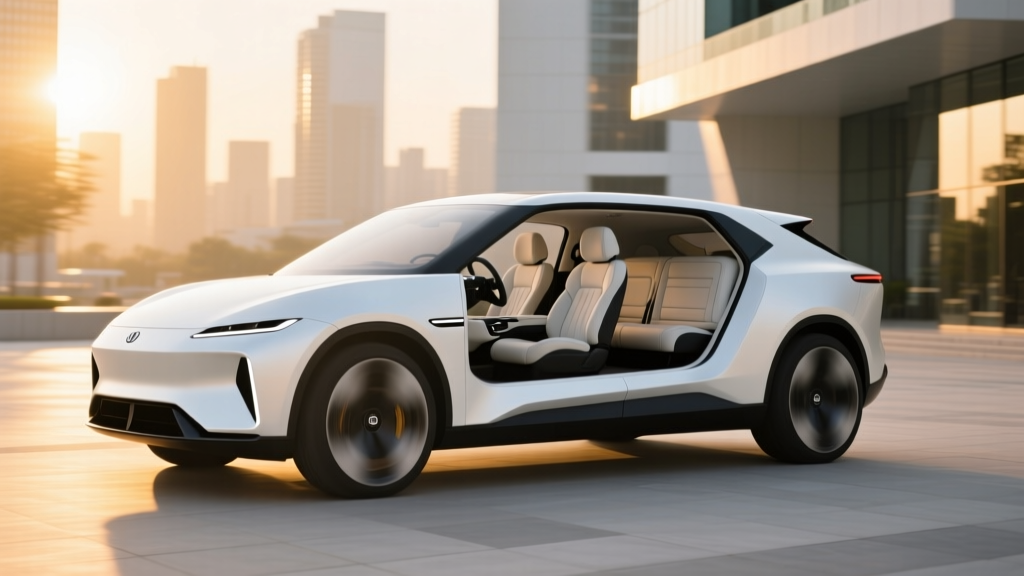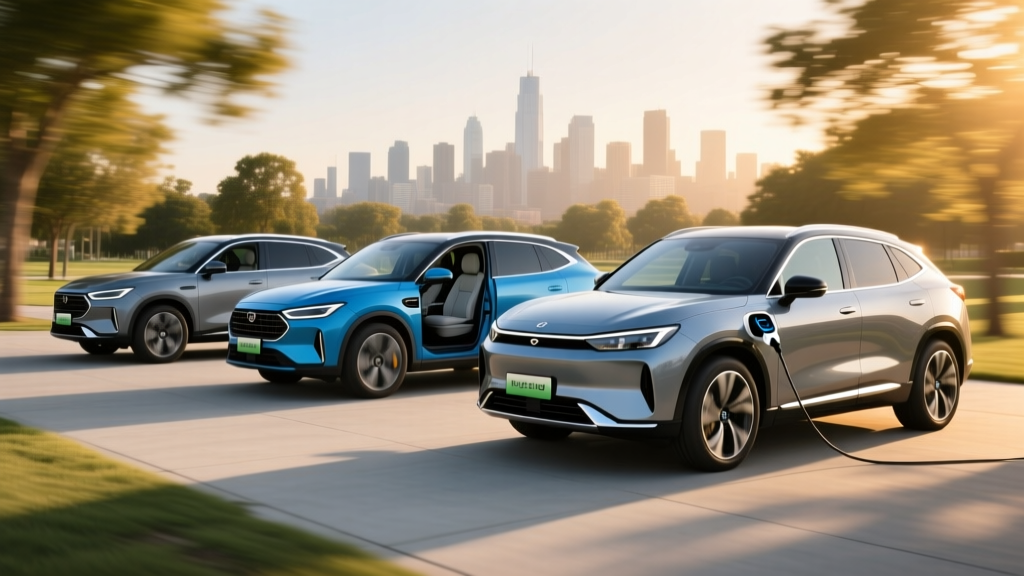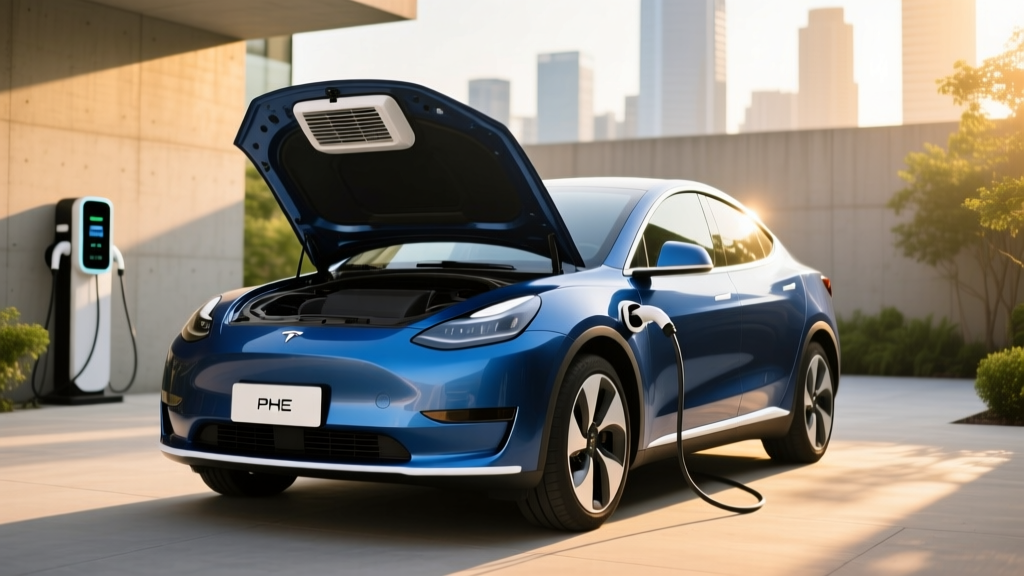
If you've searched for a plug in car air conditioning unit, you're likely looking for a way to cool (or heat) your vehicle while it's parked or before you get in — without idling a gas engine or draining your battery. In the electrified-vehicle world, that capability already exists. It's called preconditioning, and plug-in hybrids (PHEVs) with high-voltage traction batteries can run their climate systems directly from grid power while plugged in, acting as a built-in plug-in car air conditioning unit that requires no aftermarket hardware.
This guide explains exactly how PHEV preconditioning works, which 2026 models do it best, and how the economics and mechanics compare to standalone 12V or 120V aftermarket cooling solutions. We'll also cover the core PHEV specs buyers care about: electric-only range, MPG, battery warranty, and federal tax credit eligibility.
What a "Plug-In Car Air Conditioning Unit" Actually Means for PHEVs
The phrase "plug-in car air conditioning unit" typically refers to one of two things:
- Factory-installed electric climate control that runs off a PHEV or EV's high-voltage battery while the vehicle is plugged into a Level 1 (120V) or Level 2 (240V) charger. This draws grid power to cool or heat the cabin without engaging the gas engine.
- Aftermarket 12V or 120V AC units designed for parked vehicles, camper shells, or off-grid use. These are separate from the car's climate system and require their own power source.
For PHEV owners, the factory system is almost always the superior option. A PHEV's high-voltage battery (typically 12–25 kWh usable in 2026 models) powers an electric compressor that can cool the cabin for hours — or precondition it to your target temperature in minutes — while the vehicle remains plugged in. The energy cost is minimal: preconditioning a cabin from 95°F to 72°F typically consumes 1–3 kWh, or roughly $0.15–$0.45 at the U.S. average residential rate of ~$0.16/kWh.
HEV vs. PHEV: Which Can Act as a Plug-In Air Conditioner?
Not all hybrids can cool your cabin while parked and plugged in. Here's the critical distinction:
| Feature | Conventional Hybrid (HEV) | Plug-In Hybrid (PHEV) |
|---|---|---|
| Plugs into wall/charger? | No | Yes |
| Battery size (usable) | 1–2 kWh | 12–25 kWh (2026 models) |
| Electric-only range | 0–2 mi at low speed | 25–50+ mi |
| Preconditioning while plugged in | No — no plug, limited battery | Yes — full HVAC from grid |
| Parked AC without engine | Limited (battery too small) | Yes (30 min–hours depending on SoC) |
| Federal tax credit (§30D) | No | Up to $7,500 (eligibility varies) |
The takeaway: if you want your vehicle to function as a plug-in car air conditioning unit — cooling the cabin while parked at home, at work, or at a campsite — you need a PHEV or a full BEV. Conventional hybrids like the standard Toyota Prius HEV cannot do this because they have no plug and their small battery cannot sustain the AC compressor for more than a few minutes without the gas engine kicking in.
Top 2026 PHEVs With Strong Preconditioning and Climate Features
Below is a spec comparison of popular 2026 PHEV models that support plug-in preconditioning — meaning their electric HVAC system runs off the high-voltage battery while connected to a charger.
| Model | Battery (kWh usable) | EV Range (EPA mi) | Combined MPG (gas) | Combined HP | DC Fast Charge? | Base MSRP |
|---|---|---|---|---|---|---|
| Toyota RAV4 Prime | 14.9 | 42 | 38 | 302 | No | $44,500 |
| Chrysler Pacifica PHEV | 16.0 | 32 | 30 | 260 | No | $51,095 |
| Hyundai Tucson PHEV | 13.8 | 33 | 35 | 261 | No | $39,500 |
| Jeep Wrangler 4xe | 17.3 | 22 | 20 | 375 | No | $51,795 |
| BMW X5 xDrive50e | 25.7 | 38 | 27 | 483 | Yes (7.4 kW DC) | $74,500 |
Sources: fueleconomy.gov, manufacturer 2026 spec sheets. MPG is combined gas-only after battery depletion. EV range is EPA-rated electric-only.
How Preconditioning Works in These PHEVs
Each of these models supports scheduled or app-triggered preconditioning. When plugged into a Level 1 (120V, ~1.4 kW) or Level 2 (240V, 3.3–7.2 kW) charger, you can:
- Schedule a departure time via the infotainment system or companion app (Toyota app, Uconnect, Hyundai Bluelink, etc.).
- Trigger climate remotely from your phone — the electric compressor cools or heats the cabin using grid power, preserving your battery's state of charge (SoC) for driving.
- Set a target temperature (typically 62–84°F) and let the system manage compressor speed.
On a Level 2 connection, preconditioning draws ~2–4 kW for the compressor plus fan and electronics. A 15-minute cool-down session uses roughly 0.5–1.0 kWh — negligible against a 14–25 kWh battery, and essentially free if your electricity rate is low or you have solar.
Real-World MPG and EV Range: What to Actually Expect
EPA estimates are a starting point, not a guarantee. Here's what PHEV owners typically report in real-world driving:
| Model | EPA Combined MPG | Real-World City MPG | Real-World Hwy MPG | Real-World EV Range |
|---|---|---|---|---|
| Toyota RAV4 Prime | 38 | 40–44 | 34–37 | 35–40 mi |
| Chrysler Pacifica PHEV | 30 | 31–34 | 26–29 | 27–31 mi |
| Hyundai Tucson PHEV | 35 | 36–40 | 30–33 | 28–32 mi |
| Jeep Wrangler 4xe | 20 | 21–23 | 17–19 | 18–21 mi |
| BMW X5 xDrive50e | 27 | 28–31 | 23–26 | 32–37 mi |
Key observations:
- City MPG often exceeds EPA in hybrids and PHEVs because regenerative braking recovers energy in stop-and-go traffic. The RAV4 Prime routinely returns 40+ MPG in urban driving.
- Highway MPG drops because regen opportunities decrease and aerodynamic drag increases. Expect 10–15% below EPA combined on sustained 70+ mph freeway runs.
- EV range shrinks in cold weather. At 30°F, expect 20–30% less electric-only range due to cabin heating demands and reduced battery efficiency. At 10°F, EV range can drop by 35–40%.
- EV range shrinks at highway speeds. Electric-only range is rated at mixed driving; sustained 75 mph can cut it by 15–25%.
Battery Warranty, Lifespan, and Replacement Costs
Federal mandate: All PHEV batteries sold in the U.S. carry a minimum warranty of 8 years / 100,000 miles. In California Air Resources Board (CARB) states, that extends to 10 years / 150,000 miles.
The warranty typically covers battery capacity dropping below 60–70% of original capacity, though terms vary by manufacturer. Check your specific warranty booklet.
How Long Do PHEV Batteries Actually Last?
PHEV batteries use NMC (nickel manganese cobalt) or NCA (nickel cobalt aluminum) lithium-ion chemistry. Because PHEVs have relatively small batteries that cycle frequently, thermal management is critical. Most 2026 PHEVs use liquid cooling to keep cells in the optimal 20–40°C range.
Real-world data from Toyota's hybrid lineup (the Prius has been on the road since 2001 in the U.S.) shows that well-managed hybrid batteries routinely last 150,000–200,000+ miles before significant degradation. PHEV batteries, which undergo deeper cycles, may degrade somewhat faster, but modern thermal management has narrowed this gap considerably.
Replacement Cost
If your PHEV battery does need replacement out of warranty, expect:
- Toyota RAV4 Prime: ~$5,000–$7,000 (battery pack + labor)
- Chrysler Pacifica PHEV: ~$6,500–$8,500
- Hyundai Tucson PHEV: ~$5,500–$7,500
- Jeep Wrangler 4xe: ~$7,000–$9,000
- BMW X5 xDrive50e: ~$10,000–$14,000
These are ballpark figures based on current dealer and independent-shop pricing. Refurbished or remanufactured packs can reduce cost by 30–40%. Battery prices continue to decline, so out-of-warranty replacement in 2030–2035 will likely be cheaper than today's estimates.
Federal Tax Credit Eligibility for PHEVs in 2026
Under IRS §30D, qualifying new PHEVs can receive up to $7,500 in federal tax credits. However, eligibility depends on multiple factors that change frequently:
- Battery capacity: Must be ≥7 kWh (all PHEVs listed above qualify).
- MSRP caps: Vans/SUVs/pickups ≤$80,000; sedans ≤$55,000.
- Buyer income caps: AGI ≤$150K (single), $225K (head of household), $300K (joint).
- Critical minerals & battery sourcing: Increasing percentages must be sourced from the U.S. or FTA partners — this disqualifies some models depending on the supply chain year.
- Point-of-sale transfer: As of 2024, buyers can transfer the credit to the dealer for an immediate price reduction rather than waiting to claim it on their tax return.
As of the 2026 model year, the Toyota RAV4 Prime, Hyundai Tucson PHEV, and Chrysler Pacifica PHEV have historically qualified for partial or full credits, but sourcing requirements tighten annually. Always verify current eligibility on fueleconomy.gov or with your tax professional before purchasing.
Pros of Using a PHEV as Your Plug-In AC
- No aftermarket hardware needed — factory HVAC runs off the high-voltage battery
- Preconditioning preserves EV range for your commute
- Silent operation — no engine idling, no fumes in a garage
- Heating and cooling both work (heat pump or resistive + electric compressor)
- App-based scheduling and remote trigger from anywhere
- Energy cost: ~$0.15–$0.45 per preconditioning session
Limitations to Know
- Requires access to a plug (Level 1 or Level 2) for sustained use
- Running AC while parked unplugged drains the traction battery (reduces EV range)
- Preconditioning speeds vary — some models take 10–20 min to reach target temp in extreme heat
- Not all PHEVs support remote climate trigger; some require scheduling only
- Aftermarket 120V units offer more cooling power for large spaces (e.g., camper conversions)
Hybrid vs. PHEV vs. Full EV: Which Fits Your Needs?
Choose a conventional hybrid (HEV) if: You have no access to home or workplace charging, you want maximum simplicity, and you prioritize fuel savings without any plug-in routine. You will not get plug-in preconditioning.
Choose a PHEV if: You have home charging (even a standard 120V outlet works), your daily commute is under 30–40 miles, you want electric-only driving for most trips, and you want the flexibility of a gas engine for road trips. PHEVs give you the plug-in car air conditioning capability without range anxiety.
Choose a full BEV if: You have reliable Level 2 home charging, your daily driving is under 250 miles, you want zero tailpipe emissions, and you want the lowest per-mile energy cost. BEVs precondition even more effectively than PHEVs because their larger batteries (60–100+ kWh) can sustain climate systems for hours without meaningful range impact.
The Charging Setup You Need
For PHEV preconditioning, a standard 120V outlet (Level 1) is sufficient. PHEV batteries are small enough that Level 1 charging fully replenishes them overnight (typically 8–14 hours for a full charge from empty). The climate system draws ~2–4 kW during preconditioning, which a 120V circuit can partially offset while the battery also charges.
A Level 2 (240V) home charger isn't strictly necessary for a PHEV, but it cuts charge time to 2–4 hours and provides ample headroom for simultaneous preconditioning and battery charging. Installation costs range from $500–$2,000 depending on panel capacity and run length.
Frequently Asked Questions
How many MPG does a PHEV get?
It depends on whether you're driving on battery or gas. In electric-only mode, PHEVs achieve 75–100 MPGe. After the battery depletes, they operate as conventional hybrids, returning 20–44 MPG combined depending on the model. The Toyota RAV4 Prime leads at 38 MPG combined (gas) and 94 MPGe (electric). Real-world city MPG often exceeds EPA estimates due to regenerative braking.
How far can a PHEV go on electric only?
2026 PHEVs offer 22–50 miles of EPA-rated electric-only range. The BMW X5 xDrive50e achieves 38 miles thanks to its 25.7 kWh battery; the Toyota RAV4 Prime manages 42 miles from 14.9 kWh due to excellent efficiency. Real-world EV range drops 20–30% in cold weather and 15–25% at sustained highway speeds.
Can I run the AC while parked without plugging in?
Yes, but it drains the high-voltage battery. A PHEV with 30 miles of EV range and a 15 kWh battery can run the AC compressor (~2 kW draw) for roughly 4–6 hours before the battery is too depleted for driving. If you're plugged in, the grid supplies the energy and your battery remains charged.
Is a PHEV battery reliable and what does replacement cost?
PHEV batteries are reliable, with most lasting 150,000+ miles based on decades of Toyota hybrid data and modern thermal management. Federal law mandates an 8-year/100,000-mile warranty (10 years/150,000 miles in CARB states). Out-of-warranty replacement ranges from ~$5,000 (Toyota) to ~$14,000 (BMW), with refurbished options available at lower cost.
Does a PHEV qualify for the $7,500 federal tax credit?
Some do, but eligibility depends on MSRP caps ($80K for SUVs, $55K for sedans), buyer income limits ($150K–$300K AGI), and battery-sourcing requirements that tighten annually. Check fueleconomy.gov for the current list and consult a tax professional for your specific situation. The credit can be transferred to the dealer at point of sale for an immediate price reduction.
Do I need an aftermarket plug-in car air conditioning unit if I own a PHEV?
Almost certainly not. Your PHEV's factory climate system — powered by the high-voltage battery and optionally drawing from the grid while plugged in — provides effective cooling and heating without any additional hardware. Aftermarket 12V or 120V units are only worth considering for specialized applications like camper conversions, work trucks, or vehicles without high-voltage batteries.
How much does preconditioning cost in electricity?
At the U.S. average residential rate of ~$0.16/kWh, a 15-minute preconditioning session consuming ~0.75 kWh costs roughly $0.12. Even a 30-minute session in extreme heat (~1.5 kWh) costs under $0.25. Compare that to idling a gas engine, which burns ~0.2–0.4 gallons per hour ($0.60–$1.40 at $3.50/gallon) and produces exhaust fumes.
This article reflects 2026 model-year specifications and current IRS §30D tax credit rules. Always verify pricing, eligibility, and specifications with the manufacturer and irs.gov before purchasing.