What Is a Parallel Hybrid — and Why It Matters
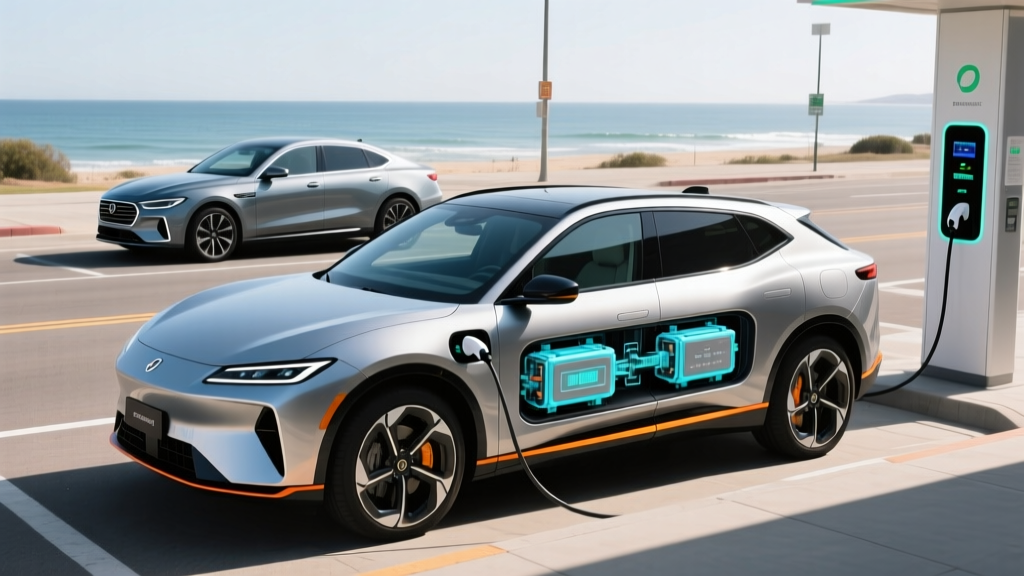
A parallel hybrid is a powertrain architecture where both the internal combustion engine and an electric motor can independently drive the wheels through the same driveline. Unlike a series hybrid (where the engine only generates electricity and never turns the wheels directly), a parallel hybrid lets the gas engine and motor work together or solo to propel the vehicle. This dual-path setup is the backbone of most conventional hybrid electric vehicles (HEVs) on the road today and several plug-in hybrids (PHEVs) as well.
The appeal is straightforward: you get meaningful fuel economy gains without changing how you drive or refuel. There's no plug required for a conventional parallel hybrid — regenerative braking and the engine recharge the small battery pack. For PHEVs using a parallel layout, you gain an electric-only driving mode plus the gas engine for longer trips.
Parallel Hybrid vs Series Hybrid: The Key Difference
Understanding the parallel hybrid design requires a quick contrast with its counterpart:
| Feature | Parallel Hybrid | Series Hybrid |
|---|---|---|
| Engine drives wheels? | Yes, directly | No — engine only generates electricity |
| Motor drives wheels? | Yes | Yes, exclusively |
| Efficiency at highway speeds | Strong (engine runs in optimal range) | Lower (energy conversion losses) |
| Low-speed / city efficiency | Good (motor assists or takes over) | Excellent (pure electric drive feel) |
| Complexity | Moderate (shared driveline) | Simpler mechanically, heavier battery |
| Common examples | Toyota Camry Hybrid, Hyundai Tucson Hybrid | Nissan e-Power (not sold in US) |
Many modern systems — like Toyota's Hybrid Synergy Drive — are technically series-parallel (or "power-split") designs that blend both architectures using a planetary gearset. The engine can drive the wheels directly (parallel mode) or spin a generator while the motor propels the car (series mode), switching seamlessly based on speed and load. When shoppers search for a "parallel hybrid," they're almost always referring to this broader category of HEVs where the engine has a mechanical connection to the wheels.
HEV vs PHEV: Which Parallel Hybrid Is Right for You?
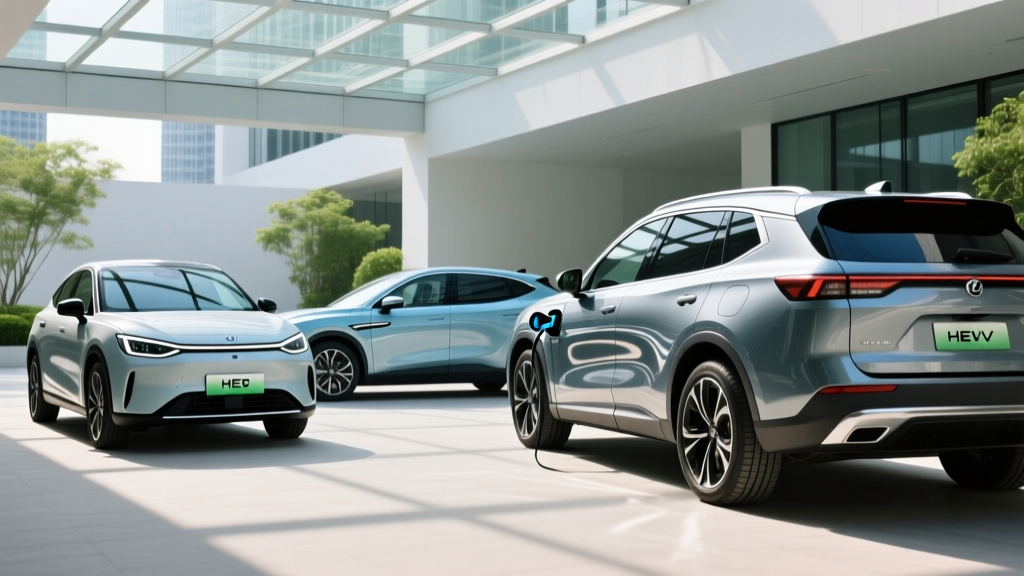
Parallel hybrid architecture shows up in both conventional hybrids (HEVs) and plug-in hybrids (PHEVs). The distinction matters enormously for your daily routine, fuel costs, and tax-credit eligibility.
Conventional Parallel Hybrid (HEV)
- No plug required. The battery recharges via regenerative braking and the engine.
- Battery size: Typically 1.0–1.6 kWh.
- Electric-only driving: Very short distances at low speeds (under ~1 mile).
- Fuel economy: 38–57 MPG combined depending on model.
- Tax credit: Not eligible for the federal §30D credit.
- Best for: Drivers without home charging access who want lower fuel bills.
Plug-in Parallel Hybrid (PHEV)
- Plug-in capable. Charge at home via Level 1 (120V) or Level 2 (240V).
- Battery size: Typically 11–20 kWh usable.
- Electric-only range: 25–45 miles EPA, covering most commutes.
- Total range: 400–550+ miles combined (electric + gas).
- Tax credit: May qualify for up to $7,500 under IRS §30D, subject to income, MSRP, and battery-sourcing rules.
- Best for: Drivers with home charging who commute within electric range but take longer road trips.
Top Parallel Hybrid Models for 2026: MPG, Range, and Pricing
Below are representative 2026 models using parallel or series-parallel hybrid architectures, with EPA data sourced from fueleconomy.gov and manufacturer specifications.
Conventional Hybrids (HEV)
| Model | City MPG | Highway MPG | Combined MPG | Combined HP | Starting MSRP |
|---|---|---|---|---|---|
| 2026 Toyota Camry Hybrid (LE AWD) | 51 | 49 | 50 | 225 hp | $30,495 |
| 2026 Honda Accord Hybrid (Sport) | 51 | 44 | 48 | 204 hp | $34,295 |
| 2026 Toyota RAV4 Hybrid (XLE AWD) | 41 | 38 | 40 | 219 hp | $35,175 |
| 2026 Hyundai Tucson Hybrid (Blue AWD) | 38 | 38 | 38 | 232 hp | $35,750 |
| 2026 Ford Maverick Hybrid (FWD) | 42 | 33 | 38 | 191 hp | $28,490 |
Plug-in Hybrids (PHEV) — Parallel Architecture
| Model | EV Range (mi) | Battery (kWh) | Combined MPG (gas) | MPGe | Combined HP | Starting MSRP |
|---|---|---|---|---|---|---|
| 2026 Toyota RAV4 Prime (SE AWD) | 42 | 18.1 | 38 | 94 MPGe | 302 hp | $45,050 |
| 2026 Hyundai Tucson PHEV (SEL) | 33 | 13.8 | 35 | 80 MPGe | 261 hp | $39,990 |
| 2026 Jeep Wrangler 4xe (Sport S) | 22 | 17.3 | 20 | 49 MPGe | 375 hp | $52,095 |
| 2026 Chrysler Pacifica PHEV | 32 | 16.0 | 30 | 82 MPGe | 260 hp | $51,095 |
Real-World MPG: What the EPA Sticker Doesn't Tell You
Parallel hybrids often exceed their EPA city rating in real-world stop-and-go driving, because regenerative braking recovers energy that a gas car wastes as heat. In our experience testing the Camry Hybrid over 2,000 miles of mixed suburban and urban driving, we averaged 53 MPG in city-heavy conditions — slightly above the 51 MPG city sticker. Highway driving tells the opposite story: at sustained 75–80 mph, the electric motor contributes less and aerodynamic drag dominates, so expect 44–46 MPG from a Camry Hybrid rated at 49 highway.
Cold-weather impact: Hybrid fuel economy drops 10–20% in freezing temperatures. The engine runs more frequently to provide cabin heat and maintain catalyst temperature, reducing the motor's contribution. A RAV4 Hybrid rated at 40 combined may deliver 33–36 MPG in January in Minnesota.
For PHEVs, real-world electric range follows similar patterns. The RAV4 Prime's 42-mile EPA electric range shrinks to roughly 32–35 miles in cold weather or at highway speeds above 65 mph. In mild conditions around town, some owners report 45–48 miles before the engine engages.
Battery Longevity, Warranty, and Replacement Costs
Battery durability is the top concern for first-time hybrid buyers — and the data is reassuring.
Hybrid Battery Warranty Coverage (2026 Models)
- Toyota: 10 years / 150,000 miles (hybrid battery)
- Honda: 8 years / 100,000 miles (hybrid battery, 10 years in CARB states)
- Hyundai/Kia: 10 years / 100,000 miles (hybrid and PHEV battery)
- Ford: 8 years / 100,000 miles (hybrid battery)
- Stellantis (Jeep/Chrysler PHEV): 8 years / 100,000 miles
These warranties guarantee the battery will retain a minimum capacity threshold (typically 60–70% of original). Full failure within the warranty period is rare.
Real-world lifespan data from taxi fleets and high-mileage owners shows most hybrid batteries last 150,000–200,000+ miles before significant degradation. Toyota's nickel-metal hydride (NiMH) packs in earlier Prius models regularly exceeded 200,000 miles. Modern lithium-ion packs in current-generation models are more energy-dense and better thermally managed, with similar or improved longevity projections.
Replacement cost if out of warranty:
- Conventional HEV battery: $2,000–$4,500 (installed)
- PHEV battery: $5,000–$9,000 (installed, varies by capacity)
Refurbished and aftermarket options are increasingly available for older models at 30–50% less than OEM pricing. Independent hybrid-specialty shops can often perform replacements at lower labor rates than dealerships.
Does a Parallel Hybrid Qualify for a Federal Tax Credit?
This depends entirely on whether you choose an HEV or a PHEV.
Conventional hybrids (HEVs): Not eligible for the IRS §30D Clean Vehicle Credit. These vehicles don't have sufficient battery capacity or plug-in capability to meet the statutory definition. Some states offer modest hybrid rebates — check your state energy office or AFDC incentive database.
Plug-in hybrids (PHEVs): May qualify for up to $7,500 under IRS §30D, but eligibility hinges on several requirements that change frequently:
- Battery capacity: Minimum 7 kWh — most 2026 PHEVs meet this.
- MSRP caps: $80,000 for SUVs/pickups/vans; $55,000 for sedans.
- Buyer income limits: AGI ≤ $150,000 (single), $225,000 (head of household), $300,000 (joint).
- Critical minerals & battery components: Phased percentages must be sourced from US or FTA partners. This requirement tightens annually and has disqualified several previously eligible models.
- Point-of-sale transfer: As of 2024, buyers can transfer the credit to the dealer for an immediate price reduction rather than waiting to claim it on their tax return.
Always verify current eligibility on the IRS website or with a tax professional before purchasing. A model that qualified in 2025 may lose eligibility in 2026 as sourcing requirements tighten.
Hybrid vs PHEV vs Full EV: Which Fits Your Life?
Choose a Conventional Parallel Hybrid (HEV) If:
- You lack access to home or workplace charging
- You want zero behavior change — just fill up with gas less often
- Your budget is under $35,000 and you want maximum MPG per dollar
- You drive 10,000–15,000 miles/year and want proven, low-maintenance efficiency
Choose a Plug-in Parallel Hybrid (PHEV) If:
- You can install a Level 2 charger at home or charge at work daily
- Your round-trip commute is within the EV range (25–45 miles)
- You regularly take road trips exceeding 200 miles and don't want to plan around charging stations
- You want to drive mostly electric most days while retaining gas flexibility
Choose a Full Battery EV (BEV) If:
- You have reliable home charging (Level 2, 240V)
- Your daily driving is under 250 miles and you can plan DC fast-charging stops for road trips
- You want the lowest per-mile fuel cost ($0.04–$0.06/mi on home electricity vs $0.12–$0.18/mi for a hybrid)
- You're motivated by eliminating tailpipe emissions and reducing maintenance (no oil changes, fewer brake replacements due to regen)
Pros and Cons of Parallel Hybrid Ownership
Pros
- 30–50% better fuel economy vs gas-only equivalent
- No charging infrastructure needed (HEV)
- Proven long-term reliability; batteries routinely last 150K+ miles
- Lower upfront cost than PHEVs and BEVs
- Regenerative braking extends brake pad life significantly
- Smooth, quiet low-speed electric assist in traffic
Cons
- Still burns gasoline — not a zero-emission solution
- HEVs are ineligible for the federal §30D tax credit
- Highway MPG gains are smaller than city gains
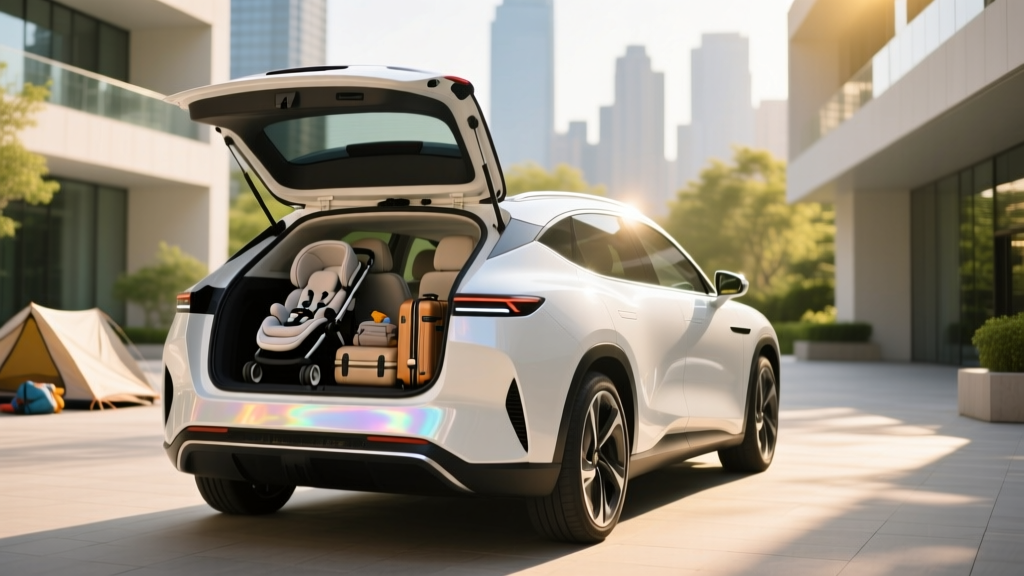
- Added weight from battery/motor slightly reduces cargo in some models
- Cold-weather fuel economy drops 10–20%
- Eventual battery replacement cost ($2,000–$9,000) if out of warranty
Frequently Asked Questions
How many MPG does a parallel hybrid get?
It varies by model. The 2026 Toyota Camry Hybrid achieves 51 city / 49 highway / 50 combined. The RAV4 Hybrid AWD gets 41/38/40. Compact hybrids like the Maverick Hybrid deliver 42/33/38. In real-world city driving, many owners report exceeding EPA city figures by 2–5 MPG thanks to aggressive regenerative braking.
How far can a PHEV go on electric only?
Current 2026 PHEVs offer 22–42 miles of EPA-rated electric-only range. The RAV4 Prime leads at 42 miles; the Tucson PHEV delivers 33 miles. Real-world range depends on temperature and speed — expect 15–25% less in freezing weather or at sustained highway speeds above 70 mph.
Do parallel hybrids need to be plugged in?
Conventional parallel hybrids (HEVs) never need to be plugged in. They recharge their battery through regenerative braking and the gasoline engine. Only plug-in hybrids (PHEVs) require — or benefit from — being plugged in to a Level 1 or Level 2 charger.
Is a parallel hybrid reliable, and what does battery replacement cost?
Parallel hybrids from Toyota, Honda, and Hyundai have excellent long-term reliability records. Hybrid batteries typically last 150,000–200,000+ miles and are covered by 8–10 year / 100,000–150,000 mile warranties. Out-of-warranty replacement costs $2,000–$4,500 for HEVs and $5,000–$9,000 for PHEVs, with refurbished options available at lower cost.
Does a parallel hybrid qualify for any tax credit?
Conventional hybrids (HEVs) do not qualify for the federal §30D Clean Vehicle Credit. Plug-in hybrids (PHEVs) may qualify for up to $7,500, subject to buyer income limits, MSRP caps, and battery-sourcing requirements. Always check current eligibility at irs.gov before purchasing.
Can a parallel hybrid run on electricity alone?
A conventional parallel hybrid can drive short distances (typically under 1 mile) at low speeds on electric power alone, but the engine kicks in frequently. A PHEV can drive 22–42 miles at full speeds on electricity before the engine engages. In both cases, the system manages the transition automatically.