If you have been shopping for a fuel-efficient vehicle without committing to a fully electric car, you have likely encountered the term "parallel hybrid cars" in spec sheets and reviews. Unlike series hybrids where the engine only generates electricity, parallel hybrid powertrains let both the gasoline engine and the electric motor drive the wheels simultaneously or independently. This architecture delivers real-world fuel savings without any change to your driving or fueling habits.
This guide breaks down exactly how parallel hybrid systems work, how they differ from plug-in hybrids (PHEVs) and full EVs, and which 2026 models offer the best combination of efficiency, reliability, and value.
What Is a Parallel Hybrid Car?
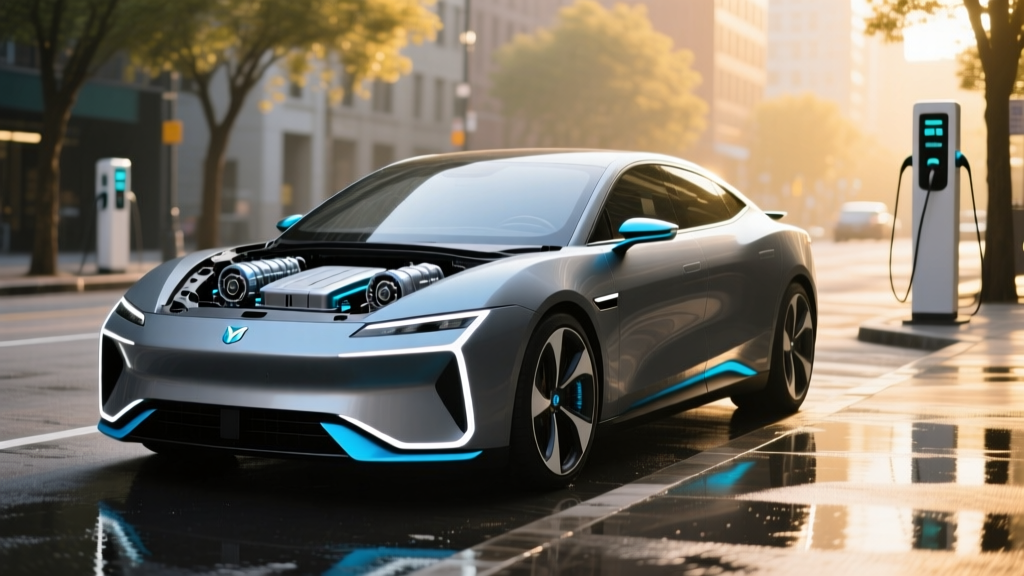
A parallel hybrid uses two power sources — a gasoline internal combustion engine (ICE) and an electric motor — that can both send torque directly to the driven wheels. The vehicle's power control unit decides when to use the engine alone, the motor alone, or both together, based on throttle input, speed, and battery state of charge.
Here is what makes the parallel layout distinct:
- Engine and motor share the drivetrain: Both connect to the transmission or axle, so either or both can propel the car.
- Regenerative braking recovers energy: During deceleration, the electric motor acts as a generator, converting kinetic energy back into battery charge.
- No plug required (for conventional HEVs): The small battery (typically 1–2 kWh) recharges through regenerative braking and engine-driven generation. You never need to plug in.
- Seamless stop-start: The engine shuts off at stops and restarts instantly via the electric motor, eliminating idle fuel burn.
Toyota's Hybrid Synergy Drive (used in the Prius, Camry, and RAV4 Hybrid), Honda's two-motor e:HEV system, and Hyundai/Kia's TMED (Transmission-Mounted Electric Device) are all examples of parallel or parallel-series hybrid architectures on sale in 2026.
HEV vs PHEV vs EV: Which Fits Your Driving Life?
Before evaluating specific models, it is essential to understand where a conventional parallel hybrid (HEV) sits relative to a plug-in hybrid (PHEV) and a battery electric vehicle (BEV). Each has different fueling requirements, range profiles, and incentive eligibility.
| Attribute | Parallel Hybrid (HEV) | Plug-In Hybrid (PHEV) | Battery Electric (BEV) |
|---|---|---|---|
| Plug-in charging required? | No | Yes (for EV-mode benefit) | Yes (only energy source) |
| Battery size | 1–2 kWh | 13–25 kWh | 50–100+ kWh |
| Electric-only range | <1 mi at low speed | 25–50 mi (EPA) | 200–400+ mi (EPA) |
| Gasoline engine | Yes (primary) | Yes (backup + highway) | None |
| Federal tax credit (§30D) | No | Up to $7,500 (varies) | Up to $7,500 (varies) |
| Home charging install | Not needed | Level 2 recommended | Level 2 essential |
| Best for | No home charging, high-mileage commuters | Home charging + short commutes + road trips | Home charging, daily driving <250 mi |
2026 Parallel Hybrid Cars: EPA MPG and Powertrain Specs
Below are the top-selling parallel hybrid models for the 2026 model year, with EPA fuel economy data sourced from fueleconomy.gov and manufacturer specifications.
| Model | Combined HP | EPA City | EPA Hwy | EPA Combined | Base MSRP |
|---|---|---|---|---|---|
| Toyota Prius (HEV) | 196 hp | 57 mpg | 56 mpg | 57 mpg | $29,445 |
| Toyota Camry Hybrid | 225 hp | 53 mpg | 50 mpg | 51 mpg | $30,290 |
| Honda Accord Hybrid | 204 hp | 51 mpg | 44 mpg | 48 mpg | $33,990 |
| Toyota RAV4 Hybrid | 219 hp | 41 mpg | 38 mpg | 40 mpg | $33,425 |
| Honda CR-V Hybrid | 204 hp | 43 mpg | 36 mpg | 40 mpg | $35,395 |
| Hyundai Tucson Hybrid | 232 hp | 38 mpg | 38 mpg | 38 mpg | $34,460 |
| Ford Maverick Hybrid | 191 hp | 42 mpg | 33 mpg | 37 mpg | $28,140 |
| Toyota Sienna (HEV) | 245 hp | 36 mpg | 36 mpg | 36 mpg | $39,085 |
Real-World MPG vs. EPA Stickers
One of the most pleasant surprises with parallel hybrid cars is that real-world city driving often exceeds the EPA city estimate. Because hybrids rely heavily on regenerative braking and electric-only motoring at low speeds, stop-and-go urban traffic actually maximizes their efficiency advantage over gasoline-only cars.
Based on owner-reported data and independent testing:
- City driving: Many owners of the Prius and Camry Hybrid report 1–4 mpg above the EPA city figure in warm-weather urban commuting.
- Highway driving: Expect 2–5 mpg below the EPA highway number at sustained 75–80 mph speeds. The engine runs continuously at highway pace, and the electric motor provides minimal assist.
- Cold weather: In sub-40°F conditions, hybrid fuel economy drops 8–15% because the engine runs longer to provide cabin heat and reach operating temperature. A Prius rated at 57 mpg combined may return 48–52 mpg in winter city driving.
- Short trips in cold: Trips under 3 miles in winter are the worst-case scenario — the engine may never fully warm up, dropping instantaneous economy into the low 30s.
PHEV Parallel Hybrids: Electric-Only Range and Charging
Several popular models use a parallel hybrid architecture but add a larger battery and charge port, making them plug-in hybrids. If you can charge at home and your commute is under 40 miles round-trip, a PHEV lets you drive on electricity most days while keeping a gas engine for longer trips.
| Model | Battery (kWh) | EPA EV Range | Total Range | Level 2 Charge (0–100%) | DC Fast Charge |
|---|---|---|---|---|---|
| Toyota RAV4 Prime | 18.1 kWh | 42 mi | ~580 mi | ~2.5 hr (6.6 kW) | No |
| Toyota Prius Prime | 13.6 kWh | 44 mi | ~490 mi | ~4 hr (3.3 kW) | No |
| Hyundai Tucson PHEV | 13.8 kWh | 33 mi | ~420 mi | ~2 hr (7.2 kW) | No |
| Chrysler Pacifica PHEV | 16.0 kWh | 32 mi | ~460 mi | ~2 hr (7.2 kW) | No |
| Ford Escape PHEV | 14.4 kWh | 37 mi | ~440 mi | ~3.5 hr (3.7 kW) | No |
Hybrid Battery Reliability, Warranty, and Replacement Costs
Battery longevity is the single most common concern among first-time hybrid buyers. The data is reassuring: modern nickel-metal hydride (NiMH) and lithium-ion (Li-ion) hybrid batteries are engineered for the life of the vehicle.
Real-world failure data from owner surveys and warranty claim records shows:
- Toyota Prius (3rd gen, 2010–2015): Battery failure rate under 5% at 150,000+ miles. Many originals still in service at 200,000+ miles.
- Toyota Camry Hybrid: Failure rates below 3% through 10 model years of data.
- Honda hybrid systems: The two-motor e:HEV system uses a smaller lithium-ion pack with comparable longevity. Honda's warranty matches the 8/100k federal minimum.
What Does Hybrid Battery Replacement Cost?
If your hybrid battery does fail outside warranty, here are the typical replacement costs in 2026:
- Toyota Prius: $2,500–$3,800 for a new OEM battery pack; $1,200–$2,000 for a refurbished unit.
- Toyota Camry Hybrid: $3,000–$4,500 OEM; refurbished options available from $1,500.
- Honda Accord Hybrid: $3,200–$4,800 OEM.
- RAV4 Hybrid: $3,500–$5,000 OEM.
- PHEV packs (RAV4 Prime, Prius Prime): $5,000–$8,000 OEM, reflecting the larger kWh capacity.
For context, a conventional gasoline car's transmission replacement often costs $3,000–$6,000, and hybrids eliminate the traditional starter motor and alternator (two common ICE failure points) by using the electric motor for both functions.
Tax Credits and Incentives for Hybrid Buyers
This is where the distinction between HEV and PHEV matters financially.
- Conventional hybrids (HEVs): Do not qualify for the federal §30D clean vehicle tax credit. The IRS limits this credit to plug-in vehicles with battery capacities of at least 7 kWh. No federal purchase incentive applies to a standard Prius, Camry Hybrid, or RAV4 Hybrid.
- Plug-in hybrids (PHEVs): May qualify for up to $7,500 under §30D, but eligibility depends on multiple factors that change frequently. As of 2026, the credit requires meeting battery component sourcing rules, critical mineral thresholds, buyer income caps ($150K single / $300K joint AGI), and vehicle MSRP caps ($55K sedans / $80K SUVs and trucks). Always verify current rules at IRS.gov before purchasing.
- State and utility incentives: Several states and local utilities offer rebates for PHEVs (and occasionally HEVs). California's CVRP program, Colorado's state credit, and various utility company rebates can add $1,000–$4,000 depending on your location. Check your state energy office for current programs.
- Point-of-sale transfer: Qualifying PHEV buyers can transfer the federal credit to the dealer at purchase, reducing the sale price directly rather than waiting for a tax refund.
Who Should Buy a Parallel Hybrid — and Who Shouldn't?
Choose a Parallel Hybrid (HEV) If:
- You cannot install a home charger (apartment, street parking, no garage)
- Your daily driving exceeds 60 miles and you don't want to plan charging stops
- You want maximum fuel savings with zero behavior change
- You regularly drive in stop-and-go city traffic where hybrids shine
- You want proven long-term reliability with low maintenance costs
- You tow occasionally (hybrids handle light towing without range anxiety)
Consider a PHEV or Full EV Instead If:
- You have home Level 2 charging and a commute under 40 miles (PHEV covers it on electricity)
- You want to minimize gasoline use and emissions as much as possible
- You qualify for the §30D credit and want to offset a higher purchase price
- You drive mostly in urban areas where EV-mode efficiency is maximized
- You want access to HOV lane stickers (available for PHEVs and BEVs in many states, not HEVs)
Frequently Asked Questions
How many MPG does a parallel hybrid car get?
The most efficient 2026 parallel hybrids return 48–57 mpg combined (EPA). The Toyota Prius leads at 57 mpg combined, while midsize sedans like the Camry Hybrid achieve 51 mpg combined and SUVs like the RAV4 Hybrid deliver 40 mpg combined. Real-world city driving often exceeds EPA estimates by 1–4 mpg, while sustained highway driving at 75+ mph may return 2–5 mpg below the sticker.
Do parallel hybrid cars need to be plugged in?
No. Conventional parallel hybrids (HEVs) recharge their small battery entirely through regenerative braking and engine-driven generation. You fuel them exactly like a gasoline car. Only plug-in hybrids (PHEVs) have a charge port and benefit from external charging.
How long do hybrid batteries last?
Most hybrid batteries last 150,000–200,000+ miles with less than 10% capacity degradation. Federal law mandates an 8-year/100,000-mile warranty (10 years/150,000 miles in CARB states). Toyota's track record shows failure rates below 5% even at high mileage. If replacement is needed outside warranty, expect $2,500–$5,000 for an HEV pack depending on the model.
Is a parallel hybrid more reliable than a gas car?
Data consistently shows that Toyota and Honda hybrids match or exceed the reliability of their gasoline counterparts. Hybrids eliminate the starter motor, alternator, and traditional accessory belt — all common ICE failure points. The continuously variable transmission (eCVT) used in most Toyota hybrids has fewer moving parts than a conventional automatic and shows very low failure rates.
Do parallel hybrid cars qualify for a federal tax credit?
Conventional hybrids (HEVs) do not qualify for the federal §30D clean vehicle tax credit — that credit is limited to plug-in vehicles. Plug-in hybrids (PHEVs) may qualify for up to $7,500 depending on battery sourcing requirements, buyer income, and vehicle MSRP caps. Check current eligibility on fueleconomy.gov and IRS.gov before purchasing.
What is the difference between a parallel hybrid and a series hybrid?
In a parallel hybrid, both the engine and electric motor can mechanically drive the wheels. In a series hybrid, only the electric motor drives the wheels — the gasoline engine acts solely as a generator to charge the battery. Most consumer hybrids sold today (Toyota, Honda, Hyundai) use parallel or parallel-series architectures because they offer better highway efficiency and more flexible power delivery.