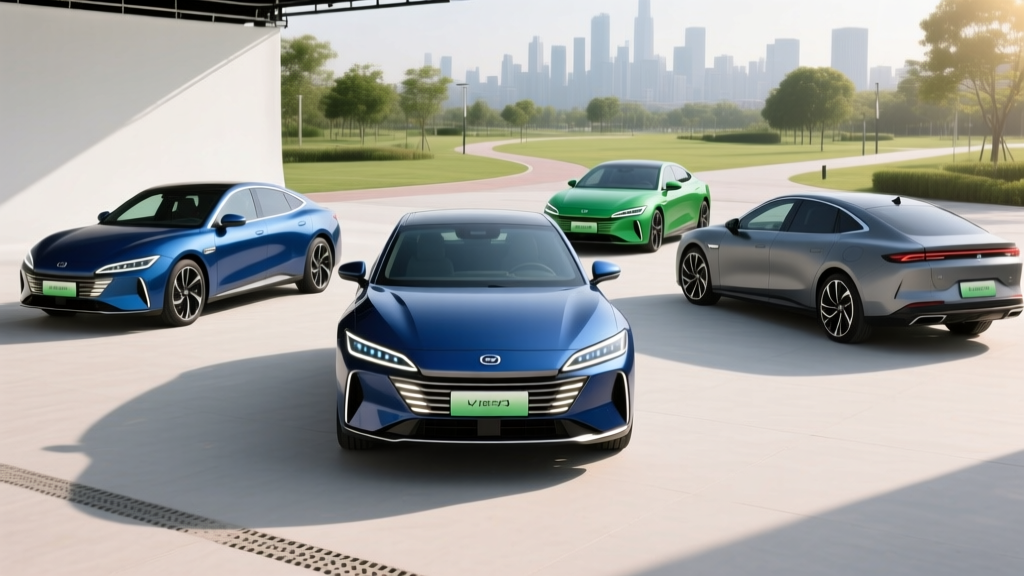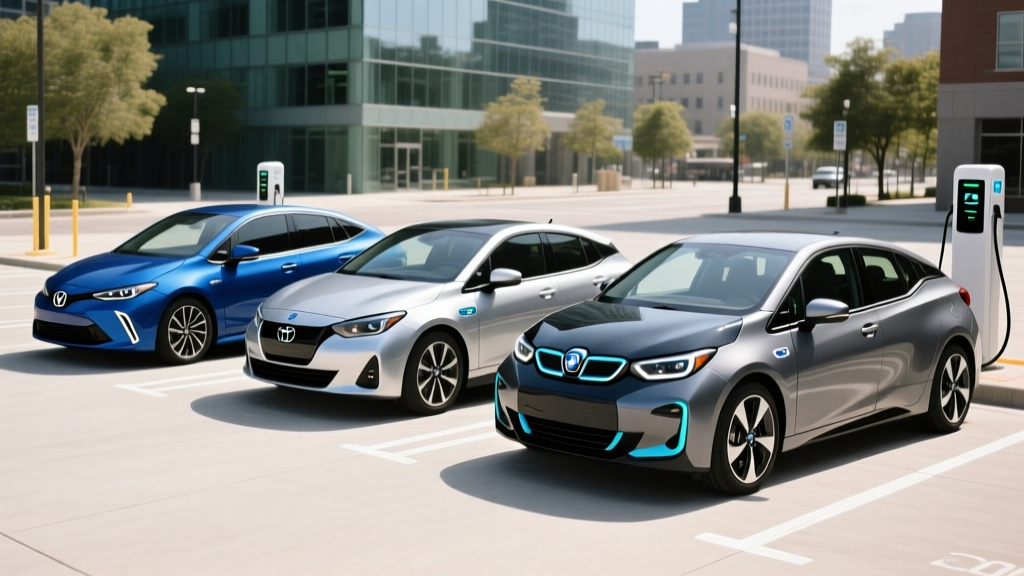
Compact footprints don't have to mean compromise fuel economy. Mini hybrid cars — subcompacts and compacts that pair small-displacement gasoline engines with electric motors — deliver 40+ MPG in real-world city driving, cost thousands less than midsize SUVs, and remain the most practical electrified option for apartment dwellers who lack home-charging access. For 2026, the segment has consolidated around a handful of proven nameplates, each taking a different approach: conventional hybrids (HEVs) that never need a plug, and plug-in hybrids (PHEVs) that offer 25–40 miles of electric-only commuting before the gas engine kicks in.
This guide breaks down the top mini hybrid cars by exact EPA figures, battery specs, powertrain outputs, pricing, and who each one is actually for — no marketing fluff, just the numbers you need to decide.
HEV vs PHEV: Which Mini Hybrid Architecture Fits You?
Conventional Hybrid (HEV)
- How it charges: Regenerative braking and the gasoline engine recharge a small battery (~1–2 kWh). No plug required.
- Electric-only driving: Minimal — typically under 1 mile at low speeds.
- Best for: Drivers without access to a plug at home or work, high-mileage commuters, rideshare drivers.
- Federal tax credit: Not eligible under IRS §30D (requires plug-in capability and minimum battery capacity).
Plug-In Hybrid (PHEV)
- How it charges: Plug into a standard 120V outlet (Level 1) or a 240V Level 2 charger. Larger battery (10–20 kWh).
- Electric-only driving: 25–40 miles EPA, enough for most daily commutes without burning gas.
- Best for: Drivers with home or workplace charging who want EV-like daily commuting plus gas-engine road-trip range.
- Federal tax credit: May qualify for up to $7,500 under §30D, subject to MSRP caps, buyer income limits, and battery-sourcing requirements. Point-of-sale transfer available.
The choice is simple: if you can plug in regularly, a PHEV gives you the best of both worlds. If you can't, an HEV still slashes fuel costs dramatically versus a gas-only car.
Top Mini Hybrid Cars Compared: Specs, MPG & Pricing
| Model (2026) | Type | EPA MPG (City/Hwy/Combined) | EV Range (PHEV) | Battery | Combined HP | Base MSRP |
|---|---|---|---|---|---|---|
| Toyota Prius | HEV | 57 / 56 / 57 | — | ~1.0 kWh (NiMH) | 196 hp | $29,445 |
| Toyota Prius Prime | PHEV | 52 / 48 / 50 (hybrid) + 127 MPGe | 44 mi | 13.6 kWh (Li-ion) | 220 hp | $34,095 |
| Hyundai Elantra Hybrid | HEV | 53 / 56 / 54 | — | ~1.6 kWh (Li-ion) | 139 hp | $29,250 |
| Honda Civic Hybrid | HEV | 50 / 47 / 49 | — | ~1.1 kWh (Li-ion) | 200 hp | $30,450 |
| Mini Countryman SE ALL4 (PHEV) | PHEV | 29 combined (hybrid) + 77 MPGe | ~30 mi (est.) | ~16.3 kWh (Li-ion) | 221 hp | $42,900 |
Sources: fueleconomy.gov, manufacturer press sites. Mini Countryman PHEV figures are estimated based on the latest available model-year data.
Fuel Economy Deep Dive: Real-World MPG vs EPA Stickers
| Model | EPA Combined | Real-World City (Observed) | Real-World Highway (Observed) | Notes |
|---|---|---|---|---|
| Toyota Prius (LE) | 57 MPG | 58–62 MPG | 49–53 MPG | City-heavy driving often exceeds EPA; highway drops due to aero at 75+ mph |
| Prius Prime (PHEV) | 50 MPG / 127 MPGe | 52–55 MPG (hybrid mode) | 45–48 MPG | 127 MPGe applies only during EV-mode driving |
| Hyundai Elantra Hybrid | 54 MPG | 55–58 MPG | 48–52 MPG | Strong regen in city traffic boosts observed MPG |
| Honda Civic Hybrid | 49 MPG | 50–54 MPG | 44–47 MPG | Performance-oriented tuning trades some efficiency for throttle response |
Hybrids routinely beat their EPA city numbers because stop-and-go traffic maximizes regenerative braking — every stop recaptures energy that a gas car wastes as heat. Highway driving is the opposite: sustained speeds above 70 mph reduce the hybrid advantage because the electric motor contributes less and aerodynamic drag dominates. If your commute is 80% city, expect to exceed the combined EPA figure. If you're mostly highway, plan for 5–8 MPG below the sticker.
PHEV Electric-Only Range and Total Range
For plug-in mini hybrids, electric-only range determines how much of your daily driving is gas-free:
- Toyota Prius Prime: 44 miles EPA electric-only. Total combined range (EV + gas): approximately 470 miles. Charges from 0–100% in about 4 hours on a 240V Level 2 outlet; roughly 11 hours on a standard 120V household outlet. No DC fast charging.
- Mini Countryman SE ALL4 (PHEV): Approximately 30 miles electric-only (estimated). Total range: ~350 miles. Level 2 charging takes roughly 3.5 hours. DC fast charging is available on select trims at up to ~7.4 kW AC (no CCS DC fast capability).
A critical ownership note: PHEV batteries are smaller than full EV batteries, so the charge curve is simpler — you won't see the steep taper above 80% SoC that full EVs experience. Most PHEVs charge at a steady rate to near-full. However, the trade-off is that no current mini PHEV supports DC fast charging at meaningful speeds (50+ kW). You're limited to Level 2 AC charging, which is perfectly adequate for overnight home charging but impractical for road-trip top-ups.
Powertrain and Performance Specs
Mini hybrid cars no longer feel underpowered. The 2026 generation has largely moved past the sluggish early-2010s hybrids:
- Toyota Prius: 2.0L 4-cylinder + electric motor, 196 combined hp. 0–60 mph in approximately 7.0 seconds (FWD). The AWD-e variant adds a rear electric motor for 196 hp and 7.2 seconds.
- Prius Prime: 2.0L 4-cylinder + larger electric motor, 220 combined hp. 0–60 in approximately 6.6 seconds. Noticeably quicker than the standard Prius thanks to the more powerful EV motor.
- Hyundai Elantra Hybrid: 1.6L 4-cylinder + electric motor, 139 combined hp. 0–60 in approximately 8.4 seconds. The trade-off for 54 MPG is leisurely acceleration — adequate for commuting but not enthusiastic.
- Honda Civic Hybrid: 2.0L 4-cylinder + dual-motor system, 200 combined hp. 0–60 in approximately 7.2 seconds. Honda's two-motor hybrid system prioritizes electric-motor-driven acceleration feel, making it the sportiest-driving entry in this group.
- Mini Countryman SE ALL4: 1.5L turbo 3-cylinder + electric motor, 221 combined hp. 0–60 in approximately 6.7 seconds. ALL4 all-wheel drive is standard.
Pricing, Tax Credits, and Total Cost of Ownership
Federal §30D Tax Credit — PHEV Eligibility Checklist (2026)
- Vehicle MSRP cap: Vans/SUVs/pickups ≤ $80,000; sedans/hatchbacks ≤ $55,000.
- Buyer income cap (MAGI): $150K single / $225K head of household / $300K joint.
- Battery sourcing: Critical minerals and battery components must meet escalating domestic/free-trade sourcing thresholds. Check IRS.gov for current-year eligible vehicle lists.
- Credit amount: Up to $7,500 ($3,750 for critical minerals + $3,750 for battery components).
- Point-of-sale transfer: Eligible buyers can transfer the credit to the dealer, reducing the purchase price at signing rather than waiting for a tax refund.
- HEVs (non-plug-in): Not eligible for §30D. Some state incentives may apply — check your state energy office.
Among the PHEVs listed, the Toyota Prius Prime (starting at $34,095, sedan/hatchback MSRP cap of $55,000) is the strongest candidate for the full $7,500 credit, though battery-sourcing compliance varies by production batch. If eligible, the effective price drops to roughly $26,595 — undercutting many gas-only compacts. Always verify your specific VIN on the IRS eligible-vehicle list before purchase.
The Mini Countryman PHEV at $42,900 falls under the SUV MSRP cap of $80,000, but its European battery sourcing may not meet the critical-minerals threshold, potentially reducing or eliminating the credit. Confirm current eligibility before committing.
Battery Warranty, Reliability, and Replacement Costs
Hybrid Battery Warranty Summary
| Model | Hybrid Battery Warranty | Estimated Replacement Cost |
|---|---|---|
| Toyota Prius / Prius Prime | 10 years / 150,000 miles | $2,500–$4,500 (aftermarket/reman) to ~$6,000 (OEM) |
| Hyundai Elantra Hybrid | 10 years / 100,000 miles | $2,000–$4,000 (aftermarket) to ~$5,500 (OEM) |
| Honda Civic Hybrid | 8 years / 100,000 miles (10/150K in CARB states) | $2,500–$4,000 (aftermarket) to ~$5,000 (OEM) |
| Mini Countryman PHEV | 8 years / 100,000 miles | $5,000–$8,000 (OEM, PHEV battery is larger) |
Hybrid battery failure before 150,000 miles is statistically rare. Toyota's NiMH packs in particular have demonstrated 200,000+ mile longevity in fleet data. PHEV batteries, being larger and lithium-ion, carry higher replacement costs but also benefit from more advanced thermal management.
Reliability data from long-term ownership surveys consistently ranks Toyota's hybrid system among the most dependable powertrains in the industry. Hyundai and Honda have strong but slightly shorter track records with their current-generation hybrid systems (introduced in the early 2020s). Mini/BMW's PHEV architecture is competent but carries higher maintenance costs consistent with European luxury brands — expect higher parts and labor costs out of warranty.
Mini Hybrid vs Full EV vs Gas Car: Which Should You Choose?
Decision Framework
- Choose a mini HEV (Prius, Elantra Hybrid, Civic Hybrid) if: You lack home charging, drive 12,000+ miles/year, want the lowest total cost of ownership without behavioral change, and don't want to think about plugging in. The Prius at 57 MPG combined costs roughly $900/year in fuel (at $3.20/gal, 12K miles) versus $1,800+ for a 25-MPG gas car.
- Choose a mini PHEV (Prius Prime, Countryman PHEV) if: You have reliable Level 1 or Level 2 charging at home or work, your daily commute is under 40 miles, and you want gas-free weekday driving plus unlimited road-trip range on weekends. The Prius Prime can run months without visiting a gas station for city commuters.
- Choose a full BEV (e.g., Chevy Equinox EV, Hyundai Kona Electric) if: You have home charging, your daily driving is under 250 miles, you want zero tailpipe emissions and minimal maintenance (no oil changes, no engine), and you can absorb the higher upfront cost offset by the $7,500 credit and lower per-mile energy cost (~$0.04–$0.06/mi on home electricity vs $0.12–$0.15/mi for a 50-MPG hybrid).
- Stick with a gas car if: You drive under 8,000 miles/year (the fuel savings may not justify a hybrid premium), you're buying used on a tight budget, or you live in an extreme-cold climate where hybrid battery efficiency drops significantly (though modern hybrids manage this well with thermal conditioning).
Pros and Cons: Mini Hybrid Cars at a Glance
Pros
- 40–57 MPG combined — 2–3× the efficiency of a typical gas compact
- No charging infrastructure needed (HEV); minimal charging needed (PHEV)
- Lower upfront cost than most full EVs ($29K–$34K range)
- Proven reliability with 10-year/100K+ mile battery warranties
- Excellent city MPG — hybrids actually beat EPA estimates in stop-and-go traffic
- Prius Prime eligible for up to $7,500 federal credit (if sourcing requirements met)
Cons
- HEVs not eligible for federal §30D tax credit
- PHEVs lack DC fast charging — road-trip EV mode requires planning
- Cargo space is reduced vs non-hybrid versions (battery packaging)
- Highway MPG drops to 45–53 — less advantage over gas cars at sustained speed
- Hybrid battery replacement ($2,500–$8,000) is an eventual out-of-warranty cost
- Limited AWD options (only Prius AWD-e and Countryman ALL4 in this segment)
Frequently Asked Questions
How many MPG do mini hybrid cars get?
The top performers deliver 49–57 MPG combined EPA. The 2026 Toyota Prius LE leads at 57 MPG combined (57 city / 56 highway). The Hyundai Elantra Hybrid achieves 54 MPG combined, and the Honda Civic Hybrid returns 49 MPG combined with a sportier driving feel. In real-world city driving, expect to exceed these numbers by 2–5 MPG thanks to regenerative braking.
How far can the Prius Prime go on electric only?
The 2026 Toyota Prius Prime achieves 44 miles of EPA-rated electric-only range on a full charge — enough to cover the average American's one-way commute (approximately 16 miles per FHWA data) with room to spare. Total combined range (electric + 11.4-gallon tank) is approximately 470 miles.
Do conventional hybrids need to be plugged in?
No. Conventional hybrids (HEVs) like the Toyota Prius, Hyundai Elantra Hybrid, and Honda Civic Hybrid charge their batteries entirely through regenerative braking and the gasoline engine. You simply fuel them like any other car. Only plug-in hybrids (PHEVs) like the Prius Prime benefit from being plugged in.
Is the hybrid battery reliable, and what does replacement cost?
Hybrid batteries are among the most durable components in modern vehicles. Toyota's hybrid battery packs routinely last 200,000+ miles in fleet data. All major manufacturers warranty hybrid batteries for 8–10 years and 100,000–150,000 miles. If replacement is eventually needed, aftermarket and remanufactured packs cost $2,000–$4,500, while OEM replacements run $5,000–$8,000 depending on the model and battery size.
Do mini hybrid cars qualify for any tax credits?
Conventional hybrids (HEVs) do not qualify for the federal §30D clean vehicle credit. Plug-in hybrids (PHEVs) may qualify for up to $7,500, but eligibility depends on the vehicle's MSRP (≤$55,000 for sedans/hatchbacks), the buyer's modified adjusted gross income, and battery-sourcing requirements. The Toyota Prius Prime is the strongest PHEV candidate in this segment. Verify your specific vehicle's eligibility on IRS.gov before purchase, as sourcing compliance can change with production updates.
Hybrid vs PHEV vs EV — which is right for me?
If you can charge at home and commute under 40 miles daily, a PHEV like the Prius Prime gives you electric commuting with gas-engine backup. If you can't charge at home, a conventional HEV like the Prius or Elantra Hybrid delivers 50+ MPG without any lifestyle change. If you have home charging and rarely drive over 250 miles in a day, a full BEV offers the lowest per-mile cost and zero tailpipe emissions — but at a higher purchase price and with road-trip charging planning required.