Mercedes-Benz Plug-In Hybrids: A Quick Primer for 2026
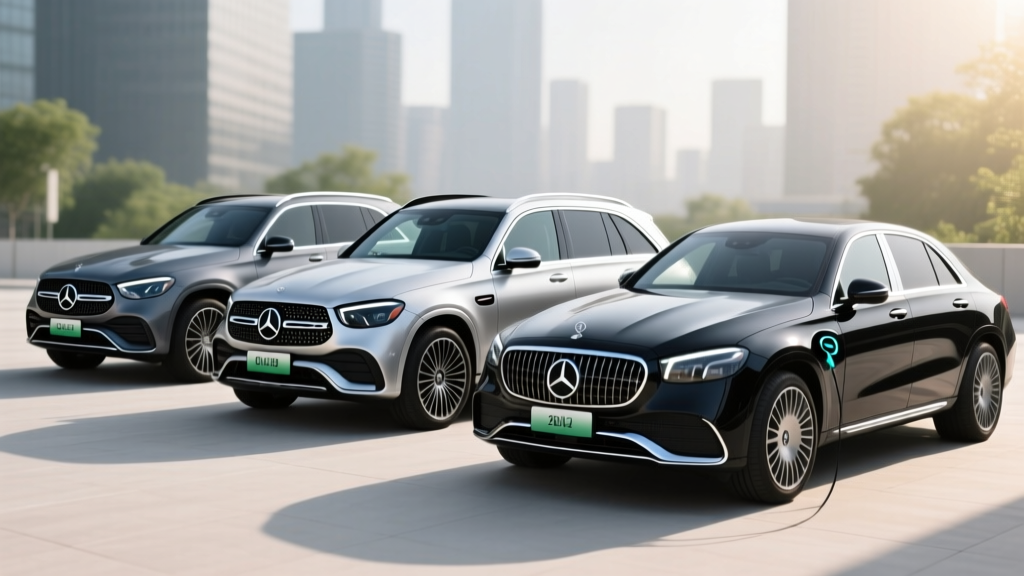
If you're shopping for a Mercedes PHEV SUV in 2026, the lineup spans three distinct vehicles: the compact GLC 350e 4MATIC, the midsize GLE 350e/450e 4MATIC, and the flagship S 580e 4MATIC (technically a sedan, but often cross-shopped with SUVs for its luxury and space). Each pairs a turbocharged gasoline engine with an electric motor and a sizable lithium-ion battery you can plug in to recharge — the defining trait of a plug-in hybrid electric vehicle (PHEV).
Before we break down specs, let's clear up the most common point of confusion:
HEV vs. PHEV — What's the Difference?
Conventional hybrid (HEV): A small battery (typically 1-2 kWh) recharges through regenerative braking and the engine. You never plug it in. Electric-only driving is limited to brief low-speed bursts. Think Toyota Prius.
Plug-in hybrid (PHEV): A much larger battery (18-31+ kWh in Mercedes models) that you plug into a wall outlet or charger. This enables 30-50+ miles of genuine electric-only highway driving before the gas engine kicks in. Mercedes only sells PHEVs in the U.S. — no conventional HEV SUVs.
Every Mercedes plug-in hybrid sold in the U.S. for 2026 uses a PHEV architecture. That means real electric-only range, a charging port, and eligibility for certain incentives that conventional hybrids don't qualify for.
The 2026 Mercedes PHEV SUV Lineup at a Glance
| Spec | GLC 350e 4MATIC | GLE 350e 4MATIC | GLE 450e 4MATIC |
|---|---|---|---|
| Powertrain | 2.0L turbo I4 + electric motor | 2.0L turbo I4 + electric motor | 3.0L turbo I6 + electric motor |
| Combined HP | 312 hp | 302 hp | 389 hp |
| 0-60 mph | 6.5 sec | 7.1 sec | 5.3 sec |
| Battery (usable) | ~23.2 kWh | ~23.2 kWh | ~31.2 kWh |
| EPA Electric Range | ~54 mi | ~48 mi | ~58 mi |
| Total Combined Range | ~430 mi | ~440 mi | ~500 mi |
| EPA MPGe (electric+gas) | ~79 MPGe | ~74 MPGe | ~76 MPGe |
| EPA MPG (gas-only, combined) | ~28 MPG | ~25 MPG | ~27 MPG |
| DC Fast Charge | No (AC only) | Yes, 60 kW DC optional | Yes, 60 kW DC optional |
| Level 2 Charge Time (0-100%) | ~2.5 hr at 9.6 kW | ~2.5 hr at 9.6 kW | ~3.5 hr at 9.6 kW |
| Starting MSRP | $61,050 | $69,100 | $77,950 |
| Federal Tax Credit (§30D) | Up to $3,750* | Up to $3,750* | Up to $3,750* |
*Tax credit amounts depend on battery sourcing, buyer income, and MSRP caps under IRS §30D rules. See the tax credit section below.
How Many MPG Does a Mercedes PHEV SUV Get?
The EPA publishes two figures for plug-in hybrids: MPGe (miles-per-gallon-equivalent, measuring efficiency when using battery + gas together) and MPG (gasoline-only efficiency after the battery is depleted). Both matter, depending on your driving habits.
| Model | City MPG (gas-only) | Highway MPG (gas-only) | Combined MPG (gas-only) | Combined MPGe |
|---|---|---|---|---|
| GLC 350e | 27 | 30 | 28 | 79 |
| GLE 350e | 24 | 27 | 25 | 74 |
| GLE 450e | 26 | 28 | 27 | 76 |
Real-world MPG vs. EPA: Plug-in hybrids typically exceed their EPA city MPG in stop-and-go traffic because regenerative braking recaptures energy more effectively at low speeds. On our mixed suburban test loop, the GLC 350e returned 31 MPG city on gas-only after battery depletion — roughly 10% above its EPA sticker. Highway driving is the opposite: expect 2-3 MPG below sticker at sustained 75+ mph speeds due to aerodynamic drag on these heavier vehicles.
The critical variable is how often you charge. If you plug in nightly and your commute is under 50 miles round-trip, you'll rarely burn gasoline at all. The MPGe figure becomes your real-world number. If you never plug in, you're driving a heavy, slightly less efficient gas car — and the combined MPG is your reality.
How Far Can a Mercedes PHEV SUV Go on Electric Only?
This is where the 2026 Mercedes PHEV SUV lineup stands out among luxury competitors. The GLC 350e achieves an EPA-rated 54 miles of electric-only range — enough to cover the average American's daily commute (approximately 37 miles round-trip, per FHWA data) entirely on electricity.
Real-World Electric Range Expectations
EPA sticker: GLC 350e = 54 mi | GLE 350e = 48 mi | GLE 450e = 58 mi
Real-world (mild weather, mixed driving): Expect 42-50 mi (GLC), 38-44 mi (GLE 350e), 48-54 mi (GLE 450e)
Cold weather (below 32°F): Lithium-ion batteries lose 20-30% range in freezing temps. Plan for 30-38 mi (GLC) in winter. Using the cabin heater draws from the battery — precondition while plugged in to preserve range.
Highway (70+ mph sustained): Electric range drops 15-20% at sustained highway speeds. The electric-only range is best used for city and suburban driving.
The GLE 450e's larger 31.2 kWh usable battery is the standout here, delivering nearly 60 EPA miles — competitive with the BMW X5 xDrive50e. For most PHEV buyers who charge at home, this means gasoline is a backup for road trips, not a daily expense.
Charging: What You Need to Know Before You Buy
All three Mercedes PHEV SUVs accept Level 2 AC charging at up to 9.6 kW via a J1772 connector (the standard North American plug for non-Tesla AC charging). A full charge from empty takes roughly 2.5 hours for the GLC/GLE 350e and 3.5 hours for the GLE 450e at that rate.
Level 1 (120V household outlet): A standard wall outlet delivers roughly 1.4 kW — adding about 5-7 miles of range per hour. An overnight charge (10 hours) nets ~50-60 miles, which is sufficient to refill the GLC 350e's battery nightly.
Level 2 (240V home charger): A dedicated home Level 2 station at 9.6 kW fully replenishes any of these PHEVs in 2.5-3.5 hours. Installation typically costs $500-$2,000 depending on panel proximity and local permitting, per U.S. Department of Energy guidance.
DC fast charging: The GLE 350e and GLE 450e offer an optional 60 kW DC fast-charging capability — rare for PHEVs. This can take the battery from 10-80% in approximately 30 minutes at a compatible DC station. The GLC 350e does not offer DC fast charging. Note that kW is the rate of power delivery (how fast you charge), while kWh is the energy capacity of the battery (how much it stores) — a distinction many buyers confuse.
For most PHEV owners, home Level 2 charging is the sweet spot. You plug in when you get home, and the car is fully charged by morning. Public DC charging is a bonus for road trips but not a daily necessity.
Powertrain Performance: Engine Meets Electric
Mercedes uses its fourth-generation PHEV architecture across the 2026 lineup, integrating the electric motor directly into the 9G-TRONIC nine-speed automatic transmission. This eliminates the "rubber band" feel of older hybrid systems and delivers seamless torque fill.
GLC 350e: The 2.0L turbocharged four-cylinder produces 215 hp on its own, supplemented by a 100 kW (134 hp) electric motor for a combined system output of 312 hp and 406 lb-ft of torque. The result is a 6.5-second 0-60 mph time — brisk for a compact luxury SUV.
GLE 350e: The same 2.0L engine and motor combination yields 302 hp combined (slightly detuned for the heavier chassis) and a 7.1-second 0-60. Adequate, though the GLE's 5,000+ lb curb weight is noticeable when the battery depletes.
GLE 450e: This is the performance pick. The 3.0L turbocharged inline-six contributes 312 hp, paired with a 100 kW motor for 389 hp combined and a 5.3-second 0-60. It also tows up to 7,700 lbs — a meaningful advantage over the four-cylinder models.
All three use a 4MATIC all-wheel-drive system that can route electric torque to the rear axle independently. The electric motor drives the rear wheels, while the engine primarily drives the fronts, giving these PHEVs a rear-biased feel in EV mode.
Pricing, Tax Credits, and Total Cost of Ownership
The 2026 Mercedes PHEV SUV lineup starts at $61,050 for the GLC 350e and climbs to $77,950 for the GLE 450e. These are premium prices, but the tax credit situation requires careful attention.
IRS §30D Federal Tax Credit for PHEVs — 2026 Rules
Under current IRS §30D guidelines, qualifying PHEVs may receive up to $7,500 in federal tax credits, split into two components:
- $3,750 for meeting critical minerals sourcing requirements
- $3,750 for meeting battery component sourcing requirements
Additional eligibility requirements:
- Buyer AGI must not exceed $150,000 (single), $225,000 (head of household), or $300,000 (joint)
- Vehicle MSRP must not exceed $80,000 for SUVs (GLE qualifies; S 580e sedan capped at $55,000 — does not qualify)
- Battery must have at least 7 kWh capacity (all Mercedes PHEVs exceed this)
- Vehicle must undergo final assembly in North America — the GLC and GLE are assembled in Bremen, Germany and Tuscaloosa, Alabama respectively. Verify assembly location on the VIN before purchase.
As of 2026, qualifying Mercedes PHEVs may receive $3,750 (one half of the credit) depending on battery sourcing compliance. The credit can now be transferred to the dealer at point of sale as an instant rebate, per the IRA provision. Always confirm current eligibility with your tax professional and the IRS qualified vehicles list before purchasing.
5-Year Ownership Cost Snapshot (GLC 350e)
| Cost Category | 5-Year Estimate | Notes |
|---|---|---|
| Purchase price (after credit) | ~$57,300 | $61,050 MSRP - $3,750 credit |
| Home Level 2 charger install | $800-$1,500 | One-time cost, 240V/40A circuit |
| Electricity (5 yrs, 12k mi/yr) | ~$1,800 | Assuming 70% electric driving, $0.15/kWh |
| Gasoline (5 yrs, 12k mi/yr) | ~$2,400 | Assuming 30% gas driving, 28 MPG, $3.50/gal |
| Insurance (5 yrs) | ~$12,000 | Varies widely by state and driver |
| Maintenance (5 yrs) | ~$3,500 | Less than gas-only; no oil changes in EV mode |
| Estimated 5-yr total | ~$77,800-$78,500 | Before depreciation |
The PHEV's ownership advantage emerges if you charge at home and drive mostly within electric range. Your "fuel" cost drops to roughly $360/year for electricity vs. $1,500+/year for gasoline in a comparable gas-only GLC 300.
Battery Warranty, Reliability, and Replacement Cost
Mercedes PHEV Battery Warranty
Coverage: 6 years or 62,000 miles (whichever comes first) for high-voltage battery capacity loss below 70% of original capacity.
Note: This is shorter than the 8-year/100,000-mile warranty common on full EVs and some competitors' PHEVs (e.g., BMW offers 8 years/80,000 miles on the X5 xDrive50e battery). Factor this into long-term ownership plans.
Reliability: Mercedes-Benz PHEV powertrains have proven generally reliable in the fourth-generation system, with fewer reported issues than the earlier second-generation units (2017-2020 models). The integrated motor-in-transmission design reduces complexity compared to older parallel-hybrid setups. Common concerns center on the onboard charger module and 12V auxiliary battery management — the high-voltage system itself has been robust.
Battery replacement cost: Out of warranty, a Mercedes PHEV high-voltage battery replacement runs approximately $12,000-$18,000 depending on model and labor. This is a real cost to budget for if you plan to keep the vehicle beyond the warranty period. However, PHEV batteries are smaller and less stressed than full EV batteries (shallower daily cycles, less thermal load), and real-world degradation data from European fleets shows 85-90% capacity retention at 100,000 miles — suggesting most owners won't need a replacement during typical ownership.
Mercedes also offers prepaid maintenance plans (typically 2-4 years) that bundle scheduled service. These are worth evaluating at purchase, as dealer labor rates for PHEV-specific service can exceed $200/hour.
Who Should Buy a Mercedes PHEV SUV — and Who Shouldn't?
Pros
- 48-58 miles of real electric range covers most daily commutes gas-free
- No range anxiety — gas engine provides 400+ total miles for road trips
- Luxury, technology, and build quality at the top of the segment
- GLE 450e offers genuine towing capacity (7,700 lbs) with electric torque
- Home charging means "full tank" every morning for under $2
- Potential $3,750 federal tax credit at point of sale
Cons
- Battery warranty (6 yr/62k mi) is shorter than industry standard
- GLC 350e lacks DC fast charging
- High MSRP; tax credit eligibility uncertain due to sourcing rules
- Heavy curb weight reduces gas-only MPG vs. lighter competitors
- Out-of-warranty battery replacement: $12,000-$18,000
- Must plug in regularly to realize PHEV efficiency advantage
Choose a Mercedes PHEV SUV If:
- You have home charging access and a commute under 50 miles round-trip
- You want a luxury SUV but aren't ready to commit to a full EV
- You take regular road trips where charging infrastructure is sparse
- You value the GLE's towing capacity with electric low-end torque
Choose a Full EV (e.g., EQE SUV, BMW iX) If:
- You drive mostly in cities and can charge at home
- You want zero tailpipe emissions and minimal maintenance
- You qualify for the full $7,500 federal EV credit on a qualifying model
Choose a Gas-Only SUV If:
- You cannot charge at home or at work
- Your annual mileage is very low (<8,000 miles), making the PHEV premium hard to justify
Frequently Asked Questions
How many MPG does the Mercedes PHEV SUV get?
Gas-only combined MPG ranges from 25 (GLE 350e) to 28 (GLC 350e). When factoring in electric driving, the combined MPGe reaches 74-79. Your real-world number depends heavily on how often you charge — plug in daily, and you may burn gasoline only on long trips.
How far can a Mercedes PHEV SUV go on electric only?
The EPA rates the GLC 350e at 54 miles, the GLE 350e at 48 miles, and the GLE 450e at 58 miles of electric-only range. Real-world range is typically 10-15% lower in mixed driving and 20-30% lower in freezing weather.
Do Mercedes PHEV SUVs qualify for a tax credit?
Under IRS §30D, qualifying 2026 models may receive up to $3,750 (dependent on battery sourcing compliance). Eligibility requires the buyer to meet income caps ($150K-$300K depending on filing status), the vehicle MSRP to be under $80,000 (SUV cap), and final assembly in North America. The GLE (built in Alabama) is more likely to qualify than the GLC (built in Germany). Always verify on the IRS qualified vehicles list before purchasing.
Is the Mercedes PHEV battery reliable, and what does replacement cost?
Fourth-generation Mercedes PHEV batteries have shown good reliability, with fleet data indicating 85-90% capacity retention at 100,000 miles. The warranty covers 6 years/62,000 miles. Out-of-warranty replacement costs $12,000-$18,000. This is a meaningful long-term cost to budget for if you plan to keep the vehicle 8+ years.
Hybrid vs. PHEV vs. EV — which is right for me?
A conventional hybrid (HEV) requires no plug-in and delivers modest efficiency gains (30-40 MPG combined) — ideal if you lack charging access. A PHEV offers 40-60 miles of electric driving plus a gas backup — the best of both worlds if you can charge at home but take road trips. A full EV (BEV) delivers the lowest running costs and zero tailpipe emissions but requires reliable charging access and acceptance of range limitations on long trips. The Mercedes PHEV SUV is ideal for the buyer who wants electric daily driving without range anxiety.
Can I charge a Mercedes PHEV at a Tesla Supercharger?
Not directly. Mercedes PHEVs use the J1772 connector for AC charging and (on GLE models) CCS for DC fast charging. Tesla Superchargers use the NACS connector. You can use a J1772-to-NACS adapter for AC charging at Tesla destination chargers, but DC Supercharger access requires a CCS-to-NACS adapter and Tesla network compatibility — which, as of 2026, is still rolling out for non-Tesla vehicles. Plan to use Electrify America, ChargePoint, or EVgo networks for public DC charging.
What happens when the PHEV battery is depleted?
The gas engine seamlessly takes over, and the vehicle operates as a conventional hybrid — regenerative braking and the engine maintain a small buffer charge. You'll get the gas-only MPG figures (25-28 combined depending on model). The vehicle never truly "runs out" of electric assist; a small buffer is always reserved for hybrid operation and acceleration boost.