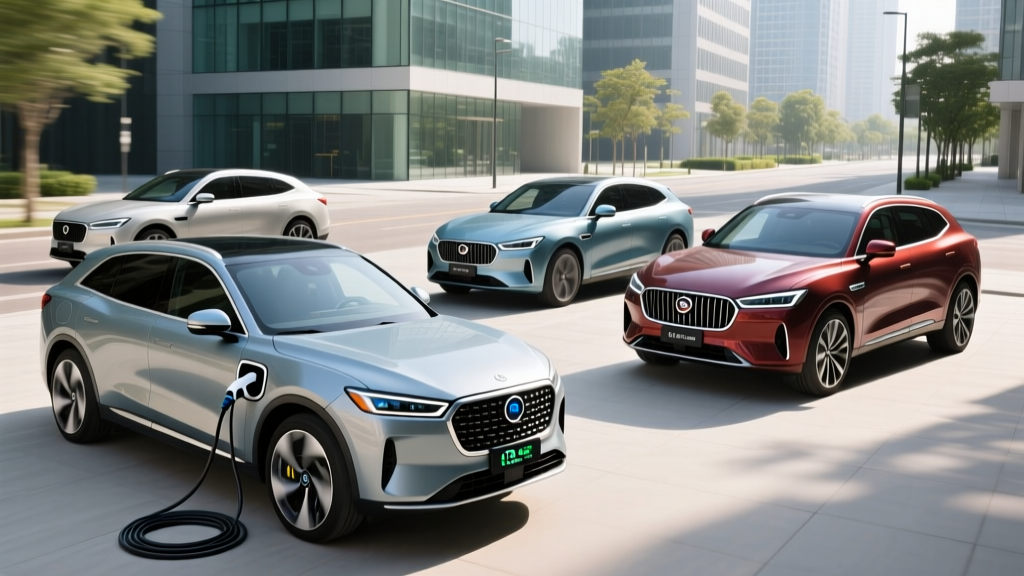
If you want electric commuting without range anxiety on road trips, a luxury plug-in hybrid (PHEV) remains the most pragmatic bridge in 2026. Unlike a conventional hybrid (HEV), which you never plug in, a PHEV pairs a larger traction battery with a gas engine—giving you 30-50 miles of electric-only driving for daily errands and seamless gasoline power for cross-country hauls. The luxury segment has matured past the early-generation PHEVs that offered barely 15 miles of electric range and glacial charging. Today's premium PHEVs deliver genuine zero-emission commutes, 400+ horsepower combined, and cabin refinement that justifies their six-figure price tags.
This guide breaks down the leading 2026 luxury PHEV SUVs—BMW X5 xDrive50e, Porsche Cayenne E-Hybrid, Volvo XC90 Recharge, and Range Rover Sport P460e—on the metrics that actually matter: real electric-only range, EPA MPG, DC fast-charge capability, battery warranty, and federal tax credit eligibility under current IRS §30D rules.
Luxury Plug-In Hybrid vs. Conventional Hybrid vs. Full EV
Before diving into specific models, clarify which electrified powertrain fits your life. The confusion between HEV, PHEV, and BEV costs buyers money and satisfaction.
| Factor | HEV (Conventional Hybrid) | PHEV (Plug-In Hybrid) | BEV (Full Electric) |
|---|---|---|---|
| Plug in to charge? | No — regenerates internally | Yes — Level 1/2, some DC | Yes — Level 1/2/DC |
| Electric-only range | 0-2 miles at low speed | 25-55 miles typical | 250-400+ miles |
| Home charging needed | No | Recommended (Level 2) | Essential |
| Road-trip convenience | Gas stations only | Gas stations (no charging wait) | DC fast chargers required |
| Federal tax credit (§30D) | No | Up to $7,500 if eligible | Up to $7,500 if eligible |
| Best for | No home charging, low budget | Home charging + long trips | Home charging, mostly local |
The luxury plug-in hybrid buyer typically has Level 2 home charging access, a commute under 40 miles round-trip, and takes 4+ road trips yearly where charging infrastructure remains unreliable. If you lack home charging, a conventional HEV (like the Lexus RX 500h) makes more sense. If you rarely drive over 250 miles between stops, a BEV like the BMW iX eliminates gasoline entirely.
Top 2026 Luxury PHEV SUVs: Spec-by-Spec Comparison
The table below uses EPA-published figures and manufacturer 2026 model-year specifications. Electric-only range and MPGe are the headline numbers, but sustained highway MPG once the battery depletes matters more for road-trip fuel bills.
| Specification | BMW X5 xDrive50e | Porsche Cayenne E-Hybrid | Volvo XC90 Recharge T8 | Range Rover Sport P460e |
|---|---|---|---|---|
| Powertrain | 3.0L I6 turbo + e-motor | 3.0L V6 turbo + e-motor | 2.0L I4 turbo + e-motor | 3.0L I6 turbo + e-motor |
| Combined horsepower | 483 hp | 463 hp | 455 hp | 454 hp |
| 0-60 mph | 4.6 sec | 4.7 sec | 5.1 sec | 5.2 sec |
| Battery (usable) | 25.7 kWh | 25.9 kWh | 18.8 kWh | 31.8 kWh |
| EPA electric-only range | 38 mi | 32 mi | 32 mi | 48 mi |
| MPGe (electric+gas) | 56 MPGe | 51 MPGe | 55 MPGe | 54 MPGe |
| MPG gas-only (combined) | 22 mpg | 21 mpg | 26 mpg | 20 mpg |
| Max AC charge rate | 7.4 kW | 7.2 kW | 6.4 kW | 7.2 kW |
| DC fast charge capable | No | Optional (22 kW DC) | No | Yes (50 kW DC) |
| Level 2 0-100% time | ~4.0 hr | ~4.0 hr | ~5.0 hr | ~5.5 hr (AC), ~50 min (DC 10-80%) |
| Total combined range | ~440 mi | ~430 mi | ~460 mi | ~470 mi |
| Base MSRP | $72,100 | $95,500 | $76,850 | $92,500 |
| Federal §30D credit eligible | No (MSRP/battery sourcing) | No (battery sourcing) | Yes — up to $7,500 | No (MSRP cap exceeded) |
| Drivetrain | AWD | AWD | AWD | AWD |
Sources: fueleconomy.gov, manufacturer 2026 spec sheets. MSRP excludes destination; tax credit eligibility per IRS §30D rules current to 2026.
Real-World MPG and Electric Range: What the EPA Sticker Doesn't Tell You
EPA range and MPG figures assume mixed driving at moderate temperatures. Real-world results for luxury PHEVs diverge in predictable ways.
Electric-only range reality
Expect to lose 15-25% of EPA-rated electric range at sustained highway speeds (70+ mph) because PHEV batteries are small and aerodynamic drag scales with velocity squared. In cold weather (below 35°F), cabin heating and battery thermal management can cut electric-only range by 30-40%. The Range Rover Sport P460e's EPA 48-mile electric range realistically delivers 32-38 miles in 45°F autumn conditions and closer to 28 miles on a 20°F January morning.
City driving actually extends electric range versus the EPA sticker—regen braking recovers energy, and speeds stay low. Owners of the BMW X5 xDrive50e routinely report 42-45 electric miles in stop-and-go commuting, beating the 38-mile EPA figure.
Gas-only MPG once the battery depletes
This is where PHEVs surprise skeptics. Once the battery is exhausted, the vehicle operates as a conventional hybrid. The Volvo XC90 Recharge's 26 mpg combined gas-only figure is class-leading because its 2.0L four-cylinder is lighter and more efficient at highway cruise than the six-cylinder rivals. On a 600-mile road trip, the XC90 Recharge burns roughly 23 gallons after the battery depletes, versus 27 gallons for the Cayenne E-Hybrid—a meaningful gap at $3.50/gallon.
| Scenario | X5 xDrive50e | Cayenne E-Hybrid | XC90 Recharge | RR Sport P460e |
|---|---|---|---|---|
| Daily 30-mi commute (charged nightly) | ~95% electric | ~95% electric | ~95% electric | 100% electric |
| City driving, battery depleted | 24 mpg | 22 mpg | 28 mpg | 22 mpg |
| Highway 75 mph, battery depleted | 21 mpg | 20 mpg | 25 mpg | 19 mpg |
| Cold weather (25°F) electric range | ~27 mi | ~23 mi | ~23 mi | ~33 mi |
| Annual fuel cost (12k mi, 70% charged) | ~$1,150 | ~$1,350 | ~$1,050 | ~$1,250 |
Annual fuel cost assumes $3.50/gal gas, $0.16/kWh electricity, and 70% of miles driven on electric. Actual costs vary by region and utility rates.
Charging a Luxury PHEV: Level 2 at Home, DC on the Road
Most luxury PHEV buyers charge at home overnight on a Level 2 (240V) circuit, waking to a full battery every morning. Public DC fast charging matters less for PHEVs than for BEVs—because you have a gas engine as backup—but it still affects road-trip convenience.
Home Level 2 charging
All four models accept 6.4-7.4 kW on Level 2 AC. At 7.2 kW, you add roughly 20-25 electric miles per hour of charging. A full overnight charge (10 pm to 6 am) on a 40-amp Level 2 circuit easily replenishes any of these batteries. Installation typically costs $800-$2,000 for the charger and electrician work, assuming your panel has capacity—older homes may need a $2,000-$4,000 panel upgrade.
DC fast charging: the Range Rover advantage
The Range Rover Sport P460e is the only model here with standard 50 kW DC fast charging. On a road trip, you can add 30+ electric miles in 20 minutes at a Electrify America or Tesla Supercharger (with NACS adapter) station while grabbing lunch. Porsche offers optional 22 kW DC on the Cayenne E-Hybrid—faster than AC but slower than true DC fast charging. The BMW and Volvo accept only AC; on road trips, you simply drive on gasoline.
For most luxury PHEV owners who charge nightly at home and drive gas on road trips, DC capability is a bonus, not a necessity. But if you want to maximize electric miles on longer trips, the Range Rover's 50 kW capability is a genuine differentiator.
Federal Tax Credit Eligibility: Only One Qualifies in 2026
The IRS §30D Clean Vehicle Credit offers up to $7,500 for qualifying new PHEVs—but stringent battery-sourcing, critical-mineral, MSRP, and buyer-income rules disqualify most luxury models in 2026.
- MSRP cap: SUVs must be under $80,000 MSRP; sedans under $55,000
- Buyer income cap: MAGI ≤ $150k single / $300k joint
- Battery component sourcing: Percentage of components must be manufactured or assembled in North America (phased thresholds increase annually)
- Critical minerals: Percentage of critical minerals must be sourced from the US or FTA partners
- Point-of-sale transfer: Eligible buyers can apply the credit as a down-payment reduction at the dealer
Of the four models profiled, only the Volvo XC90 Recharge T8 (base MSRP $76,850, under the $80,000 SUV cap) currently meets §30D requirements when equipped in base Core trim. Higher trims push it above the cap. The BMW X5, Porsche Cayenne, and Range Rover Sport all fail on MSRP cap, battery sourcing, or both. Always verify current eligibility on fueleconomy.gov before purchase—sourcing rules tighten annually.
Battery Longevity, Warranty, and Replacement Cost
PHEV battery warranty snapshot (2026 models)
| Model | Battery warranty | Capacity retention guarantee | Estimated out-of-warranty replacement |
|---|---|---|---|
| BMW X5 xDrive50e | 8 yr / 80,000 mi | ≥70% of original capacity | $12,000-$18,000 |
| Porsche Cayenne E-Hybrid | 8 yr / 100,000 mi | ≥70% of original capacity | $14,000-$20,000 |
| Volvo XC90 Recharge | 8 yr / 100,000 mi | ≥70% of original capacity | $11,000-$16,000 |
| Range Rover Sport P460e | 8 yr / 100,000 mi | ≥70% of original capacity | $15,000-$22,000 |
Federal law mandates a minimum 8-year/100,000-mile warranty on PHEV traction batteries in California-emissions states (which cover most of the US population); some states default to 8/80,000. The 70% capacity-retention threshold is industry-standard: if your 25 kWh battery drops below 17.5 kWh usable within the warranty window, the manufacturer replaces or refurbishes it at no cost.
Real-world degradation data from earlier-generation PHEVs (2018-2023 model years) shows most batteries retain 85-92% capacity after 100,000 miles when owners avoid habitual 100% charges and DC fast charging. PHEV batteries are smaller than BEV batteries, so they cycle more frequently—a 25 kWh battery cycled daily degrades faster than a 90 kWh BEV battery cycled weekly. To maximize longevity, charge to 80-90% on Level 2 for daily use and reserve full 100% charges for road-trip mornings.
Out-of-warranty replacement costs remain the top buyer concern. At $11,000-$22,000 depending on model, a decade-old PHEV battery replacement approaches the vehicle's residual value. This economics reality is why leasing (where the manufacturer owns the battery risk) appeals to many luxury PHEV buyers.
Who Should Buy a Luxury PHEV vs. a Full EV or Gas Car
Choose a luxury plug-in hybrid if:
- You have Level 2 home charging and a daily commute under 40 miles round-trip
- You take 4+ road trips yearly where public DC charging is sparse or unreliable
- You want to reduce fuel consumption 60-80% versus a gas-only luxury SUV without giving up towing or range
- You're not ready to commit to a full EV but want electric driving experience
Choose a full BEV (BMW iX, Porsche Taycan Cross Turismo) if:
- You have reliable home charging and access to DC fast charging on road trips
- You drive under 300 miles between stops most of the time
- You want zero tailpipe emissions and minimal drivetrain maintenance
Choose a conventional HEV (Lexus RX 500h) if:
- You lack home charging access (apartment, street parking)
- You want hybrid efficiency without plug-in complexity
- Upfront budget is under $60,000
Luxury PHEV pros
- 30-50 miles electric covers most daily driving
- Gas engine eliminates range anxiety on road trips
- Combined 450+ hp delivers sports-sedan acceleration
- Lower fuel cost vs gas-only when charged regularly
- Federal credit possible on qualifying models
Luxury PHEV cons
- Higher MSRP than gas or HEV equivalents
- Heavy: 5,000-5,500 lb curb weight hurts efficiency once battery depletes
- Maintenance of two powertrains (engine + electric)
- Battery replacement cost after warranty ($11k-$22k)
- Most don't qualify for §30D credit due to MSRP/sourcing rules
Frequently Asked Questions
How many MPG does a luxury plug-in hybrid get?
On electricity alone, luxury PHEVs achieve 51-56 MPGe combined. Once the battery depletes, gas-only MPG ranges from 20 (Range Rover Sport P460e) to 26 (Volvo XC90 Recharge) combined. The real efficiency win comes from charging nightly: owners who plug in daily report using gasoline for fewer than 15% of annual miles.
How far can a luxury PHEV go on electric only?
EPA-rated electric-only range spans 32-48 miles in the 2026 luxury PHEV SUV segment. The Range Rover Sport P460e leads at 48 miles; the BMW X5 xDrive50e delivers 38 miles; the Porsche Cayenne E-Hybrid and Volvo XC90 Recharge both manage 32 miles. Expect 15-30% less in cold weather or at sustained highway speeds.
Does a luxury PHEV qualify for the $7,500 federal tax credit?
Most do not in 2026. The IRS §30D credit imposes an $80,000 MSRP cap for SUVs, buyer income limits ($300k joint / $150k single), and strict battery-sourcing requirements that exclude most European-assembled luxury PHEVs. The Volvo XC90 Recharge in base Core trim (MSRP $76,850) is currently the only luxury PHEV SUV that qualifies. Verify on fueleconomy.gov before purchase—eligibility changes as sourcing rules tighten.
Is a luxury PHEV reliable and what does battery replacement cost?
Luxury PHEV reliability is generally strong, with traction batteries warrantied for 8 years/80,000-100,000 miles at ≥70% capacity retention. Real-world data from earlier-generation models shows 85-92% capacity retention at 100,000 miles with proper charging habits. Out-of-warranty battery replacement costs $11,000-$22,000 depending on model—a significant expense that makes leasing or certified-pre-owned warranties attractive for long-term ownership.
Do I need to plug in a PHEV every night?
No. A PHEV operates as a conventional hybrid when the battery is depleted—you'll simply burn gasoline instead of electricity. However, to capture the fuel-cost savings and electric-driving experience that justify the PHEV premium, nightly Level 2 charging is strongly recommended. Most luxury PHEVs fully recharge in 4-5 hours on a 7 kW Level 2 circuit.
Can I DC fast charge a luxury PHEV?
Most luxury PHEVs cannot—they accept only AC Level 1/2 charging. The Range Rover Sport P460e is the notable exception with 50 kW DC capability, adding 30+ electric miles in 20 minutes. Porsche offers optional 22 kW DC on the Cayenne E-Hybrid. For most owners charging at home overnight, DC capability is a road-trip bonus rather than a necessity.
The 2026 luxury plug-in hybrid segment delivers on its core promise: electric commuting without range compromise. If your driving pattern matches the PHEV sweet spot—home charging plus regular long trips—the BMW X5 xDrive50e offers the best balance of performance, electric range, and value. The Volvo XC90 Recharge wins on efficiency and is the only model that currently qualifies for the federal tax credit. The Range Rover Sport P460e is the technology leader with DC fast charging and the longest electric range, at a premium price. Choose based on your specific commute, road-trip frequency, and charging access—not marketing claims.