Shopping for luxury hybrid SUVs in 2026 means navigating a crowded field of conventional hybrids (HEVs), plug-in hybrids (PHEVs), and full battery-electric vehicles (BEVs). Each powertrain delivers a fundamentally different ownership experience — and the right choice depends on your daily mileage, charging access, and whether you prioritize silent electric commuting or long-distance flexibility without range anxiety.
This guide breaks down the top luxury hybrid SUVs currently on sale with exact EPA fuel economy figures, electric-only range for PHEVs, battery warranty coverage, powertrain specs, and real-world efficiency data. We'll also clarify which models qualify for federal tax credits under current IRS §30D rules.
HEV vs PHEV: Understanding the Two Hybrid Types
Before comparing specific models, it's essential to understand the distinction between the two hybrid architectures available in luxury SUVs:
Conventional Hybrid (HEV)
- No plug required. The battery recharges through regenerative braking and the gasoline engine.
- Small battery (typically 1–2 kWh) assists the engine for improved MPG.
- No electric-only driving beyond very low-speed creep (under 1 mile).
- No federal tax credit — HEVs do not qualify under §30D.
- Best for: Buyers who want better fuel economy without changing their refueling habits.
Plug-In Hybrid (PHEV)
- Plugs in like an EV. Larger battery (13–25+ kWh) enables 20–50+ miles of electric-only driving.
- Gas engine kicks in after the battery depletes, functioning as a conventional hybrid.
- Level 2 charging at home or public stations; most do not support DC fast charging.
- May qualify for up to $7,500 federal tax credit if battery sourcing, MSRP caps, and buyer income limits are met.
- Best for: Commuters with home charging who want electric daily driving plus gas-engine range for road trips.
Top 2026 Luxury Hybrid SUVs: Side-by-Side Specs
Here's a data-driven comparison of the most compelling luxury hybrid SUVs on the market. All figures reflect 2026 model-year specifications from manufacturer data and fueleconomy.gov.
| Model | Type | EPA Combined MPG / MPGe | Electric-Only Range | Battery (kWh) | Combined HP | 0–60 mph | Base MSRP |
|---|---|---|---|---|---|---|---|
| BMW X5 xDrive50e | PHEV | 50 MPGe (combined gas+elec) / 22 MPG gas-only | 38 mi | 25.7 kWh (usable ~22) | 483 hp | 4.6 sec | $73,475 |
| Mercedes-Benz GLE 400e | PHEV | 56 MPGe / 23 MPG gas-only | 45 mi | 23.3 kWh (usable ~20) | 375 hp | 5.7 sec | $72,700 |
| Porsche Cayenne E-Hybrid | PHEV | 46 MPGe / 21 MPG gas-only | 32 mi | 25.9 kWh (usable ~21) | 463 hp (V6) / 729 hp (Turbo) | 4.4 sec (V6) | $91,900 |
| Lexus RX 500h F SPORT | HEV | 27 MPG combined (28 city / 26 hwy) | N/A | ~1.4 kWh (self-charging) | 366 hp | 5.5 sec | $62,950 |
| Volvo XC90 Recharge T8 | PHEV | 55 MPGe / 27 MPG gas-only | 35 mi | 18.8 kWh (usable ~15) | 455 hp | 4.9 sec | $76,850 |
| Lexus TX 500h | HEV | 27 MPG combined (28 city / 26 hwy) | N/A | ~1.4 kWh (self-charging) | 366 hp | 5.9 sec | $67,900 |
| Lincoln Aviator Grand Touring | PHEV | 56 MPGe / 23 MPG gas-only | 30 mi | 17.7 kWh (usable ~14) | 494 hp | 5.5 sec | $74,085 |
Fuel Economy Breakdown: Real-World MPG vs EPA Stickers
EPA estimates provide a standardized baseline, but real-world fuel economy for luxury hybrid SUVs often diverges — especially in city driving, where regenerative braking recaptures energy that conventional vehicles waste as heat.
| Model | EPA City MPG | EPA Highway MPG | EPA Combined | Real-World Expectation |
|---|---|---|---|---|
| Lexus RX 500h | 28 | 26 | 27 | 27–30 city; 24–26 highway |
| Lexus TX 500h | 28 | 26 | 27 | 27–29 city; 24–25 highway |
| BMW X5 xDrive50e (gas-only mode) | — | — | 22 | 20–23 highway at 75+ mph |
| Volvo XC90 Recharge (gas-only) | — | — | 27 | 25–28 mixed after battery depletion |
Key insight: Conventional hybrids like the Lexus RX 500h frequently exceed their EPA city rating in stop-and-go traffic because regenerative braking works hardest at low speeds. Highway efficiency drops because there's less braking energy to recapture and aerodynamic drag dominates. PHEVs show the opposite pattern — their MPGe figure assumes a charged battery and short trips; once depleted, they revert to gas-only MPG that's often lower than a dedicated HEV due to the extra weight of the larger battery pack.
PHEV Electric-Only Range: What You'll Actually Get
The EPA electric-only range figure assumes moderate temperatures, flat terrain, and mixed driving. In practice, expect variation:
Real-World PHEV Range Expectations
EPA 38 mi (BMW X5 xDrive50e): Expect 30–35 mi in warm weather mixed driving; 22–28 mi in freezing temperatures with cabin heat running. Highway-only driving at 70+ mph may yield 25–30 mi.
EPA 45 mi (Mercedes GLE 400e): Expect 35–42 mi warm mixed; 28–35 mi cold. The GLE's relatively large usable battery gives it an edge in real-world commuting.
EPA 35 mi (Volvo XC90 Recharge): Expect 28–33 mi warm; 20–27 mi cold. The XC90's smaller usable capacity means range drops are more noticeable.
Cold-weather note: All PHEVs lose 20–35% of electric range in sub-freezing temperatures because the battery's internal resistance increases and energy is diverted to cabin heating. If your commute is 30 miles and you live in a cold climate, choose a PHEV with at least 40+ EPA miles of range to ensure electric-only commuting year-round.
PHEV Charging: Speed, Connectors, and Home Setup
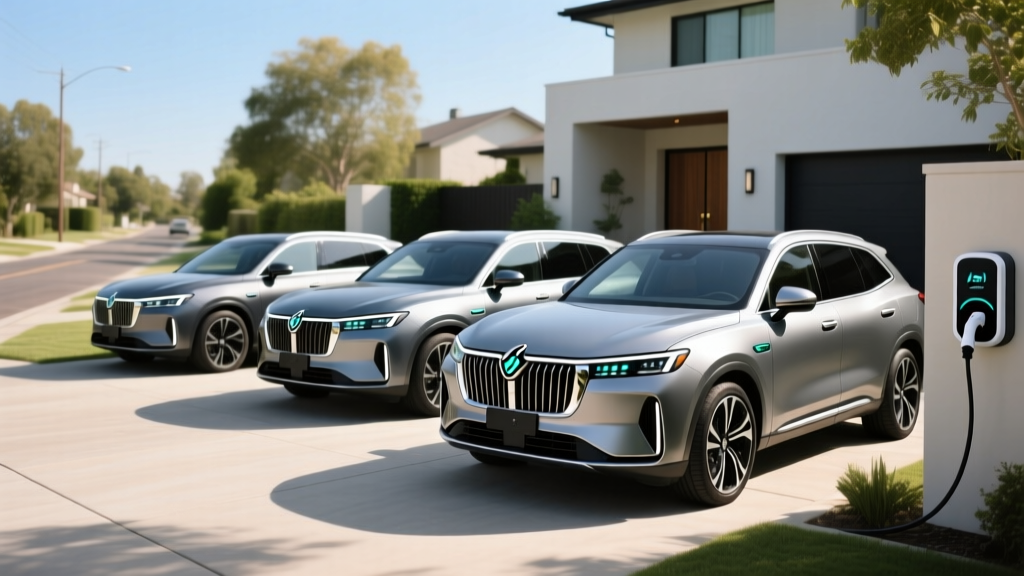
Most luxury PHEVs charge exclusively via Level 2 (240V) AC charging. DC fast charging is rare in this segment because the batteries are small enough that a Level 2 session completes overnight.
| Charging Level | Power (kW) | Typical PHEV Charge Time (0–100%) | Miles of Range Added per Hour |
|---|---|---|---|
| Level 1 (120V household outlet) | 1.2–1.4 kW | 14–20 hours | ~3–5 mi/hr |
| Level 2 (240V, home or public) | 3.3–7.2 kW | 3–7 hours (varies by onboard charger) | ~12–25 mi/hr |
| DC Fast Charge (rare on PHEVs) | Up to 50 kW | ~30 min (10–80%) | N/A — few PHEVs support this |
DC fast charging exception: The Porsche Cayenne E-Hybrid and select BMW PHEVs offer optional DC fast charging capability (up to 50 kW), allowing a 10–80% charge in roughly 25–30 minutes. Most other luxury PHEVs max out at 7.2 kW AC, which is perfectly adequate for overnight home charging but means you can't meaningfully top up at a highway DC station.
Home charging cost: A basic Level 2 home charger (240V, 32A) costs $300–$600 for the unit plus $500–$2,000 for professional electrician installation depending on panel capacity and run distance. For PHEV owners, this is a one-time investment that enables daily electric commuting at roughly $0.12–$0.16 per kWh (national average), translating to about 3–5 cents per mile — versus 15–20 cents per mile on premium gasoline.
Battery Warranty, Lifespan, and Replacement Costs
Hybrid & PHEV Battery Warranty Coverage
Federal law mandates that hybrid and PHEV batteries carry a minimum warranty of 8 years / 100,000 miles. In California Air Resources Board (CARB) states (CA, CO, CT, ME, MD, MA, NJ, NY, OR, RI, VT, WA), the warranty extends to 10 years / 150,000 miles.
Capacity retention threshold: Most manufacturers warrant the battery against falling below 60–70% of original capacity during the warranty period. If degradation exceeds this threshold, the manufacturer replaces or reconditions the battery at no cost.
Real-world longevity data: Toyota/Lexus hybrid batteries have demonstrated exceptional durability, with many RX and Highlander hybrids reaching 200,000+ miles on the original battery pack. BMW and Mercedes PHEV batteries from the current generation (2024+) use NMC chemistry with active liquid cooling, which significantly reduces degradation compared to earlier passive-cooled designs.
Out-of-warranty replacement cost: If a hybrid or PHEV battery fails after the warranty expires, expect replacement costs in the range of:
- HEV (Lexus RX, TX): $3,000–$5,000 for the battery module
- PHEV (BMW X5, Porsche Cayenne, Volvo XC90): $8,000–$15,000 due to larger capacity and more complex thermal management systems
Third-party reconditioning services are emerging as a lower-cost alternative ($2,000–$6,000), replacing individual degraded cells rather than the entire pack. This option is most mature for Toyota/Lexus platforms.
Federal Tax Credit Eligibility for PHEVs
Conventional hybrids (HEVs) do not qualify for the federal §30D clean vehicle tax credit. Only PHEVs with a battery capacity of at least 7 kWh are eligible — and even then, current 2026 rules impose strict requirements:
- MSRP cap: SUVs must have an MSRP at or below $80,000 (sedans: $55,000). Several fully loaded luxury PHEVs exceed this cap.
- Buyer income cap: Modified adjusted gross income must not exceed $300,000 (joint filers), $225,000 (head of household), or $150,000 (single).
- Battery sourcing: A percentage of critical minerals and battery components must be sourced from the US or free-trade-agreement countries. This requirement tightens annually, and some European-built PHEVs may lose partial or full eligibility.
- Point-of-sale transfer: As of 2024+, buyers can transfer the credit to the dealer at purchase, reducing the purchase price directly rather than waiting for a tax refund.
- Maximum credit: Up to $7,500 ($3,750 for critical minerals + $3,750 for battery components), but partial credits are common when only one sourcing requirement is met.
Current eligibility snapshot (2026): Verify each model's status on the IRS qualified vehicles list, as sourcing compliance changes with supply-chain shifts. The BMW X5 xDrive50e (built in Spartanburg, SC) has historically qualified for partial or full credit, while European-imported models like the Porsche Cayenne E-Hybrid face sourcing hurdles. Always confirm with your dealer and a tax professional before relying on credit eligibility in your purchase decision.
Who Should Buy a Luxury Hybrid SUV — HEV, PHEV, or Full EV?
Choose a Conventional Hybrid (HEV) If:
- You cannot install a home charger (apartment, condo, street parking)
- You want zero change to your refueling routine — just fill up at gas stations
- Your priority is moderate fuel savings with proven long-term reliability
- You drive 15,000+ miles per year mostly on highways where hybrid advantages shrink
- Best picks: Lexus RX 500h, Lexus TX 500h
Choose a Plug-In Hybrid (PHEV) If:
- You have home or workplace Level 2 charging access
- Your daily commute is under 40 miles round-trip (enabling mostly electric driving)
- You take road trips regularly and want gas-engine range without range anxiety
- You want to reduce fuel costs significantly without committing to a full EV
- Best picks: BMW X5 xDrive50e, Mercedes-Benz GLE 400e, Volvo XC90 Recharge
Choose a Full EV (BEV) If:
- You have reliable home charging and your daily driving is under 250 miles
- You want to eliminate gasoline entirely and minimize maintenance (no oil changes, fewer moving parts)
- You qualify for the full $7,500 federal credit on an eligible BEV
- You're comfortable planning around DC fast charging on road trips
- Consider: BMW iX, Mercedes EQE SUV, Porsche Macan Electric
Pros and Cons: Luxury Hybrid SUV Ownership
Pros
- Significantly better fuel economy than gas-only luxury SUVs (20–56 MPGe depending on type and usage)
- PHEVs offer silent, smooth electric commuting with zero tailpipe emissions on short trips
- No range anxiety — gas engine provides 400–500+ miles of total range
- Lower operating costs when PHEV is charged regularly (3–5 cents/mile electric vs 15–20 cents/mile gas)
- Strong resale value, especially Lexus and Porsche platforms
- Hybrid batteries carry 8–10 year warranties with proven long-term durability
Cons
- Higher purchase price than gas-only equivalents ($5,000–$15,000 premium)
- PHEVs require home charging to realize fuel savings; without it, you're carrying dead battery weight
- PHEV gas-only MPG is often mediocre (20–27 combined) once the battery depletes
- HEVs offer modest fuel savings over efficient gas SUVs — the payoff takes years of ownership
- Out-of-warranty PHEV battery replacement is expensive ($8,000–$15,000)
- Federal tax credit eligibility is uncertain and model-dependent; do not assume $7,500 savings
- Added weight reduces handling agility compared to gas-only counterparts
Frequently Asked Questions
How many MPG does a luxury hybrid SUV get?
Conventional hybrid luxury SUVs like the Lexus RX 500h deliver 27 MPG combined (28 city / 26 highway). PHEVs post much higher MPGe figures (46–56 MPGe) when driven on a charged battery with short trips, but revert to 20–27 MPG in gas-only mode after the battery depletes. Real-world city MPG for HEVs often exceeds the EPA estimate by 2–3 MPG thanks to regenerative braking.
How far can a luxury PHEV SUV go on electric only?
Current luxury PHEVs offer 30–45 miles of EPA-rated electric-only range. The Mercedes-Benz GLE 400e leads at 45 miles; the BMW X5 xDrive50e achieves 38 miles; the Volvo XC90 Recharge manages 35 miles. Real-world range drops 20–35% in cold weather and at sustained highway speeds.
Do luxury hybrid SUVs qualify for the federal tax credit?
Only PHEVs (not conventional HEVs) can qualify for the §30D federal tax credit, and eligibility depends on MSRP (under $80,000 for SUVs), buyer income (under $300,000 joint), and battery critical-mineral/component sourcing requirements. Check the IRS qualified vehicles list for current status, as eligibility can change mid-year.
How long do hybrid SUV batteries last, and what does replacement cost?
Hybrid and PHEV batteries are warranted for 8 years/100,000 miles (10 years/150,000 miles in CARB states). Real-world data from Lexus/Toyota platforms shows many batteries lasting 200,000+ miles. Out-of-warranty replacement costs $3,000–$5,000 for HEV batteries and $8,000–$15,000 for PHEV batteries. Third-party cell-level reconditioning is an emerging lower-cost option.
Should I buy a hybrid, PHEV, or full electric luxury SUV?
Choose an HEV if you can't charge at home and want simple fuel savings. Choose a PHEV if you have home charging, commute under 40 miles, and want electric daily driving plus gas flexibility for road trips. Choose a full EV if you have reliable charging, drive under 250 miles daily, and want to eliminate gasoline and minimize long-term maintenance costs.
Do conventional hybrids need to be plugged in?
No. Conventional hybrids (HEVs) like the Lexus RX 500h and TX 500h charge their small batteries entirely through regenerative braking and the gasoline engine. You never plug them in. Only PHEVs require (or benefit from) plug-in charging.