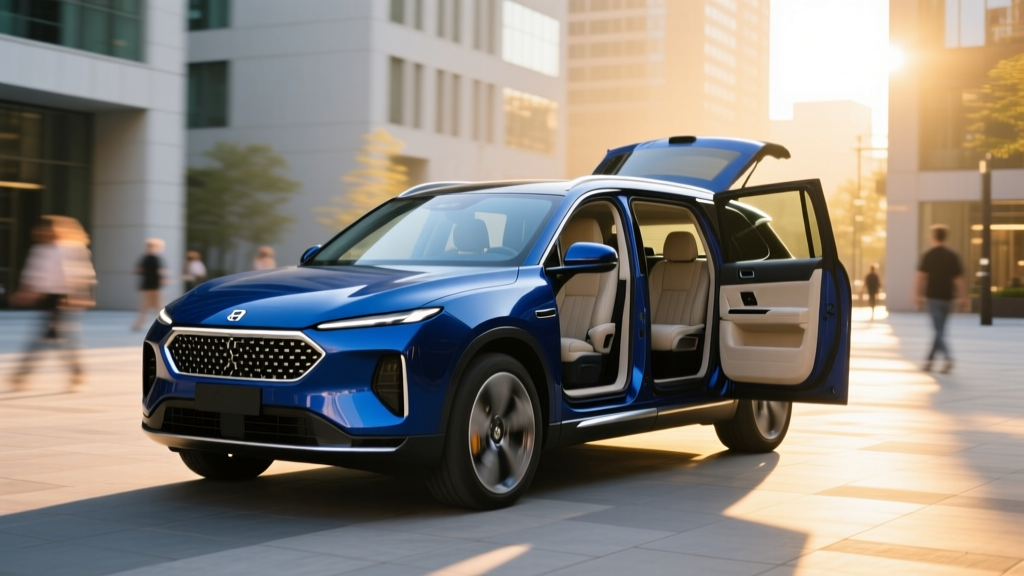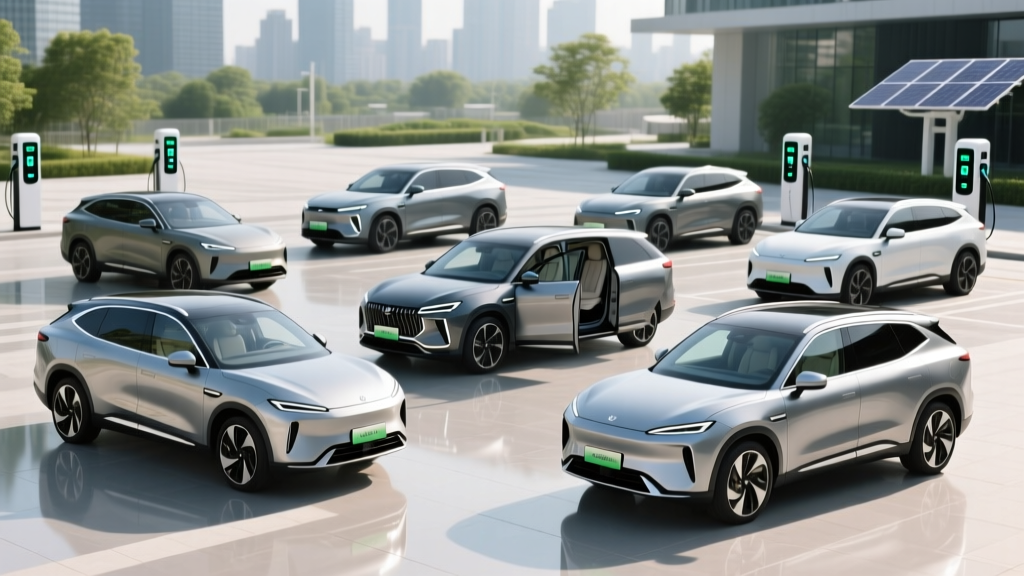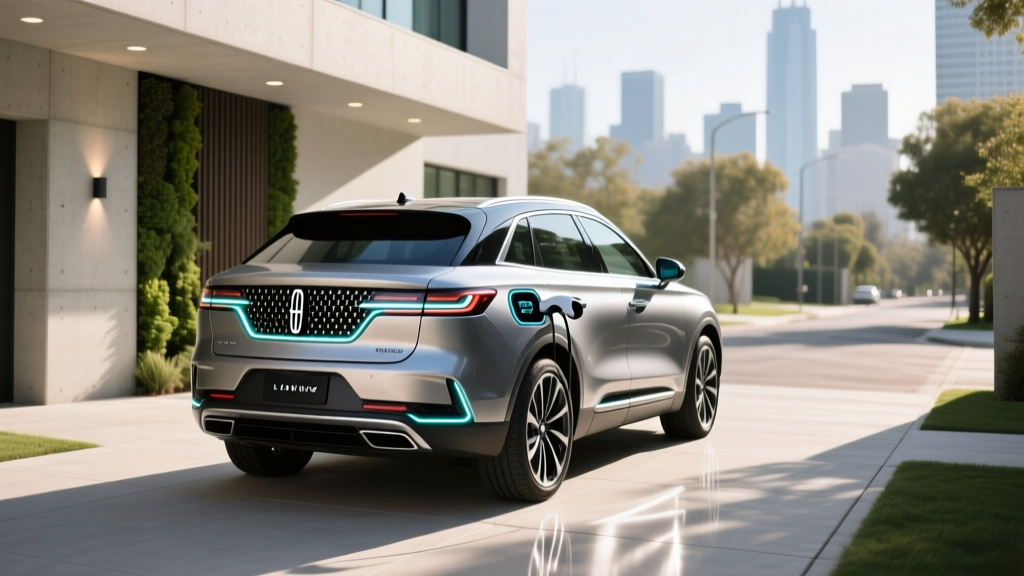
Lincoln's approach to electrification has been deliberate rather than aggressive. As of the 2026 model year, the brand offers one plug-in hybrid (PHEV) — the Corsair Grand Touring — and its closest sedan-adjacent offering, the Lincoln MKZ Hybrid, was discontinued after the 2020 model year. That leaves luxury sedan shoppers searching for a "Lincoln hybrid sedan" with a decision to make: pivot to the Corsair PHEV compact SUV, consider the Lincoln Aviator Grand Touring PHEV, or look outside the Lincoln lineup entirely.
This guide breaks down Lincoln's current hybrid and PHEV options with exact specs, real-world efficiency data, pricing, and a clear framework for deciding whether a Lincoln PHEV fits your driving life — or whether a full EV or conventional hybrid makes more sense.
Lincoln's 2026 Hybrid Lineup: What's Actually Available
Lincoln currently sells two electrified vehicles, both plug-in hybrids wearing the "Grand Touring" badge:
- Corsair Grand Touring (PHEV): Compact luxury crossover, 2.5L inline-4 + electric motor, 266 combined hp, EPA-estimated 33 miles of electric-only range, ~37 MPGe combined when using both gas and electric.
- Aviator Grand Touring (PHEV): Midsize three-row luxury SUV, 3.0L twin-turbo V6 + electric motor, 494 combined hp, EPA-estimated 21 miles of electric-only range, ~23 MPGe combined.
Neither is a sedan. Lincoln discontinued the MKZ Hybrid sedan in 2020 and has not announced a direct hybrid sedan successor for 2026. If your search for a Lincoln hybrid sedan is non-negotiable on the "sedan" part, you're looking at the used market (2017–2020 MKZ Hybrid) or competitors like the BMW 330e, Volvo S60 Recharge, or Lexus ES 300h.
But if you're flexible on body style and want Lincoln luxury with electrified efficiency, the Corsair Grand Touring is the brand's most practical and efficient offering. Let's dig into it.
Corsair Grand Touring PHEV: Full Spec Breakdown
| Spec | Value |
|---|---|
| Powertrain | 2.5L iVCT Atkinson-cycle I-4 + permanent-magnet electric motor |
| Combined Horsepower | 266 hp |
| Transmission | eCVT (power-split device) |
| Drivetrain | eAWD (electric rear axle motor) |
| Battery Capacity | 14.4 kWh (usable ~11.5 kWh) |
| Battery Chemistry | NMC (nickel-manganese-cobalt) lithium-ion |
| EV-Only Range (EPA) | 33 miles |
| Total Combined Range | ~430 miles (EV + gas tank) |
| MPGe (combined, EV+gas) | 80 MPGe |
| MPG (gas-only, combined) | 33 MPG |
| MPG (city / highway, gas-only) | 34 city / 32 highway |
| Level 2 Charging (240V) | ~3.5–4 hours (0–100%) |
| DC Fast Charging | Not available |
| 0–60 mph | ~6.8 seconds |
| Cargo Volume (rear seats up) | 27.6 cu ft |
| Base MSRP (Grand Touring trim) | ~$52,000 |
| Battery Warranty | 8 years / 100,000 miles |
| Powertrain Warranty | 6 years / 70,000 miles |
HEV vs PHEV vs EV: Which Lincoln (or Alternative) Fits You?
Understanding the distinction between hybrid types is essential before committing to a purchase. Lincoln only sells PHEVs — not conventional hybrids (HEVs) — so here's how they compare:
| Feature | HEV (Conventional Hybrid) | PHEV (Plug-In Hybrid) | BEV (Full Electric) |
|---|---|---|---|
| Plug in to charge? | No — regenerates while driving | Yes — plug in for EV range | Yes — only energy source |
| Electric-only range | 0 miles (motor assists engine) | 20–40 miles typical | 200–400+ miles |
| Gas engine? | Yes (primary) | Yes (backup + highway) | No |
| Home charging needed? | No | Recommended (120V or 240V) | Essential (240V strongly recommended) |
| Lincoln example | None current (MKZ Hybrid discontinued) | Corsair Grand Touring, Aviator Grand Touring | None current |
| Competitor example | Lexus ES 300h, Toyota Camry Hybrid | BMW 330e, Volvo S60 Recharge | BMW i4, Tesla Model 3, Genesis Electrified G80 |
| Federal tax credit | No | Up to $7,500 (§30D, subject to rules) | Up to $7,500 (§30D, subject to rules) |
- Choose the Corsair PHEV if: You have home charging access, drive 30–40 miles daily (covering most commutes on electricity), want luxury branding, and need the flexibility of a gas engine for longer road trips without charging-infrastructure dependence.
- Choose a conventional hybrid (e.g., Lexus ES 300h) if: You cannot charge at home, want maximum simplicity, and prioritize proven sedan packaging with 44+ MPG combined.
- Choose a full EV (e.g., BMW i4, Tesla Model 3) if: You have reliable home Level 2 charging, rarely drive more than 250 miles in a day without stopping, and want the lowest per-mile energy cost and zero tailpipe emissions.
Fuel Economy Deep Dive: EPA vs Real-World MPG
| Driving Scenario | EPA Estimate | Real-World Expectation |
|---|---|---|
| EV-only range | 33 miles | 26–33 miles (weather & speed dependent) |
| MPGe (combined EV+gas) | 80 MPGe | 65–85 MPGe (depends on charging frequency) |
| Gas-only city | 34 MPG | 32–36 MPG (hybrids often exceed EPA in city) |
| Gas-only highway | 32 MPG | 29–33 MPG (aerodynamic drag at 75+ mph reduces efficiency) |
| Gas-only combined | 33 MPG | 30–35 MPG |
The key insight for PHEV ownership: your actual MPGe depends entirely on how often you charge. If you plug in every night and your daily driving stays under 30 miles, you may use almost zero gasoline for months. If you never plug in, you're carrying 400+ pounds of battery dead weight and getting 33 MPG — respectable for a luxury AWD crossover, but no better than a well-tuned conventional hybrid.
Source: fueleconomy.gov — Lincoln Corsair PHEV
Charging the Corsair Grand Touring: What You Need to Know
The Corsair Grand Touring's 14.4 kWh battery (approximately 11.5 kWh usable) charges as follows:
- Level 1 (120V household outlet): ~10–12 hours for a full charge. Practical for overnight top-ups if you drive less than 30 miles daily.
- Level 2 (240V home charger, 32A): ~3.5–4 hours for a full charge. This is the recommended home setup — a 3-hour charge during a work-from-home day or overnight is effortless.
- DC Fast Charging: Not supported. The Corsair PHEV uses a J1772 connector for AC charging only. No CCS or NACS DC capability.
For a PHEV with 33 miles of range, DC fast charging isn't a dealbreaker. The battery is small enough that Level 2 refills it quickly, and the gas engine covers any gaps. However, this also means you cannot use Tesla Superchargers, Electrify America, or other DC networks to extend your electric range on road trips — you'll simply switch to gas.
Pricing, Tax Credits, and Ownership Cost
The 2026 Lincoln Corsair Grand Touring starts at approximately $52,000 MSRP (including destination). Well-equipped examples with the Elements or Jet Appearance packages can reach $58,000–$62,000.
Federal Tax Credit Eligibility (§30D)
The Corsair Grand Touring PHEV may qualify for a partial or full federal tax credit under IRS §30D, but eligibility depends on several factors that change periodically:
- MSRP cap: SUVs/crossovers must be under $80,000 — the Corsair qualifies.
- Buyer income cap: AGI must not exceed $150,000 (single), $225,000 (head of household), or $300,000 (joint). Check IRS.gov §30D guidelines for current-year limits.
- Battery sourcing: Critical minerals and battery component requirements phase in progressively. The Corsair's battery supply chain determines whether the full $7,500, a partial $3,750, or no credit applies. This changes as Lincoln/Ford adjusts sourcing.
- Point-of-sale transfer: As of 2024+, eligible buyers can transfer the credit to the dealer at purchase, reducing the purchase price directly rather than waiting for a tax refund.
5-Year Ownership Cost Snapshot
Compared to a gas-only Lincoln Corsair (2.0L EcoBoost, ~26 MPG combined), the Grand Touring PHEV saves approximately:
- Fuel: ~$2,500–$3,500 over 5 years / 60,000 miles (assuming 60% electric driving)
- Maintenance: ~$500–$800 savings (less brake wear from regen, no transmission fluid changes on eCVT)
- Insurance: Comparable to gas Corsair; some carriers offer minor hybrid discounts
- Premium paid upfront: ~$6,000–$8,000 more than a gas Corsair Reserve trim
Break-even typically occurs around year 4–5, depending on local electricity rates, gas prices, and how faithfully you charge.
Battery Longevity, Warranty, and Replacement Cost
PHEV batteries face a different stress profile than full EV batteries. The Corsair's 14.4 kWh pack is relatively small, meaning it cycles more frequently (full charge-to-depletion) than a 75+ kWh EV battery doing the same daily mileage. However, Ford/Lincoln's power-split hybrid system is one of the most proven in the industry — the same architecture underpins the Ford Escape PHEV and has accumulated hundreds of millions of real-world miles.
Battery Replacement Cost
If the battery fails outside warranty, replacement costs for the Corsair PHEV battery pack are estimated at $6,000–$9,000 (parts + labor), based on comparable Ford/Lincoln PHEV battery pricing. This is significantly less than a full EV battery replacement ($12,000–$20,000+) because the pack is smaller.
Realistically, modern NMC PHEV batteries with active thermal management (which the Corsair has) rarely require full replacement within the first 10–12 years. Gradual degradation of 1–2% per year is typical, meaning a 10-year-old Corsair might offer 25–28 miles of EV range instead of the original 33 — still functional for most commutes.
Reliability and Safety Ratings
The Lincoln Corsair (including the Grand Touring PHEV) shares its platform with the Ford Escape, one of the most thoroughly tested compact crossovers on the market. The PHEV powertrain's eCVT eliminates the conventional transmission — a common failure point in gas vehicles — replacing it with a far simpler planetary gearset that has no clutches, bands, or torque converter to wear out.
Safety ratings for the Corsair:
- NHTSA: 5-Star Overall Safety Rating (see nhtsa.gov/ratings for model-year specifics)
- IIHS: Top Safety Pick in prior model years (check iihs.org for current-year crash test results)
- Standard ADAS: Lincoln Co-Pilot360 2.0 includes automatic emergency braking, blind-spot monitoring, lane-keeping assist, and adaptive cruise control. This is SAE Level 1–2 driver assistance — the driver must remain engaged at all times.
Who Should Buy the Corsair Grand Touring PHEV (And Who Shouldn't)
✅ Choose the Corsair PHEV If:
- You want Lincoln luxury and a quiet, refined cabin
- Your daily commute is under 30 miles (covers most errands on electricity)
- You can install a Level 2 charger at home or have 120V garage access
- You take road trips where charging infrastructure is sparse
- You want AWD capability for snow/rain without the efficiency penalty of a gas-only AWD
- You prefer a crossover ride height over a sedan
❌ Look Elsewhere If:
- You absolutely want a sedan body style (Lincoln doesn't offer one)
- You cannot charge at home or at work (PHEV value drops significantly)
- You drive 60+ miles daily and want to maximize electric miles (consider a full EV with 250+ mile range)
- You want the lowest possible purchase price (a Lexus ES 300h hybrid sedan starts ~$44,000)
- You want DC fast charging for electric road-trip capability
Lincoln Hybrid Sedan Alternatives: What to Consider Instead
If the sedan form factor is a hard requirement, these competitors fill the gap Lincoln left:
| Model | Type | Combined MPG / MPGe | EV Range | Starting MSRP |
|---|---|---|---|---|
| Lexus ES 300h | HEV | 44 MPG combined | N/A | ~$44,000 |
| BMW 330e xDrive | PHEV | 75 MPGe / 28 MPG gas | 22 miles | ~$47,000 |
| Volvo S60 Recharge | PHEV | 74 MPGe / 30 MPG gas | 41 miles | ~$52,000 |
| Mercedes C 300e | PHEV | ~80 MPGe / ~30 MPG gas | ~35 miles | ~$55,000 |
| Genesis Electrified G80 | BEV | 97 MPGe | 282 miles (EPA) | ~$80,000 |
The Volvo S60 Recharge stands out for its 41-mile EV range — the longest among PHEV sedans — while the Lexus ES 300h delivers unmatched simplicity and fuel economy for buyers who don't want to plug in at all.
Frequently Asked Questions
How many MPG does the Lincoln Corsair PHEV get?
The 2026 Corsair Grand Touring PHEV is EPA-rated at 80 MPGe combined when using both electric and gas power, and 33 MPG combined when running on gasoline alone (34 city / 32 highway). Real-world gas-only driving typically yields 30–35 MPG depending on conditions.
How far can the Corsair Grand Touring go on electric only?
The EPA estimates 33 miles of electric-only range. In real-world driving, expect 26–33 miles depending on temperature, speed, and terrain. Cold weather (below 40°F) and sustained highway speeds above 70 mph will reduce this to the low-to-mid 20s.
Does the Lincoln Corsair PHEV qualify for a federal tax credit?
It may qualify for a partial or full credit under IRS §30D (up to $7,500), depending on current battery-sourcing rules, your income level, and MSRP caps. The Corsair is under the $80,000 SUV cap. Check IRS.gov and fueleconomy.gov for the latest eligibility before purchasing. Never assume a flat credit amount.
Is the Lincoln hybrid reliable, and what does battery replacement cost?
The Corsair PHEV uses Ford's proven power-split hybrid architecture, which has an extensive reliability track record across millions of vehicles. The high-voltage battery is warranted for 8 years / 100,000 miles. Out-of-warranty battery replacement is estimated at $6,000–$9,000, though full replacements are rare within the first 12 years of ownership.
Do I need to plug in the Corsair Grand Touring?
You don't have to — the gas engine will power the car indefinitely without plugging in. However, you'll miss the entire value proposition of a PHEV: cheap electric commuting. Without plugging in, you're paying a premium for a battery you never use and getting 33 MPG, which a conventional hybrid could match at a lower purchase price. Plug in nightly to maximize savings.
Will Lincoln ever make a hybrid sedan again?
As of 2026, Lincoln has not announced a successor to the MKZ Hybrid sedan. The brand's electrification roadmap focuses on SUVs and crossovers. If a Lincoln hybrid sedan is essential to you, the used MKZ Hybrid (2017–2020, ~41 MPG combined) is your only option, or consider the competitors listed above.