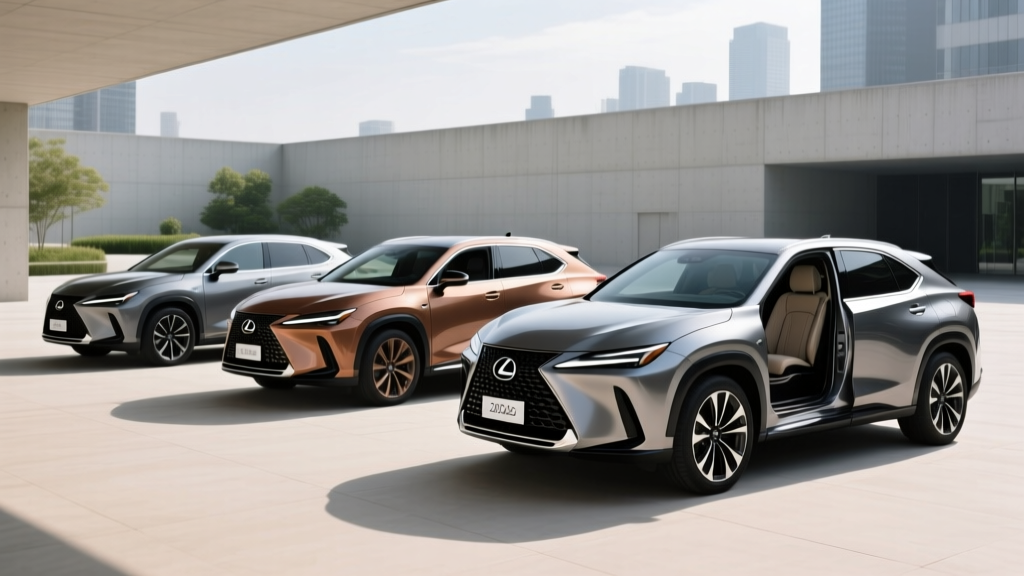
Lexus has built its reputation on hybrid powertrains longer than almost any other luxury brand. For the 2026 model year, the lineup spans five hybrid SUVs — from the compact UX to the three-row TX and the flagship LX — covering conventional hybrids (HEVs) that never need a plug and plug-in hybrids (PHEVs) that deliver genuine electric-only commuting range. If you're researching hybrid SUVs from Lexus, the choices can feel overwhelming because the powertrain strategies differ dramatically across trims. This guide cuts through the marketing to give you exact EPA figures, real-world expectations, pricing, and the decision framework to pick the right one.
HEV vs PHEV: How Lexus Hybrid SUVs Actually Work
Before comparing models, the distinction between conventional hybrid and plug-in hybrid matters enormously for your daily driving and fuel budget.
Conventional Hybrid (HEV)
A small battery (typically 1.0–2.0 kWh) captures energy from regenerative braking and the gas engine. You never plug it in. The electric motor assists the engine during acceleration and enables brief low-speed electric driving. The UX 250h, NX 350h, RX 350h, and TX 500h use this architecture. Expect 33–42 MPG combined depending on the model.
Plug-In Hybrid (PHEV)
A much larger battery (18.1 kWh usable in the NX 450h+, 22.0 kWh in the RX 500h+ variants) stores enough energy for 37–42 miles of pure electric driving at highway-capable speeds. You plug it in overnight on a Level 2 charger. When the battery depletes, it operates as a conventional hybrid. The NX 450h+ and RX 450h+ are Lexus's PHEV offerings.
The practical upshot: if you have home charging and a commute under 40 miles round-trip, a PHEV can run almost entirely on electricity on weekdays while retaining unlimited gas range for road trips. If you lack reliable charging access, an HEV delivers strong efficiency without any infrastructure requirements.
2026 Lexus Hybrid SUV Lineup: Full Spec Comparison
| Model | Type | Powertrain | Combined HP | EPA MPG (City/Hwy/Combined) | EV Range (PHEV) | Battery | 0–60 mph | Starting MSRP |
|---|---|---|---|---|---|---|---|---|
| UX 250h | HEV | 2.0L I4 + 2 motors | 181 hp | 43 / 41 / 42 | — | ~1.4 kWh NiMH | 8.7 sec | $38,450 |
| NX 350h | HEV | 2.5L I4 + 2 motors | 240 hp | 41 / 37 / 39 | — | ~1.6 kWh NiMH | 7.2 sec | $42,665 |
| NX 450h+ | PHEV | 2.5L I4 + 2 motors | 304 hp | 38 / 37 / 38 (hybrid mode) / 84 MPGe | 37 mi | 18.1 kWh Li-ion | 6.0 sec | $50,965 |
| RX 350h | HEV | 2.5L I4 + 2 motors | 250 hp | 37 / 34 / 36 | — | ~1.6 kWh NiMH | 7.4 sec | $52,000 |
| RX 450h+ | PHEV | 2.5L I4 + 2 motors | 304 hp | 37 / 35 / 36 (hybrid mode) / 83 MPGe | 37 mi | 18.1 kWh Li-ion | 6.2 sec | $58,750 |
| TX 500h | HEV | 2.4L Turbo I4 + hybrid | 371 hp | 27 / 28 / 27 | — | ~1.4 kWh NiMH | 5.9 sec | $66,810 |
| LX 700h | HEV | 3.5L Twin-Turbo V6 + motor | 457 hp | 22 / 23 / 22 | — | ~1.5 kWh NiMH | 6.5 sec | $107,910 |
Sources: fueleconomy.gov, Lexus official specifications. MSRP reflects base trim before destination. MPGe applies only to PHEV models operating on combined electric + gas energy.
Fuel Economy Deep Dive: Real-World MPG vs EPA Stickers
Lexus hybrids consistently outperform their EPA ratings in city driving — this is one of the most reliable patterns in hybrid ownership. The reason is physics: regenerative braking recaptures kinetic energy during stop-and-go traffic that a gas car simply wastes as heat. Highway driving, where regenerative opportunities are minimal and aerodynamic drag dominates, tends to return numbers at or slightly below the EPA estimate.
| Model | EPA Combined | Real-World City (Owner Reports) | Real-World Highway | Best Use Case |
|---|---|---|---|---|
| UX 250h | 42 MPG | 44–47 MPG | 37–39 MPG | Urban commuting, city-heavy driving |
| NX 350h | 39 MPG | 40–43 MPG | 35–37 MPG | Balanced suburban + city mix |
| NX 450h+ | 38 MPG (hybrid) / 84 MPGe | Varies by charge discipline | 35–37 MPG after depletion | Short commute + home charging |
| RX 350h | 36 MPG | 37–40 MPG | 32–34 MPG | Family hauling with efficiency priority |
| RX 450h+ | 36 MPG (hybrid) / 83 MPGe | Depends on plug-in frequency | 33–35 MPG after depletion | Two-car households, chargeable commute |
| TX 500h | 27 MPG | 26–28 MPG | 26–28 MPG | Three-row needs, performance priority |
| LX 700h | 22 MPG | 20–22 MPG | 22–24 MPG | Luxury/off-road, hybrid as refinement |
For PHEV owners, the effective MPG depends entirely on charging habits. An NX 450h+ owner who charges nightly and commutes 30 miles round-trip might burn zero gasoline on weekdays, using the engine only for weekend trips. An owner who never plugs in will see 38 MPG — still excellent for a 304-hp luxury SUV, but a waste of the PHEV premium.
PHEV Charging: Electric-Only Range, Charging Times, and Practical Limits
Both Lexus PHEVs — the NX 450h+ and RX 450h+ — share the same 18.1 kWh lithium-ion battery pack and deliver 37 miles of EPA-rated electric-only range. This covers the average American's daily commute with margin to spare, according to EPA data.
| Charging Method | Power (kW) | Time (0–100%) | Availability |
|---|---|---|---|
| Level 1 (120V household outlet) | ~1.4 kW | ~13 hours | Any standard outlet |
| Level 2 (240V home charger, 32A) | ~6.6 kW | ~3 hours | Home wallbox or public Level 2 |
| DC Fast Charging | Not supported | — | — |
Critical PHEV Detail: No DC Fast Charging
Lexus PHEVs use a J1772 connector for Level 1 and Level 2 AC charging only. They cannot accept DC fast charging at public stations. This is a deliberate engineering trade-off: the 18.1 kWh battery is small enough to recharge fully overnight on Level 2, and omitting DC hardware reduces weight, cost, and packaging complexity. For a commuter PHEV, this is the right call — but it means you cannot "top up" at a highway fast charger during road trips.
For PHEV charging at home, a Level 2 wallbox (240V, 32-amp circuit) is the practical minimum. Installation typically costs $500–$1,500 depending on panel proximity and local permitting, on top of $300–$600 for the charger unit itself. Level 1 (standard 120V outlet) works but requires 13 hours for a full charge — feasible only if the vehicle sits parked for extended periods.
Performance and Powertrain: Where Hybrid Muscle Surprises
Lexus's hybrid system pairs electric motors with gasoline engines in ways that eliminate the "rubber band" feel of older CVTs. The higher-output models genuinely perform:
- TX 500h F SPORT Performance: 371 hp from a turbocharged 2.4-liter hybrid system, 0–60 in 5.9 seconds. This is sports-sedan acceleration in a three-row family hauler.
- NX 450h+: 304 hp, 0–60 in 6.0 seconds. The PHEV's electric torque fill makes it the quickest NX variant.
- LX 700h: 457 hp from the twin-turbo V6 hybrid, designed for towing (8,000 lb capacity) and off-road capability rather than outright speed.
- NX 350h / RX 350h: 240–250 hp, adequate for daily driving with 7.2–7.4 second 0–60 times. Not sporty, but never strained.
The UX 250h, at 181 hp and 8.7 seconds to 60, is the outlier — adequate for city driving but noticeably leisurely during highway merging. If performance matters, step up to the NX 350h at minimum.
Pricing, Tax Credits, and Total Cost of Ownership
Here's where Lexus hybrid SUVs require careful financial analysis. The IRS §30D federal tax credit offers up to $7,500 for qualifying new PHEVs and EVs, but eligibility depends on MSRP caps, buyer income limits, and battery component/mineral sourcing requirements that shift annually.
§30D Tax Credit Rules for 2026
- MSRP cap: SUVs must be under $80,000 (all Lexus hybrid SUVs qualify on base pricing)
- Income cap: $150,000 single / $225,000 head of household / $300,000 joint filers
- Battery sourcing: Critical minerals and battery components must meet phased-in domestic/free-trade sourcing thresholds — this is the most restrictive filter and disqualifies many models
- PHEV minimum battery: At least 7 kWh (both Lexus PHEVs meet this at 18.1 kWh)
- Point-of-sale transfer: Eligible buyers can apply the credit as a down-payment reduction at the dealer
Critical caveat: Conventional hybrids (HEVs) — the UX 250h, NX 350h, RX 350h, TX 500h, and LX 700h — do NOT qualify for the §30D federal tax credit. Only the NX 450h+ and RX 450h+ PHEVs are eligible, and only if battery sourcing requirements are met for the specific build date. Always verify current eligibility on fueleconomy.gov before purchasing. Consult a tax professional for your specific situation.
For total cost of ownership, Lexus hybrids command a premium of $1,500–$4,000 over their gas-only equivalents but recoup this through fuel savings within 3–5 years for most drivers. Insurance premiums for Lexus hybrids typically run 5–10% higher than gas counterparts due to higher repair costs for hybrid-specific components. Depreciation, however, is a Lexus strength — the brand consistently ranks among the best for resale value, and hybrid variants often hold value better than gas models as fuel prices fluctuate.
Battery Longevity, Warranty, and Replacement Costs
Lexus Hybrid Battery Warranty
Coverage: 10 years / 150,000 miles (whichever comes first) on the hybrid battery and all hybrid-system components, including the inverter and electric motors. This applies to both HEV and PHEV models.
Capacity retention threshold: For PHEVs, Lexus warrants that the battery will retain sufficient capacity to deliver rated electric-only range, though exact percentage thresholds are not published. If the battery degrades below functional limits within the warranty period, Lexus replaces it at no cost.
Real-world data from Lexus and Toyota hybrid owners (the two brands share hybrid architecture) is remarkably reassuring. The NiMH batteries in conventional hybrids routinely last 150,000–200,000+ miles with minimal degradation, because the system never deeply cycles them — the battery operates in a narrow state-of-charge window (roughly 40–80%) that dramatically extends cycle life. Toyota Prius taxis regularly exceed 300,000 miles on original hybrid batteries.
PHEV lithium-ion batteries face more stress due to deeper daily cycling, but the 18.1 kWh pack in the NX/RX 450h+ is conservatively sized and thermally managed. Expect 10–15 years of service before meaningful degradation.
If replacement is needed out of warranty:
- HEV battery (UX, NX 350h, RX 350h, TX, LX): $2,000–$4,000 for the battery module, plus $500–$1,000 labor
- PHEV battery (NX 450h+, RX 450h+): $8,000–$12,000 for the larger lithium-ion pack, plus labor
- Refurbished options: Third-party refurbished hybrid batteries are available for $1,000–$2,500 (HEV) and can halve replacement costs
Reliability: Why Lexus Dominates Hybrid Longevity Rankings
Lexus has ranked at or near the top of every major reliability study for over a decade. J.D. Power Vehicle Dependability Studies consistently place Lexus in the top three brands, and Consumer Reports reliability surveys rate Lexus hybrid powertrains among the most trouble-free in the industry. The hybrid system itself — the planetary gearset, electric motors, and power electronics — has fewer wear components than a conventional automatic transmission. There are no belts, no torque converter, no multi-clutch packs to fail.
The gasoline engines in Lexus hybrids (the 2.5-liter four-cylinder in the NX/RX, the 2.0-liter in the UX) are naturally aspirated and conservatively tuned, running Atkinson-cycle for efficiency. These are among the longest-lived engines Toyota/Lexus produces, with 200,000+ mile service life being routine with basic maintenance.
Common trouble spots in Lexus hybrids are peripheral, not powertrain-related: infotainment glitches, 12V auxiliary battery failures (a $200–$400 fix), and occasional suspension component wear. The hybrid system itself is remarkably bulletproof.
Decision Framework: Which Lexus Hybrid SUV Fits You?
Choose the UX 250h if:
- You want the most fuel-efficient luxury SUV available (42 MPG combined)
- Your driving is overwhelmingly urban and under 35 miles daily
- Budget is a priority — starting under $39,000
- You accept modest acceleration (8.7 sec 0–60)
Choose the NX 350h if:
- You want a compact luxury SUV with strong efficiency (39 MPG) and adequate power
- You lack home charging access (no plug required)
- You want Lexus Safety System+ 3.0 with comprehensive ADAS
Choose the NX 450h+ (PHEV) if:
- You have reliable home Level 2 charging
- Your daily commute is under 37 miles round-trip
- You want to minimize gasoline use without range anxiety on road trips
- You may qualify for the §30D federal tax credit
Choose the RX 350h or RX 450h+ if:
- You need midsize SUV space (more cargo room than the NX, more refined ride)
- The RX 450h+ makes sense for two-car households that can charge one vehicle
- You value the RX's class-leading interior quality and highway comfort
Choose the TX 500h if:
- You need genuine three-row seating for six or seven passengers
- Performance matters (371 hp, 5.9 sec 0–60)
- You accept lower efficiency (27 MPG) as the cost of size and power
Choose a full EV instead if:
- You have reliable home charging and your daily driving is under 250 miles
- You want zero tailpipe emissions and minimal maintenance (no oil changes, no engine)
- You're considering the Lexus RZ 450e or competing electric SUVs like the Genesis GV60 or BMW iX
Lexus Hybrid SUV Pros
- Class-leading reliability and 10-year/150,000-mile hybrid warranty
- Strong real-world MPG, especially in city driving (often exceeds EPA)
- No charging infrastructure needed for HEV models
- Excellent resale value across the lineup
- Refined, quiet powertrain operation
- PHEV models offer 37 miles electric range with unlimited gas backup
Lexus Hybrid SUV Cons
- PHEVs lack DC fast charging — no quick top-ups on road trips
- HEV models do not qualify for the $7,500 federal tax credit
- UX 250h acceleration is sluggish for highway merging
- PHEV premium ($8,000+ over HEV) requires years of fuel savings to recoup
- Infotainment system, while improved, still trails European competitors
- TX 500h and LX 700h efficiency gains over gas versions are modest
Frequently Asked Questions
How many MPG does the most efficient Lexus hybrid SUV get?
The UX 250h leads the lineup at 42 MPG combined (43 city / 41 highway). In real-world city driving, owners regularly report 44–47 MPG thanks to regenerative braking in stop-and-go traffic. The NX 350h follows at 39 MPG combined, and the RX 350h delivers 36 MPG combined — impressive for a midsize luxury SUV.
How far can Lexus PHEV SUVs go on electric only?
Both the NX 450h+ and RX 450h+ deliver 37 miles of EPA-rated electric-only range from their 18.1 kWh lithium-ion battery. This is sufficient for most daily commutes. Once the battery is depleted, they operate as conventional hybrids at 36–38 MPG with unlimited range from the gas tank.
Do Lexus conventional hybrids need to be plugged in?
No. The UX 250h, NX 350h, RX 350h, TX 500h, and LX 700h are conventional hybrids that charge their small batteries entirely through regenerative braking and the gasoline engine. You fuel them like any other car. Only the NX 450h+ and RX 450h+ are plug-in hybrids that benefit from external charging.
Are Lexus hybrid SUVs reliable, and what does battery replacement cost?
Lexus ranks among the most reliable automotive brands globally, and its hybrid powertrains are among the most proven in the industry. Hybrid batteries are covered for 10 years / 150,000 miles. Out-of-warranty HEV battery replacement runs $2,000–$4,000; PHEV battery replacement runs $8,000–$12,000. Real-world data shows most hybrid batteries last 150,000–200,000+ miles before needing replacement.
Do any Lexus hybrid SUVs qualify for the federal tax credit?
Only the plug-in hybrid models — the NX 450h+ and RX 450h+ — are potentially eligible for the IRS §30D federal tax credit of up to $7,500. Conventional hybrids (HEVs) do not qualify. PHEV eligibility depends on battery sourcing requirements, buyer income caps ($150K single / $300K joint), and MSRP limits ($80K for SUVs). Always verify current eligibility on fueleconomy.gov before purchasing, as sourcing rules change. The credit can be applied as a point-of-sale reduction at the dealer.
Should I buy a Lexus hybrid or a full electric SUV?
Choose a Lexus hybrid (HEV) if you lack home charging, drive more than 300 miles daily, or frequently take long road trips where charging infrastructure is uncertain. Choose a PHEV if you have home charging and a short commute but want gas backup. Choose a full EV (like the Lexus RZ 450e) if you have reliable home charging, your daily driving is predictable, and you want zero tailpipe emissions with minimal maintenance. The PHEV is the bridge option that eliminates range anxiety while maximizing electric driving.
How long does it take to charge a Lexus PHEV at home?
On a Level 2 home charger (240V, 6.6 kW), the NX 450h+ and RX 450h+ fully recharge in approximately 3 hours. On a standard 120V household outlet (Level 1), a full charge takes roughly 13 hours. Neither PHEV supports DC fast charging. Most owners charge overnight on Level 2 and wake up to a full 37 miles of electric range every morning.