Why Lexus Dominates the Luxury Hybrid Market
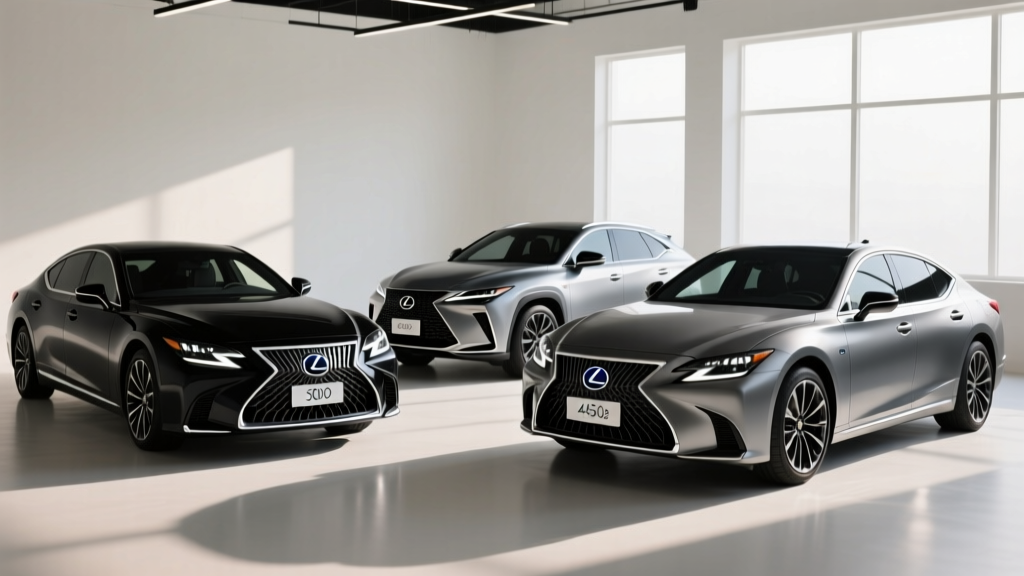
Lexus pioneered the luxury hybrid segment with the RX 400h back in 2005, and two decades later the brand offers one of the most comprehensive hybrid lineups in the premium space. Every core model in the 2026 Lexus lineup is available as a hybrid — and in most trims, the hybrid is the default powertrain rather than an expensive upgrade. For buyers searching for a reliable Lexus hybrid car that delivers strong fuel economy without range anxiety or charging infrastructure dependence, the options span from a subcompact crossover to a three-row family hauler.
This guide breaks down every current Lexus hybrid and plug-in hybrid model with exact EPA fuel economy figures, powertrain specs, pricing, and real-world ownership considerations. Whether you're weighing a conventional hybrid (HEV) against a plug-in hybrid (PHEV) or deciding between Lexus and a full battery-electric vehicle, the data below will clarify the decision.
HEV vs PHEV: Understanding Lexus Hybrid Options
Before diving into specific models, it's critical to distinguish between the two hybrid architectures Lexus employs:
Conventional Hybrid (HEV)
- How it works: A small battery (typically 1.0–1.7 kWh) paired with a gasoline engine and one or more electric motors. The battery recharges through regenerative braking and the engine — you never plug it in.
- Best for: Drivers without access to home or workplace charging who want maximum fuel efficiency with zero behavior change.
- Electric-only driving: Very short low-speed bursts only (under 1 mile at parking-lot speeds).
Plug-In Hybrid (PHEV)
- How it works: A larger battery (18+ kWh) that you plug in to charge, providing 30+ miles of pure electric driving before the gasoline engine engages.
- Best for: Drivers with home Level 2 charging who commute short distances and want EV-like daily driving with gas-engine flexibility for road trips.
- Electric-only driving: Full highway-capable electric range on battery alone.
Lexus currently offers PHEV variants of the NX and RX. Every other hybrid in the lineup is a conventional HEV. This distinction matters enormously for tax credit eligibility, daily operating cost, and charging requirements.
2026 Lexus Hybrid Lineup: Full Spec Comparison
The table below covers every hybrid and PHEV model currently available from Lexus, with EPA figures sourced from fueleconomy.gov and manufacturer specifications.
| Model | Type | Powertrain | Combined HP | EPA City/Hwy/Combined MPG | PHEV Electric Range | Battery (kWh) | 0–60 mph | Starting MSRP |
|---|---|---|---|---|---|---|---|---|
| UX 300h | HEV | 2.0L I4 + 2 motors (AWD) | 196 hp | 43 / 41 / 42 | N/A | ~1.4 (NiMH) | 7.8s | $38,490 |
| NX 350h | HEV | 2.5L I4 + 2 motors (AWD) | 244 hp | 38 / 33 / 36 | N/A | ~1.6 (NiMH) | 7.2s | $43,965 |
| NX 450h+ | PHEV | 2.5L I4 + 2 motors (AWD) | 304 hp | 84 MPGe combined (36 MPG gas-only) | 37 miles | 18.1 (Li-ion) | 6.0s | $51,465 |
| RX 350h | HEV | 2.5L I4 + 2 motors (AWD) | 250 hp | 37 / 34 / 36 | N/A | ~1.6 (NiMH) | 7.4s | $53,250 |
| RX 450h+ | PHEV | 2.5L I4 + 2 motors (AWD) | 304 hp | 83 MPGe combined (35 MPG gas-only) | 37 miles | 18.1 (Li-ion) | 6.2s | $64,050 |
| RX 500h F SPORT | HEV | 2.4L turbo I4 + hybrid (AWD) | 371 hp | 28 / 29 / 28 | N/A | ~1.4 (NiMH) | 5.9s | $63,350 |
| TX 500h F SPORT | HEV | 2.4L turbo I4 + hybrid (AWD) | 371 hp | 27 / 28 / 27 | N/A | ~1.4 (NiMH) | 6.0s | $68,250 |
| LC 500h | HEV | 3.5L V6 + electric motor (RWD) | 354 hp | 26 / 33 / 29 | N/A | ~1.1 (Li-ion) | 5.0s | $102,150 |
Fuel Economy Deep Dive: EPA vs Real-World MPG
One consistent pattern with Toyota/Lexus hybrid systems: real-world city MPG often exceeds the EPA city estimate. This happens because hybrids recapture the most energy in stop-and-go driving through regenerative braking, and the EPA city test cycle is relatively gentle. In dense urban traffic with frequent stops, owners of the UX 300h and NX 350h regularly report 45–48 MPG in warm weather — above the EPA city figures.
Real-World MPG Expectations by Model
| Model | EPA Combined | Real-World City (warm) | Real-World Highway (75 mph) | Real-World Cold Weather |
|---|---|---|---|---|
| UX 300h | 42 MPG | 44–48 MPG | 36–38 MPG | 34–38 MPG |
| NX 350h | 36 MPG | 37–40 MPG | 30–32 MPG | 28–32 MPG |
| NX 450h+ (gas-only) | 36 MPG | 36–38 MPG | 30–32 MPG | 28–30 MPG |
| RX 350h | 36 MPG | 36–39 MPG | 30–33 MPG | 28–31 MPG |
| RX 450h+ (gas-only) | 35 MPG | 34–37 MPG | 29–32 MPG | 27–30 MPG |
Highway driving is where hybrids lose their advantage. At sustained 75+ mph speeds, the electric motor contributes less and aerodynamic drag dominates. Expect a 15–20% drop from combined EPA figures on long highway trips — a pattern consistent across all Lexus hybrid models. Cold weather further reduces efficiency by 10–15% due to increased engine runtime for cabin heat and reduced battery efficiency.
PHEV Models Explained: NX 450h+ and RX 450h+
Lexus offers two plug-in hybrid models, both sharing the same proven powertrain architecture derived from the Toyota RAV4 Prime — one of the best-selling PHEVs in the U.S.
Electric-Only Range and Charging
Both the NX 450h+ and RX 450h+ feature an 18.1 kWh lithium-ion battery pack delivering an EPA-rated 37 miles of electric-only range. In real-world testing, expect 32–36 miles in mixed driving and up to 40 miles in low-speed city conditions where regenerative braking extends range.
| PHEV Spec | NX 450h+ | RX 450h+ |
|---|---|---|
| Battery capacity | 18.1 kWh | 18.1 kWh |
| EPA electric range | 37 miles | 37 miles |
| Level 1 charging (120V, 12A) | ~11 hours (0–100%) | ~11 hours (0–100%) |
| Level 2 charging (240V, 32A) | ~4 hours (0–100%) | ~4 hours (0–100%) |
| DC fast charging | Not available | Not available |
| Total combined range | ~545 miles | ~550 miles |
| Charge port | J1772 (Level 2) | J1772 (Level 2) |
Critical note on DC fast charging: Neither Lexus PHEV supports DC fast charging. This is typical for plug-in hybrids — the battery is small enough that Level 2 charging overnight fully replenishes it. If you need rapid public charging capability, a full BEV is the appropriate choice.
For daily commuters with home Level 2 charging and a round-trip commute under 35 miles, both PHEVs effectively operate as electric vehicles on most days. The gasoline engine only activates on longer trips, providing the combined 545+ mile total range without any charging infrastructure dependency.
Pricing, Tax Credits, and Total Cost
Lexus hybrid pricing spans from the accessible UX 300h to the six-figure LC 500h coupe. Here's what matters for your wallet:
Federal Tax Credit Eligibility
Under current IRS §30D rules, conventional hybrids (HEVs) do not qualify for any federal tax credit. Only the plug-in hybrid models are potentially eligible. However, the NX 450h+ and RX 450h+ face significant hurdles under the Inflation Reduction Act's sourcing requirements:
- MSRP cap: SUVs/vans must be under $80,000 — both Lexus PHEVs qualify (NX at ~$51K, RX at ~$64K)
- Income cap: AGI must not exceed $150K single / $300K joint
- Battery sourcing: Critical minerals and battery components must meet escalating domestic-content thresholds — Lexus PHEVs use Toyota-sourced batteries that may not fully meet 2026 thresholds
- Assembly: Both PHEVs are assembled in Japan, which does not disqualify them but battery component origin matters
As of the 2026 tax year, Lexus PHEV eligibility for the full $7,500 credit is uncertain due to battery component sourcing rules that have tightened annually. The credit may be reduced to $3,750 or eliminated entirely depending on the specific battery supply chain certification. Always verify current eligibility on irs.gov or consult a tax professional before purchasing based on credit assumptions.
Point-of-sale transfer is available if the vehicle qualifies, allowing dealers to apply the credit as an immediate price reduction rather than waiting for tax filing.
Cost-per-Mile Comparison
Assuming $3.50/gallon regular unleaded and $0.14/kWh electricity:
- UX 300h (42 MPG combined): $0.083/mile on gas
- NX 450h+ (electric mode): $0.042/mile on electricity — roughly half the fuel cost
- NX 450h+ (gas-only mode, 36 MPG): $0.097/mile
- Comparable gas-only luxury SUV (24 MPG): $0.146/mile
Battery Longevity, Warranty, and Reliability
Lexus Hybrid Battery Warranty
Every 2026 Lexus hybrid and PHEV carries a hybrid battery warranty of 10 years or 150,000 miles (whichever comes first), transferable to subsequent owners. The general powertrain warranty covers 6 years/70,000 miles, and the basic vehicle warranty is 4 years/50,000 miles.
Lexus (parent company Toyota) has the longest track record of any automaker with hybrid battery durability. Data from Toyota/Lexus hybrid vehicles in service since 2004 shows hybrid battery failure rates well under 5% within the warranty period. Many first-generation Prius and RX 400h batteries lasted 200,000+ miles before meaningful degradation.
Battery Replacement Cost
Should a hybrid battery fail out of warranty, replacement costs vary by model:
- HEV models (UX, NX 350h, RX 350h): $2,500–$4,500 for a new OEM battery pack. Refurbished units are available for $1,500–$2,500.
- PHEV models (NX 450h+, RX 450h+): $6,000–$9,000 due to the larger 18.1 kWh lithium-ion pack.
These costs are comparable to a major engine or transmission repair on a conventional vehicle and are rarely incurred within the vehicle's typical ownership span. NHTSA complaint databases show very few hybrid battery-related complaints for Lexus models.
Overall Reliability
Lexus consistently ranks at or near the top of IIHS reliability surveys and J.D. Power dependability studies. The hybrid powertrain actually reduces wear on several components: regenerative braking extends brake pad life (60,000–100,000 miles is common), and the engine runs fewer total hours than in a gas-only equivalent. The e-CVT transmission has no traditional gears or clutch packs to wear out.
Pros of a Lexus Hybrid
- Class-leading fuel economy in the luxury segment (up to 42 MPG combined)
- No charging required for HEV models — zero lifestyle change
- Proven hybrid reliability with 20-year track record
- 10-year/150,000-mile hybrid battery warranty
- Strong resale value — Lexus hybrids hold value better than most EVs
- AWD standard on most hybrid trims via rear electric motor
- PHEV models offer 37 miles electric + 545 total range
Cons of a Lexus Hybrid
- HEVs do not qualify for federal tax credits
- PHEV tax credit eligibility uncertain under 2026 sourcing rules
- PHEVs lack DC fast charging capability
- Highway MPG drops significantly at 75+ mph
- Performance-oriented 500h trims sacrifice efficiency for power
- Infotainment system still lags behind European competitors
- Premium fuel recommended on turbo hybrid models (RX 500h, TX 500h)
Who Should Buy a Lexus Hybrid vs EV vs Gas
Choose a Lexus HEV (UX 300h, NX 350h, RX 350h) if:
- You don't have access to home or workplace charging
- You want 35–42 MPG without changing any driving habits
- You prioritize long-term reliability and resale value
- You drive 12,000–15,000 miles/year and want low operating costs
- You live in an apartment or street-park and can't install a charger
Choose a Lexus PHEV (NX 450h+, RX 450h+) if:
- You have Level 2 home charging and a commute under 35 miles round-trip
- You want electric daily driving but need gas flexibility for road trips
- You want to reduce fuel costs without range anxiety
- You may qualify for partial federal or state PHEV incentives
- You're not ready for full EV ownership but want to reduce emissions
Choose a full BEV (Tesla Model Y, BMW iX, etc.) if:
- You have reliable home charging and access to DC fast chargers for road trips
- You want the lowest per-mile fuel cost and minimal maintenance
- You qualify for the full $7,500 federal EV tax credit
- You want the latest in autonomous driving features and OTA updates
- Your daily driving is predictable and within 250 miles
Frequently Asked Questions
How many MPG does a Lexus hybrid get?
It depends on the model. The UX 300h leads the lineup at 42 MPG combined (43 city / 41 highway). The NX 350h and RX 350h deliver 36 MPG combined. Performance-oriented models like the RX 500h and TX 500h return 27–28 MPG combined — still better than their gas-only counterparts but less impressive. Real-world city driving often exceeds EPA estimates by 2–5 MPG thanks to regenerative braking.
How far can a Lexus PHEV go on electric only?
Both the NX 450h+ and RX 450h+ deliver an EPA-rated 37 miles of electric-only range from their 18.1 kWh battery packs. Real-world range varies from 32 miles (highway, cold weather) to 40 miles (city, warm weather). Once the battery depletes, the gasoline engine engages seamlessly, providing 36 MPG combined and a total range exceeding 545 miles.
Do Lexus hybrids need to be plugged in?
No. Conventional Lexus hybrids (HEV models like the UX 300h, NX 350h, RX 350h, RX 500h, TX 500h, and LC 500h) never need to be plugged in. The battery charges through regenerative braking and the gasoline engine. Only the PHEV models (NX 450h+ and RX 450h+) benefit from plug-in charging, though they still operate as regular hybrids if you never plug them in — you just miss out on the electric-only range.
Is a Lexus hybrid reliable and what does battery replacement cost?
Lexus hybrids are among the most reliable vehicles on the road, backed by two decades of proven hybrid technology from Toyota. The hybrid battery carries a 10-year/150,000-mile warranty. Out-of-warranty replacement costs $2,500–$4,500 for HEV models and $6,000–$9,000 for PHEV models, though failures within the first 200,000 miles are statistically rare.
Does a Lexus hybrid qualify for any tax credit?
Conventional Lexus hybrids (HEV) do not qualify for any federal tax credit. The PHEV models (NX 450h+, RX 450h+) may qualify for a partial or full federal credit under IRS §30D, but eligibility depends on battery component sourcing requirements that tighten annually. State-level incentives may also apply — check your state's energy office or the fueleconomy.gov tax incentive page for current details.
Which Lexus hybrid is best for a family?
The RX 350h offers the best balance of interior space, 36 MPG efficiency, and a $53,250 starting price for a two-row family SUV. If you need three rows, the TX 500h F SPORT is the only hybrid option at 27 MPG combined and $68,250 — though its turbo-hybrid powertrain prioritizes power over efficiency. For maximum efficiency in a family-friendly package, the NX 450h+ PHEV provides 37 miles of electric commuting plus ample cargo space at $51,465.
How long does it take to charge a Lexus PHEV?
On a standard 120V household outlet (Level 1), a full charge takes approximately 11 hours — adequate for overnight charging. On a 240V Level 2 home charger (32A), a full charge takes about 4 hours. Neither PHEV model supports DC fast charging, which is standard for plug-in hybrids given their relatively small battery packs.
Final Take: The Lexus Hybrid Advantage
The 2026 Lexus hybrid lineup offers something increasingly rare in the auto industry: electrification without compromise. You get meaningful fuel savings (35–42 MPG in most models), proven long-term reliability, strong resale value, and zero lifestyle disruption — no charging apps, no range planning, no cold-weather anxiety. The PHEV models add genuine electric commuting capability for those with home charging, bridging the gap between hybrid convenience and EV efficiency.
For buyers who aren't ready to commit to a full battery-electric vehicle but want to reduce fuel consumption and emissions, a Lexus hybrid remains one of the most rational choices in the luxury market. The data supports it: real-world MPG that often beats the EPA sticker, a decade of hybrid battery coverage, and ownership costs that undercut both gas-only luxury competitors and most EVs when factoring in depreciation and insurance.